Table of Contents
Speech Code of the Month: Texas A&M University
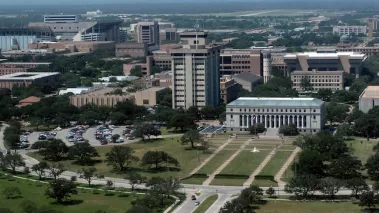
FIRE announces its Speech Code of the Month for May 2007: Texas A&M University.
Texas A&M’s policy on Student Rights and Obligations provides, in relevant part, that:
The rights of students are to be respected. These rights include respect for personal feelings, freedom from indignity of any type…. No officer or student, regardless of position or rank, shall violate those rights; no custom, tradition or rule in conflict will be allowed to prevail. (Emphasis added).
This policy literally prohibits hurting someone’s feelings at Texas A&M University.
Legally speaking, this policy is not worth the paper it’s written on. It is unconstitutionally overbroad, because it prohibits a tremendous amount of constitutionally protected speech. (Most deeply hurtful speech is also entirely constitutionally protected. For an example, take a look at the case of Hustler Magazine v. Falwell, in which the U.S. Supreme Court upheld Hustler Magazine’s right to publish a satirical advertisement suggesting that the Rev. Jerry Falwell’s first sexual experience was a drunken tryst in an outhouse with his own mother!) The policy is also unconstitutionally vague, because ordinary people will have to guess at its meaning. For example, might a classroom criticism of Creationism hurt the “personal feelings” of an evangelical Christian student? Might a classroom criticism of affirmative action hurt the “personal feelings” of a minority student? These are examples of both constitutionally protected and socially important speech, but students at Texas A&M must guess at whether they might face punishment for expressing those opinions, and are thus likely to refrain from speaking out for fear of engendering hurt feelings. Finally, this policy unconstitutionally conditions the permissibility of speech on subjective listener reaction—i.e., on whether the speech hurts someone’s feelings, whether or not the person’s hurt feelings are reasonable. The only prerequisite for punishment seems to be whether or not someone felt hurt by someone else’s speech. Time and time again, courts have held that these types of regulations are unconstitutional.
Legal considerations aside, moreover, think of the effect that a policy like this has on campus discourse. Can you imagine the eggshells students must walk on to avoid violating this policy? Think how circumspect you would be in your daily interactions if you could be punished simply for hurting someone’s feelings. Is that an appropriate environment for a major state university that, in its own words, “depends upon an uninhibited search for truth and its open expression”?
Texas A&M is the sixth largest university in the country in terms of enrollment, with over 46,000 enrolled students living under this repressive and unconstitutional policy. For this reason, it is our May 2007 Speech Code of the Month. If you believe that your college or university should be a Speech Code of the Month, please email speechcodes@thefire.org with a link to the policy and a brief description of why you think attention should be drawn to this code.
Recent Articles
Get the latest free speech news and analysis from FIRE.

FIRE calls on 20 Washington cities to end censorship of social media comments
FIRE urged 20 Washington cities — from Seattle to Spokane Valley — to eliminate unconstitutional restrictions that regulate citizens’ comments on the cities’ social media pages.
Student journalists know their rights. Universities should too.
Student journalists know their First Amendment rights. Universities must do more to protect those rights, not stand in the way of their reporting.

Government officials admit his Halloween decorations are legal. Why won't they leave him alone?
Bristol Borough officials admit a homeowner’s Halloween decorations are legal. They keep pressing him to take them down anyway. That’s jawboning.
LAWSUIT: Michigan State trustee challenges speech code restricting criticism of university leadership
When MSU trustee Michael Balow refused to give up his First Amendment rights, the board imposed severe punishments that are preventing him from effectively carrying out his duties.