Table of Contents


IRS investigations raise new concerns about policing political speech
Shutterstock
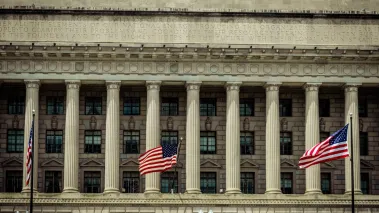
The Internal Revenue Service Building at 1111 Constitution Avenue, Washington, D.C.
After the assassination of Charlie Kirk last year, the White House issued NSPM-7, a presidential memo nominally aimed at combating political violence. FIRE warned at the time that NSPM-7 blurred the line between investigating crimes and investigating beliefs. It designates “anti-Americanism,” “anti-capitalism,” “anti-Christianity,” and “extremism on migration, race and gender” as “indicia” of political violence.
Now, the machinery NSPM-7 set in place is running.
This week, The New York Times reported on an internal IRS memo describing the work of agency investigators assigned to a task force formed under NSPM-7. The memo mentions at least four criminal investigations, referrals of tax-exempt groups for audit, and reviews of subpoenaed financial records of people arrested at immigration protests. The task force is also investigating “doxxing,” a term the administration has stretched to cover constitutionally protected activity like filming and posting photos of ICE agents or noting their presence in a community.
We don’t yet know whom the IRS is investigating. It’s possible some of the cases involve actual crimes. But when a government task force operates under a presidential directive singling out disfavored political views as grounds for suspicion, it’s hard to trust that it’s investigating people for what they did rather than what they believe.
DOJ plan to target ‘domestic terrorists’ risks chilling speech
DOJ plans to target “domestic terrorists” blur crime and ideology, revive McCarthy-era tactics, and risk chilling protected political speech.
And there is already evidence of the government using NSPM-7 to cast a wide net and surveil lawful activity. In Minnesota, Homeland Security agents acting under the directive infiltrated meetings of anti-ICE activists and compiled dossiers on attendees whose only apparent offense was exercising First Amendment rights.
To be clear, the government can and should prosecute people who commit violence or other crimes. But as my colleague Adam Goldstein put it when NSPM-7 was published: “In America, we shouldn’t target people for their ideologies. We should target them for their actions, full stop.”
This principle isn’t partisan. When Barack Obama was president, the IRS subjected nonprofits with terms such as “Tea Party” and “Patriots” in their names to heightened scrutiny. It was wrong then, and it’s wrong now.
And earlier this year, a unanimous Supreme Court ruled in First Choice v. Davenport that a religious nonprofit opposing abortion could proceed with a First Amendment lawsuit against the New Jersey attorney general over a subpoena demanding its donors’ identities. Quoting an amicus brief filed by FIRE, the ACLU, and the ACLU of New Jersey, the Court recognized that even an unenforced subpoena targeting First Amendment activity will give its recipient “a very good reason to clam up” and “give the target organization’s members and supporters a very good reason to abandon the cause.” We also warned that “government actors increasingly abuse subpoenas and other investigatory tactics to silence speakers across the political spectrum.”
Separately, FIRE is representing NewsGuard, an organization that rates the reliability of news websites, in a lawsuit against the Federal Trade Commission. The agency issued NewsGuard a sweeping demand for years of sensitive internal records and blocked advertising companies from doing business with the organization, all because FTC officials disapproved of its editorial judgments.
There are many more examples of government officials wielding these speech-chilling tactics against their political adversaries. Beyond being unconstitutional, it’s shortsighted. One side might score political points today, but it invites the other side to respond in kind. An endless cycle of reprisals that erodes freedom of speech ultimately serves no one.
Recent Articles
Get the latest free speech news and analysis from FIRE.
FIRE SURVEY: Americans have little confidence in either party to protect free speech
After protesters drive Gregory Bovino offstage, Rutgers gets free speech right
VICTORY: Federal officials agree to end censorship of Facebook group and app reporting ICE activity