Table of Contents
Chilled into silence at Whitman College

Shutterstock
Whitman College, nestled near Washington’s Blue Mountains in Walla Walla, promises prospective students, “You’ll find your own path and passions — going further than you ever thought possible.”
Unless, it seems, your path runs against the grain.
Discouraged by the student senate’s flagrant viewpoint discrimination earlier this year, members of the Whitman Republican Club have decided not to resubmit for official recognition.
This is what happens when a college doesn’t play by its own rules. It’s also a warning to institutions and student groups nationwide: The chill sweeping through Whitman is real, and it could freeze your club next.
An easy process, unless you hold the ‘wrong’ views
Whitman College doesn’t impose many steps for a new club to form, register, and become affiliated with the institution. In fact, it’s quite a simple process (as it should be). Identify your club’s purpose, select an adviser, fill out a registration form, and submit a club constitution. After those steps, the finish line is to “present to” the Associated Students of Whitman College (ASWC) for official affiliation.
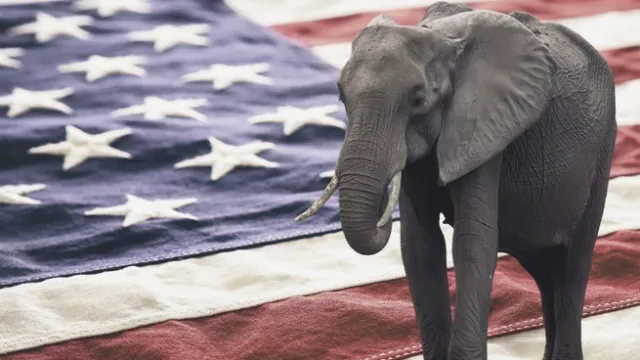
Whitman Republican Club denied affiliation — for being Republican
Whitman promises students free speech and association. Its student senate still rejected a Republican club after grilling members on their politics.
Right there on Whitman’s website, you can find why ASWC or the Student Activities Office is supposed to be able to deny your club recognition: “If a club/organization poses safety or liability risks to club members or to the College, the Student Activities Office and ASWC reserve the right to deny recognition to that club.” Absent such concerns, it’s safe to assume that you’ll achieve official status with the college.
Well, depending on what you believe — and whether those beliefs conform to what the student government says is permissible.
If you’re the Whitman Republican Club, that finish line stretched further and further away as ASWC grilled club leaders on ideological questions. Despite ASWC’s own mission — which includes “facilitating important discussions” and “creating equal and inclusive opportunities” — the Republican group’s bid for recognition stalled before it got off the ground.
We’ve seen this before, and it didn’t age well
You may not share the Whitman Republican Club’s beliefs. You may share ASWC’s skepticism. But we don’t have to imagine what happens when student governments judge groups by their content or viewpoint. History offers abundant examples of groups that were unpopular in their day, fought for recognition, and later gained broader acceptance.
Take, for instance, the Gay Alliance of Students at Virginia Commonwealth University, which formed in 1974. The group was the first to be denied registration by the university’s Board of Visitors on the grounds that the “existence of GAS as a recognized campus organization would tend to attract other homosexuals to the University.” A two-year legal battle followed, with the GAS ultimately prevailing. In 1976, the U.S. Court of Appeals for the 4th Circuit held VCU was required to officially recognize the group and allow it to apply for funding and space allocations — just as any other student organization could. Elsewhere, courts required public universities and student senates that denied campus organizations recognition based on their progressive views to reverse course.
Other progressive groups — including College Democrats at Liberty University and H*yas for Choice at Georgetown University — have faced institutional ire at private colleges. And when a college promises its students and faculty the right to engage in free expression, it should live up to that commitment. Frankly, it’s reasonable for students at such schools to expect their colleges will provide them free speech rights commensurate with those of their peer institutions — regardless if the beliefs of a student group are not popular in the college community. In fact, it is those unpopular beliefs that are most in need of protecting.
Recognizing a student organization isn’t the same as endorsing its views. Recognition simply lets students across the ideological spectrum take part in campus life. And that fosters exactly the robust discussion and equal opportunity that ASWC’s own mission promises.
When censors win, everyone loses
Censorship used against one group can eventually be turned against others. It’s a destructive shortcut, and it runs contrary to the purpose of higher education, where students should expect to broaden their horizons and encounter diverse, difficult, and challenging ideas.
What would have become of the liberal and LGBT groups that fought for freedom of association in the 20th century if the chill had frozen them, too?
Students shouldn’t shrink from the disagreement that comes with that. More speech is the answer to challenging ideas. When beliefs are vigorously debated, they can be changed or disproven.
It takes courage to hear and answer ideas that challenge your own. Fear holds the reins when censorship reigns. At Whitman, the Republican club isn’t the only one losing out now that it lacks official status and won’t reapply. Every student who might have tested their beliefs against the club’s has lost that chance too.
How can students “find [their] own path and passions — going further than [they] ever thought possible” if their own student senate, with no interference from the college, paternalistically insulates them from ideas with which they may disagree? And what would have become of the liberal and LGBT groups that fought for freedom of association in the 20th century if the chill had frozen them, too?
Whitman is a warning. Censors will try to keep the status quo at all costs. Even when it’s written into a handbook, free expression is never guaranteed. Hearing out the other side will always be radical, and always worth fighting for.
The Foundation for Individual Rights and Expression is a free speech charity that defends the rights of students and faculty members — no matter their views — at public and private universities and colleges in the United States. If you are a student or a faculty member facing investigation or punishment for your speech, submit your case to FIRE today. If you’re faculty member at a public college or university, call the Faculty Legal Defense Fund 24-hour hotline at 254-500-FLDF (3533). If you’re a college journalist facing censorship or a media law question, call the Student Press Freedom Initiative 24-hour hotline at 717-734-SPFI (7734).
Recent Articles
Get the latest free speech news and analysis from FIRE.
A UK teen mocked a local politician. Then the police showed up.
VICTORY: New Jersey drops complaint against school board member targeted for asking constituents about taxes

FIRE sues Los Angeles City Council over policy banning certain words during public comment