Table of Contents
Tuskegee tells students to suit up and leave the durag at home
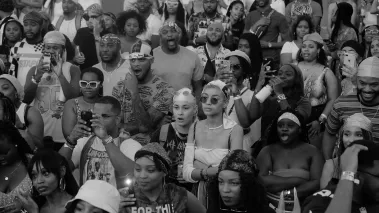
Durag Fest in Charlotte, North Carolina, 2019
President Mark Brown recently welcomed incoming classes to Tuskegee University by announcing a new campus dress code.
The new code says students must arrive on campus with “a business suit and proper shoes for a business meeting” and bans revealing clothing, baseball caps, bedroom slippers, bonnets, sunglasses, durags, and clothing displaying profanity, sex, or drugs in classrooms, the cafeteria, and official school settings. T-shirt dresses and sagging pants are also off limits. Brown said faculty are “empowered to respond” if students disobey.
The new policy is a nod to Tuskegee’s past. Tuskegee first adopted student uniforms in 1886, just five years after it opened, requiring male students to wear “a dark blue suit.” The suits would be supplied by the school’s Girls’ Industrial Room at a cost of about $13 for coat and trousers.
This fit with founder and first president Booker T. Washington’s model of academic study combined with professional discipline. Washington repeatedly tied personal appearance to the respect black Americans could command from others. In his autobiography, he described the difficulty of wearing one suit to work and school, and keeping it clean, and wrote how learning to care for his appearance inspired self-respect.
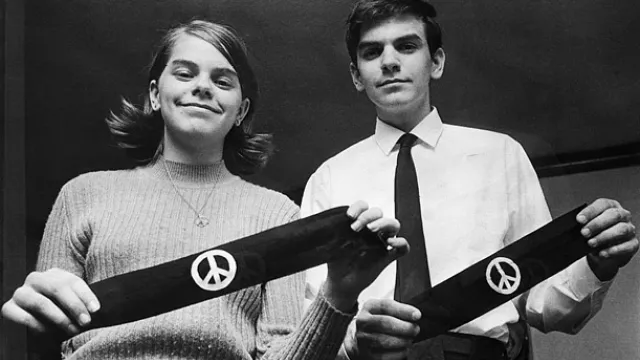
In keeping with Washington’s philosophy of respectability, Tuskegee continues to emphasize dress and professionalism today. But the university also makes broad commitments to student expression and intellectual independence. Although the school is a private institution not bound by the First Amendment, its laudable commitment to students’ free expression is inconsistent with a broad dress code.
Put simply, a university that promises its students freedom of expression shouldn’t undermine that promise by policing what students wear to lunch. Few would say that sagging pants, bedroom slippers, or bonnets are professional attire. And Tuskegee has a legitimate interest in helping students navigate professional expectations. But teaching students how to dress for a job interview doesn’t require turning the cafeteria into one.
Durags and bonnets can communicate identity, culture, or simply personal taste. Clothing is expressive precisely because people use it to communicate something about themselves. Solange Knowles wore a durag as part of her 2018 Met Gala look. Rihanna appeared on the cover of British Vogue wearing one in 2020, with the word “Rebel!” across her chest. There’s even a Durag Festival in Charlotte to celebrate black creativity in the city.
Or consider Tuskegee’s ban on clothing displaying profanity, sexual content, violence, illegal drugs, alcohol, or tobacco. If the school’s commitment to free expression means anything, it should only ban clothing that’s reasonably likely to disrupt class. Telling adults they cannot wear, for example, T-shirts depicting dogs playing poker and smoking cigars, advertising a local pub, or saying “Save Ukraine, Bomb Russia” is entirely inappropriate at a university that claims to believe in freedom of expression.
“We are never asking Tuskegee to lower its standards,” Rayne Caldwell, sophomore class president, said in a recent Facebook post. “We are asking Tuskegee to prioritize the standards that matter most.”
Teaching students how to dress for a job interview does not require turning the cafeteria into one.
Given the policy’s broad restrictions on ordinary campus life, FIRE wrote to Tuskegee University urging administrators to reconsider the policy and bring its dress code into closer alignment with the university’s stated commitments to freedom of expression.
While it is true that Washington valued dress as a means of empowering black people, he also wrote in his autobiography about an even greater tool for black empowerment: speech. Describing his own speaking career, he explained how he accepted invitations to speak on the understanding that he was “to be free to talk about my life-work and the needs of my people.”
Universities can prepare students to know when a business suit is appropriate in professional life. But they don’t need to make every classroom or every trip to lunch a dress rehearsal for the boardroom. Tuskegee can honor Washington’s legacy by protecting the free expression rights he so prized.
Recent Articles
Get the latest free speech news and analysis from FIRE.

Venezuela is a cautionary tale w/ Jim Epstein and Germania Rodriguez Poleo
Podcast

FIRE sues Los Angeles City Council over policy banning certain words during public comment

It was never just going to be about keeping kids off social media