Table of Contents
J. Edgar Hoover and the war on dissent
Chris Henke / FIRE
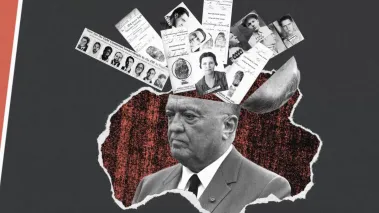
This year, the United States celebrates its 250th anniversary. To commemorate the occasion, FIRE is proud to present the limited series “Figures of Speech,” looking at the heroes and villains of free speech in American history. We began with Joseph McCarthy, the senator who scared America silent. Then we looked at Thomas Paine, American history’s winter soldier, and Woodrow Wilson, our worst president for free speech. Today we turn to J. Edgar Hoover and the story of how he used the FBI to wage war on dissent.
In 1964, Martin Luther King Jr. received a suspicious package. Inside was an audio recording and a letter denouncing him as “a complete fraud and a great Liability to all of us Negroes.” The letter accused King of “countless acts of adultery and immoral conduct lower than that of a beast,” before ending with a chilling message: “King, there is only one thing left for you to do. You know what it is. You have just 34 days.”

The package had not come from a disillusioned admirer. It came from the Federal Bureau of Investigation. King suspected as much and understood the ultimatum as an invitation to kill himself before his private life was exposed.
The episode was part of the FBI’s broader campaign of surveillance and harassment against King, which included wiretapping his home and offices and planting hidden microphones in his hotel rooms. Whether the bureau hoped King would take his own life or merely withdraw from public life, it was attempting to silence the nation’s leading voice for racial equality.
This was J. Edgar Hoover’s FBI.
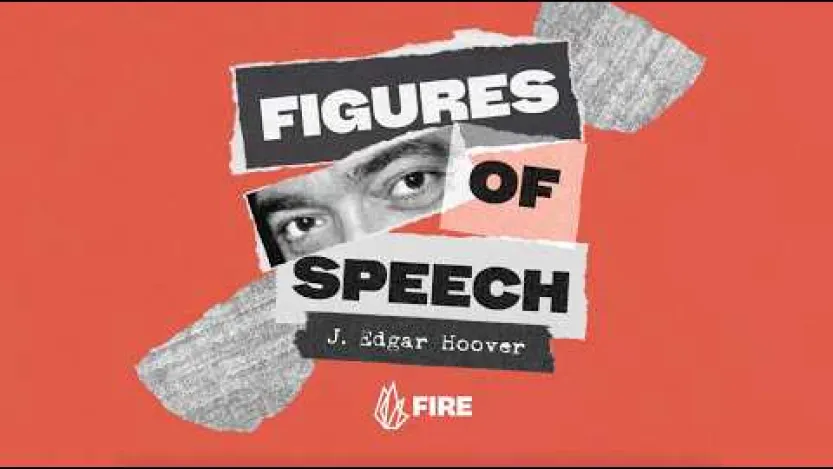
For nearly half a century, Hoover shaped the bureau in his own image, transforming it from a small, scandal-plagued agency into one of the most respected and powerful institutions in America. But Hoover’s greatest ambition was never simply to catch criminals. He believed the FBI should protect the nation not just from gun-toting bank robbers, but from idea-toting dissidents. Under his leadership, the bureau amassed countless intelligence files on Americans, secretly recorded perceived enemies, infiltrated political organizations, and covertly disrupted movements deemed a threat to the social and political order. Hoover’s long, relentless campaign to snuff out dissent made him one of the most formidable enemies of free speech in American history.
Hoover entered the Justice Department in 1917 at the age of 23, just as the United States’ entry into World War I triggered a massive crackdown on dissent. The censorship fever that gripped the nation only spiked after the war ended, as the Russian Revolution, labor unrest, and a wave of anarchist bombings contributed to heightened public anxiety about communist influence.
The First Red Scare enabled Hoover to develop his skills in collecting and managing vast amounts of information on the government’s undesirables. He used a system of index cards to keep tabs on suspected radicals and helped coordinate the Palmer Raids, a brutal campaign to arrest and deport immigrants with alleged radical beliefs or associations. Authorities swept up thousands in the raids, often without warrants or any evidence of criminal wrongdoing. The backlash to this notorious assault on civil liberties taught Hoover not that political repression was wrong, but that it had to be done with more professionalism and less overt lawlessness.
Hoover rose to become director of the FBI (then called the Bureau of Investigation) in 1924. After firing the previous director, Attorney General Harlan Fiske Stone warned that “a secret police system may be a menace to free government and free institutions.” Unfortunately, the man he just appointed would spend the next 48 years proving him right.
Hoover’s reign wasn’t all bad. He modernized the FBI through forensic science techniques, fingerprint databases, crime statistics, centralized training, and strict hiring standards (perhaps too strict, insisting the FBI reject all “long hairs, beards, mustaches, pear-shaped heads, [and] truck drivers”). But the same bureaucratic machinery that made the FBI successful at fighting crime also made it disturbingly effective at monitoring Americans’ speech.
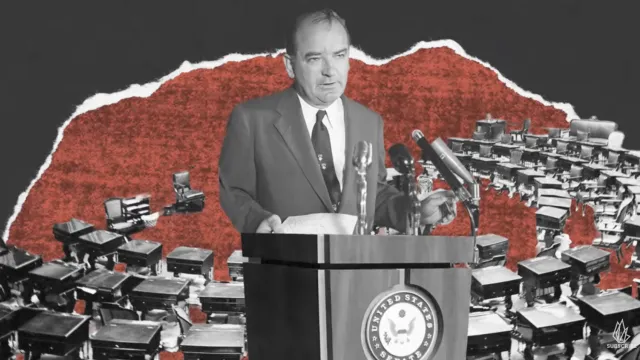
How McCarthy scared America silent
A paranoid senator, a terrified nation, and the birth of modern political censorship. This is the chilling story of how McCarthyism came to haunt America.
World War II gave Hoover the opportunity to increase his institutional power and establish the FBI as a permanent domestic intelligence agency. As fears of Nazi espionage and sabotage mounted, President Franklin D. Roosevelt granted the bureau sweeping new authority, including secret approval for warrantless wiretapping. Hoover interpreted “subversion” broadly, targeting not only foreign agents but also communists, labor activists, isolationists, and others he viewed as impediments to the war effort. The FBI’s wartime expansion of personnel, resources, and surveillance capabilities laid the foundation for its increasingly aggressive attacks on free speech.
During the Cold War, concerns about communism again took center stage. To be sure, Hoover was not chasing an entirely imaginary threat. Soviet intelligence had infiltrated the U.S. government, and the FBI uncovered several spy networks. But his anticommunist crusade extended beyond espionage to encompass political belief and association. Agents broke into Communist Party offices, installed listening devices, photographed membership rolls, and compiled detention lists for use during a national emergency. Hoover also secretly supplied information to congressional committees, state officials, and anti-radical organizations like the American Legion, fueling public hearings, blacklists, and professional ruin.
If the Palmer Raids foreshadowed Hoover’s approach to dissent, and the Cold War normalized it, COINTELPRO represented its fullest expression. Launched in 1956 against the Communist Party and later expanded to other “subversives” including civil rights activists, black nationalist groups, Vietnam War protesters, student organizations, and — in a break from Hoover’s usual focus on the left — the Ku Klux Klan, the program used covert tactics designed to make political movements collapse from within.
In one so-called “snitch jacket” operation, agents planted a forged report in an effort to frame Communist Party official William Albertson as an FBI informant. The ruse succeeded, destroying Albertson’s standing within the party.
Anonymous letters, like the one sent to King, were a COINTELPRO staple. The FBI also used informants to spread rumors, derail meetings, and sow internal distrust. The bureau so thoroughly infiltrated the Communist Party that one former Justice Department prosecutor joked Hoover had inadvertently saved it from collapse because “his informants were nearly the only ones that paid the party dues.”
Even Hoover’s targeting of other groups was motivated in part by his belief that they were communist fronts or vulnerable to communist influence. He initially targeted King because of his alleged ties to communists, but he also became hostile to King’s own activism. Although King preached nonviolence, Hoover argued that even peaceful demonstrations incited violence by provoking hostile reactions. The Supreme Court has long rejected this “heckler’s veto” censorship logic, recognizing that angry mobs can’t be allowed to dictate who gets to speak. But for Hoover, public order came first, even if it meant silencing one of the country’s most influential voices.
Despite his methods, Hoover remained remarkably popular for most of his career, serving under eight presidents of both parties. Unlike the flamboyant anticommunist Joseph McCarthy, who burned out after a few years, Hoover cultivated the image of a disciplined, incorruptible public servant — the “G-Man” — who cared about facts rather than politics or headlines. He earned public trust by pursuing gangsters, spies, and other actual criminals, and much of the country shared his fears about communism and subversion. Meanwhile, many of his most controversial tactics remained hidden from public view.
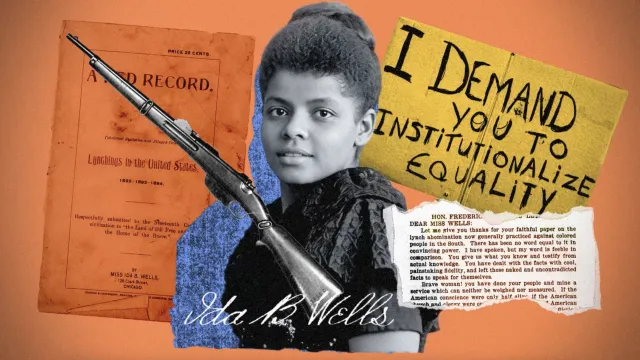
Ida B. Wells: Journalist, activist, civil rights icon, and free speech hero
In 1892, a mob destroyed a Memphis newspaper after it published an anti lynching editorial. Through death threats and violence, they tried to erase journalist Ida B. Wells’s message. Instead, they made her fight impossible to ignore.
Only in the 1960s did Hoover’s popularity begin to decline, as the civil rights movement, the Vietnam War, and broader cultural upheaval divided Americans and made many of them increasingly skeptical of authority. Then, in 1971, activists burglarized an FBI office in Media, Pennsylvania, exposing details of confidential surveillance programs that tarnished the bureau’s reputation.
Hoover died in office the next year at the age of 77. But the full scale of his abuses didn’t become clear until 1975, when the Senate’s Church Committee investigated the FBI and other intelligence agencies. Its final report was Hoover’s posthumous indictment, revealing that America’s celebrated G-Man was the architect of one of the most egregious crackdowns on political dissent the nation had ever seen. As biographer Beverly Gage observed, Hoover went from an unheard-of 98% approval rating to “almost nobody willing to claim his legacy, even within the FBI.”
That legacy is a reminder that the government can trample Americans’ freedom of speech without passing a law or filing a criminal charge. Hoover’s methods were less formal and visible, but they could be just as effective at making people afraid to speak.
The Hoover era also reminds us that the gravest threats to free speech often come from officials who promise to protect us from whatever dangers seem most pressing at the moment — and from a public willing to accept those promises without asking what freedoms are being surrendered in return.
Recent Articles
Get the latest free speech news and analysis from FIRE.
After a congressman challenged a student reporter’s right to record, here’s what journalists should know
Restoring Title IX kangaroo courts is no solution to the ‘Cornell 7’ sexual assault controversy
A UK teen mocked a local politician. Then the police showed up.