Table of Contents
The good, the bad, and the vague in the new college accreditation rule

AP Photo/Butch Dill
Students attend graduation ceremonies at the University of Alabama in Tuscaloosa, Alabama, on Aug. 6, 2011.
Last week, the Department of Education finalized new regulations governing federally recognized accrediting organizations. These private agencies serve as quality-assurance gatekeepers for more than $100 billion in annual federal student aid, making their standards deeply influential over institutional policy. The department’s new regulations could therefore substantially alter institutional policies, including free expression policies.
Historically, federal regulations have left accreditors with substantial freedom to set their own standards and have had little to say regarding free speech or academic freedom (though most accreditors have voluntarily incorporated these principles into their standards). But more recently, accreditors have come under scrutiny for failing to exercise proper oversight of their accredited colleges, including claims that they fail to enforce their standards for free speech and academic freedom. FIRE’s own experience lends credence to these claims. On several occasions, we have contacted accreditors to report an institution’s noncompliance with the accreditor’s academic freedom or free expression standards. Unfortunately, our complaints have usually been rejected or ignored, with little to no explanation.
The regulations change the equation by establishing more detailed expectations concerning faculty policies, academic freedom, free expression, and intellectual diversity—in some ways for better and in some ways for worse. FIRE submitted a formal comment to the department in September, offering support for provisions that bolstered campus expressive rights and suggestions to address vague or overbroad language. Here’s what advocates for free expression need to know about the substance of the final rule. (The regulations also address many issues unrelated to FIRE’s mission, which are not addressed here or in our comment.)
Bad: making accreditors interpret religious doctrine
The regulations exempt religious institutions from certain academic freedom and viewpoint diversity requirements. However, they subsequently require accreditors to evaluate whether a religious institution’s academic freedom and viewpoint diversity policies are “consistent with the institution’s religious mission.” Essentially, this appears to task accreditors with determining whether a religious institution is properly implementing its own religious doctrine regarding academic freedom and viewpoint diversity.
If applied in this manner, this provision would run afoul of the First Amendment, which protects the right of churches and other religious institutions, including religious universities, to decide matters “of faith and doctrine” without government intrusion.
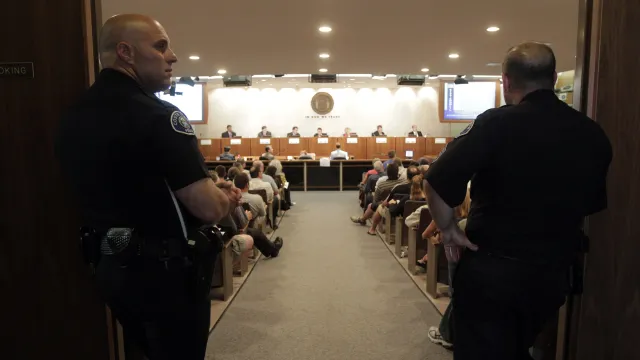
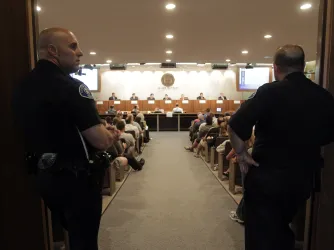
When police treat free speech as suspicious activity
Police monitoring of public meetings risks chilling free speech. When protected expression becomes suspicious activity, everyone has reason to worry.
Courts have frequently rejected regulations on this basis. For example, the U.S. Court of Appeals for the Tenth Circuit applied this doctrine to a higher education regulatory scheme in Colorado. It explained that government scrutiny of whether a religiously affiliated university’s “stated commitment to academic freedom could be squared with [its] statement of religious beliefs” would present an “intrusion into religious affairs.” Similarly, the U.S. Court of Appeals for the D.C. Circuit criticized the National Labor Relations Board for using a religious school’s academic freedom commitment as evidence of certain employees’ nonreligious status. This move, the court said, “impermissibly sided with a particular view of religious functions.” The court criticized the Board’s refusal “to accept that faculty members might contribute to a school’s religious mission by exercising their academic freedom, even though many religious schools understand the work of their faculty to be religious in just this way.”
The Education Department argues that the regulation does not require religious institutions “to adopt viewpoint-range, intellectual-diversity policies, or academic-freedom protections that would conflict with” their religious mission. However, the text of the rule leaves that determination to accreditors acting on behalf of the government. Ultimately, then, this provision poses a serious threat to the First Amendment rights of religious institutions.
Academic freedom and the First Amendment
Good: Protecting constitutional academic freedom
Section 602.17(a)(2)(iii) of the final rule requires accreditors to evaluate whether nonreligious institutions maintain academic freedom protections that are “clearly articulated and applied consistently to faculty regardless of . . . viewpoint, or ideology.”
As applied to public institutions, this is a worthy requirement. Public universities are constitutionally prohibited from retaliating against faculty on the basis of their viewpoints, and accreditors should ensure that taxpayer dollars are not going to institutions that flout their constitutional obligations.
Bad: restricting institutional autonomy at private universities
The provision is more complicated as applied to private institutions. Many private colleges voluntarily promise robust academic freedom, and FIRE has long urged both institutions and accreditors to take those commitments seriously. If the Education Department’s rule simply required accreditors to ensure that private universities live up to their stated promises, it would be a strong addition. Instead, this provision effectively requires every secular private institution to maintain viewpoint-neutral academic freedom protections.
That’s a meaningful distinction. Private institutions possess expressive and associational interests protected by the First Amendment. Some private colleges exercise these rights by organizing around particular academic or philosophical missions, and so may choose to retain authority to ensure that faculty activity remains consistent with the institution’s stated mission. A federal funding condition that functionally eliminates this discretion raises serious First Amendment concerns.
The department argues that this language is process-oriented and that an institution’s decision not to adopt a formal policy on academic freedom does not, by itself, constitute noncompliance. But the lack of clarity in the regulatory text itself leaves room for confusion and potential abuse.
Good: striking the right balance with the First Amendment
Another provision in the same section, (a)(2)(v), takes the right approach regarding First Amendment protections more broadly. It requires accreditors evaluating public institutions to consider whether they maintain “consistently applied policies that protect the First Amendment” while instructing them to “similarly evaluate” private institutions that voluntarily guarantee “the same or similar” protections. (Confusingly, later language in this same section, (a)(2)(vii)(c), seems to take this approach with respect to academic freedom, but the new regulations do not reconcile this section with the language previously discussed.)
Vague: evaluating whether institutions “appropriately prioritize” intellectual diversity
Section 602.17(a)(2)(viii) requires accreditors to evaluate whether nonreligious institutions have “a policy that is designed to support, promote, and appropriately prioritize intellectual diversity and the free exchange of ideas amongst faculty, to include elements that address intellectual inquiry and student learning, and measures student and faculty perceptions on the range of viewpoints and perspectives offered by the institution or program.”
As FIRE has long argued, intellectual diversity, understood as meaningful exposure to competing ideas, arguments, methods, and schools of thought, is a real educational good. A university cannot truly fulfill its mission if students and faculty are deterred from challenging prevailing views, testing controversial hypotheses, or debating contested questions. But incorporating undefined language about viewpoint diversity into federal regulations carries real risk. What does it actually mean for an institution to “appropriately prioritize” intellectual diversity? It’s anybody’s guess, and some accreditors and institutions may overread the provision to require particular levels of ideological representation.
Student journalists know their rights. Universities should too.
Student journalists know their First Amendment rights. Universities must do more to protect those rights, not stand in the way of their reporting.
The Education Department said that it does not intend to prescribe institutional policies or override institutional autonomy. But without any of the clarifying language we suggested in our comment, the regulations could be misinterpreted in ways that do precisely that.
Good: preventing accreditors from abusing their authority
Two provisions in the new regulations will help limit the ways in which accreditors can wield their authority to threaten institutions’ First Amendment rights and obligations.
First, Section 602.18(b)(4) requires nonreligious accreditors to ensure that decisions “are neutral with respect to viewpoint and ideology that are unrelated to its accrediting policies or standards.” This language is helpful. Accreditors are quality-assurance bodies, and their decisions should not turn on their approval or disapproval of an institution’s political or ideological orientation.
Second, Section 602.15(f) provides that an agency’s accreditation standards “must not restrict public institutions from fulfilling their obligations under the First Amendment,” nor may they restrict private institutions that “guarantee the same or similar protections.” This is a strong addition. The government should ensure that accreditors are not wielding their authority to prevent public institutions from complying with core constitutional obligations. Similarly, although private universities are not state actors subject to the First Amendment, they are free to adopt these standards in order to ensure robust, wide-open campus debate. The government — and gatekeepers to federal funds — should welcome this decision, not stand in its way.
Vague: a poorly worded religious carveout
Unfortunately, this provision also includes a poorly worded carveout for religious institutions. It states that an accreditor may not restrict a private institution from guaranteeing First Amendment protections “unless the institution has a religious mission.” The way this is written, it appears to say that an accreditor can require a religious university to restrict speech, even if it doesn’t want to. The Education Department explains that this language is intended to preserve institutional autonomy — but as written, it does the exact opposite.
Good: clarifying complaint procedures
The final rule bolsters the mechanisms through which students, faculty, and staff may communicate accreditation concerns directly to accrediting agencies. In our comment, we recommended that the department explicitly state what current regulations seem to require: that accreditors must review third-party complaints regarding institutional compliance (e.g., complaints from watchdog groups like FIRE). Although the department ultimately declined to incorporate the suggestion, it nevertheless acknowledged in its explanation that accreditors should review third-party complaints and provided instructions on what to do when an accreditor fails to provide such review, stating:
If an entity submits a complaint to an agency and does not believe that it has been sufficiently vetted, then the entity can submit a complaint to the Department for review of the agency’s response to aslrecordsmanager@ed.gov or call 202-453-7615. The commenters may also attend a NACIQI [National Advisory Committee on Institutional Quality and Integrity] meeting and provide public comment regarding an accrediting agency.
An open question
Some have argued that several of the provisions in the new regulations are barred by federal law. They point to 20 U.S.C. § 1099b(o), which requires the secretary to establish regulations for recognizing accreditors but specifically prohibits “promulgat[ing] any regulation with respect to” certain accreditation standards, including “faculty.” But despite this provision, and as discussed above, the final rule describes what an accrediting agency must evaluate when applying its standards regarding faculty.
In response to this plausible statutory prohibition, the Education Department argued that subsection (o) means “the secretary may establish recognition criteria governing whether an accrediting agency functions as a reliable authority under Section 496, while leaving to accrediting agencies the responsibility for developing and applying their own substantive accreditation standards.” Because FIRE’s chief focus lies in academic freedom and free speech, our analysis has focused on the substance of the proposed regulations and does not take a side.
Conclusion
We welcome the Education Department’s renewed attention to the role that academic freedom, freedom of expression, and open inquiry play in educational quality. Accreditors should not pressure public institutions to violate the First Amendment, prevent private institutions from honoring speech protections they voluntarily adopt, or make accreditation decisions based on ideological favoritism. The final rule makes meaningful progress on each of those fronts. Additionally, the rule will help ensure that accreditors monitor public universities for compliance with core First Amendment obligations. At the same time, other provisions are sufficiently vague to be abused or seriously threaten constitutionally protected institutional autonomy — especially at religious institutions.
FIRE stands ready to work with institutions and accreditors trying to comply with the rule in a manner that protects and bolsters freedom of inquiry and freedom of expression on campus.
Recent Articles
Get the latest free speech news and analysis from FIRE.

Trump vs. the Smithsonian: Who controls America's history? w/ Jessica Dickinson Goodman
Podcast

California’s new chatbot law has a free speech problem
When police treat free speech as suspicious activity