Table of Contents
Northern Ireland to consider abolishing blasphemy law

Shutterstock.com
The side of a parked police car in Dubai.
FIRE’s Free Speech Dispatch covers new and continuing censorship trends and challenges around the world. Our goal is to help readers better understand the global context of free expression. Want to make sure you don’t miss an update? Sign up for our newsletter.
Northern Ireland’s blasphemy law under scrutiny
Connie Egan, a member of Northern Ireland’s Legislative Assembly, pushed an amendment late last month that seeks to abolish the common law offences of blasphemy and blasphemous libel from the region. “Blasphemy laws have no place in modern society and Northern Ireland is the only place across these islands that still has these archaic offences, dating back to the 1800s, on the books,” Egan said.
Though these kinds of blasphemy laws are rarely or sporadically enforced in some nations that maintain them, it’s still important to abolish them to ensure they cannot be used in the future, and to signal that blasphemy must not be treated as a crime. This is especially notable at this moment in the UK, where asylum seeker Hamit Coskun just successfully defeated prosecutors’ efforts to punish him for burning a Quran in front of London’s Turkish embassy. Coskun was not charged under a blasphemy law, but civil liberties observers have rightfully warned that prosecutors may be seeking to enforce a quasi-blasphemy law under other statutes.
Academic freedom, free speech controversies in UK higher ed
A controversy at the Open University has intensified debates over academic freedom after the institution said it would no longer use the term “ancient Palestine” in course materials following a complaint from the pro-Israel advocacy group UK Lawyers for Israel. The university initially affirmed that the phrase was “academically appropriate,” noting it had been used historically by scholars such as Herodotus, but later said the term had become “problematic in a way that, perhaps, it was not when the materials were written in 2018.” When OU’s Palestine Solidarity Group alleged that the university’s decision violated the Higher Education (Freedom of Speech) Act 2023, OU said it would still allow use of the term but with “an additional contextual note to support students’ understanding of differing perspectives.”
Speaking of the Higher Education Act, some academics are arguing more needs to be done. Scholars involved in several high-profile academic free speech disputes in the UK are urging the government to immediately introduce a formal complaints system for university staff who believe their academic freedom has been violated. In a letter to the skills minister, academics argued that the delay in implementing the mechanism leaves scholars without a clear pathway to challenge censorship or retaliation, warning that many cases remain hidden because affected academics fear consequences. The signatories wrote that their experiences represent “the tip of the iceberg,” noting that many scholars “quite rationally avoid raising complaints even internally within their institutions” because they assume it will be ineffective or personally damaging.
UAE police threaten jail time over social media posts
Dubai is a hot spot for influencers, but social media users may want to be wary about what they post. Amid attacks from Iran that killed at least three people in the UAE, Dubai police have threatened fines and jail time up to two years for “rumors, false information, or any content that contradicts official announcements or that may cause public panic or threaten public safety, order, or health.”
“Think before you share,” police warned.
Reprimands, sentences, and lawsuits for political speech across Europe
- In Belgium, a media outlet was formally reprimanded after publishing the full transcript of a speech by U.S. Vice President JD Vance. The country’s press ethics body said the outlet “violated ethics and, in particular, its social responsibility as a media of information” by publishing the speech without sufficient context or verification.
- In the United Kingdom, emails obtained through a freedom of information dispute reveal government officials privately discussing a decision to block funding for the Irish-language rap group Kneecap. One message reportedly described the issue as something officials hoped to “keep out of the public domain,” raising questions about transparency.
- Germany has also seen legal battles over political speech. A German court ordered the country’s domestic intelligence agency to temporarily stop referring to the far-right Alternative for Germany (AfD) party as extremist until the designation’s legality is fully reviewed. Judges concluded that “it cannot currently be established that the applicant, as a whole, is dominated by the positions discussed above,” meaning the evidence was not yet sufficient to classify the entire party as extremist.
- Meanwhile, broadcaster Piers Morgan is facing a defamation lawsuit filed by a pro-Israel lawyer after a heated exchange on Piers Morgan Uncensored. During the interview, Morgan dismissed claims about Israeli military actions in Rafah as “a lot of old bullshit again.”
Another lengthy sentence for insulting the Thai monarchy
A Thai court extended the prison sentence of activist lawyer Arnon Nampa by two years and eight months for speeches calling for monarchy reform at a 2020 protest. This brings his total sentence to more than 30 years under Thailand’s strict lese-majeste law. And that might not be all. Nampa still faces three more cases for defaming the monarchy.
Berlin International Film Festival faces controversy, and new rules
The Berlin International Film Festival sparked intense debate after filmmakers used their acceptance speeches to criticize Israel and Germany’s policies. Syrian-Palestinian director Abdullah Al-Khatib ended his remarks by declaring “Free Palestine from now until the end of the world” while accusing Germany of being “partners in the genocide in Gaza by Israel.” The comments prompted backlash from German officials and calls for code of conduct governing political statements at the festival.
Director Tricia Tuttle will be allowed to keep her position, but must “accept a new advisory board and a code of conduct that all festival participants will be required to sign off on.”
Blasphemy laws continue to endanger speech and religious minorities
In Gujranwala, a city in Pakistan, a Christian family says neighbors threatened to accuse them of blasphemy after allegedly seizing their property. According to advocates, the tactic is sometimes used to intimidate minorities in property disputes. Human rights groups note that “this is not the first time land grabbers have allegedly used threats of blasphemy accusations to silence Christian families.”
Human Rights Watch is also urging Pakistan to overturn the blasphemy conviction of university lecturer Junaid Hafeez, who was sentenced to death in 2019 over alleged Facebook posts and classroom remarks. The organization said his prolonged detention is “emblematic of the unjust and abusive nature” of the country’s blasphemy framework.
Egypt’s own “contempt of religion” law has also returned to public debate. The controversy was reignited after a video called for a boycott of Christian-owned shops, claiming buying from them “contributes to insulting Islam.” Article 98 of Egypt’s penal code allows prison sentences for those accused of insulting the country’s “heavenly religions.”
Recent Articles
Get the latest free speech news and analysis from FIRE.
Netanyahu threatens denaturalization for IDF ‘slander’ while officials target filmmakers
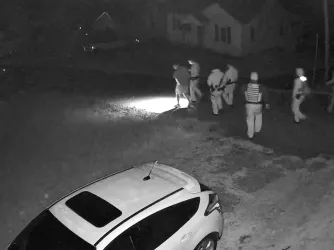
LAWSUIT: FIRE announces lawsuit against Tennessee police department over pre-dawn raid at critic’s home

VICTORY: Federal court rejects bid to dismiss lawsuit from state employee fired for criticizing Charlie Kirk