Table of Contents
Lies in politics are bad. That doesn’t make Wales’ new plan to criminalize them a good idea.
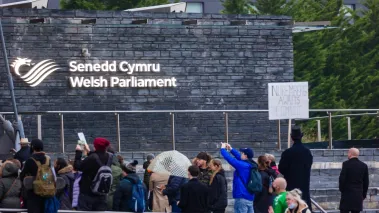
Shutterstock.com
Protesters gather on the steps of the Welsh Parliament in November 2021.
The political sphere, and the world more broadly, would probably be a better place if we did away with the practice of lying. Most of us would sleep more soundly at night if we didn’t feel the need to treat political campaigning with similar skepticism we’d give to days-old gas station sushi.
But that doesn’t mean we’ll improve the world by giving government officials more power to punish dishonesty. We would still have lies — we always will, and no law can make them disappear. But in addition, we’ll have the added problem of more censorship laws ripe for abuse and error.
The Welsh Parliament, however, believes legislation is necessary to fight the scourge of political lies. In a new bill passed this week, by a vote of 50–1, the Senedd passed legislation in part granting Welsh ministers new authority to criminalize making false statements before or during a Senedd election. The language creating this authority, likely to come into force in 2030, reads:
(2A) The Welsh Ministers must make provision, of the kind that may be made under subsection (1)(a), prohibiting the making or publishing of false or misleading statements of fact before or during an election for the purpose of affecting the return of any candidate.
(2B) The provision required by subsection (2A) may include, in particular, provision—
(a) about what is or is not a statement of fact;
(b) prohibiting false statements only or both false and misleading statements;
(c) specifying the period in which any prohibition has effect;
(d) prohibiting false or misleading statements of fact relating to matters specified in the order or matters generally;
(e) prohibiting false or misleading statements of fact made or published by persons or categories of person specified in the order or any person;
(f) prohibiting the making or publishing of false or misleading statements knowingly or recklessly;
(g) specifying exemptions or exceptions to any prohibition.
With the law’s passage, the onus will now be on Welsh ministers to craft criminal offenses that punish political candidates who issue false — or, according to the bill — even misleading statements during an election.
Legislators say the act is vital to combat declining public trust in civic life but fail to account for what new risks to public trust will arise from a bill that doesn’t even define false or “misleading” information, and yet grants future government officials the power to punish candidates for it with criminal sanctions.
Nor does the bill acknowledge the reality that some political matters are contested and don’t fit into a simple fact or fiction paradigm, or that those accused of lies today could even someday be vindicated as wrongly-maligned truth-tellers. It’s happened before, and it will happen again.
The reality is that people in office, and not just those aspiring to it, who will be enforcing these future laws against lies don’t always tell the truth. In fact, that’s been a mainstay throughout human history. Sometimes they do so for more innocent reasons — perhaps, just like the rest of us, they’re occasionally operating on incomplete or faulty information and just conveying what they believe to be true. Or, as many tyrants big and small have done over the years, they are misleading citizens because they have selfish or nefarious reasons. No matter what political views you hold or party you support, you can probably think of a few politicians who fit that bill.
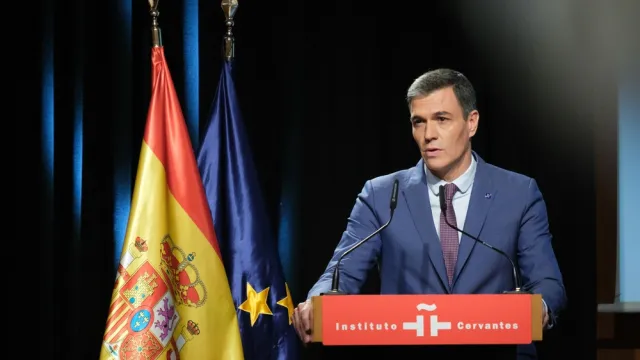
Spain’s new AI 'hate' tracker raises familiar risks for online speech
Spain launches an AI "hate" tracker, raising urgent questions about the future of online speech regulation.
While it’s a matter of regulatory abuse rather than criminal law, Americans should be aware that we’re fighting similar problems of a government monopoly on truth here in the U.S. Just days ago, Federal Communications Commission Chairman Brendan Carr threatened to do away with the broadcasting licenses of networks he claims are “running hoaxes and news distortions” about the war in Iran. While Welsh politicians are seeking to punish “fake news” (as future ministers may define it) among political candidates, our own FCC is trying to stamp out from our airwaves what the Trump administration defines as false, free press be damned. Americans must not allow these threats to go unchecked, either from today’s FCC or its future leadership.
Possessing the qualities of righteousness or virtue does not immunize a politician from sometimes just being flat-out wrong on some factual matters, or at least halfway there. For that reason alone, we should be wary of granting them the power of the state to sift through truth and lies. But we don’t live in a world governed by angels, and many politicians will not be honorable figures — so we should not hand such beatific power to human beings imperfect enough to abuse it.
Recent Articles
Get the latest free speech news and analysis from FIRE.

FIRE demands LA City Council end policy banning certain words during public comment
The man who wants back into San Quentin
This European country launched a task force to target ‘hate speech.’ Now a journalist who insulted politicians is going to prison.