Table of Contents
German bill would criminalize denying Israel’s right to exist
Shutterstock
Where exactly are the lines drawn around speech about the Israeli-Palestinian conflict? It’s one of the most pressing free speech questions today, given both how contested the subject matter is and how rapidly the legal environment is shifting. European nations like France and the United Kingdom have pursued new protest restrictions and, in Australia, the state of Queensland continues to arrest activists under a new ban on the phrase “from the river to the sea.”
Germany has stood at the center of these debates, too. And now the German parliament is pressing for more radical legal changes: a bill criminalizing speech that denies Israel’s right to exist and punishing offenders with fines or up to five years in prison. If passed, Germany would be the first European nation to legislate on this specific type of expression.
Germany has banned Holocaust denial for decades, but German legislators say more action is needed to fight rising antisemitism. Boris Rhein, head of the German state Hesse, said, “Those who deny Israel’s right to exist are attacking Jewish life. Those who attack Jewish life are attacking our free and democratic order.”

Canada is considering action against ‘false and misleading information.’ But exactly what action is a mystery.
Canada is weighing legal action against “false and misleading information,” but key details are redacted — raising serious free speech concerns.
This bill would expand Section 130 of the Criminal Code, which addresses incitement to hatred and Holocaust denial, to also cover public denials of Israel’s right to exist and calls for its elimination that promote “a willingness to commit acts of antisemitic violence or arbitrary acts.”
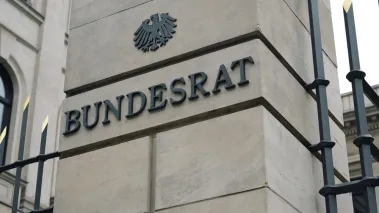
The Bundesrat, the upper house of Parliament, advanced the bill last week and now it heads to the lower house, the Bundestag. Ron Prosor, Israel’s ambassador to Germany, celebrated the bill’s progress, saying, “The German parliament today drew a bright red line, according to which denying the existence of the State of Israel is no longer legal in Germany.”
Similar expression has drawn attention in the United States, too, especially in the context of the International Holocaust Remembrance Alliance’s (IHRA’s) definition of antisemitism. FIRE takes no position on the working definition itself, but has repeatedly expressed serious concerns about the censorship threats posed by incorporation of the IHRA definition into criminal law and antidiscrimination enforcement, including on campus.
Of particular concern are some of the IHRA’s examples of contemporary antisemitism, including one which directly addresses denial of Israel’s right to exist, the speech Germany’s new bill seeks to govern:
Denying the Jewish people their right to self-determination, e.g., by claiming that the existence of a State of Israel is a racist endeavor.
Applying double standards by requiring of it a behavior not expected or demanded of any other democratic nation.
Some or many readers will no doubt find this kind of speech to be antisemitic, but it is nevertheless protected political expression in the United States. If the First Amendment means anything, it means that the government does not get to decide what political speech is unreasonable or unjust, and which countries or conflicts Americans cannot fully and freely discuss.
Whether the German parliament will ultimately finalize the bill is not yet certain but one thing is clear: Democracies around the world are fighting many of the same battles around the limits of speech, whether it’s hateful expression or under-16 bans, and we can expect similar bills and regulations to pop up across borders. That’s why the First Amendment is so vital — it can act as a bulwark against speech restrictions that have advanced in other nations from doing the same here.
Recent Articles
Get the latest free speech news and analysis from FIRE.

Venezuela is a cautionary tale w/ Jim Epstein and Germania Rodriguez Poleo
Podcast

FIRE sues Los Angeles City Council over policy banning certain words during public comment

It was never just going to be about keeping kids off social media