Table of Contents
So to Speak Podcast Transcript: What’s the First Amendment’s original meaning? w/ Jud Campbell and Stephen Solomon
Note: This is an unedited rush transcript. Please check any quotations against the audio recording.
Jud Campell: Is the lack of a regulation at the founding, an indication of a lack of power, or is it just the indication of a lack of an exercise of power?
Voice Over: Somewhere, I read of the freedom of speech. You’re listening to So to Speak: The Free Speech Podcast, brought to you by FIRE, the Foundation for Individual Rights and Expression.
Nico Perrino: All right, welcome back to So to Speak: The Free Speech Podcast, where every other week we take an uncensored look at the world of free expression through the law, philosophy, and stories that define your right to free speech. I’m your host, Nico Perrino. The First Amendment is only 45 words long, but more than 200 years and thousands of court decisions later, we’re still arguing over a basic question: What do those words mean, and what did they mean to the early Americans who adopted them?
The founding generation inherited the law of seditious libel that allowed the British government to punish criticism, but these were also the revolutionaries, who protested in the streets, burned and hung effigies of government officials, and circulated anonymous pamphlets that criticized those in power. So, what did this founding generation think they were protecting when they added the freedom of speech or of the press to the Bill of Rights? And how much can their answer tell us about the First Amendment today?
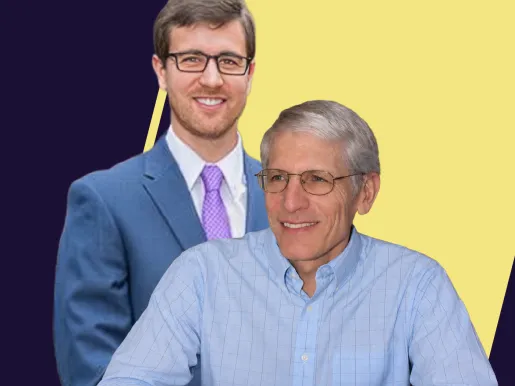
Joining me to look through history, and to debate what originalism can, and can’t, tell us about the First Amendment is Jud Campbell. Jud is a professor at Stanford Law School and the author of two important law review articles on this topic. One is natural rights in the First Amendment, and the other is determining rights. Jud, welcome back onto the show. I actually listened to our last podcast recording last night. We recorded that nine years ago. It’s kind of hard to believe. Time flies.
Jud Campell: Thanks so much.
Nico Perrino: Also joining us on the show is a recurring, so to speak, guest. Stephen Solomon is the Marjorie Dean Professor at New York University, where he teaches First Amendment law in the College of Arts and Sciences. He’s also the founding editor of “First Amendment Watch”, and the author of “Revolutionary Dissent: How the Founding Generation Created the Freedom of Speech.” Professor Solomon, welcome back onto the show.
Stephen Solomon: Thanks very much, Nico. And hi, Jud.
Jud Campell: Hi.
Nico Perrino: So, let’s start at a kind of high level here. Jud, I’m going to start with you. Why should we care about the original meaning of the First Amendment? Is this just some sort of like historical curiosity that scratches some sort of historical itch that we might have, or is there something more tangible to it?
Jud Campell: Well, pretty much anybody who is interested in constitutional meaning today cares about history to some extent. And, so, whether you’re an originalist or somebody who engages in more of what we often call a pluralist constitutional interpretive method, history is one really important element. And one of the things that folks who are interested in history care about is how people thought about the law at the founding, and the background principles that they were either reflecting or creating when they adopted various constitutional texts.
Other people care about how the public at large thought about the language that was being adopted, either in the state ratification conventions, with respect to the original Constitution, or in the state legislative sessions that adopted the Bill of Rights, after it was first passed by Congress, in the first Congress. And, so, I think this is of interest to pretty much anybody who’s doing constitutional interpretive work today.
Although, the extent to which they care about it is going to differ quite a lot, whether they have a sort of strong originalist view that doesn’t put a lot of emphasis on precedent, or perhaps have a more ecumenical sort of more pluralist interpretive method that looks to a lot of different aspects of our constitutional tradition.
Nico Perrino: And Steve, what about you? Why should we care about originalism? Is it for much of the same reason that Jud articulates there?
Stephen Solomon: Oh, I think exactly. And also, I think the Supreme Court is much more attuned to originalism now than they were a generation or two ago. If you go back to the early First Amendment jurisprudence that started in the, maybe, 1960s, you get a lot of decisions on First Amendment issues that don’t necessarily explain the original idea of the founders. There are exceptions to that, but they are exceptions. So, I think it’s become more and more important in the last generation.
Nico Perrino: Yeah. Well, the First Amendment jurisprudence, as we know it today, really didn’t start to develop until what was it, 1919, where you have Justice Oliver Wendell Holmes’s famous dissent in the Abrams’ case, and you don’t ever get a law from the government struck down on First Amendment grounds until, I believe, 1931, in the Stromberg case. So, for the first 140 years of American history, the First Amendment didn’t do much in the way of protecting what we consider today would be core free-speech rights.
So, did the court, as it started to develop that First Amendment jurisprudence, beginning in the 1910s, and really accelerating in the 1930s, did they just get it wrong, or is it appropriate to interpret the First Amendment in the way that they were doing it, perhaps untethered to the previous 140 years of American history, and perhaps untethered to the original intent of the founding fathers? Jud, what do you think?
Jud Campell: Yeah, so, I’d say two things. One is that there was a lot of action in state courts prior to the 19 teens, where state courts were wrestling with what the freedom of speech and freedoms of press meant with respect to either their state constitutions or even just background principles of Anglo-American law that were widely accepted across state lines. So, it’s not the case that there’s just a sort of wholesale invention of the law of freedom of speech or freedom of the press in the 19 teens. Although, it is accurate to say that there really isn’t much First Amendment law per se prior to that time.
The other thing I’ll emphasize here is that the 19 teens is not just a moment where the court is beginning to wrestle with First Amendment law as such. It’s also a moment where there is a massive jurisprudential shift in the way that we think about rights, and the way that we think about constitutional interpretation. This is a moment when jurists like Justice Holmes, but reflecting a lot of different traditions, not just his particular variant of legal interpretation.
Lots and lots of jurists are starting to think about constitutional rights not as being bound to a pre-existing notion of natural rights, not as being bound to kind of an older, backward-looking conception of the common law, but instead are starting to think about rights and thinking about constitutionalism more broadly as being a kind of forward-looking project, a way that we give greater protection for a set of values that we hold dear, but we don’t need to hold ourselves so much to the way that these values were understood before.
And, so, it’s a moment where the court is beginning a process, a kind of forward-looking evolutionary development of constitutional law. And what Steve was just referring to is a response to that. We had that sort of forward-looking, accretive process of constitutionalism for the last 100 years or so, and the court is beginning to be more backward-looking in its orientation. And, so, what we’re seeing now is a struggle to figure out what to do with all of this law that’s been developed over the last 100 years, with a very different orientation towards constitutionalism than what we see now prevailing in the court.
Stephen Solomon: I suspect that if New York Times v. Sullivan were decided today, there’d be a major section right in the middle of it that would go back to the founding period, and go into some depth about the original meaning, the original public meaning, as far as that can be determined. And they might go through several different theories, but that would almost certainly be discussed.
In 1964, that was not really expected. They did do a little bit of analysis of that. They talked about the Sedition Act a bit, and Madison’s report of 1800, which was very important. But not much. Not much. They left the subject pretty quickly. I don’t think that would be the case today if they were deciding it.
Nico Perrino: And to remind our listeners of what the New York Times v. Sullivan case was, this is the case that established the actual malice standard for defamation of, in that case, public officials, but later also expanded to public figures, and we’ve talked about that in the past on this podcast. But Jud, if the founding fathers were to look at the way we do constitutionalism today, largely through the judiciary, would they recognize it?
Jud Campell: I think, in certain respects, but not in all respects, that there are some threads of continuity, but that in very important ways, our framework for thinking about the Constitution has shifted. So, the most important of these is that they did not expect the judiciary to be fully in charge of all aspects of constitutional development. They thought that Republican governance, that Democratic politics, was a really important facet of not just the idea of protecting rights, but also of having rights, that to have rights meant to be in control of those rights, not just individually, but through your representative.
And, so, this is why the claim to rights, and especially to natural rights, resonates so much with Americans in the 1770s, who are claiming natural rights in their opposition to imperial rule by a foreign parliament. They think that to have natural rights means that you have to maintain control of those rights, either individually or through legislative decisions that are made on your behalf, with your consent, namely the consent of your representative.
And, so, this is just a very different way of thinking about what rights are, and how they’re protected than we’re familiar with now. For us to have a right means to be in the individual possession of the decision over how to exercise that right.
Nico Perrino: Yeah…
Jud Campell: To be –
Nico Perrino: …well, when I think of rights, I think this is something that is wholly within the scope of my autonomy, and that there can be no abuse of that right within the scope of that rights. But what you’re saying is it’s bounded by the sort of conception of public interest, and public interest is determined through representative government. So, your rights are determined by representative government, not…
Jud Campell: That’s –
Nico Perrino: …by something inalienable, perhaps.
Jud Campell: Well, it could be inalienable, but it can’t be alienated to some foreign power, as opposed to being possessed by yourself, and with your consent through your representative. So, that’s one important aspect of founding error rights discourse. At the same time, it’s important to recognize they did think there were certain things that the legislature, even with the consent of the people, assumed consent of the people through representation.
They thought that there were certain things the legislature itself couldn’t do, so the legislature couldn’t say certain religious beliefs are deemed to be incompatible with the public good, and therefore, we’re going to persecute people who have those beliefs. That was an aspect of liberty that was thought to be inalienable in a different sense, in a more power restrictive sense. And, so, there are facets of founding our views about rights that bear some resemblance to our conception of rights, as Trump’s, as strong limits on governmental power, and so on.
The rule against prior restraints is a really important one with respect to the freedom of the press, the ability to make sure that when your speech is limited, that that speech can only be limited with the consent of a jury, that the jury has to maintain authority in cases involving speech restrictions. And then, I think they also value the idea that you have a right to speak in good faith on matters of public concern. That it’s really important to democratic politics, that you be able to criticize the government, and that the government can’t punish dissent in total.
Nico Perrino: Mm-hmm.
Jud Campell: Now, that’s different than saying you have a right to maliciously, falsely attack the government, and that’s where we get into some of the finer points of the debate about founding our views. But I do think it’s really important to recognize they had a conception of freedom of speech that did limit governmental power in certain ways, and I think the language of the First Amendment reflects that.
Nico Perrino: Yeah, Stephen, do you see the history the same way, or do you see it slightly different?
Stephen Solomon: I see it slightly different. I think the judiciary was a part of this from the very beginning. There are many founders, in the Constitutional Convention, and later, who talked about the role of the judiciary in reviewing laws that they thought might violate the Constitution. Of course, Marbury v. Madison settled that. I am uncomfortable with the idea that legislators are the final arbiters of what’s the public good, at least in terms of freedom of speech and freedom of the press.
I think we saw with the Sedition Act, what that leads to. I think when you talk about freedom of speech and freedom of the press, legislators have a history, and this goes back to the founding period, let alone after, of protecting their own interests. They put down dissent. They prosecute people just for routine criticism. And we saw that in the Sedition Act, which I think maybe we’ll be talking about later. People were prosecuted. It was a very partisan act. People were prosecuted for saying things that were no more out there than what was said against the British or during the ratification period.
Someone got prosecuted for putting up a liberty poll in Dedham, Massachusetts. A congressman was prosecuted and put in jail. Why was that? It’s because the Federalists in power thought that the public good was defined by what they put into law, and it punished dissent. And then I think we’ve seen that a similar kind of thing all through American history. You go to the 1830s, you have Southern legislators passing laws against anti-slavery speech, and you got the First World War prosecutions, the Second World War.
These are legislators making determinations about the public good. And they were bad decisions when they were made. They’re bad decisions when we look back on them. It a lot of it involves protecting themselves from criticism.
Nico Perrino: Yeah. And if I’m recalling the debate over the Bill of Rights correctly, I mean, James Madison talked about how these states, that had these state constitutional protections for individual liberty, would violate those protections, and that these were your parchment barriers. So, a federal Bill of Rights, for example, could only accomplish so much. But Jud, in your reading, if the scope of these rights is really only determined by representative government, then is medicine wrong in saying that these states were wrong for these prosecute for these prosecutions?
Jud Campell: Yeah, I mean, I think it’s important here to differentiate two things. So, one is can legislators violate people’s rights and act in nefarious ways that help ensure their own advancement and political ends, and so on. And the answer there is clearly yes. I mean, I think the Sedition Act is a good indicator of the harms that can come from legislative restrictions of speech. I’m certainly not here to defend that, but it’s a different question as to what’s their frame of mind at the time.
And on that, I think we kind of need to get in the mindset of, well, what are they thinking, in the late 1780s, when they passed this thing through the first Congress? And at that point, it’s important to remember that they thought that the types of threats, that had existed to their expressive freedom, had been effectively remedied by the types of protections that I was just talking about. So, they saw there being a very strong potential for abuse when a foreign government, and especially a foreign king, with foreign ministers, who were acting under the king’s direction, and with the king’s authority in the United States, I’m talking especially about colonial governors and colonial judges, when those people had tried to suppress speech.
And what was the protection there? Well, in large part, it was the protection of local juries of the ability of people like John Peter Zenger in the 1730s in New York to get the protection of a local jury that said this effort to suppress this person’s speech is out of bounds. And, so, for them, I think they hadn’t yet learned the lesson that actually entrusting the people themselves through their representatives, was also going to be really threatening to expressive freedom.
And, so, that’s a lesson I think we can learn from history. I’m certainly not anti-libertarian about my own personal views of free speech. But I think from their standpoint, that they saw some of the structural protections that I was just mentioning as being adequate. The other thing I would just say here is –
Nico Perrino: Well, let me just double tap on the Sedition Act…
Jud Campell: Sure. Sure.
Nico Perrino: …because with the Sedition Act, the Federalist Party was pretty much eradicated in part due to the response over the Sedition Act, right? I mean, so that would seem to bolster your argument, that there was this kind of political backlash to it, that cabined how the legislature should interpret the First Amendment’s protections.
Jud Campell: Yeah, I mean, I do think that the backlash to the Sedition Act is a little tricky because the Sedition Act is largely opposed on the basis of a federal…
Nico Perrino: Enumerated powers.
Jud Campell: … [inaudible – crosstalk] [00:18:58] to the problem according to Jefferson and the Kentucky Resolutions, is that the federal government lacks power, and that the First Amendment reinforces a lack of federal power, and that sedition prosecution should take place at the state level. So, it’s not so much a kind of libertarian argument against federal power – excuse me, against the Sedition Act that most of the Republicans are making, although some do, and Madison’s Virginia report is a good example of that.
And, so, I think that there is a reaction for sure to the Federalist Alien and Sedition Acts episodes. Notice that the Alien Act episode is particularly important on that, too, that the Federalist Party is acting like a bunch of WASPy elites, and it turns out that an increasingly diverse country doesn’t much care for that. But I do think it’s right to say that there is some reaction, especially in the election of 1800. In the election of 1798, actually, it’s a pretty big Federalist victory, which is the first election after the Sedition Act is passed.
But in the election of 1800, it is true that the House of Representatives swings to the Republicans, and I think one of the states in the presidential election, maybe New York or something like that, does swing to the Republican column in that election.
Nico Perrino: Steve, in your book “Revolutionary Dissent,” one of the things that you say cannot be ignored in these debates is just how the founding generation practiced freedom of speech, not necessarily who they voted for or how these rights were interpreted by the courts, but what they just did. Can you unpack that a little bit?
Stephen Solomon: Sure. So, I think, perhaps, the leading definition of originalism is the original public meaning, what it meant to the general public or reasonable people at the time of enactment. So, we, the people, draw up these amendments. We debate them thoroughly. They go into the conventions. And the question is what did that generation understand their rights to be as written at the at the time?
So, if you if you look at it from that perspective, and I think that might be the sort of Justice Scalia’s definition of how you look at originalism, you go back to the beginning of the founding period, which I would date to perhaps 1761, with James Otis arguing against the writs of assistance, which led to the Fourth Amendment protections against unreasonable searches and seizures, but certainly to the Stamp Act protests, the liberty trees, the liberty poles, the hundreds of pamphlets, essays, letters, just so much was published.
And the attempts that were made by British royal governors to prosecute people were totally useless. I mean, the Boston Gazette, for example, in 1766 to 69, I think there were something like four attempts to get indictments by grand juries on the basis of seditious libel, and they were turned down all the time. And then, there was –
Nico Perrino: Yeah, that’s what Jud was just talking about, right…
Stephen Solomon: Yeah. Yeah. Yeah.
Nico Perrino: …with the juries just refusing to indict or convict.
Stephen Solomon: Yeah. And, so, that’s part of the understanding that that seditious libel simply was not applicable in the American experience that they were going through. I think, also, you go to the period of the debates over the Constitution, the ratification period, just the freest possible debate. Akhil Amar has written a lot about this in several essays. There was no expectation or fear of seditious libel prosecutions or any other kind of punishment. They were putting up liberty poles. They were they were engaged in enormous numbers of, again, essays and pamphlets.
The documentary history of the ratification of the Constitution, which is a set of volumes put out by the University of Wisconsin, republishes basically all the debates, all the newspaper articles and essays. It’s 41 volumes, so this debate was just profound. And when you’re debating the Constitution, and then debating the Bill of Rights, and you’re engaged in the most free debate possible, without any fear of seditious libel prosecutions, one can argue that that’s the expectation, the meaning of the First Amendment. The generation, that ratified it, engaged in tremendous free debate without fear, seditious libel, and I think that’s a good indication of what they felt that they were ratifying.
Nico Perrino: Well, you use the word “debate” there, which suggests that there are people, within that founding generation, who felt differently on some of these issues. And even looking at the Sedition Act stress test in the late 1790s, you have a vehement and caustic debate between the Republicans and the Federalists around the true meaning of the First Amendment. And both these sides could claim some sort of commitment, or authority or involvement with the ratification of the Bill of Rights itself.
So, is originalism, Jud, in a certain respect kind of a fool’s errand? Because anyone on any side of some of these debates might be able to find an originalist argument to support their position? There’s no like the original purpose of the First Amendment, for example. Or is that wrong? Is their original purpose, or is as you say, is it perhaps just defined by whatever we think, in the current moment, is in the public interest?
Jud Campell: Yeah, I do think that there are problems with trying to implement an originalist approach, just as there are problems with any interpretive approach, in that you encounter underdeterminacy, you encounter debate, and whether we’re looking to values today or we’re looking to understandings back in the day, there are going to be disagreements, and you’ve got to have a way of dealing with that.
Certainly, one way of dealing with it would be to say, as a general matter, the burden is on whoever trying to challenge the governmental action to try to show its unconstitutionality. That’s a principle that has, itself, a grounding and founding era law, that there’s a presumption of constitutionality and a clear error requirement for any exercise of judicial review. So, I think it is a problem, but whether it’s an exorable problem, an inexorable problem or not, I think is still up for debate.
I mean, one thing I would say here is I do think that it’s difficult to know what to make of practices in a lot of situations. So, we have a right to liberty, that’s recognized at the founding. We also have a right to keep and bear arms, for instance. And there just aren’t that many gun control restrictions. One of the things that comes up in the early 1800s is that guns get more dangerous, and they begin to be used for more hand-to-hand crime as opposed to for protection against native incursions, or the hunting of animals or various things like that.
And the question that you then encounter is, well, is the lack of a regulation, at the founding, an indication of a lack of power, or is it just the indication of a lack of an exercise of power? And that’s a difficult question to answer by just looking to the practices themselves. And, so, that’s where I think it is helpful to have a kind of broader intellectual framework for thinking about how did these people view rights? Did they view rights as the sort of thing that can be understood simply through practices, simply through what is done at any given moment, or did they have a different way of thinking about rights?
And, so, I’ve tried to approach this more from a kind of what are the intellectual frameworks that they’re using standpoint, as opposed to as much from the bottom up, as Steve has done in in his work. But I think both have valid elements to them, and they do get to this question about what is it we care about and why.
Nico Perrino: Well, Steve, what do you think of those intellectual frameworks? Do you think one is more important than the other? Do you think the intellectual frameworks that the founders used to articulate these rights is supportive of this more practical argument that you’re making?
Stephen Solomon: Yeah. Yeah. Yeah. So, I think there were two frameworks, in addition to Jud’s argument about natural law. One is the one I just described about the actual practice in the streets, the practice of writing and debating with that fear of seditious libel. I think the other one goes to what we might call the structural function of freedom of speech. The common law of England and Blackstone’s definition of freedom of speech kind of worked in England, so that was the Blackstonian definition that no prior restraints. But once you –
Nico Perrino: So, for our listeners, you can publish something, and you’re free to do so, but that doesn’t insulate you from punishment after the fact for what you published.
Stephen Solomon: Yeah. So, that was clearly the common law of England. Although, the work of Wendell Bird, for example, wrote a whole book challenging Blackstone and that interpretation, citing a lot of speakers and writers of that time, who took other stances, and Blackstone being the most conservative of them, choosing the most restrictive definition of free speech.
In any case, when you get to America and the building of the Constitution, sovereignty passes to the people. Sovereignty is no longer in the king and Parliament, and self-governance becomes very important. It is we the people. We choose our representatives, and it becomes critically important to be able to have a very broad freedom to criticize public officials and the government.
And you have to do that in order to keep public officials in line. You have to do that in order to have effective elections, where you can criticize public officials, critique their work. Someone else tries to get the office. And the Sedition Act made that really impossible. It was designed to keep the Federalists in power, and it actually protected the Federalist Congress, the Federalist President Adams, and it exempted Thomas Jefferson, who was the Democratic Republican Party. And also, the Sedition Act was designed to go to sunset at the end of the Madison administration, just in case he lost, that it wouldn’t be able to be used against them.
So, it was so partisan, and it was the perfect example of this is not the way we can regard speech in a democratic society, in a republican form of government. Not that it was the last example of this, unfortunately, but it may have been a good thing that it happened, seven years after the First Amendment was ratified, it did give Madison an opportunity, in his report of 1800, to write about the value of the press. He wrote that the press, his practice of the press and protections of the press, went clearly beyond the old common law understanding. And he said that because we had a different form of government.
So, I think that was a very powerful statement. I think we could talk about Holmes, and Brandeis, and cases that come later in the 20th century. But the strongest statement, I think, came from Madison in 1800. He was the author of the First Amendment. I think he thought most deeply about it. And the Sedition Act really forced him to write about it in a way that he thought might last for a couple centuries or more.
Nico Perrino: Jud, I want to ask you about Steve’s argument there, because if I’m understanding him correctly, you make the argument that legislators and the founders understood rights to be bounded by how their representatives would define the public good. But if people can’t engage with their representatives, and representatives can’t speak freely, because they are subject to repressive laws, representative government just doesn’t work. Right?
So, is that the sort of kind of inalienable rights that the founders may or may not have thought shouldn’t be touched by government? But then, how do you explain the Sedition Act in which they did touch that very thing?
Jud Campell: Right.
Nico Perrino: Right?
Jud Campell: Right. No, I think it’s a good point. I mean I agree with much of what Steve said. I will put some alternative views on the table, though. So, one thing I just want to start with is England had a republican government at this time, and they thought that there was not just a freedom of the press, as a rule against prior restraint, but that you had a right to engage in public criticism of public officials and so on. That’s not a right that’s judicially enforceable, in the kind of conventional American sense of judicial review, because England doesn’t have a conventional American sense of judicial review in the 1800s.
But there’s plenty of discussion of freedom of speech. It’s referred to in different ways in England, because, at core, they have a representative government. You elect members of Parliament, and the members of Parliament are acting on your behalf, and that’s what justifies law, in England, as being, at least in part, reflective of this idea that you have these rights.
And, so, I don’t think Americans need to develop something totally new. They do innovate in certain ways, especially once we get to the 1790s. But my view is that there’s more continuity between the English and the American conceptions of a lot of these rights, and the way that Steve’s framing it. And I think Steve’s framing –
Stephen Solomon: Well, yeah, I think –
Nico Perrino: Go ahead, Steve.
Stephen Solomon: Yes. So, I agree with Jud about the Republican principles in England. But in practice, there really wasn’t any freedom of speech. The history of dissent in England is full of people getting sent to be beheaded back into the 15th, 16th, 17th centuries. And the best example from the 1760s is John Wilkes. I mean, he was a member of Parliament, and he criticized the king. He published a newspaper called “The North Briton.” He criticized the king, and he was prosecuted for seditious libel. He’s kicked out of Parliament. All his papers were seized. He served, I think, 22 months in prison.
And John Wilkes became a hero in in the colonies, because this is during the time of increasing ferment and dissent against Britain. And, so, I mean John Wilkes was a hero. I mean Wilkes-Barre, Pennsylvania is named after him. And when Alexander McDougal, who was a merchant in New York, published a broadside criticizing the New York Assembly and the governor of New York, they found out who he was and they prosecuted him and he became the John Wilkes of America.
And McDougal Street in in Manhattan is named after him. I walk by it every day at NYU. So, they made heroes of free-speech martyrs. The first one, again, being Wilkes, and if that’s an example of the British protecting speech, it’s one that that hit the Americans in the wrong way.
Nico Perrino: There’s something that I’ve been struggling in my mind with. There’s a Supreme Court justice in the 20th century, and I forget which one, and I forget which case. But to paraphrase effectively, what they said was, if there was any purpose to the American Revolution, the Declaration of Independence, and the Constitution, it was to give Americans more liberty than that which was granted to English citizens, or English subjects, I should say.
I don’t know if that’s exactly right, because if I’m understanding the American Revolution correctly, one of the reasons they were rebelling is because they weren’t granted the natural rights of Englishmen. They didn’t feel like they had the same rights that people over in London, for example, might have had. What’s the right interpretation of that? Because there is also one interpretation of the Constitution that people often have, which is separate from originalism, or perhaps the living Constitution approach, which is this idea of purposivism. The purpose of the Constitution is liberty.
So, when you’re trying to interpret it, what the Bill of Rights means, for example, you’re going to put a thumb on the scale on the side of liberty, because determining the original meaning is hard, and we don’t want to just have this amorphous idea of a living constitution because that can mean whatever you want it to mean. But at least this idea of liberty, this purpose of liberty, tethers you to something when you’re trying to interpret what the role of the Constitution is in governing our lives. Jud, how do you see it?
Jud Campell: Yeah, I mean, I think that there are a couple things here. So, one is I definitely want to agree with Steve that there are many people in the United States who appreciate that power has been abused in England, and the Wilkes’ case is a great example of that. And I think one of the things that this highlights, and it gets back to Steve’s point about legislatures as well, is that whenever you grant a power to repress speech, that power can be abused. And, so, one of the things you want to think about is how to calibrate the authority to restrict speech.
The Americans, to your point, Nico, are insisting, in the 1770s, that they enjoy rights under the British Constitution, and their assertions of rights are very much grounded in the adequacy, in fact, the gloriousness of the British Constitution. So, this is a people in the 1770s, who are not claiming a need to reinvent constitutional rights. There are people who think they have certain constitutional rights, and that an imperial government is not respecting those rights.
And, so, there’s just a constant invocation of the rights of Englishmen amongst Americans in the 1770s. This is in pamphlet literature, but also in the colonial assemblies passing resolutions insisting upon the natural rights and the rights of Englishmen. And, so, I think that gets to the kind of core point that I want to make, which is there’s a kind of continuity between the British and the American conceptions of these things.
The other thing I just want to highlight is it’s important for us to think about, if we’re just trying to get in the mindset of these folks in the 1800s, but also if we’re trying to think through these things ourselves, it’s important for us to think about what the harms are to granting a power to restrict speech. It’s also important for us to think about the harms to not having a power to restrict speech. And here, the Federalists have a plausible answer. I don’t find it particularly convincing, but it’s a plausible answer to the way that Steve framed the need for freedom of speech in a Republican government.
Basically, what they say is Republican government requires adequately-informed citizens. One way that you could suppress an adequately-informed citizen is by cutting off any public discussion or hostile commentary about the government. And, so, we don’t want to do that. We don’t want to take away people’s right to comment on the government. But another way you could lead to an inadequately-informed public is by lying to the public about what it is that the governors are doing.
And, so, they’re thinking about this in a kind of nuanced way, that there are certain ways that you can restrict speech, and there are certain ways you can’t restrict speech. Part of the trouble here is that the federalist prosecutors, just like the royal prosecutors back in England in the Wilkes’ episode, are inclined to construe what counts as a malicious, false criticism of the government, in a way that’s much broader than what you or I might think of as a malicious and false criticism of the government.
And, so, this does get to the core question of like, how much do we want to calibrate governmental power over speech, and how much do we want to just get out of that project at all? And by the late 1790s, there are people in the Republican Party, who say we should just get out of this project. We should just deny the government any power over speech. I don’t think that’s where Americans were generally in the late 1780s.
Nico Perrino: Go ahead, Steve.
Stephen Solomon: Yeah, I think one of the problems with legislators is under natural law, if you give legislators the power to control speech for the public good, and that’s what we’re talking about. It’s just too vague, and they can justify anything under that rubric. I think the Sedition Act, at least in the minds of the Federalists who control the government, was enacted for the public good. In the 1960s, all the laws of in the South to put down dissent, and protests for the rights of Black people were, at least in the ideas, in the minds of the Southern legislatures were for the public good.
Book bans today by legislatures and school boards are in their mind for the public good. It’s censorship. It’s just too vague a term. What we have – a
Nico Perrino: Can I just put a pin in that really quick?
Stephen Solomon: Yeah.
Nico Perrino: Because I want to clarify your argument, Jud. You’re saying this is the reality of how the founders thought about it. You’re not necessarily saying you agree with it. If I’m hearing you correctly, it sounds like you would agree with everything that Steve just said, and maybe that was just a shortcoming in the founders’ philosophy around rights, if their end goal was to prevent tyranny, in this case, seemingly the tyranny of a majority that might manifest itself in representative government.
Stephen Solomon: Yeah. But I’m saying the tyranny against speech is inevitable if the standard is the legislature decides on speech issues according to the “public good.”
Jud Campell: Yeah, one way kind of step back from this is to say, okay, if I’m right, if my conception of the First Amendment and of how they thought about the freedom of speech as right, then what would they be concerned about? Well, what they would be concerned about is making sure that legislative decision-making was as good as it could be. They would be really concerned about things like the design of the legislature, how it is that representation is being reflected in the creation of different levels of government. How it is that we might divide power between different branches of government, and so on.
And sure enough, what do we see? We see a constitutional convention that is full of questions over institutional design, over exactly those lines. We see a ratification debate that is full of concern by people, who think that the elevation of these authorities to a centralized national government, takes them too far away from the hands of the people themselves, and makes it dangerous because we won’t be able to control what they are doing.
Whereas if it’s us at the local level or at the state level, that’s us. We control what we do, and therefore it’s less of a concern. And, so, I think Steve is totally right. It’s just that from the kind of standpoint that they’re operating in, it leads them less to a concern about limiting governmental power, and more to a concern about how do we structure institutions in ways that that accommodate these sorts of checks.
And from my standpoint, that’s really important to appreciate, because it’s not just about protecting rights in the sense that we are accustomed to thinking about protecting rights, which is how do we allow for individual autonomy in various ways to be preserved. They’re thinking about in the sense of preserving rights, in the sense of preserving control, individually and collectively, over the decision making about how to restrict those rights. And, so, it’s just a different frame of reference.
Nico Perrino: Steve, I’ll come to you in a second, but let me just ask one question. Then why write an amendment that is as unequivocal as the First Amendment?
Jud Campell: Yeah.
Nico Perrino: "Congress shall make no law abridging the freedom of speech." Is the freedom of speech just a term of art? But even if it’s just the term of art, even if you look to some of the state constitutions that initially protected freedom of speech, like Pennsylvania, they have a comma and then a clause that said: “Subject to the abuse of that right.” Like if you were going to be more equivocal, might you do something like that, rather than say: “Congress shall make no law abridging the freedom of speech?” How are we supposed to deal with that?
Jud Campell: Yeah, I mean, I think it’s a nice point. So, one of the things that the Federalists are especially worried about is that when they write down these rights, it’s going to – and if they were to refer to say the abuse of the right as a limiting principle, that that would suggest a power to restrict in ways that would then open them back up to a debate about the unlimited nature of federal power.
So, Madison, before he goes to the first Congress, has a correspondence with Jefferson about what they want to do. And one of the things that Madison insists on, which I think is a really crucial element of his thinking at this time, is that he doesn’t want to engage in a project of enumerating rights, that reopens questions of federal power, either from the standpoint of changing federal power, or from the standpoint of re-engaging this anti-federalist critique about how the federal government is going to have all this authority.
And, so, even though we know, I mean, we are absolutely convinced as scholars, who write on the First Amendment, that the right of free exercise does not give you the right to engage in ceremonial sacrifice, right? It’s there are limits to these rights, even though we know we are 100% certain that there are limits to the exercise of rights, they don’t write them down. And in fact, as you said, Nico, they don’t even make any reference to those limits.
And why is that? Well, I think it’s because Madison didn’t want to reengage this broader project. So, I think the text here is a little bit misleading, because I think it responded to this core problem that Madison recognized, and wasn’t trying to specify all the limits in the text.
Nico Perrino: Go ahead, Steve. I’m sorry for cutting you off.
Stephen Solomon: Yeah, the correspondence between Jefferson and Madison is really fascinating on this issue. And one of the objections that Madison gave to Jefferson, who was pushing for a bill of rights, was that a bill of rights would be a parchment barrier, meaning that it just wouldn’t stand up to political forces. Why did he say that? He was very much engaged, by that point, in the battle for religious freedom in Virginia. And he wrote the free exercise of religion clause in the Virginia Declaration of Rights, which he thought created, basically, equality among religions.
But the persecution went on. Why? Because the legislature in Virginia just ignored it, so he felt that factions, “the violence of factions,” as he called it, would just run over rights, and so he wasn’t really convinced that a bill of rights would be effective. And I wanted to get to another point about with legislating for the public good.
It seems to me, I’d like to get your reaction to this, Jud, a different version of this is the compelling need test the Supreme Court puts on legislative restrictions on speech, that you know attack viewpoint, and so many cases are decided on that. It seems like the legislature has to prove a compelling interest in limiting speech. That is a perhaps a narrowing of the definition of – a general definition of public good.
Nico Perrino: Yeah. And it’s not that they just have to show a compelling need in certain circumstances.
Stephen Solomon: Yeah.
Nico Perrino: They need to show that that that their approach is narrowly tailored to serve that need.
Stephen Solomon: Yes. Yeah.
Nico Perrino: Yeah. So, Jud, I’m curious hearing what you think about that as well.
Jud Campell: Yeah, so, this is an important point. Genealogically, we have this strict scrutiny test, and it has no immediate connection to anything at the founding.
Stephen Solomon: Yeah.
Jud Campell: So, where does it come from? Why do we have this thing that’s just totally made up? Well, for about 150 years, the court had a recognized jurisprudence of rights that allowed for limitations of rights in promotion of the public good. And at the state level, this was called the “police power doctrine,” which allowed for restrictions of liberty and property, but there had to be a public need for that restriction.
And that’s basically where things were up through the early 1900s. And what the court ends up doing, starting in the 1920s, but especially taking off in the 1930s and 40s, is it starts saying, “Well, we’re going to get out of that project, with respect to most forms of economic liberty, but we think that it needs to be an especially important facet of judicial review, at the federal level, to take a really close look at those instances where the state and federal governments are restricting aspects of liberty that are related to the political process, or that infringe upon the rights of racial minorities, etc.
And, so, that’s where the tiers of judicial review, or what we would now call “tiers of judicial scrutiny,” get developed as in the late 1930s and 40s. And just genealogically, it comes from this tradition of having liberty subject to regulation and promotion of the public good. There’s this older conception of rights that allowed for that. I think, now, it’s kind of become a kind of weird exception in the minds of the court to a general presumption that the government lacks authority to restrict rights.
And, so, that’s why we see a lot of the majority of the Supreme Court, today, increasingly uncomfortable with the tiers of scrutiny, and more inclined to say, “Well, we should be using history and tradition to try to ground our analysis of what the limitations of rights are.” So, they really don’t like this because it feels like balancing. It feels like second-guessing legislative judgments. But I think, genealogically, it does come out of this tradition.
Stephen Solomon: So, if the court used your framework as opposed to the one they’re using would New York Times v. Sullivan still stand? Would other central cases and First Amendment jurisprudence still stand?
Nico Perrino: Like obscenity doctrine, symbolic speech? I mean, where does all this stuff stand, if your reading of the original intent of the First Amendment is accurate, and the courts today approached it the way you think the founders approached it?
Jud Campell: Yeah. So, I want to carefully differentiate two different things. So, one is what did they expect for judges to do? And, here, I do think that our modern doctrine is just very, very different than what we see today, that New York Times v. Sullivan is not an opinion that reflects how the founders understood the legally determinate aspects of freedom of expression that they thought judges could enforce.
I think that’s pretty clear, actually, that New York Times v. Sullivan, as a rule, comes out of a very forward-looking kind of common law style of constitutionalism that the court is adopting in the 1960s. And, so, the rule itself doesn’t really have any foundation in the founding era materials. Where I would be more open, to a rule like New York Times v. Sullivan, is that I think the founders more broadly, not when focusing on judicial review, but when thinking about, well, what does the freedom of speech entail, they were open to arguments along exactly the lines that Steve has been making about the harms that come from granting the government power to restrict speech.
And, so, we see Madison, not when arguing in a court, but when arguing more broadly in the Virginia legislative session that adopts the Virginia resolutions, Madison makes a set of broader arguments about how there’s a real harm to a system of republican governance when we have legislative authority to restrict speech.
And I think in that forum, in the forum of democratic decision-making, it’s entirely consistent with the founders’ understanding to say we need to have more robust protection for expression. I don’t think the founders themselves made that choice, but I think it’s a style of argument that is within the ambit of how they thought about freedom of expression more broadly.
Stephen Solomon: I think if we go back to New York Times v. Sullivan, I think some of the arguments that we’ve talked about today, like the structural role that freedom of speech plays, I think that that’s a justification for Sullivan. I think what the general public understanding was in terms of what the family generation actually did in engaging in speech would support Sullivan, if one were to write Sullivan today or rewrite it.
I also think it’s useful to look at the facts behind the case. There were something like 10 or 12 news organizations that were being sued for defamation by various governmental officials in the South over civil rights, the coverage of civil rights. Sullivan, in particular, tried to take advantage of a couple mistakes that the New York Times made, and under Alabama law, would have won the case. I mean, there’s almost no question of it. In fact, it went up through the Alabama courts, and Sullivan won until he got the Supreme Court.
Nico Perrino: Well, that’s one of the things you were finding to reference juries, as Jud was just doing, you couldn’t you couldn’t win one of these cases in front of a Southern jury.
Stephen Solomon: Yeah.
Nico Perrino: And I think there was something like $3 billion in 2026 dollars’ worth of outstanding defamation judgments that these news organizations faced.
Stephen Solomon: Yeah. But what the Southern juries did, and what the law did, was basically cut off coverage of one of the most important public issues of the time, and make it very expensive in terms of lawsuits to do it. It shows speech. It took the Supreme Court, and perhaps a more protective interpretation of the First Amendment, to deal with that. Not dealing with it would have meant the New York Times, I think, and a lot of other news organizations, simply wouldn’t have covered the civil rights struggle in the South, which would have been a great loss to all of us.
I think that’s part of self-governance, to enable the press to act as a checking, engage in a checking function on the actions of public officials, or at least inform the public, so that the public can make decisions about it. And that’s fully for public is essential value of the First Amendment, I think.
Nico Perrino: Which requires, as Sullivan said, the breathing room to get things wrong.
Stephen Solomon: Yeah. Yeah.
Nico Perrino: Jud, I’ll just give you a second to respond to that, and then I have one last question I want to ask both of you, and we can close out here.
Jud Campell: Yeah, I mean, I do think this comes back in large part to where we began, which is thinking about how we discipline constitutional interpretation. So, constitutional interpretation is not just about what do we think is a good idea. It’s about what do we think the law requires, and then we need some account of what the law is. And this is one of the things that makes these questions tricky. I don’t disagree with Steve, that there is a great value to having breathing space, and that value is especially high in moments where there is a really strong repressive impulse, particularly by minorities in particular communities. I mean, national minorities, but who have dominance in particular areas, like the Jim Crow governance that was taking place in the South in the 1950s and 60s.
Stephen Solomon: Yeah. But this repressive impulse just goes on and on and on. It’s sort of part of the system that we have. Politicians want to stay in office. They want to get their programs through. They want to do whatever they want to do. And what happens is they try to repress speech. They go after people who dissent, however they can.
Nico Perrino: So –
Stephen Solomon: And yes, so, the First Amendment supports that kind of criticism and holding public officials accountable.
Nico Perrino: So, by way of closing here, when I last spoke with both of you on this podcast, it was almost a decade ago. Some of the justices that – I’m talking about the Supreme Court here. Some of these justices, most of these new justices, ascribe to some form of originalism. They often approach it differently, but they ascribe to some form of originalism, where they really do want to understand, at least in part, how the founding era approached these sorts of questions of rights or these questions of the amendments in the Bill of Rights.
Jud, I was talking to one of our lawyers ahead of this podcast, and he realized that you were coming on, or saw it on my calendar, or saw it somewhere that you were coming on. He’s like, “That’s the guy who’s often cited in the opposing briefs in a lot of our First Amendment litigation.” My question is this: So, let’s say you have an originalist interpretation of the First Amendment, and you bring that originalist interpretation to bear on a lot of the First Amendment questions, free-speech questions that we have today. And you don’t like the outcomes that you’re getting.
The founders anticipated that we sometimes might want to amend the Constitution to update it to the times or things that aren’t working. I just don’t know how I would amend the First Amendment to the Constitution, given how unequivocal it is; Congress shall make no law abridging the freedom of speech. Do I just have to say this time I actually mean that the words on the page mean what they say? And then, the Supreme Court can now say, “Okay, well that was the original intent.”
So, do I just need to amend the Constitution to say the exact same thing it does now, and make clear my purpose is not the same purpose as those founders who I’m taking for granted in this situation, Jud, approached rights in the same way you say they approach rights. I mean, how do you think about that?
Jud Campell: Well, I mean, I do think you’d want to think carefully about what you think of freedom of speech, and if you do take an absolutist view, then you might want to say that, in the text, in a way that’s quite clear. I would encourage you not to take an absolutist view, because I think that is not a viable way of governing. I mean, I think there are needs. For instance, when people threaten each other, they use words. And when people engage in fraud, they use words. And when people engage in defamation, they use words.
And I think there are really good reasons why – or perjury, or revealing confidential secrets of that are medically private, or that reveal information about where troops are going, or and on and on and on. I mean, there are good reasons to restrict speech. There are also good reasons to really worry about granting the government power to restrict speech. And the question that we have to grapple with is how do we balance those as a matter of policy?
And then, the question that we have to grapple with, as a matter of constitutional law, is figuring out, okay, well, what makes a constitutional answer right or wrong, and then use our method to try to figure out what the answer is. And, so, I –
Nico Perrino: So, you have to do the sort of thing that James Madison was worried about doing from the outset, which if you like First Amendment doctrine today, you say, okay, Congress shall make no law abridging the freedom of speech, except for incitement to imminent lawless action as defined in Brandenburg, except for defamation as defined in Sullivan and applied to public figures and not just public officials, and the list goes on. Miller for obscenity. But then, you got a lengthy amendment, and you have the same Madison problem.
Jud Campell: Yeah. Yeah. Well, you could try, but I do think that Madison was wise here to recognize that that effort is not likely to be successful.
Nico Perrino: Yeah, probably.
Jud Campell: And, so, in my view, Madison deliberately avoided that effort. One thing we haven’t talked about here that I do think really complicates originalism when it tries to address this question is I don’t think the First Amendment is an effort to freeze in place a particular set of views. I think the First Amendment was an effort to identify a right, that the founders thought already existed, and that had its content based on bodies of natural law and customary law, the understandings of which could change over time.
And, so, I think, actually, this is an area where originalism gets really tricky on a kind of theoretical level. And, so, I’m not sure what the right answer is for an originalist justice today because I do think that that aspect of the First Amendment makes it really difficult to pin down, well, what exactly are we looking for here? There was this understanding that we had rights that were grounded in customary and natural law.
What do we do when we no longer really think about constitutional law that way, and we’ve shifted to more of a textual focus? I think that that’s not something the current justices are thinking about. But if I were in their shoes, that’s something I would really be trying to think through.
Nico Perrino: Steve, I’ll give you the final word here. Do you have any closing thoughts on this or anything else we’ve discussed here?
Stephen Solomon: Well, the First Amendment is only 45 words, and it covers five rights. And this freedom of speech and freedom of the press is only 14 words. So, even if, Nico, you expanded that to include the things that are not covered, right, like child pornography, and harassment, and true threats and things like that, you would you would that would make it a little bit longer, but that’s not really where the fights are.
The fights are over a lot of other issues that come up, and even today it gets more complicated with social media: How does the First Amendment apply? There’s so many questions. You would end up, if you really wanted to say something really distinct and helpful, the First Amendment would be a book where you took on every issue, and you gave guidance on everything.
So, I think what we’re left with is what we have, which is a really strong intellectual debate about what it means, that will go on not just today, but for generations to come. And I think if we keep in mind that what the role of the press is, what the role freedom of speech plays in a republican form of government. I think we can’t go too wrong.
Nico Perrino: I think that’s a good place to leave it. Jud, Steve, thanks for coming on the show.

Free Speech and Social Media
Social media companies wield immense power to shape and inform important national debate. But some have gone too far in regulating the speech of their users. Here's what you need to know.
Stephen Solomon: Yeah, thank you.
Jud Campell: Thanks so much.
Stephen Solomon: Yeah. Yeah.
Nico Perrino: That was Jud Campbell of Stanford Law School, and Stephen Solomon of New York University. I am Nico Perrino, and this podcast is recorded by a rotating roster of my FIRE colleagues, including Bruce Jones, Ronald Bias, Jackson Flegel, and Scott Rogers. The podcast is produced and edited by Emily Beeman. To learn more about So to Speak, you can subscribe to our YouTube channel or Substack page, both of which feature video versions of this conversation. We’re also on X by searching for the handle “Free Speech Talk.”
And if you want to send us feedback, I can also forward feedback onto our guests. You can email us at sotospeak@fire.org. Again, that is sotospeak@fire.org. And if you enjoyed this episode, please leave us a review wherever you get your podcasts. Until next time, thank you again for listening. The Foundation for Individual Rights and Expression FIRE and the Flame logo are registered trademarks of the Foundation for Individual Rights and Expression.