Table of Contents
What is strict scrutiny? And why is it important in First Amendment law?
Research & Learn
When government action implicates First Amendment free speech rights, reviewing courts apply one of multiple levels of judicial review — and strict scrutiny is the most speech-protective. (Last updated May 8, 2026)
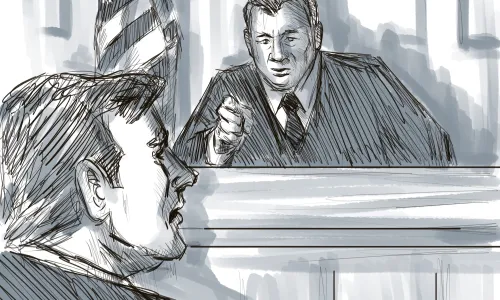
When federal, state, or local officials make it harder for us to exercise our First Amendment rights, we rely on the power of the courts to protect our freedom of speech. And when the government directly targets expression based on content or viewpoint, it presents a particular danger to free speech that rightfully makes courts particularly wary. So when you see a speech case before the Supreme Court (or other courts), you’ll often hear about the parties — or even the Justices — arguing about whether the challenged law or action requires strict scrutiny.
That’s because, before a court can rule on whether government action or legislation violates the First Amendment, it has to determine what test to apply. This is what courts call the “level of scrutiny,” and which one a court chooses depends on how the government regulates speech. Deciding the level of scrutiny is a court’s first step to figuring out whether a regulation is constitutional but it’s often, effectively, the last. Strict scrutiny is the highest level, one that courts have described as “in practice, virtually impossible to satisfy.”
For First Amendment advocates, convincing a court to apply the right level of scrutiny is crucial. Here’s how that analysis works.
What is First Amendment scrutiny?
A court’s first step in determining whether a statute or other government action that regulates speech is constitutional is to figure out how heavily to scrutinize the reasons for the action. In a First Amendment case, the way a law interacts with speech dictates which of the levels of scrutiny apply. The different levels of scrutiny, in turn, dictate how heavy a burden the government bears to justify enforcing the law. A higher level of scrutiny requires the state to prove to the court that it couldn’t execute important government functions by less speech-restrictive means. A lower level lightens the government’s burden by both allowing it to justify its regulations with less pressing interests, and relaxing the requirement that it use the narrowest means of achieving those interests.
Thankfully, it’s not the government’s call when its regulations burden speech — and the heightened scrutiny courts give such regulations protects our First Amendment rights.
If a law does not satisfy – that is, “pass” – the applicable level of scrutiny, it’s unconstitutional. But because the lowest level is nearly impossible to fail, and the highest is supposed to be nearly impossible to pass, the determination of which one applies is often the whole ballgame.
What are the different levels of scrutiny?
Starting with the most restrictive to government regulation:
Strict Scrutiny: The highest level of First Amendment scrutiny. The Supreme Court has called it “a demanding standard,” under which “it is rare that a regulation will ever be permissible.” Strict scrutiny requires the government to show its regulation furthers a “compelling” state interest. If it can do that, it must also show the regulation is “narrowly tailored,” requiring the government to prove that its regulation is the least restrictive means of achieving its interest. That’s a really high hurdle — if the challenger can posit and/or the court can imagine any alternative regulation that would burden less speech, the regulation at issue fails strict scrutiny.
Strict scrutiny applies to content-based regulations of speech. A regulation of speech is content based if it “applies to particular speech because of the topic discussed or the idea or message expressed.” Here are some examples of regulations the Supreme Court has held were content based:
- An outdoor sign ordinance that set out different rules for the size and placement of a sign depending on whether its message was “directional,” “political,” or “ideological.”
- A picketing ordinance that prohibited protesting outside schools unless the message on the picket signs was about a labor dispute.
- A federal law that prohibited reproducing an image of U.S. currency unless it was part of a publication that was “philatelic [about stamp collecting], numismatic [about coin collecting], educational, historical, or newsworthy.”
Each of the above singles out a topic of discussion regardless of the speaker’s viewpoint on the subject. But sometimes the government will single out one side of a debate for disparate treatment — we call that viewpoint discrimination, a particularly egregious form of content-based regulation. That, too, is subject to at least strict scrutiny — though some would argue that, because the government can never have a compelling interest in censoring one side of an argument, viewpoint discrimination can never pass constitutional muster.
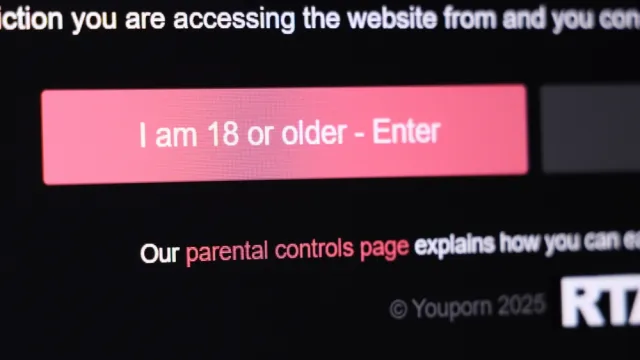
Supreme Court case upholding age-verification for online adult content gets lesser First Amendment scrutiny
The Supreme Court applied intermediate scrutiny to a Texas statute targeting adult sites based on content on grounds the First Amendment does not protect “accessing material obscene to minors without verifying one’s age."
Intermediate Scrutiny: Lower than “strict,” but still considered “heightened scrutiny,” intermediate scrutiny requires the government to show a challenged regulation first furthers a “significant government interest” — less important than the “compelling” interest for strict scrutiny. If it can do that, it must also show the regulation is “narrowly tailored,” which, for this level, means the regulation “does not burden substantially more speech” than necessary to achieve that interest. That means the government has to prove it chose an option that generally protects speech, but also that the court won’t require the government to show it was the least restrictive possible regulation.
Intermediate scrutiny applies to regulations that burden speech but are neutral as to the speech’s content. This includes regulations on the “time, place, and manner” of speech in public, like restrictions on amplifying sound or, say, putting up a table or a stage in a park. It also applies to the regulation of conduct that can, incidentally, also encompass speech, like a restriction on burning a draft card, where the point is to stop people from destroying their draft cards, but the restriction also necessarily reaches symbolic burning or destruction that has expressive purposes.
Rational Basis Review: This is the lowest level of scrutiny, reserved for government actions that do not interfere with protected speech, regulating only conduct or unprotected speech like true threats or obscenity. Rational basis review requires government regulations to merely be rationally related to legitimate government interests. The court presumes a challenged law, for instance, is constitutional under rational basis review unless the plaintiff can prove the law is arbitrary or irrational. When a court applies this level of scrutiny to a law, it’s deferring to the legislature on how to govern and doesn’t require the government to prove the challenged law is the best way to do it. If lawmakers, for example, enact a statute saying opticians can’t fit lenses without a prescription from an optometrist, or banning interstate shipment of milk cut with vegetable oil, courts aren’t going to ask if opticians are up to the task or if vegetable oil is good for you — that’s the government’s call.
Thankfully, it’s not the government’s call when its regulations burden speech — and the heightened scrutiny courts give such regulations protects our First Amendment rights.
Keep Reading

Compelled disclosure requirements and the First Amendment
Issue Pages
Secondary effects doctrine
Issue Pages
Time, place, and manner limits on speech
Issue Pages