Table of Contents
So to Speak Podcast Transcript: Legendary lawyer Michael Tigar on juries, free speech, and the trial of John Peter Zenger
Note: This is an unedited rush transcript. Please check any quotations against the audio recording.
Michael Tigar: We're watching the exercise of arbitrary power, the feckless filing of lawsuits, libel lawsuits with huge claim damages, ridiculously high, all of which could tend to stifle the exercise of expression.
Nico Perrino: Welcome back to So to Speak: the Free Speech Podcast, where we take an uncensored look at the world of free expression through the law, philosophy and stories that define your right to free speech. I'm your host, Nico Perrino.
You've probably heard me reference the trial of John Peter Zenger on this podcast before. Zenger was a New York City publisher who in 1735 stood trial for publishing criticisms of William Cosby, New York's then colonial governor. Now, under English law at the time, truth was no defense to a seditious libel charge, and a guilty verdict seemed inevitable, but the jury refused to convict Zenger.
It was an early indication that the American colonists harbored a view of liberty more expansive than that offered to them by the British crown. As one founding father later put it, “The trial of Zenger in 1735 was the germ of American freedom, the morning star of that liberty which subsequently revolutionized America.”
The case was also the morning star of my interest in free speech issues. As a student in Mr. Shields' fifth-grade class at Jackson Elementary School in Elmhurst, Illinois, I acted in a theatrical rendition of the trial of John Peter Zenger that we put on for the school. I played a propagandist for the colonial governor named Francis Harrison, who has been described by historians as the governor's flatterer-in-chief and hatchet man; so, no friend of free speech.
Our guest today is a friend of free speech, however, and is also the author of a play on the trial of John Peter Zenger. I can't say whether his script is the same one we used in my fifth grade class, although I highly doubt it, because Francis Harrison doesn't appear in his script, and I have a hard time believing fifth graders could have performed his version anyway. Nevertheless, Michael Tigar's script is the canonical script, which was first performed in 1986 at a meeting of the American Bar Association.
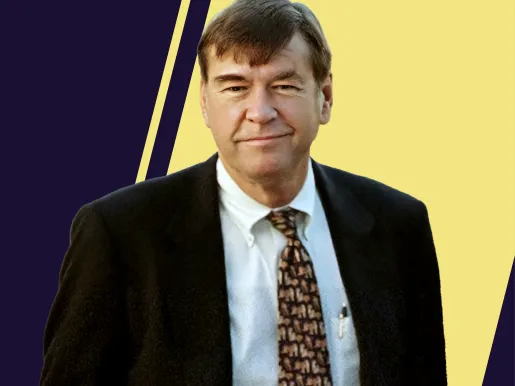
In addition to being a playwright, Michael has had a storied legal career spanning more than six decades. He's represented some very famous and controversial clients, and argued before the Supreme Court many times. He's also been a law professor and staunch advocate for human rights around the world. As part of our celebration of America's 250th birthday, Michael joins us to revisit the Zenger trial, and explain why a case decided decades before the American Revolution still shapes how we think about the freedom of press today. Michael, welcome onto the show.
Michael Tigar: Well, thank you.
Nico Perrino: Before we dive into the Zenger trial, I want to get a little bit of your background, because I was reading your biography, and it seems like you have just had a wild and, if I might say so, fun six decades practicing law. But you were a student – and this might be interesting for our listeners – you were a student at the University of California, Berkeley during the free speech movement. Is that not right?
Michael Tigar: That's true. I was a law student from 1963 to 1966, when I graduated, and in 1964, there was the free speech movement. I became editor in chief of the law review at my law school, and we decided to do a whole law review issue on student rights and campus rules arising from the free speech movement.
Nico Perrino: And did you have an interest in free speech prior to the Berkeley free speech movement?
Michael Tigar: Oh, sure. About two weeks after I arrived at Berkeley to be an undergraduate in 1958, I heard about a nonprofit radio station called KPFA, which was a Pacifica Foundation station, and it stood for free speech. It had all sorts of controversial people on it. And I went down there, and then I volunteered to be an announcer. And they threw me a copy of Metterling's Massacre of the Innocents and said, “Please read that into the microphone,” and I did, and I got up and left. I couldn't find anybody to say goodbye to.
And three weeks later, somebody stopped me on the campus and said, “Gee, I heard you reading Metterling's Massacre of the Innocents on the radio.” So, I went down and talked to one of their people. I said, “Does that mean you broadcast this thing I read?” And the folks said, “Yeah, but we lost your phone number. So, we just went ahead and did it.”
I then started working at the station, and one of the things into which I drifted was a news writer and news broadcaster, because the station had a half an hour news program every evening, which in those days, that was a long news program to have. And I worked with really top-flight folks to learn the craft of journalism.
And then, I began actually selling articles I had written, which is pretty neat for a guy that didn't have a lot of money. After I graduated, I went to London to be Pacifica Foundation's London correspondent, and in that capacity, I interviewed Lord Bertrand Russell. I interviewed some of the folks who were caught up in the violence against the anti-de Gaulle movements in Paris, and so on.
Nico Perrino: Yeah, well, you would think, given that experience and that profile at which you were doing journalism that you would go into a career of journalism, but you decided to go back to law school?
Michael Tigar: Well, not back to law school, just to law school. That was because I thought about –
Nico Perrino: Back to school.
Michael Tigar: – “Should I be a journalist? Should I be a history professor?” But the idea, then, that I could maybe participate in what was not only the expansion of First Amendment rights, but also the Warren Court's expansion of the constitutional rights of criminal defendants, and all manner of other folks. So, I applied to go to law school.
Nico Perrino: Well, you mentioned the expansion of First Amendment rights. I was reading some essays written by Clark Kerr, who was then the chancellor of the University of California during the Berkeley Free Speech Movement, and he said that the Free Speech Movement sort of took him by surprise, because he thought that the university respected free speech as it was then understood on a college and university campus.
And indeed, he had, the spring before, I believe, even won an award from the American Association of University Professors for his defenses of academic freedom, including the earlier loyalty oath controversy at the University of California, Berkeley. So, he was taken aback by the more expansive view and the view that would later be adopted by the Supreme Court that the Berkeley students had in 1964. But you're shaking your head. It sounds like you're no Clark Kerr man.
Michael Tigar: Clark Kerr wrote a book called Industrialism and Industrial Man. I wrote a review of it when I was an undergraduate. In Industrialism and Industrial Man, he said that what's going to happen now is that we're going to have a class of people who will be sort of running things; and then, there'll be a lot of people who don't need to really know as much as you might think about how government works, and the ins-and-outs of governmental debates.
And it was almost as though he was writing from the standpoint of George Orwell. It was truly an Orwellian book. In the end, he was no friend of the robust idea of freedom of expression that dominated the free speech movement.
Nico Perrino: Well, when Mario Savio gave that speech about throwing your "bodies upon the gears" —
Recording: When the operation of the machine becomes so odious, makes you so sick at heart that you can't take part – you can't even passively take part – and you've got to put your bodies upon the gears and upon the wheels, upon the levers, upon all the apparatus, and you've got to make it stop. And you've got to indicate to the people who run it, to the people who own it, that unless you're free, the machine...
Nico Perrino: It's a sort of implicit reference, I think, to this factory line comparison that Clark draws in the Industrial book.
Michael Tigar: Yes. Yes, it is.
Nico Perrino: After law school, you were involved in a bit of a controversy, right? You were supposed to go clerk at the Supreme Court for Justice William Brennan, and you had your offer revoked just like weeks or days before you were supposed to come out to Washington, DC?
Michael Tigar: This is a story that I've written about, but yes, Justice Brennan appointed me as his law clerk, in a letter at the end of my secondary law school. Brennan was under enormous pressure. We never found out all the pressure, but Earl Warren is said to have told him that he couldn't go through with the clerkship thing, because Ronald Reagan might become governor of California, due to the adverse publicity.
Well, as you know, Ronald Reagan's political career was on its way, and would not be halted unless he was found in a motel screwing a chicken. But excuse me, having sex with a chicken. But I got to Washington, DC, and I met with Brennan, and he withdrew the clerkship offer. But that was 1966. I argued two cases before the Supreme Court, shortly after becoming a lawyer. The first was in 1969. I was 28 years old, and I won eight zip.
And so, I wrote to Brennan in 1977, 11 years after this episode, because the court’s conservative wing had turned against some of his ideas. And he wrote me back a long, handwritten letter that said, “Please make an appointment. Come, and we'll have lunch in my chambers,” and that led to a series of lunches with Brennan that I found fascinating, because he talked about pending cases.
Indeed, he greeted me, the first time I saw him, with a handshake, and said, “You don't know how much trouble I had getting Byron White to give you the fifth vote in the Gelbard case,” which was a case about grand jury witness rights. And then, towards the end of his life, Brennan wrote me a letter apologizing for what happened in the clerkship episode, and he actually wrote a letter to my son offering him a clerkship. And my son wrote back, and said, “Well, I hope you'll understand that if I'm to get a clerkship, I have to do it on my own.”
Nico Perrino: Well, by all accounts, William Brennan was a very kind of genial and nice man, at least everything that I’ve heard about him.
Michael Tigar: Absolutely, and at his memorial service in the Supreme Court, Justice Scalia came up to me and said he probably was the most influential justice of the 20th century. And then, he added, “A lot of folks up here don't want to hear that.” I said, “Yeah, I'm talking to one of them.” Yes, he was affable, and just a delight to be with.
Nico Perrino: And a very important figure for free speech and the First Amendment in the 20th century.
Michael Tigar: Absolutely.
Nico Perrino: I would say he wrote the holy trinity of free speech cases. He authored the majority opinion in New York Times v. Sullivan, of course, in 1964.
Michael Tigar: Yes.
Nico Perrino: In 1969, it was an unsigned opinion, but it was Justice Brennan who wrote the Brandenburg decision.
Michael Tigar: Yes.
Nico Perrino: And then, also, Texas v. Johnson at the end of his career, the flag-burning case. He authored that decision, as well. I personally think William O. Douglas was the more stalwart free speech defender on the court, more consistent free speech defender on the court, but there's no doubt Brennan is right up there with him, and authored more of the influential decisions than William O. Douglas.
Michael Tigar: Yes. Well, Brennan was more affable than Douglas.
Nico Perrino: Oh, yeah. I think an understatement, given what I've heard about the two men.
Michael Tigar: But Douglas was great. You can look back at the transcript of a case I argued in ‘69, Gutknecht v. United States, which was a young man who'd torn up his draft card, and Douglas, confronting the government lawyer and interrogating him was a magnificent part of that argument.
Nico Perrino: You were also involved in the Chicago 8 trial, correct?
Michael Tigar: I was a lawyer in the Chicago 8 trial, and this was a part of my own journey. Yes, I drafted the pretrial motions attacking the Rap Brown Act, under which the free speech case was brought; that is, interstate travel in order to make is seditious or make violent speech, or cause people to do uprisings. So, that really was a central point of the Chicago case.
Nico Perrino: Which, just for our listeners who might not be familiar with it, it was a case stemming out of the 1968 Democratic National Convention in Chicago that resulted in unruliness and riotness, and there was a charge brought against the Chicago 8 for crossing straight state lines with the intent to cause a riot.
Michael Tigar: Yes, and although eventually these defendants didn't do any time, and the case came out okay for them, there was a great deal of controversy that surrounded the trial.
Nico Perrino: Yeah. Were you there with William Kunstler and Julius Hoffman?
Michael Tigar: Well, I was there with William Kunstler, but one of the defendants, Bobby Seale, of the Black Panther parties, had his own lawyer, Charles Gary of San Francisco. Gary became ill and needed surgery, and moved for a continuance until he could return to the courtroom. The outrageous federal judge, Julius Hoffman, refused the continuance.
So, Seale said, “Well, I'm sorry, Your Honor, that means I don't have the lawyer of my choice,” and Judge Hoffman said, “Well, you had a lawyer here that was arguing a bunch of pre-trial motions. You had three, in fact. One is Tigar and two others. I'll order them to appear and represent you.”
The Judge Hoffman issued an order that I show up and represent Bobby Seale, who didn't want me to represent him, and I sent the message that I wasn't going to override Bobby Seale's right to counsel of his choice. And Hoffman had me arrested and transported from – he did, oh yes –arrested by the US Marshal. Judge Prager in Los Angeles said okay, that can happen. So, he took me to Chicago and put me in a jail cell, and it was nice. I got to spend the day in jail with Bobby Seale. Did you know about that?
Nico Perrino: I had no idea. I'm familiar with a lot of the antics during the Chicago 8 trial, and the contempt charge that was brought against my counselor. And it was Bobby Seale who was strapped to the chair and gagged, right, by Julius Hoffman?
Michael Tigar: Yes, oh yes, because then he protested. And so, that's the way Hoffman responded. This is before all of this began. There I was in jail, and the United States Attorney, Tom Foran, came into my cell at the end of the trial day and said, “Well, we're going to send you to the Cook County jail. What's going to happen to you over there? We don't know. You’d better convince Seale to withdraw all of this.” And I said, “No, I'm not doing that.”
Well, several years before, when I was a lawyer in Washington, I had represented Felix Alderisio, known as Milwaukee Phil, along with a fellow named Ruby Kolod and Ice Pick Willie Alderman. The Supreme Court decided the case in their favor. It's called Alderman v. United States. And so, there I was about to be taken off to be jailed for the weekend and move perhaps down to the Cook County jail, and a guy walks up to me and says, “Hi, I'm Erwin Weiner.” Phil Aldericio, who was an alleged mafia boss, “Phil sent me down, and we're going to try to get you bailed out, but in any case, don't worry.”
Well, I didn't get bailed out. I’m sent back up. I'm in the cell. The marshal comes along, and he says, “Tigar.” I said yes. He said, “Do you know a man named Erwin Weiner?” and I said, “Yeah.” He said, “You know him?” “Yeah.” “Come with me.”
So, I come with the marshal, and I'm in a cell; and through the bars, there's Erwin Weiner. And Erwin says, “Hi, Phil Alderisio sent me. This is my friend. This is my associate, Angela Puglisi,” and Angela says hi. And Erwin says, “I guess you've heard about the Cook County Jail being terrible.” I said, “Well, yeah, they said that.”
He said, “Don't worry about it.” He says, “When you get there, you'll order dinner; steak, chicken, quail, whatever you want. That's fine. The guards are all right,” and just give them a little money when they do it. And I said, “Okay, well, I got some 20s.” He says, “No, no, no, not 20s. Give them ones and fives. We don't pay them the 20s.” A few hours later, the Court of Appeals for the Seventh Circuit released me and the others. So, I never had to find out how much influence Phil Alderisio had over the Cook County Jail.
Nico Perrino: It sounds like you might have had a four or five star experience at the Cook County Jail.
Michael Tigar: Yes, this is actually right now. The story continues, because several years ago, the Court of Appeals for the Ninth Circuit held that the Rap Brown Act was invalid under the First Amendment, which the Seventh Circuit had not held, and one of the three judges on the Ninth Circuit panel was my son, John Tigar, sitting by designation. So, the moral of story is, if you're going to attack the First Amendment, don't pick on the Tigars, because they'll going to be coming for you.
Nico Perrino: Across multiple generations.
Michael Tigar: Yes.
Nico Perrino: You've got so many good stories. We could spend this whole hour just talking about your story. You wrote a book, right? You have a memoir?
Michael Tigar: I've written a dozen books, but I have a memoir called Sensing Injustice. I had an earlier edition of it called Fighting Injustice, but when I did the second one, they let me call it whatever I wanted. And the book is not designed to inflate my own ego, which as one of my Texas law students said, is really as big as the Asian continent. It is an effort to talk about the adventures and the ways in which we can engage with the wielders of power.
Nico Perrino: Well, let's turn to the Zenger trial now, because William Crosby, the one who precipitated this prosecution of John Peter Zenger, was a man who was, by all accounts, drunk on power. A little bit of background for our listeners here. The case begins really in 1731, when this colonial governor, William Cosby, arrives in the New York colony then to serve as governor of the colony.
And he arrives and demands, more or less, the salary that was given to the man who was acting on his behalf as governor when he was traveling here, and this dispute ends up going to a court. It is a court that, I believe, William Cosby chose, and more or less cooked the books for, to get the outcome that he desired. But there was one judge on this court who refused to vote in William Cosby's favor, and William Cosby came after him. William Cosby, from then on, is kind of opposed by the colonists in New York for his behavior; his arbitrariness, as we were discussing before, as an executive.
He was called a rogue governor; a spiteful man, greedy, jealous, quick-tempered, dull, unlettered, and haughty. And there is a movement to oppose him, and Zenger becomes the publisher of, what was it, The New York Weekly Journal, that ends up publishing a lot of criticism of William Cosby, and that's what puts Zenger in the sights of William Cosby.
Michael Tigar: Then, there's some suspicion that Zenger didn't write all of that stuff himself.
Nico Perrino: Well, that's not what's alleged in the trial, either. It's just that he published it.
Michael Tigar: Yes.
Nico Perrino: And the fact that he published it was enough to be guilty under British common law here, of seditious libel, which I think it might surprise some of our listeners. When you hear of libel or defamation here in the United States, you think of something that's not truthful. But in fact, during this period, a libel could be a mere criticism that sowed a sort of distrust or disdain for those in power; and indeed, the more true the statement was, the greater the libel, even.
Michael Tigar: Yes, that's true.
Nico Perrino: Tell me a little bit about this Andrew Hamilton character. No relation, I'm assuming, to the founding father, Alexander Hamilton?
Michael Tigar: That's right.
Nico Perrino: At his time, this is the man who would go on to represent John Peter Zenger. In his time, he was kind of the most famous and respected lawyer in the colonies, based in Philadelphia, but pretty aged. I believe he had gout when he was arguing this Zenger case.
Michael Tigar: Yes, I sympathized with him on that score. He had been educated both in England and in the United States. He was a friend and associate of William Penn. And you'll recall. That William Penn was himself a defendant in that famous trial in the 1600s about this alleged riot in Grace Church Street, as to which the jury, oh my goodness, refused to convict. He numbered Benjamin Franklin among his friends and associates.
So, he was a considerable figure in the colonies at that time, and thus familiar with the course of development that had restrained royal power in the 1600s. You recall that one of the things that happened as a result of Lord Cook's activity was that the king was shortened by the height of a head. They really did regime change, and they did it in part by means of the exercise of free expression; not so much in the streets, but in such things as Lord Cook's vigorous championing of the rights that he said dated from Magna Carta.
Nico Perrino: William Cosby had a hard time bringing an indictment against John Peter Zenger for publishing these criticisms of him in The New York Weekly Journal. To start with, William Cosby had offered a reward of £50 for the discovery of the authors of the alleged libels, and issued an order that Zenger's newspapers be publicly burned by “the common hangman.”
He then ordered his attorney general, Richard Bradley, to file an information before the justices, because he couldn't get a grand jury to indict John Peter Zenger for these alleged libels, and that's what led the justices to issue a bench warrant for the rest of Zenger. So, when Zenger gets to court, his then lawyers, Alexander and William Smith, make an objection.
Michael Tigar: They do.
Nico Perrino: And they object to the fact that Cosby had handpicked the justices, Delancey and Phillips, who were going to preside over his case. And for this, the justices – I think there were justices, not judges – the justices not only kicked the lawyers off the case, they also disbarred them?
So, when Andrew Hamilton becomes Zenger's lawyer after Zenger's previous lawyers are kicked off his case and disbarred, he goes up there and he makes an argument that the justices bristle at, which is that if the statements that Zenger were publishing were true, they could not be libelous. And the justices are saying, “That's not what the law is.” How right was Andrew Hamilton on the law at the time, or was he being a little bit creative as a play at the jury?
Michael Tigar: Well, he was being he was being creative, because at that time – we're talking about 1735 – this idea that truth is not a defense to a prosecution for libel was still hanging around. It took a vigorous enforcement of the First Amendment in the United States, and a great deal of pushback in England, to get that changed.
Nico Perrino: So, the jury refuses to convict Zenger, and this becomes an early demonstration in American history of jury nullification, which is a kind of controversial practice today, right? Can juries nullify? If they are going to nullify, they probably shouldn't say that they're nullifying? Talk a little bit about jury nullification.
Michael Tigar: There is a great deal of controversy over whether judges can tell juries that they have the power of nullification, and whether lawyers can argue it. As I understood the law, in times when I have argued that the juror’s power is of the power of the ancient kings, by which I mean to suggest to them that they can acquit, there really isn't anything a judge can do about it, because they haven't gone too far.
Nico Perrino: When we're talking about the Zenger case, the job of juries – and I hope I get this right; I'm not a lawyer – the job of juries is to decide questions of fact, right? And it's the judge who helps them apply the law. It's the sole job of the jury in the Zenger case to decide whether John Peter Zenger published those alleged libels against William Cosby, and it's the justice's job to inform them, if that is true, how this case must come out.
But the jury says, “Well, yeah, he published this. He admits to publishing this.” They concede, they stipulate that he published this. But Andrew Hamilton is here arguing that the law, as the justices want to interpret it, is wrong; and a jury in the Zenger case or a future case decides that they are going to take the application of the law upon themselves, and try and acquit, because they think that law is unjust.
Is that a right that an American jury has? And more than that, is that a core, fundamental, American value, that a jury is kind of sovereign to itself, and it can acquit, if it thinks that a law duly passed and properly applied is nevertheless an unjust law?
Michael Tigar: If the jury acquits, that's an unreviewable decision.
Nico Perrino: And it doesn't matter the reason they do it. They can ignore the judge's orders.
Michael Tigar: They can do it. As American law has developed, they're supposed to follow the judge's instructions.
Nico Perrino: Yes.
Michael Tigar: And sometimes we argue that they should, and sometimes we begin to suggest that they need not.
Nico Perrino: And that's exactly what Andrew Hamilton did. He was pretty explicit on it. He said you should not.
Michael Tigar: Yes, he did. And when the jurors get back there and start to deliberate, I believe that the first thing they do is to ask themselves among themselves how this case ought to come out. And then, they begin to deconstruct the facts and the judge's instruction. Now, sometimes that moves the case along towards an acquittal, but sometimes it's a necessary reminder of how the jurors ought to react to a factual presentation that's particularly troubling.
But another part of this, something that you want to make a theme of this broadcast, and that is that courageous lawyers standing up for free expression becomes an integral part of the movement. And one of the cases I argued a number of years after that was Gentile v. State Bar of Nevada. Dominic Gentile was a lawyer in Las Vegas, and his client, Grady Sanders, was indicted for allegedly stealing stuff that had been locked in one of these rent-a-locker things, and Dom held a press conference saying that the police had actually done it.
The case went to trial, and by golly, he convinced the jury enough that they acquitted Grady Sanders. But then, the State Bar of Nevada charged him with a disciplinary rule violation, in that he had, as a lawyer, spoken out in ways that could materially affect a pending criminal case. The case worked its way through the Nevada courts, and [inaudible] [00:31:49] was denied; and Dom asked me to argue it, and I did.
The Supreme Court held five to four. There's a welter of opinions, but the central opinion is that five to four, the disciplinary rule that regulated lawyers’ speech violated the First Amendment, because it permitted bar disciplinary authorities to restrict lawyer speech beyond what the First Amendment provided or permitted. And there, in the oral argument, you hear Justice O'Connor saying, “Mr. Tigar” – and this always means, “Here comes five votes,” right?
Because at that point, she said, “You're saying this rule violates the First Amendment?” Yes. She said, “Well, don't all state bars have the same rule?” And I said, “Well, I think they do.” She said, “So, what? So, they're all invalid?” I said, “Well, the bar has to learn the First Amendment doesn't stop short of its door.”
I cite that case because one of the things we wrote about in the brief was, in 1761, one of John Adams' associates, a lawyer named James Otis, made a speech on the Boston Common, because Adams was active in litigating the British imposition of taxes without representation, and indeed such things as trying to punish freedom of expression. And Otis made this speech, and of that, John Adams later said, “Then and there was the child, independence, born.” Language that echoes what you read from Governor Morris.
Nico Perrino: Yes.
Michael Tigar: That is, the milestones or the markers on the way to liberation have to do with free expression,” and this is why it is the understanding of this historical progression that leads people to study the impact not only of the Zenger case, not only of James Otis' speech, but of the English dispute over freedom of expression that took place around the literary work, let us say that, of a number of people, and the bravery of such lawyers as Thomas Erskine, later Lord Erskine. Has your research led you to Lord Erskine?
Nico Perrino: I have not. I have not confronted him, no.
Michael Tigar: Well, Lord Erskine, he became Lord Erskine when he was created a peer, but in a famous libel case, the jury came back guilty of publishing only, which meant that the defendant published, but there was no seditious tendency, and the jury refused to find a seditious tendency. And so, the judge, Lord Bullington, said, “Well, just take that as a guilty.”
And Erskine stood up and said, “No, no, I demand that the court write down the word ‘only.’” And Bullington said, “Sir, be patient, be quiet, or I shall be compelled to proceed in another manner.” And Erskine famously said, “Your lordship may proceed in any manner he wishes. I know my duty as well as your lordship knows his,” which to me – I know I'm running on about this –
Nico Perrino: No, please.
Michael Tigar: – but here is the intersection of lawyer courage and First Amendment rights.
Nico Perrino: Well, there are a lot of people who believe that the First Amendment was really merely meant to extend the Blackstonian approach to free speech; that is, no prior restraints. But in your reading of the history, Michael, did the colonists during this period and on through the revolution and the ratification of the First Amendment – did they have a more expansive view of free speech than merely, “You can't just prevent someone from publishing something?”
Michael Tigar: I think so, and I think that it's obvious from the fact that they weren't simply resisting prior restraints. The colonists were out there talking about stuff. James Otis' speech on Boston Common in 1761 had nothing to do with prior restraint, and everything to do with advocacy. There is nothing in the Declaration of Independence, or precious little, about prior restraint. It's just, “Man, that's a powerful argument that they've got to separate from the crown here.”
Why is it they thought they were entitled – Jefferson and the other authors of the Declaration – why did they think they were entitled to say this stuff, and what kind of a country were they making that would permit other people to talk about these sorts of things? So, yes, prior restraint is a bad thing, and prior restraint is one of the purposes of the foundation stones of the First Amendment, but by no means the only one, or perhaps not the most important one.
Nico Perrino: Yeah. By way of closing here, Michael, I'd love to hear the response from those in the audience on that first performance, after that first performance of The Trial of John Peter Zenger, the play that you authored, and I believe you acted in, as well. Were members of the bar familiar with The Trial of John Peter Zenger? And how do you look at the trial's impact over the centuries since it occurred?
Michael Tigar: Well, the first performance was at an American Bar Association meeting, and sitting in the front row was the chief judge of the New York Court of Appeals, Saul Wachtler. Then, the performance was reviewed in the New Yorker, which said that “Mr. Tiger went beyond ham; he went whole hog,” which I interpret as a moderately favorable review of my performance.
In the intervening years, I'm sure a number of schools have looked at the play. It's in the public domain, so, nobody has to ask permission. Great portions of it were performed at a Pennsylvania Bar conference at a hotel in Atlantic City. I received a call, and went and visited with a high school civics class that was doing it. So, the play has had that. Oh, and as I said, the New York Historical Society, we did a partial performance.
So, the play has had some of its intended effect, which among the intended effects was that it dramatized the value of counsel that were willing to stand up to the exercise of arbitrary power; newspapers that were willing to take risks in exposing wrongdoing by government. If we just limit it to those two things, this is something we need to do today.
We're watching the exercise of arbitrary power, the feckless filing of lawsuits, libel lawsuits with huge claim damages, ridiculously high, and all of which could tend to stifle the exercise of expression, because we look back to The New York Times v. Sullivan. The New York Times had the money to hire and get that case argued all the way through the courts to the Supreme Court of the United States. But at the same time, all over the South, public officials were attacking newspapers that didn't have the resources.
Nico Perrino: Well, there were a number of Northern newspapers that refused to send their correspondents down South to do reporting, for fear that they would one, be attacked, or two, that reporting would result in libel lawsuits that would go before Southern juries that they had no chance of winning. I think there was something like, in 2025 dollars – I did the calculation recently for my book – there was something like $3 billion in outstanding judgments against news publications for reporting on what was happening during the civil rights movement in the South.
Michael Tigar: This discussion should focus on the fact that it's expensive to hire lawyers and to run the defense of the case. The objective of many of these cases is not to win, but to outspend the other side, force the other side to spend a lot of money, because that is a way of deterring the filing of these lawsuits in the first place.
Nico Perrino: Yep. Well, we're right now at FIRE – as many of our listeners will know, we are representing Ann Selzer, who is a pollster out of Iowa who ran a poll ahead of the 2024 election that showed that Kamala Harris was leading in the polls. As everyone knows, Donald Trump ended up winning the State of Iowa in the 2024 election. And subsequently, he, in his personal capacity, filed a lawsuit alleging that Ann Seltzer and The Des Moines Register, which published her poll, were engaged in a form of consumer fraud, because the poll was wrong.
It's frivolous litigation, as we're arguing in court, but . . . we're representing Ann Selzer on a pro bono basis; but you could very easily see how even defending against a frivolous lawsuit like this could easily bankrupt an individual like Ann Seltzer, who has to go through years-long litigation, because at the time of the filing, there was no anti-SLAPP — strategic lawsuits against public participation — statute in the State of Iowa.
So, it wasn't easy to get a case like this dismissed at the early stages. So, that's why I think it's important that you have public interest firms, as well, that are willing to step in and defend against these efforts to curtail free speech and free expression, lest these individuals be cowed into silence; because even if they stand firmly on their First Amendment rights, those who seek to file civil lawsuits in this case to undermine those rights or to limit those rights, even if they have no chance at winning, can still bankrupt you in the process.
Michael Tigar: Many states have statutes now that restrict these frivolous lawsuits that are filed for the purpose of suppressing public dissent and public participation in social change. For your listeners, Greenpeace was targeted by a bunch of folks for some of its environmental litigation. And that case, at least one of those cases, wound up before The Honorable John Tigar in the Northern District of California. And you can Google and read his opinion, which applies anti-SLAPP legislation – yes, anti-SLAPP –
Nico Perrino: Legislation.
Michael Tigar: – legislation rules to dismiss the lawsuit, and it's quite a long opinion. I admire it. Even if it had not been written by my son, I would think it was good.
Nico Perrino: Well, Michael, I could talk to you all day. You have a ton of stories. I wish we had more time to hear them, but I'm glad to hear that you've authored 12 books, including a memoir, which we will link to in the show notes, if folks want to learn more about your career and some of the fights that you've fought. And I thank you for joining us today to not only talk about that career, but also to talk about the trial of John Peter Zenger.
Michael Tigar: Well, if you're going to look at a book, look at the one called mythologies of state and monopoly power. That's one of the books that I wrote that I really like. It's a series of essays on legal issues. Noam Chomsky wrote a jacket blurb for it. So, what the heck? That one's worth buying.
Nico Perrino: All right. Well, we'll link it in the show notes, so our listeners who are interested in learning more about your ideas and your career can check it out. I am Nico Perrino, and this podcast is recorded by a rotating roster of my FIRE colleagues, including Bruce Jones, Ronald Baez, Jackson Flegel, and Scott Rogers. The podcast is produced and edited by Emily Beeman.
You can learn more about So to Speak by subscribing to our YouTube channel or Substack page, both of which feature video versions of this conversation; and we're also on X by searching for the handle, @freespeechtalk. Feedback can be sent to sotospeak@fire.org. Again, that is sotospeak@fire.org. We'd love to hear from you.
And if you enjoyed this episode, please leave a review wherever you get your podcast. They help us attract new listeners to the show. And until next time, I thank everyone again for listening. The Foundation for Individual Rights and Expression, FIRE, and the flame logo are registered trademarks of the Foundation for Individual Rights and Expression.