Table of Contents
Texas university keeps professor on suspension for over a year with no end in sight
Shutterstock
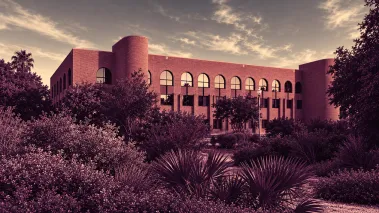
University of Texas Rio Grande
For 16 months, University of Texas Rio Grande Valley professor Clyde Barrow has been getting paid not to teach. On May 15, 2025, the school told him he was suspended. To this day, he cannot access his campus office, and the university has given him no clear indication of when — or whether — he will return to the classroom.
Barrow has received little process and few answers about why he remains on leave, outside of an investigatory report issued a year ago. And UTRGV has shown zero interest in resolving Barrow’s situation. The university is apparently satisfied to spend taxpayer money to keep a tenured professor away from his students without making a final decision about what, if anything, he did wrong.
Late last month, an attorney for Barrow, arranged and funded by FIRE’s Faculty Legal Defense Fund, sent a letter to the school’s chancellor, John Zerwas, asking the UT System to intervene and help bring Barrow’s suspension to some sort of resolution.
The result? More crickets. No response, as before. Barrow remains suspended without a clear path forward.

Why would someone post that?
A year after Charlie Kirk’s killing, lawsuits show how costly it is to fire public employees for expressing an opinion
When he initially received notice of his suspension, Barrow asked the university multiple times what he was accused of doing, what policies he allegedly violated, and how long its investigation would take. But every administrator he contacted was evasive and he got no concrete answers for months.
Barrow suspected that the suspension arose from his strong criticisms of UTRGV’s leadership. He had complained that an interim chair, Donkyu Kim, allowed faculty meetings to become disorderly and unprofessional. He accused Kim of showing “poor quality of leadership and meeting management.” He described a proposed change to faculty workload as “idiocracy.” And he repeatedly criticized proposed changes to university policies.
Those comments may have been abrasive. But at a public university, there is no exception to the First Amendment for abrasiveness, incivility, or disrespect. FIRE initially wrote UTRGV on July 11, 2025, raising concerns about both Barrow’s speech rights and the university’s handling of his suspension. At the very least, we said, the university needed to tell Barrow what accusations he faced and explain the process it would use to decide them.
We also explained that the First Amendment protects faculty members’ right to criticize the operations of a public university. Professors do not surrender their right to speak about university governance simply because their criticism irritates administrators or colleagues. And faculty members are often among the people best positioned to debate issues such as curriculum, workload, leadership, or institutional policy.
FIRE urged the university to give Barrow the due process necessary to adjudicate any legitimate allegations against him and, to the extent the university was targeting constitutionally protected expression, to end that punishment.
The university responded a couple of weeks later. But rather than address our concerns, the school simply said it was following its internal processes.
Barrow attended a couple of interviews throughout that summer. Then, in September 2025 — four months after his suspension — he finally received an investigative report laying out the allegations against him. The report chronicled years of Barrow’s harsh criticism of department leadership, including repeated criticism of Kim. Most strikingly, the report recommended disciplinary action “up to and including termination of tenure and employment.”
Yet a year later, Barrow still has not received a final resolution, and has heard nothing about his status, despite attempts by his FLDF attorney to engage university decision-makers, and FIRE sending another letter in April 2026. Two semesters have now passed since the report, and there’s no indication of whether he will ever be able to return to teaching. If his tenure is going to be revoked, a drastic action that should be reserved for the most severe misconduct, he has not received any substantive opportunity to defend himself.
That’s why FIRE is now publicizing Barrow’s case. The problem is not only that a tenured professor is facing potential termination for his speech. It is that he has had to wait for more than a year without a meaningful path to a final decision.
Florida wants colleges out of politics, but its plan has a loophole
Florida wants public colleges out of politics. But a loophole in its neutrality plan could give administrators a new license to speak out.
Paid leave may sound benign, but not when the government uses it to remove a professor from his job indefinitely. Barrow has lost his classroom, his office, and his ability to perform the central duties of his profession. He’s also lost the opportunity to advance his career, and the extended paid leave will reflect poorly on his work at the university. And because this is a public university, taxpayers are footing the bill while these school administrators play games.
FIRE has consistently argued that a faculty member criticizing the operations of their university on a matter of public concern is protected speech. That principle doesn’t depend on whether the criticism is polite, diplomatic, or welcomed by administrators. We have defended faculty expression ranging from parodic land acknowledgments to flyers criticizing colleagues.
UTRGV should give Barrow a genuine opportunity to defend himself and bring this investigation to an end. If a public university can leave a tenured professor in administrative purgatory for criticizing his bosses, then every professor watching is going to learn the same lesson. You may have the right to speak, but exercising it at UTRGV could leave your career frozen indefinitely.
FIRE is a nonpartisan, nonprofit organization dedicated to defending and sustaining the individual rights of all Americans to free speech and free thought — the most essential qualities of liberty. Support FIRE's advocacy by making a free speech donation today.
Recent Articles
Get the latest free speech news and analysis from FIRE.
New Mexico's $25 billion verdict against Meta is fundamentally about speech
Silencing social media won't stop the unrest in France

FIRE is bringing the Free Speech Forum to the West Coast!