Table of Contents
Our university is trying to discredit our paper, but that won’t stop us from telling the truth
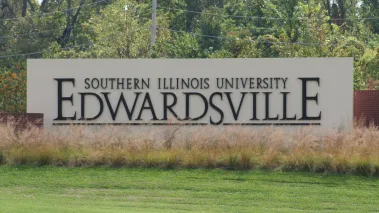
Tyler Warren / Wikimedia Commons
By Dylan Hembrough, The Alestle editor-in-chief
The pattern of baselessly discrediting the press to justify refusing to speak to them is familiar to most by now. But I’m not talking about the U.S. federal government. I’m talking about Southern Illinois University Edwardsville.
The Alestle is SIUE’s student-run newspaper — funded by student fees, but editorially independent. Over the past couple of years, however, our relationship with the university’s administration has degraded considerably. I have served as editor-in-chief for three years, and the administration’s — specifically Chancellor James T. Minor’s — mistreatment of our organization has become noticeable to many in the campus community.
This is an unfortunately common refrain across the country. Government institutions are attacking the media with little to no evidence of wrongdoing, spreading misinformation and using this sown distrust to justify not speaking to the media. While the paper has not yet been directly censored by the SIUE administration, the chancellor’s words and actions have created an environment of fear and cast a chill on SIUE’s culture of free expression.
In August 2024, The Alestle published a story that brought to light a University Housing policy that violated its employees’ First Amendment rights. After receiving a letter from the Foundation for Individual Rights and Expression, SIUE’s Senior Legal Counsel Phyleccia Reed Cole wrote that the university did not believe the paper’s reporting “accurately” portrayed the situation. When the paper asked what was inaccurate about the article, Cole gave no evidence.
In March 2025, The Alestle published a 15-month-long investigative piece on the administration’s “salary sweeps,” a process where salary dollars not being used that month — many of which came directly from student fees — were taken by the administration and placed into “strategic accounts” for the administration to redistribute as they saw fit. At the time of publication, more than $15 million had been taken, and the administration was increasingly opaque about the money and the process itself.
A couple of weeks before the story went live, Director of Communications Nicole Franklin called my personal phone number to tell me that SIUE would no longer answer any of our questions on the salary sweeps.
A few weeks after this story went live, then-Interim Executive Director of Marketing and Communications Catie Sheehan sent us a memo alleging a “string of inaccuracies” in recent stories, as well as several revisions to the salary sweeps story. Most of the revisions related to the dollar amounts reported as being swept from each individual unit — which The Alestle inadvertently underreported and later updated.
Attacking the only free press that regularly serves the community is an attack on the community’s ability to educate itself on these issues, which is an attack on democracy itself.
The paper asked for more information on these revisions, but Minor intervened and instructed administration to “disengage” from the conversation on salary sweeps altogether, a practice still in place today. Nevertheless, what was verified was promptly posted in an update.
Last February, Minor took issue with a breaking brief we published on a cease-and-desist for unfair labor practices filed by one of the unions on campus. Minor sent a letter to “University Leadership” where he said he “continue[d] to be disappointed by The Alestle’s predictably poor, inaccurate and incomplete reporting.” He then gave no evidence of any inaccuracies in the story — if anything, he proved our point.
We decided to take Minor to task for his accusations and published an editorial — along with the letter, which we obtained via a FOIA request — explaining the situation and reminding our audience that The Alestle is not afraid to admit to and correct a mistake when they happen. But in this situation, no mistakes could be found.
And that’s not to mention that the salary sweeps have had a direct impact on the paper as well, forcing us to downsize our already-small staff and cut our print publication from once every week to once every six weeks.
The administration says they are committed to the principles of free speech, but their words do not match their actions.
Such baseless disparaging of The Alestle is a grave disservice to the students SIUE is supposed to support and represent. The student body, along with the faculty and staff, deserve up-to-date and accurate information, not exclusively pro-SIUE pieces filtered through an administrative agenda. This is a taxpayer-funded institution whose students pay a lot of money to attend. Financial transparency is the least they can offer.
The Alestle has served the SIUE community since 1960, more or less since the university’s founding. It is the only publication that consistently covers SIUE's goings-on objectively, as local newspapers rarely cover SIUE-related stories. SIUE might very well be a news desert if it weren’t for The Alestle. Attacking the only free press that regularly serves the community is an attack on the community’s ability to educate itself on these issues, which is an attack on democracy itself.
Recent Articles
Get the latest free speech news and analysis from FIRE.

Venezuela is a cautionary tale w/ Jim Epstein and Germania Rodriguez Poleo
Podcast

FIRE sues Los Angeles City Council over policy banning certain words during public comment

It was never just going to be about keeping kids off social media