Table of Contents
Michigan State’s ethics policy gags dissent — and the public will feel the effects

Shutterstock
When Satvik Shubham became editor-in-chief of The State News, one of the first things he learned was that good journalism depends on people who are willing to speak.
For years, trustees at Michigan State University had spoken candidly with student reporters — even when they disagreed with one another. That access helped the paper explain not just what the board decided, but why.
Then the rules changed.
A new Board policy keeps trustees from sharing their views that go against the majority after board votes. Shubham fears the result will be fewer candid conversations, more surface reporting, and a public that knows less about how its university is governed.
Shubham began his time at the paper as the men’s soccer reporter, then sports editor, before becoming its editorial leader. His background as a sports reporter didn’t limit his interest in ensuring the hard news at MSU was covered. Instead, it emphasized its importance.
Any system of democratic oversight necessarily entails public disagreement, criticism, and debate, and officials’ constituents deserve to be informed about their elected officials’ views.
For example, Shubham says, his time as editor-in-chief included steady coverage of the MSU’s Board of Trustees’ approval process for Spartan Ventures, a nonprofit corporation designed to support MSU athletics in the changing landscape of revenue in college athletics. As The State News reported on the new initiative, it became clear certain trustees disagreed with the majority.
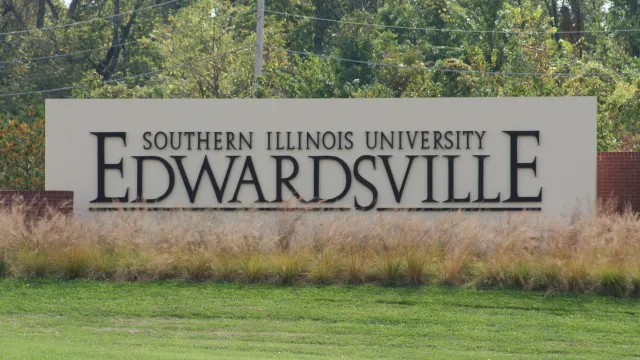
Our university is trying to discredit our paper, but that won’t stop us from telling the truth
Southern Illinois University Edwardsville claims it believes in free speech, but its administrators are disparaging the student press.
But as Shubham's time at The State News came to an end, he witnessed integral sources — the trustees themselves — limited in what they could now share when it came to their thoughts on Spartan Ventures if they happened to disagree with the board’s majority.
That prohibition isn’t just limited to college athletics coverage. Any public disagreement with the board’s majority after a vote must go unsaid, per a May 17 Board of Trustees policy. And it’s not only the board members themselves who will suffer. The press, like The State News, and the public it serves, will lose out on those perspectives. The flow of collaboration and transparency Shubham hoped to maintain is now at risk.
Silencing dissent
The MSU Board of Trustees held a special meeting on May 17, approving revisions to its Code of Ethics and Conduct by a 5-3 vote. The revised code provides that trustees will “uphold the university’s reputation” and will “not provide inaccurate, misleading, or false information concerning the university.”
The code also says that once the board makes a decision by majority vote, trustees must support it. They cannot publicly undermine the board’s decision and are expected to work with fellow trustees and university administrators to carry it out. The code describes this as a “loyal opposition,” meaning trustees can voice their concerns in “appropriate settings” before a vote — but not after one.
Every trustee must sign a statement agreeing to follow the updated code. Trustees who fail to follow its terms may face sanctions, including “referral to the appropriate entities for removal.”
The revisions came after several trustees publicly criticized university and board decisions. Trustee Rema Vassar wrote an opinion essay criticizing the university’s rollback of DEI programs. Trustees Mike Balow and Dennis Denno later wrote an op-ed calling for greater transparency into MSU’s partnership with Spartan Ventures after the board blocked their resolution seeking more information about the initiative.
Dissent like this is no longer safe, Shubham says, who worries that the open line of communication that had been a staple of his tenure at The State News is disappearing fast.
How reporting used to work
Shubham joined The State News because of its reputation as one of the country’s premier student newspapers. “I saw people talking about it as an environment where you go to grow,” he says.
He found exactly that. During his time at the paper, reporters routinely relied on trustees willing to speak frankly about the school’s biggest decisions.
“We had a consistent flow of communication with all of them, which I think is extremely important,” Shubham says. “It bridged the gap between the students and the trustees, the students and the university.”
Without those conversations, he adds, many stories would have been incomplete.
“We’ve won multiple awards for these exact investigations in which the trustees gave us a perspective we did not have before, and they all communicated with us in some way.”
Those conversations helped readers understand the internal debates and competing priorities that shaped university policy. “It’s a matter of just keeping that chain intact,” Shubham says.
The student press is an important conduit for the public’s right to know, acting as “surrogates for the public” in keeping an eye on the government — including public institutions like MSU. Keeping an open line of communication with sources who can speak to the university’s decisions assists in the press’s watchdog function. “Transparency is extremely hard to come by,” Shubham says. “Having someone and knowing someone that’s tuned in and involved is priceless when it comes to reporting.”
Of course, speaking to the press is voluntary — but that doesn’t diminish its value. “The trustees do not have to shed light on issues,” he says. “But I think when they do, and when they do it after a vote or when they do it after a key moment in the university, it opens up the university to further dialogue — which I think every kind of community needs to flourish.”
That’s true. Sunlight is the best disinfectant, as Supreme Court Justice Louis Brandeis said. But now, the views of trustees that don’t align with the majority’s are cast in the dark unless that dissenting trustee chooses to risk sanctions ranging from censure to referrals for removal. Those trustees who would voluntarily speak to the press — including The State News — can’t share their dissenting views.
FIRE wrote to the board on May 29, calling on it to revise the code. As it stands now, the new provisions violate the First Amendment by restricting trustees’ ability to discuss university-related matters, express dissenting views, and communicate with the public they were elected to serve.
This kind of gag order isn’t only popping up in Michigan. At the Pennsylvania State University, the Board of Trustees Code of Conduct underwent similar revisions that require trustees to express support for all majority board decisions and prohibit trustees from making negative statements about the board, the university, or even its alumni. The Reporters Committee for Freedom of the Press is representing three news outlets in a federal lawsuit challenging the constitutionality of this policy, which infringes journalists’ First Amendment rights to receive this information from members of the board of trustees.

Gag orders and First Amendment rights
Judges commonly use gag orders to limit the speech of trial participants or against the media. In any of these instances, gag orders raise important First Amendment questions.
Like other press outlets, The State News is a crucial throughline between the board and the public. “From a student journalism perspective, our most prominent concern is transparency,” Shubham says. Historically, this open communication pathway has been open, with trustees being willing to talk to reporters and explain their decisions after votes. And although Shubham graduated in May, he worries for the reporters and editors now navigating this new terrain.
“We just want that to continue,” he says. “They deserve to have that open dialogue pathway that I [had], and that pathway News staffers had for many years.”
Often, that line of communication opened up after the board voted on issues. Board meetings occurred twice a month, and after those, State News reporters would ask trustees to shed more light on certain decisions that were made.
Votes concerning Spartan Ventures were a prime example, Shubham says. After the initial agreements were made and donations came in, “We always wanted to ask the trustees to see if they had a different perspective on what was going on.”
That’s important — and not just to inform students and community members about the university’s strategy when it comes to student athlete name, image, and likeness revenue, but to help voters who elected trustees to the board hold these elected officials accountable. Any system of democratic oversight necessarily entails public disagreement, criticism, and debate, and officials’ constituents deserve to be informed about their elected officials’ views.
“Disagreement is a normal part of a governance, and understanding different viewpoints helps people make these informed and calculated judgments about issues affecting any university,” Shubham says.
“Students are better informed when elected trustees feel comfortable answering questions and discussing issues in an open fashion, even when there are disagreements with the board.”
Recent Articles
Get the latest free speech news and analysis from FIRE.

New Mexico's $25 billion verdict against Meta is fundamentally about speech

Silencing social media won't stop the unrest in France

FIRE is bringing the Free Speech Forum to the West Coast!