Table of Contents
The Harvard alumni who refuse to abandon their alma mater
Shutterstock.com
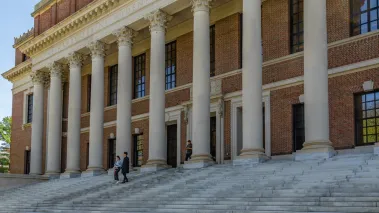
Harvard has, in recent years, seemingly abandoned its foundational commitments to free expression and academic freedom, the conditions that make the pursuit of Veritas possible at all. It has repeatedly ranked at or near the bottom of FIRE’s College Free Speech Rankings, earning an “abysmal” rating for its campus climate. In 2024, it received the lowest score the index had ever recorded.
Alumni have predictably responded by withdrawing their financial support. By the end of the 2024 fiscal year, cash gifts to Harvard had fallen 15%, the steepest single-year drop in nearly a decade. Others went even further, openly cheering as the federal government moved in to dismantle their alma mater from the outside.
The temptation is understandable. Few institutions look less amenable to reform than a centuries-old, self-governing ivory tower sat atop an endowment larger than most nations’ GDPs. The conclusion that one’s emails and gifts and votes cannot possibly matter is, for many alumni, the conclusion of long experience.
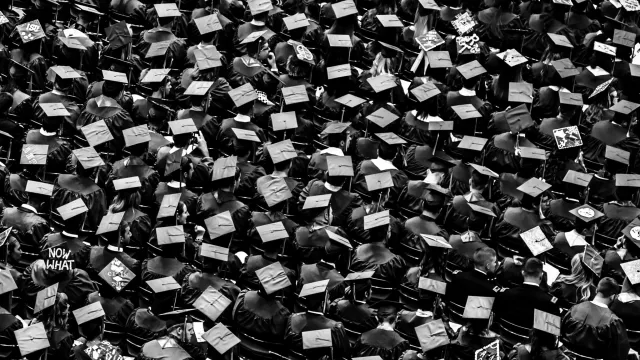
Fearing controversy, schools cancel graduation speeches
From Rutgers to NYU, schools are canceling graduation speeches over politics, trading open discourse for fear and censorship at commencement.
Yet there is a group of alumni who choose to see things differently. They call themselves Harvard Alumni for Free Speech (HAFFS). Founded in 2022, the group has taken the view that Harvard’s present condition is precisely why alumni should not abandon the university, but step in to help restore it.
“Alumni are important stakeholders and must play their part to maintain excellence at Harvard,” said John Evangelakos, HAFFS’s president and founding member. “Alumni should regard themselves as stewards who have been entrusted with passing on to future generations a Harvard that is as vibrant and impactful as it was when they were there.”
For HAFFS, that stewardship has taken concrete form. The group published voting guides and candidate endorsements for elections to Harvard’s Board of Overseers and the Harvard Alumni Association, two bodies most graduates have spent their lives ignoring, but help shape what the university does and does not do.
HAFFS has also convened the kinds of public conversation that has become difficult to stage in Cambridge. Last year, the group brought together Harvard psychologist Steven Pinker and Heterodox Academy’s John Tomasi to discuss what it would take for elite universities to recommit to intellectual pluralism. This March, HAFFS hosted a discussion of Harvard’s new Intellectual Vitality Initiative with Harvard philosopher Edward J. Hall, Harvard political theorist Danielle Allen, Harvard student leader Ari Kohn, and Monica Harris, the executive director of FAIR.
Other gatherings have brought in the two most recent chairs of the Harvard Crimson editorial board to talk about the state of student debate, as well as FIRE’s Sean Stevens and Connor Murnane to discuss what the 2026 rankings reveal about Harvard in particular.
HAFFS has responded to more acute crises as well. When Harvard found itself confronting the Trump administration’s demand for sweeping changes to its admissions, hiring, and permitted areas of study, HAFFS helped make the legal terrain legible to alumni by hosting briefings with FIRE’s Robert Shibley, walking alumni through the amicus briefs filed in Harvard’s support, and explaining the federal court ruling that ultimately found the funding cuts to be unconstitutional.
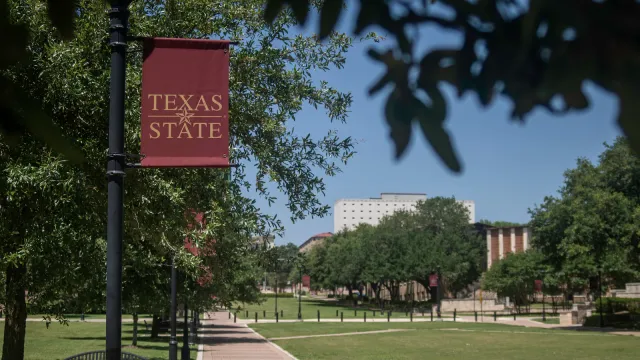
Judge orders Texas State to rehire professor fired over viral Gaza panel
A district court judge just ordered Texas State to rehire a professor who was fired after a viral Gaza panel, saying the move likely violated the First Amendment.
This is the kind of approach that is needed: sustained engagement, public events, legal literacy, electoral participation, and working in partnership with groups like FIRE, Heterodox Academy, and FAIR. Each strand on its own would be modest. Together, they give the group’s critique of Harvard’s culture an institutional weight by signaling continued engagement in the debate, rather than withdrawal from it in despair.
The work has yielded results, however partial. Harvard has convened an Open Inquiry and Constructive Dialogue Working Group whose recommendations are now reshaping discrimination policies, and adopted a policy of institutional neutrality that bars the university from issuing statements on most current events.
“HAFFS has been able to galvanize alumni and work effectively with concerned faculty to contribute to meaningful reform at Harvard over the past several years,” Evangelakos said. “But our biggest challenge is to ensure that the reforms are durable. We need to ensure that there is accountability and that alumni remain to ensure there is no backsliding.”
Walking away has its satisfactions, and so does cheerleading punitive measures from the sidelines. But both have enormous limitations. They empty the arena of the people most likely to demand reform and leave the institution to the risk-averse administrators and malevolent political actors.
Engagement works differently. It produces voting guides that change the composition of a board, events that change which arguments faculty will make in public, relationships with administrators who, when a hard moment comes, know there is a constituency on the other side of the table.
Whether Harvard becomes a place where free speech genuinely thrives will depend, in the end, on whether those who still believe in it are willing to stay and do the work.
HAFFS has chosen to stay.
Recent Articles
Get the latest free speech news and analysis from FIRE.
After a congressman challenged a student reporter’s right to record, here’s what journalists should know
Restoring Title IX kangaroo courts is no solution to the ‘Cornell 7’ sexual assault controversy
A UK teen mocked a local politician. Then the police showed up.