Table of Contents
The Good, the Bad, and the Just Plain Silly
As a free speech organization, we see pretty much every type of censorship out there. People are frequently censored at colleges and universities for engaging in controversial political speech. Other times, people are censored for engaging in speech that is crude and repugnant, but that is wholly protected. And then there are times that people seem to be censored for no reason at all. Today’s case at Marquette University is one of those instances. In the spirit of levity, here are a few more of the silliest instances of censorship we’ve seen here at FIRE:
- Gonzaga University tried to punish students for engaging in “hate speech” for posting a flyer advertising a speech by the author of the book Why the Left Hates America. Gonzaga administrators reasoned that because the flyer contained the word “hate,” it constituted “hate speech.”
- The University of New Hampshire charged a student with “harassment” and “disorderly conduct” for posting a flyer in his dorm elevators joking that women who want to lose the ‘Freshman 15’ should take the stairs instead of the elevator. The flyer was merely intended to make light of the student’s frustration with people who delay the elevator by taking it for just one or two floors instead of taking the stairs.
- The University of Central Florida attempted to punish a student for calling a student government candidate a “jerk and a fool” on the popular college website Facebook.com.
- Indian River Community College banned a student group from showing The Passion of the Christ because it was rated R, while at the same time allowing the performance of a skit entitled “F*cking for Jesus.”
Recent Articles
Get the latest free speech news and analysis from FIRE.

Venezuela is a cautionary tale w/ Jim Epstein and Germania Rodriguez Poleo
Podcast
For more than half a century, Radio Caracas
Television, or RCTV, broadcast news, sports, comedies, and
telenovelas in Venezuela...
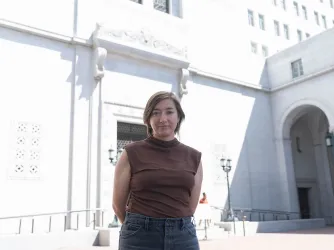
FIRE sues Los Angeles City Council over policy banning certain words during public comment
A pair of free speech groups filed a lawsuit on behalf of a Los Angeles resident against the city council after it banned certain words during public meetings, a violation of the First Amendment.

It was never just going to be about keeping kids off social media
Age-gating teens online was never going to stop with kids. The UK is already promising a more "active interventionist state" for the internet.
Pepperdine banned a professor who taught about a black Jesus
Pepperdine promises professors freedom to teach controversial ideas and vigorously debate colleagues. Christina Littlefield is testing that promise.