Table of Contents
America, we’ll give our best to you
Chris Henke / FIRE
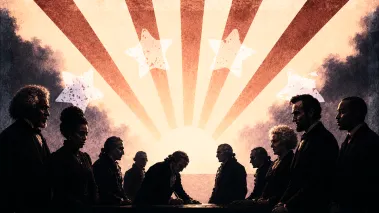
They could have died. We forget that now. After appeals to history and self-evident truths and the long train of abuses and usurpations, the 56 signers of the Declaration of Independence pledged their lives, fortunes, and sacred honor to a cause that was not certain. To an idea as radical as their revolution. To a notion of a nation yet to be built.
The United States could have died. The might of the British Empire was pressing in on the mid-Atlantic. Boston had already been occupied and blockaded. New York City would soon fall to the Redcoats, and New Jersey would follow shortly after. As Thomas Paine famously wrote later that fateful year, it was a time that tried men’s souls.
The Declaration could have died. The 56 signers could have abandoned it at the sight of the British fleet or during that terrible winter at Valley Forge. They could have saved themselves and forgotten all about the idea that people matter more than the state. That we are all created equal. That we can govern ourselves better than any prince or potentate.
To make matters more complicated, these men had little in common. The oldest was 70 years old. The youngest was 26. They represented all thirteen colonies with different economies, climates, politics, and religious affiliations. Eight of the signers were immigrants, expats from the British Isles. There were Catholics, Anglicans, Protestants, deists, and alleged atheists. Lawyers, merchants, farmers, doctors, and writers. Plantation owners and abolitionists. Forty-one owned slaves. They were principled and hypocrites, aspirational and cautionary.
In a tribal world, it was perhaps the most diverse deliberative body to that point. It’s no wonder many thought the United States would die before it began! And who could blame them? If history proved anything it was that a deliberative body of such wildly different characters and personal agendas could never put aside their differences for long enough to create a new nation, let alone defeat the greatest empire the world had ever seen.
But they weren’t interested in following the lead of history. They stepped out of it. 250 summers later, the United States of America — the offspring of that revolutionary communion — remains. Those 56 signers asserted that accident and force no longer rule the minds of man. That the human mind is created free. That we may think, write, speak, and pursue truth. It is on that rock, the Declaration itself, that they built our new home.
The terrible times they endured did not shake their resolve or dampen their belief in the struggle for which they were engaged. Nor did their personal disagreements or bickering impede it. If anything, their differences strengthened its power. Those men disagreed on much but were willing to die for each other because of the one thing that mattered most: that human beings are capable of self-government. They defended that idea when failure meant ruin and death. And they won.
That became the story of America. A grueling, methodical, often frustrating process of dissent, debate, and compromise in pursuit of a common cause. A perfect cause imperfectly lived. Generation after generation have grappled with the promises of those Founding charters and our failure to fully meet them. Like Jacob wrestling the angel in Genesis, it is in the struggle to live up to the Declaration that we find our civic purpose. In dissent and debate, we make the United States more perfect.
America has needed the exchange of ideas since the beginning. Without it, the republic would have crumbled long ago. This makes free speech not just one right among equals. It is the discipline by which the country keeps faith in the Declaration itself. It has been the indispensable mechanism of that neverending struggle, from the Founding Fathers to the abolitionists and suffragettes; from civil rights to gay rights and the campus free speech movement and beyond. Douglass once called free speech the “great moral renovator of society.” The practical expression of the American idea.
Human beings will always be living through times that try our souls. The New World is constantly on the verge of sliding back into the dogmas of the Old. The Declaration’s signers felt the temptation to abandon principle for the sake of preservation, and we feel that same temptation today. But we cannot give in. Ever. These twin ideas — America and free speech — are so much bigger than us. Particulars of time and place, no matter how uncomfortable or disagreeable, cannot and should not destroy our faith in them. No matter how ugly it gets.
Nor should our own worldviews warp them for selfish ends. Because they are greater than any one person or party or politician or political movement. They are more powerful than cultural pressures. Eternally radical. In spite of all the negative baggage we bring to both, we must love free speech like we must love the idea of America. Only with both can we remain the last best hope of earth.
Even after 250 summers, the United States is still not guaranteed. A nation forever at dawn. Ever ancient, ever new. Look how far we’ve come because of the American idea and the freedoms that sustain it. Imagine how much more is possible.
A young prairie lawyer once prophetically warned that “if destruction be our lot, we must ourselves be its author and finisher. As a nation of freemen, we must live through all time, or die by suicide.”
Our semiquincentennial is not just about celebration or remembrance. It is a recommitment to be a nation of freemen in the Spirit of the 56: To mutually pledge our lives, fortunes, and sacred honors. To defend the Declaration's promise through free speech, fierce disagreement, and goodwill during the fiery trials ahead. To give our best to her as she has given her best to us.
No matter what. For the next 250. For all time.
America is 250 and still revolutionary. Join us November 4-6, 2026 in Philadelphia for FIRE’s Soapbox conference. Early bird tickets are now on sale through Independence Day at soapbox.fire.org.
Recent Articles
Get the latest free speech news and analysis from FIRE.
Pepperdine banned a professor who taught about a black Jesus
The Biden-era Title IX rule was already dead. Now it’s off the books.

VICTORY: Iowa judge dismisses Trump’s lawsuit against pollster J. Ann Selzer
