Balow v. Scott
Cases
Michigan State University
Case Overview
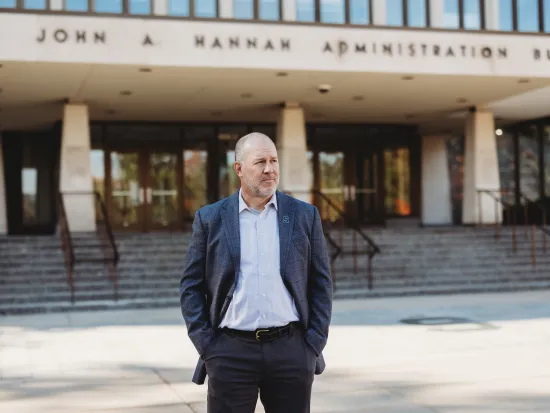
A public university can’t silence the board members elected to run it. But that’s exactly what a majority of Michigan State University’s board of trustees has done by requiring its members to promise not to publicly criticize university governance. When trustee Michael Balow refused to give up his First Amendment rights, the board imposed severe punishments that are preventing him from effectively carrying out his duties.
Trustees like Balow are supposed to provide independent oversight, not rubber-stamp university decisions. The First Amendment protects their right to dissent, even when the board majority doesn't like what they have to say.
During his candidacy, Balow vowed to increase transparency and accountability. His message resonated with voters. Two years into an eight-year term, Balow has publicly criticized MSU for its failure to investigate the institutional breakdowns that allowed the Larry Nassar sexual abuse scandal to occur and for withholding important documents regarding a $100 million private-equity investment in MSU’s athletics program.
Balow’s forthrightness didn’t sit well with some of his fellow board members. This spring, MSU Board Chair Brianna Scott accused him and other trustees of “undermining the president, the administration and decisions made by this board.” The board then revised its Code of Ethics and Conduct to silence dissenting trustees by forcing them to “uphold the university’s reputation” and refrain from sharing what the board majority considers “inaccurate, misleading, or false information concerning the university.” The revised code commands that “when the board speaks through majority action, we will not undermine and will support the majority decision of the board” and requires “loyal opposition” to be raised in “appropriate settings,” generally before board action.
Under the new code, publicly praising MSU governance is fine — but criticism results in immediate censure and the loss of official privileges. That’s textbook viewpoint discrimination. And it gives the board chair the power to retaliate against virtually any speech she dislikes — all she has to do is accuse the trustee of “undermining” or being “inaccurate” or “misleading.”
Balow refused to sign the new code, and the punishment was swift and severe. The board excluded him from events and pulled his credentials to a state policy conference. These sanctions have seriously hampered Balow’s ability to conduct trustee business, such as meeting with donors and school leaders.
Now, Michael is standing up for his First Amendment rights and those of elected trustees everywhere. On October 28, 2026, he and FIRE filed a federal lawsuit asking the court to rule that the revised code violates the First Amendment and to stop its enforcement. Brandon M. Grysko of Fausone & Grysko, PLC is serving as local counsel.