Table of Contents
URGENT: We’re one bad D.C. deal away from the era of online government censorship.
Shutterstock
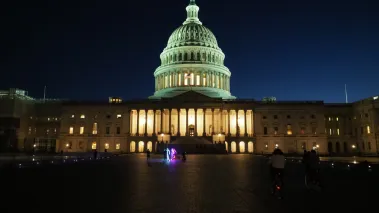
Congress and the White House are reportedly working on a deal to reshape how Americans are allowed to speak online. In exchange for overriding some state AI laws, the deal would involve a sweeping package of federal restrictions on online speech — paving the way for an unprecedented era of online censorship.
The legislative package could include the Senate version of the Kids Online Safety Act, the NO FAKES Act, and age verification requirements.
Taken together, these bills would fundamentally change the internet as we know it.
Each of these proposals raises serious First Amendment concerns.
- The Kids Online Safety Act might sound innocuous. But in practice, it opens the door to government regulation of protected speech for both adults and children. The act would force social media platforms to restrict lawful speech, allow the government to dictate the design of online speech platforms, and effectively require age verification systems that end online anonymity. Read more about what’s at stake.
- The NO FAKES Act would create a broad, new right to restrict AI-generated depictions of a person's voice and likeness — and in the process expose users, creators, platforms, and developers to lawsuits for everyday speech like memes and parodies. Remember: Fraud, defamation, and intrusions on rights of privacy and publicity are already punishable. So NO FAKES would serve primarily to chill online news, history, art — and criticism of anyone with deep enough pockets to file a lawsuit.
- Age verification mandates would require users to disclose personal information before accessing lawful speech online — eliminating anonymity, chilling expression, and threatening privacy. This "papers, please" approach to the internet that requires each of us to reveal our identity is incompatible with free expression.
The fundamental question at stake is whether power over online speech is going to stay with the American people or be seized by the government.
FIRE urges lawmakers to reject any deal that would include these bills.
Recent Articles
Get the latest free speech news and analysis from FIRE.

Venezuela is a cautionary tale w/ Jim Epstein and Germania Rodriguez Poleo
Podcast
FIRE sues Los Angeles City Council over policy banning certain words during public comment

It was never just going to be about keeping kids off social media