Table of Contents
Speech Code of the Month: Macalester College
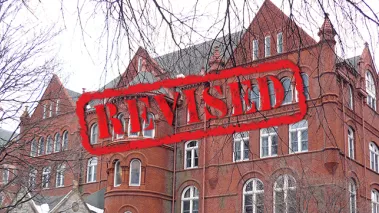
FIRE announces its Speech Code of the Month for July 2006: Macalester College.
As a private university, Macalester is not bound by the First Amendment. It is, however, bound by the contractual promises it makes to its students. Macalester’s Student Handbook provides that “[t]he relationships between Macalester College and its students is a legal and contractual one…. The legal and contractual relationship is defined in the Handbook, as well as the College Catalog and other official documents of the institution.”
The Student Handbook promises Macalester students the rights to “free expression” and “free inquiry,” and provides that “[s]tudents and student organizations are free to examine and discuss all questions of interest to them and to express opinions publicly and privately.” Several pages later, however, that same Handbook prohibits, as “racial harassment,” “speech acts which are intended to insult or stigmatize an individual or group of individuals on the basis of their race or color, or speech that makes use of inappropriate words or non-verbals.”
This policy is a clear violation of Macalester students’ rights to free expression and free inquiry, rights promised in a Student Handbook that explicitly establishes a contractual relationship between the college and its students. First, the regulation is overbroad, since the right to free expression includes the right to insult others, even harshly. The Supreme Court has said that “freedom of speech, though not absolute, is nevertheless protected against censorship or punishment, unless shown likely to produce a clear and present danger of a serious substantive evil that rises far above public inconvenience, annoyance, or unrest.” Terminiello v. Chicago, 337 U.S. 1, 4 (1949) (emphasis added). Second, the regulation is dangerously vague. A reasonable person cannot possibly know what Macalester means by “speech that makes use of inappropriate words,” since what is “inappropriate” varies widely from person to person. Faced with the threat of punishment under such a policy, students will refrain from saying anything that might even be considered inappropriate, since they do not know what is actually prohibited.
In Minnesota, the elements of a claim for breach of contract are as follows:
(1) the existence of a contract; (2) the alleged wrongdoer's knowledge of the contract; (3) intentional procurement of its breach; (4) without justification; and (5) damages.
Furlev Sales & Associates, Inc., v. North American Automotive Warehouse, Inc., 325 N.W.2d 20, 25 (Minn. 1982).
Macalester College contractually promises its students the rights to free expression and free inquiry, then breaks that promise only pages later with regulations that clearly infringe on those rights. For this reason, it is our July 2006 Speech Code of the Month.
If you believe that your college or university should be a Speech Code of the Month, please e-mail speechcodes@thefire.org with a link to the policy and a brief description of why you think attention should be drawn to this code.
Recent Articles
Get the latest free speech news and analysis from FIRE.

Venezuela is a cautionary tale w/ Jim Epstein and Germania Rodriguez Poleo
Podcast
For more than half a century, Radio Caracas
Television, or RCTV, broadcast news, sports, comedies, and
telenovelas in Venezuela...

FIRE sues Los Angeles City Council over policy banning certain words during public comment
A pair of free speech groups filed a lawsuit on behalf of a Los Angeles resident against the city council after it banned certain words during public meetings, a violation of the First Amendment.

It was never just going to be about keeping kids off social media
Age-gating teens online was never going to stop with kids. The UK is already promising a more "active interventionist state" for the internet.

Pepperdine banned a professor who taught about a black Jesus
Pepperdine promises professors freedom to teach controversial ideas and vigorously debate colleagues. Christina Littlefield is testing that promise.