Table of Contents
Greg Lukianoff on Free Speech from 'New Threats to Freedom'
Greg Lukianoff discusses his essay on campus censorship from the book New Threats to Freedom. Are there circumstances under which a person's right to not be offended supersedes a person's right to free speech? Based on the actions of several public universities, it seems that this may be a dangerously common attitude within academia.
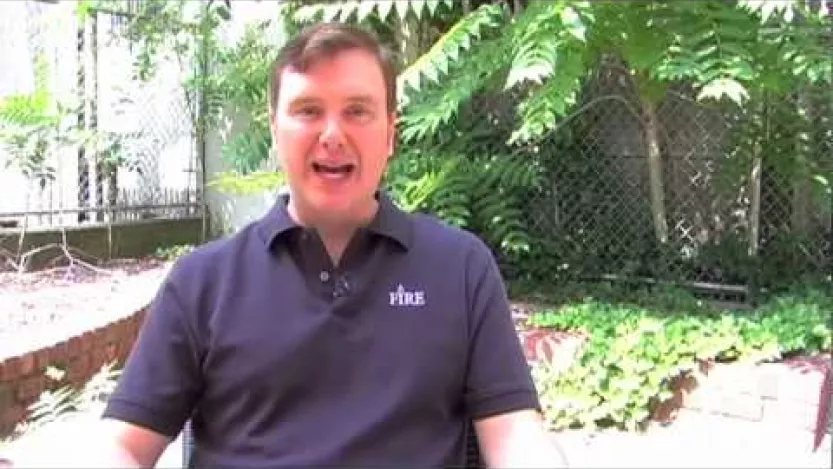
Excerpt from Greg's essay "Students Against Liberty?" in New Threats to Freedom
Chris Lee was afraid for his life. An angry mob of forty of his fellow students had showed up to raise hell at his musical comedy, and the mood was ugly. The students began by standing up in their seats and yelling, “I’m offended,” but quickly escalated to slurs and threats of violence and death. The surly crowd succeeded in stopping the play several times and threatened to turn the production into a full-scale riot.
Chris knew that his university promised to protect students who faced threats of violence — especially African American students like himself — but his repeated appeals to campus police did little to discourage the mob. After all, why would his university help him — especially when it had trained, funded, and supported the angry protestors in the first place?
Chris, a student at Washington State University, was the author and director of The Passion of the Musical, a student production written in the spirit of South Park and specifically intended both to amuse and offend as many different people and groups as possible. He could not have been clearer about his musical’s content, warning students that the play was “offensive or inflammatory to all audiences.”
Chris’s warnings were included in ads, printed on the tickets themselves, and posted on the doors of the theater. For good measure, he stood up before the show and told the audience that those who were easily offended should leave. In Chris’s words, the goal of the play “was to show people we’re not that different, we all have issues that can be made fun of.”
While his play did poke fun at a wide variety of groups, particularly religious ones, it was his parody of the Meatloaf ballad “I’d Do Anything for Love (But I Won’t Do That)” that caused the most virulent protest. Chris’s version replaced the line “but I won’t do that” with “I won’t act black.” Under pressure from the campus police, Chris edited the word “black” out of this performance. Nonetheless, The Passion of the Musical earned him the nickname “black Hitler” on campus.
Even so, the threat that Chris’s musical posed to the political sensibilities of Washington State administrators was evidently too grave to ignore. Rather than simply allow the play to go on, administrators actually organized a group of students who were angry about the play, instructed them on how to disrupt the performance, and even purchased tickets for them. To top it off, the university president applauded these students the next day for the “very responsible” exercise of their free-speech rights. In a turn that truly deserves the label “Orwellian,” a violent act of censorship was labeled “free speech.”
New Threats to Freedom
A multimedia selection from the book New Threats to Freedom, featuring work by authors Anne Applebaum, Mark Helprin, Christopher Hitchens, Robert Kaplan, James Kirchick, Greg Lukianoff, and more.
This is not an isolated incident. Lee’s case is just one among many in a general trend in American higher education. Students are learning both from the campus environment and from administrators themselves that it is not only acceptable to silence opinions they deem offensive, but that doing so is a noble and appropriate act. This dangerous lesson is taught to students through powerful examples coupled with a systemic campaign of inculcation and outright misinformation led primarily by college administrators. While the worst offenders are often lower-level student services officials, including residence assistants (RAs) and disciplinary officers, they often act with the approval and even support of the university counsel and president’s office.
Few Americans are aware of the scale of violations of student and faculty rights occurring on campuses today. Those who are often view it as simply a symptom of America’s larger culture war — and it is true that students and faculty are far more likely to be punished if they hold the conservative or Christian point of view on various issues. But the problem is deeper and more insidious than political correctness run amok. Politically correct censorship is just one part of a profound process of miseducation that has potentially dire longterm consequences for our democratic republic.
This miseducation doesn’t just occur in the classroom. It is part of the very fabric of American higher education. What follows is a brief overview of the many ways in which students today are instructed in the methods and morals of totalitarian censorship.
Recent Articles
Get the latest free speech news and analysis from FIRE.
Venezuela is a cautionary tale w/ Jim Epstein and Germania Rodriguez Poleo
Podcast
FIRE sues Los Angeles City Council over policy banning certain words during public comment

It was never just going to be about keeping kids off social media