Table of Contents
Bad cop
Shutterstock.com
The president doesn’t like it when late-night TV talk show hosts make fun of him.
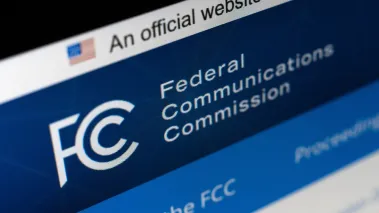
That undeniable fact is the common denominator for a series of actions that have kept the Federal Communications Commission in the news this past year and why Brendan Carr, its chairman, has been talking lately about the FCC’s “equal time” rule.
The controversy over the so-called equal time rule surfaced for most of the public recently when Stephen Colbert said CBS refused to allow him to air his interview with Texas Democratic Senate candidate James Talarico after the FCC signaled it would enforce the rule against TV talk shows. (For the record, CBS disputed his account and said the network had only “provided legal guidance” for how the show could comply with the rule. Nice show you got here . . .)
Colbert opted to do the interview and release it on The Late Show’s YouTube channel (where FCC rules do not apply) but not air it on the network or its affiliated stations. And in a perfect demonstration of the Streisand effect, the interview almost immediately racked up over 7.5 million views, triple the nightly broadcast audience for The Late Show.
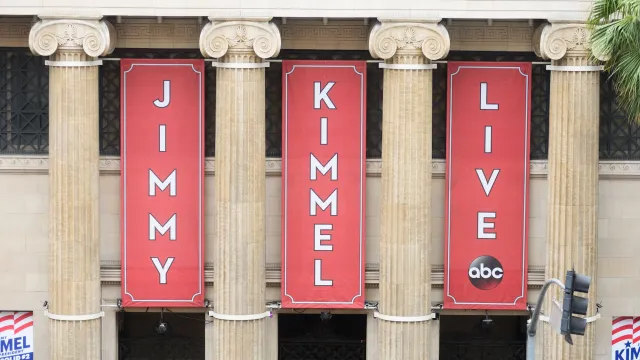
Carr’s threats to ABC are jawboning any way you slice it
ABC suspended Jimmy Kimmel hours after FCC Chair Brendan Carr suggested they could face consequences for remarks Kimmel made in the aftermath of Charlie Kirk’s murder.
There are many reasons why the FCC’s equal time rule is obsolete (and likely unconstitutional in today’s technological environment) and why Carr’s reliance on it to squelch television talk show interviews is wildly inappropriate. But first, let’s connect the dots, shall we?
The president has never been shy about expressing his displeasure with talk show hosts who roast him, calling them out by name in a seemingly endless stream of Truth Social posts, crowing at the announcement that Colbert’s show would not be renewed (mysteriously in the wake of FCC approval of the Skydance Media-Paramount Global merger), and predicting that Jimmy Kimmel would be the next to go.
And Carr, President Trump’s hand-picked chairman, has turned himself inside out looking for ways to do his master’s bidding. He quite literally has inverted himself: He used to say the FCC cannot act as the nation’s speech police, while now he can’t wait to pin on a badge — in this case, a Donald Trump lapel pin — and patrol “his” beat.
He impersonated a Mafia don in threatening ABC over a Kimmel monologue (“we can do this the easy way or the hard way”). In the process, Carr has made reference to a series of different FCC policies in various efforts to muzzle TV comics, none of which can be taken seriously by anyone who understands the Communications Act or the First Amendment.
Carr frequently cites the “public interest” requirements imposed on broadcast licensees, but that general obligation to serve the public (that is, to provide broadcasting service) has never been understood to give the FCC power to restrict particular programs, and it would be unconstitutional if it did. He neglects to note that both the FCC and the courts historically have interpreted the public interest standard to require broadcasters to exercise independent editorial judgment, and not to follow the whims of some government functionary.
Carr has even tried to summon the “news distortion rule” as justification to threaten networks over late-night comedy monologues, as if it ever had any conceivable application in that context. But that long-moribund rule for news programs, which the FCC unearthed to go after 60 Minutes for the way it edited its Kamala Harris interview, does not give the FCC the power to sit as editor in chief. And any attempt to enforce it in court would instantly be declared a First Amendment violation.
But who has to worry about courts if you can bully broadcasters into submission?
All Carr’s casting about for an excuse to lean on programming the president dislikes brings us to the latest gambit, the “equal time” rule.
More accurately, as set forth in the Communications Act, it is the “equal opportunity” rule, and it is triggered when a broadcaster allows a “legally qualified” candidate to “use” the station — that is, to appear on air. Once that happens, the station must offer comparable opportunities to opposing candidates but only if they request it. But Congress added exemptions to the rule in 1959, including for news interviews, and for decades the FCC applied those exemptions broadly to encourage the widespread discussion of political affairs. This included exemptions for candidate interviews on the radio, including for The Howard Stern Show, and since at least 2006, the FCC held that late-night shows qualified for that exemption.
But the FCC’s Jan. 21, 2026 guidance for the first time narrows the exemptions, telling broadcasters they should no longer assume that their late-night shows qualify for it. From Carr’s perspective, it is just another regulatory tool that can be cynically employed to squeeze TV hosts with the temerity to make fun of his boss.
This departure from its traditionally broad reading of the exemptions is far from neutral. The Commission framed its January 2026 guidance as applying to “broadcast television stations,” and as Carr put it last month (channeling his master’s voice), if you are “fake news,” you won’t qualify for the news interview exemption. But at the same time Carr suggested that talk radio won’t be affected by this reinterpretation, signaling that this is about selective pressure on stations the Trump administration disfavors. Translation: Carr’s FCC won’t be going after Glenn Beck or Dan Bongino for their talk radio shows anytime soon.
This is an object lesson in why it is a bad idea to vest the federal government with discretionary power over an important medium of communication. Back in the day (the 1980s), two principled Republican FCC chairmen, Mark Fowler and Dennis Patrick, took action during the Reagan administration to eliminate the Fairness Doctrine, which required broadcasters to present opposing viewpoints on controversial issues of public importance. The Fairness Doctrine was based on the same theories used to justify the equal-time rule (as well as the news-distortion rule), but Fowler and Patrick maintained that past justifications for broadcast regulation were no longer valid, and that broadcasters should receive the same First Amendment guarantees that the print media have enjoyed since our country’s inception.
Interesting side note: Last November, a bipartisan group that included seven former FCC commissioners (five Republicans and two Democrats), four of whom had served as chair (including Fowler and Patrick), filed a petition with the FCC asking that the Commission cease its partisan manipulation of broadcast rules and to eliminate the news-distortion rule. Carr’s reaction? Less than a day after the filing, he sneered at the petition in a social media post: “How about no.” Reasoned decisionmaking, indeed.
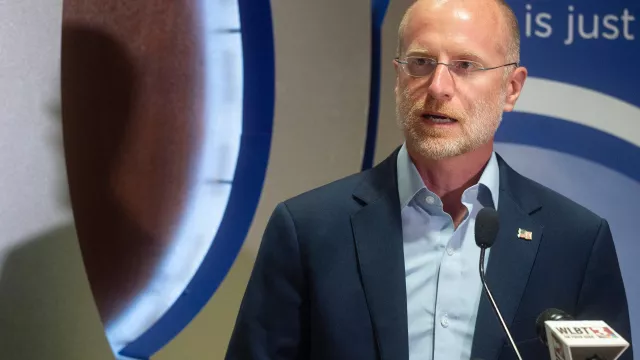
Commissioner, regulate thyself: The incoming FCC chair is threatening to censor views he doesn't like
President-elect Donald Trump announced he would appoint FCC Commissioner Brendan Carr to chair the agency, calling him a “warrior for Free Speech.”
But the former FCC officials are correct — it is long past time to eliminate broadcast content controls that were adopted under different technological conditions when broadcasting was the only electronic mass medium in town. And, as the fiasco over the equal time rule and Colbert’s deft circumvention demonstrate, political speech isn’t confined to licensed channels. As was once said of cyberspace, “the internet treats censorship like system damage and routes around it.”
Just so. And here, the damaged system is the FCC.
Broadcasters can distribute content outside of the FCC’s jurisdiction, most notably, to the internet. In a world where political speech is abundant and distributed across countless channels and platforms, the spectrum scarcity rationale that propped up broadcasting regulation has taken on far too much constitutional water to stay afloat.
As the former FCC commissioners’ petition to eliminate the news-distortion rule demonstrates, this is not a partisan issue. And the current crop of Republicans aren’t the only ones who have tried to aim the FCC’s licensing power at disfavored broadcasters. In 2018, a group of Senate Democrats urged the FCC to investigate Sinclair Broadcasting — which The New Yorker once called a “conservative media empire” — when Sinclair sought to merge with Tribune Media Company. The letter said that Sinclair violated its “public interest obligation” by “staging, slanting, or falsifying information” and suggested that the FCC “could disqualify Sinclair from holding its existing licenses” or obtaining new ones.
The tendency to leverage the FCC’s licensing power against hostile broadcast news coverage is nothing new. During the 1960s, the Kennedy administration quietly encouraged the FCC to scrutinize conservative radio broadcasters under the “public interest” standard and the fairness doctrine in an effort to blunt its critics. And Richard Nixon famously sought to use the FCC to target broadcast stations owned by the Washington Post because of the newspaper’s Watergate coverage.
The moral of this story is pretty simple: The government cannot be trusted with this kind of power, regardless of which party is in office.
Recent Articles
Get the latest free speech news and analysis from FIRE.
After a congressman challenged a student reporter’s right to record, here’s what journalists should know
Restoring Title IX kangaroo courts is no solution to the ‘Cornell 7’ sexual assault controversy
A UK teen mocked a local politician. Then the police showed up.