Table of Contents
You have the right to remain silent
Research & Learn
Miranda v. Arizona and your rights when under arrest.
By David L. Hudson, Jr., associate professor of law at Belmont University (Last updated June 18, 2026)
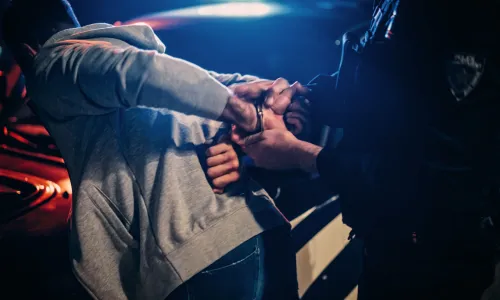
You have the right to remain silent.
Anything you say can and will be used against you in a court of law.
You have the right to an attorney during questioning.
If you cannot afford an attorney, one will be provided to you.
These are the “Miranda warnings,” procedural safeguards the U.S. Supreme Court established in its landmark decision Miranda v. Arizona (1966) to ensure that admissions by those in police custody are truly voluntary, knowing, and free from coercive pressures. In the majority opinion, Chief Justice Earl Warren clarified that if a person in police custody invokes their right to remain silent, “interrogation must cease” immediately. Moreover, if a person who is under arrest asks for a lawyer, then police must wait until an attorney arrives to begin asking questions.
The Court reasoned in Miranda that these warnings are necessitated by the Fifth Amendment to the Constitution — which states no person “shall be compelled in any criminal case to be a witness against himself” — to ensure suspects understand their rights before making self-incriminatory statements. Individuals may waive their Miranda rights, but the waiver must be voluntary — not the product of coercion, intimidation, or pressure. The burden is on the government to establish a person’s alleged waiver of their Miranda rights was valid.
The right to remain silent
Miranda v. Arizona was actually four consolidated cases — Miranda v. Arizona, Vignera v. New York, Westover v. United States, and California v. Stewart. In all four cases, suspects “confessed” after lengthy interrogations while being held in custody at police stations. In the lead case, police arrested Ernesto Miranda in Phoenix on suspicion of robbery. After a two-hour interrogation, he confessed to robbery and rape. At trial, the court admitted evidence of Miranda’s confession over his counsel’s objection, and the jury convicted Miranda. However, on appeal, Miranda’s attorneys argued the trial court should have excluded his confession under the Fifth Amendment because the police failed to warn him he cannot be compelled to incriminate himself. The Court majority agreed, noting the “very fact of custodial interrogation exacts a heavy toll on individual liberty and trades on the weaknesses of individuals.”
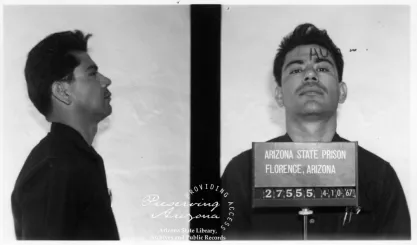
Miranda was a controversial ruling decided on a 5-4 vote. Critics contended the majority had legislated from the bench. Yale Kamisar explains that one of the leading critics was none other than William Rehnquist himself before joining the bench: “Rehnquist viewed the landmark confession case as a big mistake.” And Congress responded to Miranda in 1968 by passing a federal law purporting to make confessions admissible so long as they were voluntary — even if police fail to give Miranda warnings. In other words, to effectively overrule the Supreme Court’s Miranda decision.
That federal law lay dormant for years, as many federal prosecutors assumed it was unconstitutional — until a panel of the U.S. Court of Appeals for the Fourth Circuit relied on it in Dickerson v. United States (2000) to hold that a failure to Mirandize defendant Charles Thomas Dickerson did not invalidate his confession. Some thought the justices might uphold the federal law and overrule Miranda when Dickerson reached the Supreme Court.
But in a majority opinion by long-time Miranda critic Chief Justice Rehnquist, the Court refused to overrule Miranda, holding it “announced a constitutional rule that Congress may not supersede legislatively.” Miranda, the Chief Justice wrote, had “become embedded in routine police practice to the point where the warnings have become part of our national culture.” And the Court’s post-Miranda cases have shown that when law enforcement interrogates suspects in custody without advising them of their Fifth Amendment rights, protecting those rights requires that any admissions so obtained never make it to a jury.
Limitations on Miranda
Dickerson notwithstanding, the Court itself has issued several decisions limiting Miranda or creating exceptions to it. In his book Presumed Guilty: How the Supreme Court Empowered the Police and Subverted Civil Rights (2021), legal scholar Erwin Chemerinsky wrote that although the “Burger Court did not abandon or overrule Miranda . . . it used every opportunity to chip away at and to limit its application.” In Harris v. New York (1971), the Court held that if a criminal defendant testifies at trial, prosecutors can use the defendant’s unwarned statements to challenge their credibility — even if those statements were obtained without Miranda warnings.
Later, the Court created a public-safety exception to Miranda in New York v. Quarles (1984), holding there are times that the need to resolve dangerous situations — in Quarles, locating a gun missing in a supermarket — means police simply do not have time to deliver Miranda warnings. As then-Associate Justice William Rehnquist explained: “Whatever the motivation of individual officers in such a situation, we do not believe that the doctrinal underpinnings of Miranda require that it be applied in all its rigor to a situation in which police officers ask questions reasonably prompted by a concern for the public safety.”
Recording police in public: What you need to know
The First Amendment generally protects your right to take photos or videos of government agents in public spaces, but there are some limits.
More recently, the Court has continued to chip away at Miranda’s protections. Notably, in Berghuis v. Thompkins (2010), the Court explained that a suspect’s prolonged silence is not enough to invoke his Fifth Amendment right against self-incrimination. Rather, the suspect must unambiguously invoke the privilege. The Court explained:
There is good reason to require an accused who wants to invoke his or her right to remain silent to do so unambiguously. . . . If an ambiguous act, omission, or statement could require police to end the interrogation, police would be required to make difficult decisions about an accused’s unclear intent and face the consequence of suppression if they guess wrong.
The Court then held in Vega v. Tekoh (2022) that a former criminal defendant may not sue law enforcement officials for failure to give Miranda warnings. The case involved a defendant arrested for a sexual offense who allegedly confessed after police failed to Mirandize him. After a jury acquitted him, he sued the police officer, alleging the failure to Mirandize him violated his constitutional rights. The Court held that failure to Mirandize does not afford the ability to sue the police for a civil rights violation. Writing for the Court, Justice Samuel Alito explained that the “exclusion of unwarned statements” from criminal proceedings should be “a complete and sufficient remedy” for failing to read someone their rights.
“Allowing the victim of a Miranda violation to sue a police officer for damages under Section 1983,” wrote Justice Alito, “would have little additional deterrent value and permitting such claims would cause many problems.”
Miranda v. Arizona remains one of the Supreme Court’s most important criminal procedure decisions. The ruling established critical protections for everyday people, recognizing that police questioning can become coercive and lead to false confessions. Although the Court has narrowed parts of Miranda over time, the decision — and the Fifth Amendment rights it serves to protect — remain deeply woven into American law and culture.
Keep Reading
When does speech become incitement?
Issue Pages
Time, place, and manner limits on speech
Issue Pages

Your yard, your rights: Lawn signs and the First Amendment
Issue Pages