Table of Contents
So to Speak Podcast Transcript: Social media, speech, and kids w/ Joel Thayer and Kate Ruane
Note: This is an unedited rush transcript. Please check any quotations against the audio recording.
Kate Ruane: I'll be honest. I have never seen this much. I've been a First Amendment lawyer for almost 20 years now, and I have never seen this much activity in the speech and technology space.
Martin Luther King: Somewhere I read of the freedom of speech.
Male Voice: You're listening to "So to Speak," the free speech podcast brought to you by FIRE, the Foundation for Individual rights and Expression.
Nico Perrino: Welcome back to So to Speak: The Free Speech Podcast, where every other week we take an uncensored look at the world of free expression through the law, philosophy, and stories that define your right to free speech. I'm your host, Nico Perrino. It's been a busy few months for anyone interested in the intersection of free speech and technology, particularly social media and artificial intelligence. Lawmakers across the country are pushing new rules aimed at keeping kids safe online. Meta is facing a landmark trial over allegations that its platforms harm young users.
States are racing to regulate artificial intelligence by creating a patchwork of laws for a technology that doesn't stop at state lines. And as AI becomes an increasingly powerful tool for creating and accessing information, regulators are asking, "Who gets to decide what an AI system can say?" Where's the constitutional line between regulating technology and regulating speech? And could this latest wave of legislation and litigation change what we can see, say, and create online?
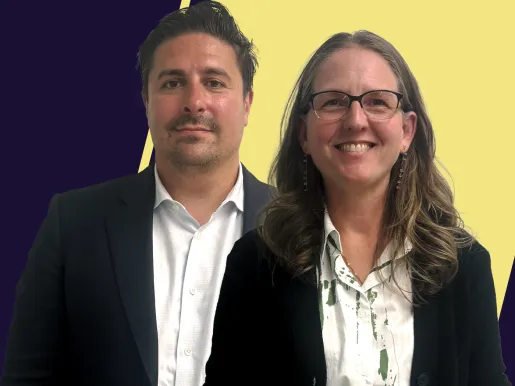
Joining me to break down the latest developments in AI and social media, and what it all means for free speech, are, to my right, Joel Thayer. He is a senior fellow for AI and Emerging Technology Policy at the America First Policy Institute, and the president of the Digital Progress Institute. Joel, welcome on to the show.
Joel Thayer: Thank you. Good to be here.
Nico Perrino: And then to my left, Kate Ruane, who is the director of the Center for Democracy and Technology's Free Expression Project. Kate, another first time guest on the show. Welcome.
Kate Ruane: Thanks. Excited to be here.
Nico Perrino: I want to start at a very high level and just kind of get your guys's take. We're going to start with social media. We'll get to artificial intelligence in the second half of this conversation. Joel, let's start with you. I'm assuming you're generally supportive of some of the litigation that's happening surrounding these social media companies and the alleged harms that they have on minors? How do you think about the issue, especially as it relates to free expression?
Joel Thayer: Sure. And look, well, obviously, that's a fair characterization.
Nico Perrino: 'Cause we have a couple of attorneys generals who are suing Meta and some of these other platforms. You also have private plaintiffs who are suing them for the alleged harms that they've had on their lives as well. How do you look at it? You're supportive of both what the attorneys general are doing, as well as the private plaintiffs.
Joel Thayer: Yeah. I basically take it from just a consumer harm perspective. And I think that consumer harm is undoubtedly happening here. And we've had a bipartisan chorus asking for regulation on these tech platforms for a very long time. And there have been inhibitors to that, either the statutory protections under Section 230, which are currently getting litigated again within the private suits that you're describing.
Nico Perrino: Sure.
Joel Thayer: Also, I am fascinated by how the First Amendment jurisprudence is shaping up. And I think anyone in this space would attest, the First Amendment isn't actually just a clear doctrine. It's a pretty messy type of case law. And I think what I'm really interested in seeing is how the First Amendment is getting developed and how it's going through the courts and how they're thinking through, after very key cases like the Moody case, for instance. Moody v. NetChoice, where two state laws basically were trying to impose common carriage requirements.
Nico Perrino: This is Texas and Florida.
Joel Thayer: Texas and Florida. That's correct. And they came at it from two different ways. I think Florida was a little less of a traditional common carriage regime, where they were trying to basically protect political speech. Whereas Texas sort of took a, "Hey, we're just going to do it across the board. You can't discriminate." And treat it as an anti-discrimination law. When you get into enforcement of that, that's when it gets a little hairy, but the underlying regulation didn't immediately jump out to me to say, "Oh, this is just a political witch hunt to get at particular speech."
Even so, the Moody case decided to punt the case entirely, or punt the First Amendment issue entirely. Well, if you want the dicta itself, I don't think it's actually binding, but if you look at what the binding aspects of it were, it came down to, well, more procedural. If you want to do a prima facie, "Hey, this is unconstitutional across the board," okay, let's hear the arguments. You have to demonstrate that almost all aspects of the law are actually unconstitutional. You have to demonstrate why it's unconstitutional.
On the other end, there was this kicking back that said, "Well, if you can demonstrate certain parts of it, if you want to enjoin certain aspects of it that we think are speech issues" – and that's when Justice Kagan really goes out of her way to explain, "Well, we see issues here, but there may not be issues with respect to texting; but there might be issues with respect to the organization of news feeds." Part of that was very confusing for the average reader, and especially me. I'm not sure what the holding actually said outside of those procedural requirements.
Nico Perrino: Dictating to these platforms what content they can and can't have on their platforms, or how they can and cannot moderate, is not justified under the First Amendment, 'cause the government doesn't get to dictate what the ideal speech nirvana is, if I'm paraphrasing what she said.
Kate Ruane: That's exactly what she said.
Nico Perrino: She did come down, it seemed, pretty hard on the idea that these states can regulate the speech on the platform; but what you're saying, Joel, and we're talking about these separate social media harm to minor cases, is you're you don't you don't see these regulations or this litigation as implicating speech necessarily. 'Cause you're saying some of these design features that can be seen as addictive aren't speech. And that's what, I think, the judge in that Los Angeles County case more or less said, is we're not going to deal with the First Amendment or Section 230 arguments, 'cause we're talking about the design features, which are separate.
Joel Thayer: Maybe outside the scope of Section 230. Sorry to meander. I think my point was that you're seeing those cases actually play out in these in some of these cases, especially when you have AG enforcement and you're looking at the contours of Moody getting a little bit further developed in terms of what a prima facie unconstitutional law would look like, or what they're looking for. As opposed to an as-applied, looking at that. You saw that in Texas in the Fifth Circuit as well, with SB 2420, which is the App Store Accountability Act.
I think ultimately why I'm broadly supportive of these particular measures is on the front end I do think that there is undeniable evidence here that these platforms are impacting kids in a negative way. I don't see these laws as directly trying to go after speech. I don't think the underlying current is dictated by, "Oh, well, they're seeing this image over that image." It's, "Well, how long are they staying on the platform? How often are they getting pinged? How hard is it for them to just completely avoid the platform entirely?"
That's why I was very supportive of the Kids Online Safety Act in particular. And I'm sure we'll get into what it was in particular. You have in there explicit calls out of saying if the kid wants to access the content themselves, that's totally fine; but you cannot just dictate for the child the actual design and use of that particular item, if they are, in fact, a child that has all these noted issues involved with those platforms. Why I really got involved in the First Amendment question, to be very clear, I was a telecommunications lawyer.
I focused almost exclusively on telecom regulation and also some tech regulation, but I found it very interesting that the First Amendment was being used in a way that I did not think comported with the way I understood the First Amendment when granted at that time. Even now, I don't know everything about the First Amendment, but I think I have a solid enough sense of the historical context of the First Amendment. I just don't think these ideas of protecting kids from certain designs of a very addictive platform or addictive service fall in that scope of what is traditionally protected under the First Amendment.
And then you saw proven somewhat right, but we're still developing. I don't think any side can claim victory one way or the other with the TikTok case that came down. And then also the Paxton case. I see those three cases as sort of defining a little bit what the states can do in this respect. And I think you're going to see it play a little out also when the tech companies are going to forward their First Amendment defenses in some of these private right of actions.
Nico Perrino: And when you say those three cases, you're talking about the Moody case?
Joel Thayer: The Moody case.
Nico Perrino: That we were discussing before. The Paxton case out of Texas that involved, for all intents and purposes, that could be deemed obscene as to minors and how they can access it online, and it requires verification?
Joel Thayer: Mm-hmm.
Nico Perrino: And then the other one was The TikTok case.
Joel Thayer: That's right.
Nico Perrino: That I think most of our listeners will be familiar with at this point. Kate, he kind of defined how he sees the First Amendment applying or not applying here. How do you look at it?
Kate Ruane: Sure. There's been a lot said, so where to start?
Nico Perrino: You can start wherever you want.
Kate Ruane: Let's start with Moody. I think Moody did two things. First, it said if you are going to bring a facial challenge, you actually have to do the facial analysis properly. You can't just come to us and say, "Hey, we think the majority of the applications of this law are unconstitutional. Strike it down." You actually have to tell us why. You have to you have to do the analysis and show us that the majority of the applications are. You can't just allege that they are. That was the holding of Moody.
Nico Perrino: And that holding has been a giant pain in the ass for a lot of lawyers ever since.
Kate Ruane: Gigantic. Gigantic, but we'll get to why that's not a thing in the cases that are currently bubbling up. I'll get to that right after I talk a little bit more about what Justice Kagan then did. She basically said, "I don't want lower courts to waste my time with the clear First Amendment question that is at issue here." Which is that states are trying to control what can and cannot be published on social media. The Texas law, if taken to its logical conclusion, would have said that if you are going to allow discussions of race on your platform, then you have to allow racist speech and racist attacks.
Whether you agree with racist attacks or not – I personally don't – but that is a clear requirement to change your editorial judgment. You can take what I just said and you can flip it and say that if you want to allow racist speech, you would also have to have to allow support for DEI, even if you didn't want to. And what Kagan basically said is the state can't control that under the First Amendment.
It cannot control editorial judgment like that. And it has never been allowed to do so when we were talking about newspapers, magazines, television, radio. And now we're not allowing it for social media either, because those first principles don't change, regardless of what technology we're talking about.
Nico Perrino: 'Cause these are private companies. What Joel was saying before, I think a lot of folks, particularly in the conservative ecosystem over the past couple of years, where there has been allegations of private censorship on these platforms, they say, "Well, these platforms are ubiquitous. They're more like common carriers and must carry" –
Kate Ruane: There's an attempt to turn these companies into common carriers. Common carriers are things like the telephone company, which does nothing but take your message and deliver it to exactly who you asked it to be delivered to. Social media doesn't do that and it never has. It has always been a one-to-many platform in the biggest part of it. And it has always had editorial judgment about what does and doesn't go on the platform, what does and doesn't get promoted, what does and doesn't get demoted. It has always exercised editorial judgment. To pretend that it doesn't, it's an argument you can make but it's incorrect.
Nico Perrino: Well, it's the editorial judgment, at least from my perspective, that's what distinguishes a lot of these companies. Right? The reason TikTok became so popular was because its algorithm was so addictive.
Kate Ruane: Exactly.
Nico Perrino: We'll get to that.
Kate Ruane: Exactly. What you see on Facebook is not what you see on Twitter.
Nico Perrino: It was better than the other ones.
Kate Ruane: Is not what you see – oh, Twitter doesn't exist anymore. It's not what you see on X. It's not what you see on TikTok, because their editorial judgment is different. And the media that are being offered through those services, the primary media being offered through those services, are also different. TikTok is a video first platform. Facebook is an AI slop first platform, sometimes.
Nico Perrino: Some people would say it's a platform for their grandparents.
Kate Ruane: You get what I'm saying. You get different content. I poke fun at Meta, but like what you see on Meta is fundamentally different from what you see on TikTok versus YouTube, etc. Because of the editorial judgments that they make, and because of the mix of content that comes in as a result of their user base and as a result of their editorial judgment, and as a result of the format of the speech that's being that's being presented. It's all very different. It all gets First Amendment protection.
And what Kagan was saying was, "Don't come back to me with this. Please, I am guiding you how to how to apply the law in this circumstance. I might not be telling you how it applies to how YouTube connects drivers and riders, but I am telling you, if you're looking at Facebook and YouTube's newsfeed algorithms, this is how I think about it and this is how the court is going to think about it." I thought that was really important.
Nico Perrino: Now when you have these states coming in and regulating the content, or how you access the content, on these platforms, because of the perceived harms for kids, how does throwing the kids in there change the First Amendment analysis from your perspective?
Kate Ruane: Not much. Not much from my perspective. For starters, the reason these lawsuits don't raise the as-applied versus –
Nico Perrino: Facial?
Kate Ruane: – facial challenges that Moody does is because we're not talking about a statute. We're talking about generally applicable negligence claims, product liability claims. We are literally talking about as-applied questions, so as this moves through the courts, we aren't going to deal with that aspect of Moody. We are only going to be dealing with the clear statement of First Amendment protection that Moody gave us. Now, the arguments being made about, "Well, we're not really talking about the content itself; instead we're talking about how the content is presented," I think that's really interesting from a First Amendment point of view.
Nico Perrino: Yeah, I think that's the core question, right?
Kate Ruane: I think it's a really interesting question from a First Amendment perspective. And when we do the analysis design feature by design feature, there are some where I think it is very clearly protected by Section 230 and/or the First Amendment. Sometimes only Section 230, sometimes the First Amendment, sometimes both.
Nico Perrino: These design features, just so our listeners are kind of aware what they're like – the notifications, the endless scrolls.
Kate Ruane: The list changes, depending on which case you're looking at, but it is usually algorithmic recommendations. How the recommendation system works. Infinite scroll or endless scroll. Matching of accounts, so child accounts with unknown adults is a common thing. Notifications, when they happen, how they happen, sometimes called or conflated with what are called intermittent variable rewards, which is when the platform makes decisions about how to bundle notifications and when to send them.
And then there's claims about lack of age verification, lack of parental controls or parental access, lack of reporting requirements for – lack of proper reporting for child sexual abuse material. Sometimes there are claims about geo-location, the publication of it, or not publication of it. I'm definitely missing some.
Nico Perrino: Joel, is she missing anything?
Joel Thayer: That's a pretty expensive list. I think everything else is kind of marginal.
Kate Ruane: It's all very fast.
Joel Thayer: Yeah. I think what we're highlighting here is also that there are aspects of it that may have speech imbued in it, but the question also is, okay, how far does the person actually protect those particular designs to the extent they do?
Kate Ruane: The First Amendment and Section 230 are both at issue in every single one of the design features.
Joel Thayer: Oh, I'm sorry. We're talking specifically about the private litigation.
Kate Ruane: Yes, I am talking about the private litigation.
Nico Perrino: The judge in that Los Angeles case didn't see either of them being involved.
Joel Thayer: No.
Kate Ruane: In the in the Superior Court case, yes, but in the MDL – if you look at the MDL's decision, it's very detailed. It goes feature by feature and does 230 –
Nico Perrino: MDL, for our listeners?
Kate Ruane: Oh, excuse me. Multidistrict litigation, which is also happening in Southern California.
Nico Perrino: There's a lot of litigation happening.
Kate Ruane: Which makes it even more confusing, right?
Nico Perrino: Yeah.
Kate Ruane: Makes it even more confusing. I want to first say that what Joel said about consumer harm resonates with me quite a bit. There is no one, I think, in this debate on any side of the First Amendment issue that does not want to see accountability for harm. The question is how, and how do we how do we achieve accountability without doing violence to doctrines that matter? When I look at these cases, I'm not necessarily looking only at the cases themselves and whether I want to see the plaintiff win or lose on their particular claims.
I'm also trying to think of what this means beyond these cases. Does it mean if algorithmic recommendations are a source of liability, where else are we going to see government control – which is what a court decision that has an impact on algorithmic recommendations would be – where else are we going to see government control step in and make speech and recommendation systems subject to government control?
Nico Perrino: That's where I think the distinction is really important, because Kate and Joel, correct me if I'm wrong, have we applied these sort of consumer harm doctrines to a speech product previously? Nothing's ringing my bell, and it could it could have happened, but you generally don't think of that as an exception, a categorical exception to the First Amendment. I know folks like to draw comparisons between tobacco, but that's not speech.
Kate Ruane: It's not speech. Exactly.
Nico Perrino: That's not a speech problem.
Joel Thayer: The advertisements were. The advertiser would be considered an actual –
Nico Perrino: Yeah, advertiser.
Joel Thayer: Yeah. For instance, the Federal Trade Commission, I think in the '90s, put a restriction on Joe Camel, that you cannot use a cartoon character to advertise. Essentially, I don't know if that litigation went anywhere, but my understanding was that no one seemed to have a real issue with that. I think the thing that we get bogged down in a little bit –
Nico Perrino: In that case, it would be because of the harm of these minors.
Kate Ruane: It would also be because it was commercial speech. It's also because it was the advertisement for a product. The product itself here is the speech. It's not an advertisement for any of the content on social media. Speech doesn't become commercial just because there is some kind of financial interest in its presentation or sale. Otherwise, the content of every book would be –
Nico Perrino: Receives First Amendment protection.
Kate Ruane: Yeah, exactly.
Nico Perrino: Maybe a lower [inaudible - crosstalk] [00:19:27].
Joel Thayer: Then what is the product then? If that is not the product –
Kate Ruane: It's the contents of the book. It's analogous to the content –
Joel Thayer: The platform would be – well, that's a pretty interactive book you got there.
Kate Ruane: Yeah.
Joel Thayer: Where I struggle with here is treating these companies – I feel like we have like many analogies for these for these types of platforms. Where at one time it's being distributed or discussed as some sort of open forum, that you're able to just access, you're able to go in there, and you're able to have all these First Amendment protected activities.
And I'm like, "Okay, fine. Then I need to see an analogy where we have put some restrictions on some sort of public good, or at least public space." And we have done that. Pruneyard is a good example of when there either is a public property or private property, there are limits on your property. And we were able to do that without running afoul [inaudible - crosstalk] [00:20:24].
Nico Perrino: Pruneyard is the mall case?
Joel Thayer: The mall case that where like there was a group of students who were out in a parking lot in – I guess it was called Pruneyard. And they were protesting against Zionism. And there was an ordinance that was dictated by the property owner saying, "Hey, you can't – we don't like certain activities."
Nico Perrino: This is our private property. No political protest.
Joel Thayer: Yeah, get out of there. The kids sued and the kids basically said, "Hey, well, we have a right to say something about this under the" – I think it was the California Constitution that augmented the scope of – that provided more protections, rather, than the First Amendment protected. Pruneyard basically said, "Look, the state can do that. The state can augment the scope of what is protected. And the First Amendment provided – doesn't run afoul to the First Amendment." And there was this question – the pushback on the First Amendment, and there was two basic claims.
Nico Perrino: It's a pretty controversial case in First Amendment circles.
Kate Ruane: Indeed.
Joel Thayer: Well, the first one was obviously a takings case. The court said, "No, not taking." The other one was that this is a compelled speech issue.
Nico Perrino: Our private property. You're forcing us to host speech that we don't want to.
Joel Thayer: Exactly. And of court basically said, "Well, that depends on the observer. The observer wouldn't look at those kids and say that you actually support Zionism or are against Zionism. Those are independent of one another." There's there was an element of compelled speech. And I guess that's probably where you all see the controversy. I don't. I don't see the fact that a constitutionally protected right, whether state or otherwise, or that activity is occurring where you say that, "Hey, I have to leave these kids alone because they have a right to be here," as somehow ascribing some sort of message to the property owner.
Nico Perrino: Can I just summarize really quickly? You're saying that Supreme Court case stands for the proposition that the government can regulate the speech – at least the speech that private property owners host.
Joel Thayer: No, my point is that there's a limit. There's a limit to like this type of speech. I don't actually see social media companies as books at all. I don't think that they are bastions of our free speech. I think of them as businesses and they are businesses that generate revenue from your personal data. That is the purpose.
Nico Perrino: Well, they can be both, right?
Kate Ruane: No one is disputing that they are businesses that generate revenue from selling advertising, which is what they do. I want to get back to actually the cases at hand, because I think there's two interesting questions, interesting actual legal questions that are posed by them. And they are, one, what is the scope of Section 230 as it applies to design features? And the interesting arguments being made to me from a legal perspective are –
Nico Perrino: We've mentioned Section 230 a couple of times. For our listeners, it's liability [inaudible] [00:23:05].
Kate Ruane: It is a law that says that online service providers, interactive computer service providers – which includes social media, includes basically anything that operates on the Internet and –
Nico Perrino: Allows information to go back and forth.
Kate Ruane: Allows information to go back and forth on the Internet.
Nico Perrino: Hosts third party content.
Kate Ruane: It says that they cannot be liable for content provided by other people. They cannot be liable as the publisher or speaker of content provided by other people. And what these cases present is the question of what is the scope of a publisher. And from a First Amendment perspective, they ask the question, one, does the First Amendment protect choices made about how to arrange and deliver and notify people of the existence of content on social media?
And then to what extent? Those are the actual questions that are before the courts that I think get lost a lot in a lot of these conversations. The answers to them are going to be critical for how and whether the content of social media can be regulated, or how it will be regulated going forward.
Joel Thayer: Can I add one thing though? I think it's a great description. I think it's absolutely correct. I think one thing that is very interesting – 'cause we brought up the phrase common carriage – Section 230 is in Title 2 of the Communications Act, which is prominently labeled the common carriage regulation.
I think just the fact that we're having these conversations and thinking through how Section 230 actually applies, and maybe what Congress was thinking, I don't think that they thought that this type of – and I'm sorry. I'm cutting in on your argument. I apologize profusely. I think also it should be noted that Section 230, I don't think, would apply in these in these different circumstances. I apologize.
Kate Ruane: I disagree with you. I disagree with you. I disagree that Section 230 doesn't apply in many of these circumstances. There might be somewhere we do agree as you go section by section throughout; but what we probably disagree on is the scope of what a publisher is under Section 230. And that is, to me, the critical question. And it is a question that Meta is now asking the Supreme Court to take up in a case that it has brought from a Nevada Supreme Court case, where design features writ large, again, at issue.
Nevada Supreme Court says Section 230 and First Amendment don't apply at all. We don't have to worry about it. Meta is now asking the Supreme Court to take that case and to take a look at the pure legal questions. Because my concern is, if the government can control how speech is arranged and provided broadly, there might be some circumstances where it's a content neutral time, place, manner restriction that we would be okay with. There might be other circumstances where it would be an incidental restriction on speech under O'Brien or under FSC vs. Paxton, which I don't like; but it's there and we have to deal with it.
My concern is that what you wind up with is governments telling social media companies what is good or not good for children to see. And that that is going to be informed by the politics of the people in government who are making these decisions. And that is going to mean that we have a politicized Internet overall. And that is my overarching concern with the direction these cases are taking. If we were just talking about court saying, for example, you cannot send notifications between the hours of 10:00 p.m. and 6:00 a.m., I might not have a big problem with it.
If we were saying you can't do infinite scrolling, where you just have to do, after 15 seconds of scrolling there has to be a Load More button. I'm not sure there's a ton of harm there. Maybe there is. I don't know. I would have to think more about it, but those aren't the orders that we're getting. We are getting broad age verification orders. We are getting broad parental notification orders, which requires you to know who their parents are. We are getting broad content orders about who can and can't talk to each other over social media.
That direction of things is, I think, terribly concerning from a free speech perspective, because it goes places that permit the government to do things like, say, don't show kids LGBTQ content anymore. Don't show them content about guns. Don't show them content about minority religions. Those are all things that are – or don't show them content about climate change.
Nico Perrino: And Joel, if you were to apply those restrictions to, say, a news broadcast on, let's say, cable television – let's put the FCC and networks aside. On cable television you can't show this sort of content, or you have to turn off your network between the hours of 9:00 p.m. and 6:00 a.m. because kids are addicted to whatever your – Cartoon Network, for example – and we want them to get some sleep. You would say that's okay, raises serious First Amendment concerns?
Joel Thayer: I think what you're getting at is some of the Title 5 or Title 6 restrictions that cable operators already have to do in terms of – you have Kid Vid, all these other issues with the FCC, where you can actually, at least to some degree regulate, the programming. And then also you have the broadcast, the over the air broadcasters, where you're able to at least negotiate either equal time rules or you can throw in other things that fall within the very broad scope of what the public interest is in the public standard, or the public interest standard and how it's been interpreted by the courts.
In some ways I would think it depends. Right? I don't think having a broad rule that just says, "Okay from this time to this time you must shut it down." There has to actually be a well thought out case and record that's been developed. And I think when you you're looking at social media, it also looks – let's go with broadcasters. Or sorry, let's go with cable companies, cable operators in particular.
And this is something that was negotiated a bit in the Turner case, where they were thinking, "Okay, well, what are" – I think in that case they were worried about the FCC applying must-carry requirements, where you had to carry a certain amount of content on there because it demonstrated a public good. Congress said that that's what they wanted. Courts basically said, "Look, cable operators are basically bottlenecks. They have bottleneck monopoly, where you can't really escape them. If you really want to have a voice in this ecosystem, you have to go through these operators."
I think that there's some element of that. Not totally. I'm still kind of negotiating with myself even whether or not the bottleneck analogy is actually appropriate to apply here. Because frankly, you can't escape a lot of these different interaction designs that you get on social media. Because there are frankly only legitimately three that kids are actually using and we're seeing the demonstrative harm.
I think that from my perspective, I agree that there could be a politicization of it. There's no doubt about it. As a conservative, I am overtly worried that there is going to be a putting a thumb on the scale. I was a big supporter of the – I forgot which AG, in the Murthy case – was it West Virginia?
Nico Perrino: Murthy was Missouri.
Joel Thayer: Missouri. I was a big supporter of Missouri pushing back on the Biden administration for trying to "jawbone." I didn't actually see it as jawbone, to be quite frank. I thought these companies already have a political bend. They kind of already wanted to do that already. I didn't see the case there. And I mostly agree with where the court landed.
In terms of your direct question, which is, well, how much of this is regulation to protect kids, and how much of this is really just trying to get around some of the speech questions; or to your point, is this really just a guise to put a thumb on the scale, to impart some sort of moral norm onto the government? Now, to me, I think that that issue kind of goes away just given the bipartisan nature of these enforcements. You have states who vehemently disagree on political issues and political ideologies, and yet they're all seeing the same designs. They're all making the same cases and they're all saying this is bad. In some ways –
Nico Perrino: Just because something's popular doesn't make it constitutional.
Joel Thayer: Oh, I'm getting there. I'm getting there. I think that gets reflected in the actual requirements or the design, or the offenses that they see. And I don't see them as overtly attempting to do that. I don't think they're attempting – these lawsuits aren't looking at these platforms and saying, "Oh, my gosh, my kids are getting too many trans content, too much trans content thrown at them." I think what they're worried about is the invasive nature of all of these platforms and the invasive nature in their lives.
Not just the content that they're seeing, but the draw that you're seeing these kids get into whenever – and again, this is an anecdote. I apologize. I'm not sure they brought this out on the record at all, but one thing that terrifies me the most is, I frequently get people throwing the YouTube videos of parents pulling their devices away from kids, and the kids going absolutely apoplectic as a result. Those are the things, I think, that's actually driving this movement. Maybe there are some conservative out there who are looking at this as a way to put their thumb on the scale.
Maybe there are some liberal constituencies who are trying to do the opposite. I think when you're looking at what they are trying to regulate here and what they are trying to prevent, it has more to do with the infinite scrolling issues that we discussed earlier. It has more to do with this constant pinging. It has more to do with these addictive features that are in the background. I don't think anyone is saying, "Hey, kids can't do research," or, "Kids can't engage with their friends." The question is, okay, well, how much of this is research and how much of this is actually them doing something that is beneficial to them?
How much of this is just another way for a corporation to extract immense amount of data, collect a bunch of information from these individuals and frankly have no accountability? And that's why I think it's "popular." I think if you had AG Paxton going out there and saying, "We want to regulate these things because we're just getting too much LGBTQ content; we're just getting too much DEI all over the Internet," you wouldn't get the AG of New Mexico signing onto those issues. I think that what you're seeing is a bipartisan chorus. That's why I harp on the bipartisanship of it. I think it's actually apolitical. If any –
Nico Perrino: No, I agree with you on that. There's a reason Jonathan Haidt's book – maybe it's still on the New York Times bestsellers list – but it was on the New York Times bestsellers list for something like 100 weeks. And I don't think he was coming at it from a partisan perspective either. I think there are parents who are just concerned about device and social media use for their kids, and that it can be hard to pull them away from that. Kate, what you would say is that you need to be careful because of the speech implication, because these are speech platforms.
Kate Ruane: What I would say is, censorship has always been bipartisan.
Nico Perrino: Well, the Communications Decency Act passed Congress overwhelmingly in the '90s.
Kate Ruane: Right. Censorship has always been bipartisan. There's always takers for suppressing somebody's speech on either side of the political aisle.
Nico Perrino: Joel's not saying that this is censorship.
Kate Ruane: No, he's not.
Nico Perrino: He's saying these design features are something separate.
Kate Ruane: That's why I didn't say these were political prosecutions or these were political cases. I don't think that they are. No, no, no. Let me clarify. Let me clarify. I said that these opened the door towards government control over speech because they take the first step towards government control over how speech is presented on these platforms. That doesn't mean that there can be none, but two things are critical to me. One, we need to be sure and clear about when Section 230 does apply to prevent these lawsuits from going forward.
And we need to be clear that there does need to be First Amendment review related to this. As I said earlier, there might be circumstances where it would be okay to regulate some of how these design features work under the First Amendment, but to the extent that we are talking about opening the door to broad government control over how these platforms are presenting information, that's really concerning. And to your point about nobody's saying kids are getting too much trans content, Marsha Blackburn actually said that. She said that she wanted to use COSA for that purpose.
Joel Thayer: None of the AGs have. And it has not been brought up in this case.
Kate Ruane: Senator Blackburn is the main sponsor of the Kids Online Safety Act in the Senate right now.
Joel Thayer: So is Senator Blumenthal.
Kate Ruane: I am aware that he is. I disagree with both of them on the dangers that COSA poses to content, but I am pointing out to you that it's not that no one has ever said that they want to use these types of laws and these types of lawsuits to move towards regulating content, because they have.
And when we take a look at what the Federal Trade Commission is doing right now with respect to transgender people and the care that they need to get, I am significantly concerned about the Federal Trade Commission getting involved in particular speech that they think falls outside the First Amendment, or that they would argue falls outside the First Amendment. I worry about those eventual consequences. It is not to say that these particular cases are those consequences, but they're putting us on a road towards it, where the First Amendment has been thought of as a firewall against this sort of thing.
I'm watching to make sure that that firewall doesn't come down while still thinking about how we create the accountability you're talking about. You said a few times, in a way that I think is really good and accurate, these companies are data sucking machines that then use it to make money. Where's our comprehensive consumer privacy law at the federal level that actually has meaningful teeth, that addresses the business model that I think you and I agree is problematic and concerning?
I would love to see that, because here we are going after content in a way that I think opens really dangerous doors. And we're not actually over here addressing the thing that you and I, I think, particularly probably agree on.
Nico Perrino: Well, I've got a question about that. And then I've got one question for you, Jill. And then I want to figure out where all the legislative work down the street and at the federal government stands. The first question on the comprehensive data privacy law is, wasn't that what COPPA was supposed to accomplish, is it regulated how these –
Kate Ruane: No, it wasn't. It's for kids.
Nico Perrino: Yeah, not comprehensive in that sense, but I think that's what Joel would argue, right? These companies are already supposed to be regulated insofar as they have minors on their platform.
Kate Ruane: Just reached a $400 million settlement for violating COPPA, apparently. It's not like COPPA doesn't exist and it's not like it's not being enforced, but I think we would all agree that it's not sufficient. Because, one, it only protects people under the age of 13 currently, so it doesn't protect the rest of us, and it doesn't meaningfully impact the business model that we have been talking about that incentivizes the type of data collection in order to sell [inaudible - crosstalk] [00:38:09].
Nico Perrino: Well, the other thing, and I might put words in your mouth here, Joel, is it doesn't require age verification.
Joel Thayer: That's right.
Nico Perrino: Which is more or less, I think, what your side would say is essential for a law like that to work, but that First Amendment advocates – myself included in there, I concede – thinks raises a significant problem for the ability of adults to access content.
Joel Thayer: Yeah, I'll say there are, I think, two original sins that COPPA commits here. I think one is, yeah, obviously not – from my perspective, not having age verification was kind of a – you have verifiable parental consent as your triggering event.
Nico Perrino: Yeah, and I've been using the acronym here. That's the Children's Online Privacy Protection Act.
Joel Thayer: That's right. COPPA.
Nico Perrino: There was a previous version, COPA, that was struck down in 2009, in part because of the age verification. I think it was harmful material.
Joel Thayer: Harmful material to minors.
Kate Ruane: Yeah, it's Ashcroft vs. [inaudible] [00:38:56].
Joel Thayer: Yeah.
Nico Perrino: That's right, yeah.
Joel Thayer: The other issue is that – and to Kate's point – ,it doesn't do very much in terms of protecting privacy wholesale. Right? It actually is far more targeted to advertising. That's basically what COPPA was trying to get at. It wasn't just simply the data collection itself. The data collection itself is assumed to basically be used to do that targeted advertising. That's kind of how you get over that particular measure. For me, we'll start with the state of a vehement agreement. I've testified this in Senate judiciary for a comprehensive privacy law. I think we need it. I think it's far time that we do it.
I think that the tech companies right now don't feel like they need to adhere to any sense of privacy, any meaningful sense, 'cause they're not required to do so. I think the incentive structure is completely messed up. The idea that even though I have very much support what AG Paxton did in terms of enforcing their privacy law in Texas to go after – or make a settlement with Google to the tune of 1.3 billion – that's kind of a speeding ticket for them. The financial incentive is not really there for them to really change their behavior.
I'm a big fan of comprehensive privacy reform. And I will agree, we need it with some teeth. I think we will probably have to negotiate what that teeth looks like and how it gets constructed. Overall, I think we agree on that front. I think that the kid's safety stuff, I think, is something separate and apart. I agree that we need privacy. I agree that they need to be protected in that way too. There's also things that are very specific to children that aren't specific to adults. And I think that's ultimately what the issue is here.
Kate Ruane: Can you unpack that?
Joel Thayer: I will.
Kate Ruane: Can you unpack what you mean by what's specific to children versus what specific to adults?
Joel Thayer: Well, brain development. Again, I'm not a psychologist, but I follow what I believe these – what's been cited in the record as being the harm that I feel is very –
Nico Perrino: Psychologists are saying. Jonathan Haidt is a psychologist.
Joel Thayer: Even outside of that, the National Institute of Health has also, and the Biden administration, has demonstrated that there's significant evidence that your brain development at those ages are very sensitive and very attuned or very receptive to this type of constant pinging. And we have seen at least to a degree that I feel comfortable saying it's been demonstrated – the pathways of the brain materially change as a child and far more significantly than you or I, who have already kind of, for lack of a better term, we're already baked.
The science is starting to bear out that children are not just receptive to it, but it's changing their brain patterns and their behavioral patterns. And that to me is far more terrifying than a loose prospect that these design restrictions are going to lead to some sort of mass censorship. Again, I don't know how you get there. It's not that I'm saying it can't happen. I am not Nostradamus and even he made mistakes.
Nico Perrino: Well, I think some of the ways that free speech advocates would look at this is that the government has made mistakes on this front before. Look at the effort to try and regulate comic books because they cause juvenile delinquency. Look at the effort to regulate violent video games because the allegations that they make people violent or that they lead to things like Columbine. Or even efforts to regulate music, because –
Joel Thayer: I believe they had MRI studies showing the effects of this.
Nico Perrino: There were psychologists out there, and you could say the data here is just far different. More robust.
Joel Thayer: That's my general point.
Nico Perrino: I think when you had Fredric Wortham testifying in the Senate in his lab coat, with this veneer of academic credibility, that comic books lead to juvenile delinquency, you could see how free speech advocates would say, "Okay, we need the science to be pretty robust here because it's often" –
Kate Ruane: I would also note that I think that this – I'm not questioning the studies that you're citing, but I do think that the research picture is more complicated than that, in which there are studies that have amalgamated all of the other studies that have basically found that there is no difference for children who use social media versus those who don't. Or the difference is negligible to the point of –
Joel Thayer: Yeah, I've seen those [inaudible] [00:42:59].
Kate Ruane: Of vanishing. There are other child psychologists, like Candace Odgers, I believe her name is, who have come out and said, "Actually, this isn't the problem. Social media isn't the problem. There are other factors that are bigger issues for us to deal with. That's not to say that what you're saying is incorrect, but I do think that the research picture is more complicated than that.
And given how important these platforms are in everybody's lives, it is of concern to me that we are on the road towards dictating how and when speech could be presented to whom on those platforms. Again, it doesn't mean that there's no way to do it, but I do think that it should be informed by the totality of the research, and we should be aware of our history. I agree with that. And proceed very carefully. That's where I am.
Nico Perrino: Kind of round this out here. I don't think we have agreement that what's being regulated here is speech, right? This is the question I want to ask you, Joel, because it's the argument that I think Mike Masnick over at TechDirt made that really convinced me. He said, "Okay, these endless scrolls would not be effective. People would not be addicted to them if it just showed you video after video of grass growing or paint drying."
It's the fact that these algorithms are really good at feeding you content that you enjoy, that makes them addictive, just in the same way a cliffhanger at the end of a TV show would, or CNN putting the Breaking News at the bottom of the Chyron down there does. You can't differentiate the design features from the underlying content. If you're regulating the design features, you're necessarily going to be regulating the content.
Joel Thayer: Yeah, so –
Nico Perrino: That doesn't mean it can't be regulated, theoretically. You still have to go through the First Amendment analysis.
Joel Thayer: That'd be my basic point and pushback. We all know if it bleeds it leads has been a thing that's been emblazoned in many different newsrooms. Because the idea is, you don't want to read just every run of the mill story, right? The front page should be the front page for a reason. It's supposed to entice you. I think the question that's presented is that it's not necessarily that the content isn't provocative or something you're not interested in.
It's just the amount of, the sheer amount that a kid is getting over – or virtually all of us are getting – over one time has a different effect than maybe a newspaper would, or maybe cable operators would. I don't shy away from the idea that there are some speech implicated. I think it is true. There is some speech implicated. There's no doubt about it. I think it'd be very hard to make the case that there isn't.
Nico Perrino: You would disagree with that judge in the Superior Court who said the First Amendment and Section 230 aren't implicated.
Joel Thayer: No, I would say that they aren't implicated. Those are two very different –
Nico Perrino: That's the AGM case. I hope I'm characterizing it correctly.
Joel Thayer: You're fine. I just think those are two very different things. Let's talk about the First Amendment first. The First Amendment has put certain restrictions or recognized that there are restrictions that we're putting on either an algorithm or a series of information that, yes, it has implications of speech, but it doesn't surmount to offense of the First Amendment. The example I usually raise –
Nico Perrino: You're still applying the First Amendment 'cause it's speech that's involved.
Joel Thayer: That's right.
Nico Perrino: You're not saying we need to take the First Amendment out of this entirely.
Joel Thayer: No. I would say that –
Nico Perrino: That's just what I'm trying to get at.
Joel Thayer: Yeah, sorry. My point is that there is a framework that I think is a pretty healthy framework, even though I disagree with it at times and I get annoyed that we do the scrutinies, but whatever. Look, a lot of these issues are probably going to be evaluated, I think now more than ever under intermediate scrutiny than strict scrutiny. There may be different areas where if you have a clear demonstration that infinite scroll is totally fine, provided that you don't do this content – okay, we're in strict scrutiny territory for sure.
I think intermediate scrutiny actually offers up the ability for both parties to basically explain, one, the tech companies, what is the actual speech you're concerned with? Is there a least restricted means in doing this? Can we do this in a way that, as Kate describes, is there another way of preventing the harms that you're describing?
Nico Perrino: What about parents getting involved?
Joel Thayer: That's my point. We can also do a – you're picking up what I'm –
Nico Perrino: I think what free speech advocates would argue is that right now you are putting the burden on parents to opt their kids into this content as opposed to telling parents, "You have the tools at your disposal to opt them out."
Joel Thayer: Sure. I also think the parental consent mechanism probably does work, provided that you have an appropriate mechanism to do that. Look, I agree with a lot of what Jonathan Haidt argued when he talked about the amount of like consent that you have to click through in order for you just to do the thing that you're going to let your kid do anyway, that that is not all that helpful. I think ultimately if you want to put the content judgment away from the state and you want to put these restrictions on there, the parent is the next best option. And I think that's what courts are responding to.
Nico Perrino: I think the challenge is you need to do age verification to determine who's a minor, as who needs the consent.
Kate Ruane: And then you have to figure out who a parent is.
Nico Perrino: Yeah, and then you need to figure out who the parent is. What's the word I'm using for? The person who has responsibility for the child.
Joel Thayer: Yeah, the custodial account. Especially when you have vertically integrated systems, and most of these platforms are getting downloaded off of one of two app stores, they kind of know, not explicitly know, who's on their device. It's very hard for me to believe that somehow – even though they've talked ad nauseum, have posted ad nauseum like that – they have these parental controls and they have the ability to decide who is the child account, who's the parent account, that somehow you put a requirement on that they have to do it, that, "Oh, my gosh. Actually, we lied about all that stuff. We're just babes in the woods. We have no idea if this is actually the parent or this is the actually responsible party here."
Then at some point we have to say, "Okay, well then that is a material deception." If you're saying that you're actually doing this, and it turns out you're not doing it, how is that – I don't think the First Amendment even applies there, 'cause you're actually deceiving somebody. To me, it just feels like we constantly move the goalposts several times back. It's like, "Okay, well we want to make sure that there's parental consent. Well, how do you know there's a parent? Well the tech companies are telling us that they have a mechanism for that."
Kate Ruane: Can I answer this?
Nico Perrino: Yeah. Let's close this out, 'cause I do want to save 10 more minutes to talk about where things are going on AI. And I would like you, Kate, to tell and get both your perspectives on this. Is there a chance that any federal legislation happens here?
Joel Thayer: [Inaudible - crosstalk] [00:50:01]. 'Cause I know there's loggerheads between the Senate and House.
Kate Ruane: I agree on the no on that one. I just want to take a couple things. First, companies choosing to offer a service to their customers is different than the government saying you have to know who is a child and who is the child's custodial parent or person in charge of that child. Creating these requirements creates incentives to use invasive age verification, which has been shown, one, to have deep chilling effects on access to constitutionally protected speech; and, two, to have significant privacy consequences. We have seen data breach after data breach after data breach.
And you and I have talked already about how you support comprehensive consumer privacy. Yet every time we impose these types of age verification requirements, there's nary a privacy, an enforceable privacy protection to be found. And to the extent that they do exist, they are to me meaningless, because no general counsel in their right mind would delete any of the data that proves that they complied with the law. Those are significant concerns with these types of technologies.
There's a vast difference between saying, "Hey, here is a tool we think you might want to use, and that I as a parent use all of the time." Which is that's my kid's account. I set it up for him, and now they know that I am his parent, but they don't know that I am his parent. I haven't provided his birth certificate. I haven't provided any information other than that this account belongs to my child.
Joel Thayer: And your credit card.
Kate Ruane: Sure, fine, but they don't know who my child is. They don't have any information about him other than what I have provided. And I use it as a service. In terms of me providing age verification, I have never done a biometric scan of my face. I have never provided my ID except in certain circumstances, like when I'm trying to get a loan. Do I want to be doing this to access social media? Absolutely not, but that is what these types of requirements would impose upon everybody. Me, everybody at this table, everybody in this building, everybody in this country.
And that is deeply concerning. People will turn away from these services that they have relied on for a long time rather than hand over data that is sensitive. Especially if they are not in possession of an ID for one reason or another, otherwise vulnerable. These are all concerns that aren't being addressed in this conversation. You just say age verification like it's magic, and it's just not. And then you also brought up just doing it through an app store. That is another place where we're just centralizing a bunch of data about people and we're not properly regulating it.
We are not making sure that people's data is private. To the extent that we're worried about privacy, one of the biggest concerns is being able to link people across the different things that they do online, right? Being able to track them across every single bit of their lives. We are ceding our lives, our privacy, into this structure in ways that don't have proper protections, and in ways that are going to chill speech, and that are eventually going to harm people, as data gets hacked and it gets leaked, and every single piece of content that you consumed.
I always try to say, "Think of the most private thing you have ever done or Googled and imagine it showing up in the New York Times." That is what we're risking here when we talk about these sorts of things. And in terms of the app stores themselves, I don't think we want to solidify the app stores as pseudo-governmental entities. If we're going to find a way to help people signal what their age is – and I don't actually oppose that – I don't necessarily think that it should be the app store that does it or it should be the primary place that does it.
I think we need to find a place that gives people control in a centralized way, but also gives them privacy protections and gives them the ability not to provide that information when they don't want to provide it. Because frankly, your weather app doesn't need to know how old you are. It just needs to know the things it needs to know to tell you what the weather is where you are. We have to think in a detailed way about these things and not just that kids are only downloading Facebook from the app store. They're not. There's lots of other things they're getting, that they don't necessarily need to know all of this information.
Joel Thayer: And that's what I said, by the way. I did not say that that's the only avenue. I'm saying that the majority of folks are using their mobile devices. Look, a lot of effectiveness doesn't have to be 100% to be in a good law. And also I think I pushed back almost directly on that they don't already have this data and that we haven't already centralized two basic markets.
Kate Ruane: I'm not suggesting that they don't. I am suggesting that there aren't sufficient protections and that proposals that would solidify these things into law –
Joel Thayer: Kids have to suffer until we pass a privacy law is basically the point.
Kate Ruane: At a minimum, the proposal should have sufficient privacy protections within them, and they don't.
Joel Thayer: What is a privacy protection that you think can pass Congress and still protect all the things that you say it would also protect with respect to kids?
Kate Ruane: Data minimization, deletion requirements, all of those things.
Joel Thayer: Well, good thing the App Store Accountability Act has that baked right into it.
Nico Perrino: That's a federal piece of – I know you were also supportive of one in Texas.
Joel Thayer: The state has a data minimization requirement, but I was just told that no general counsel would actually adhere to that provision because they would have to prove that they don't –
Kate Ruane: It's a significant concern.
Joel Thayer: Well, then I would say the GDPR should just get thrown out, because give a right to delete.
Kate Ruane: What the law says is that you have to delete it until it's not useful anymore.
Joel Thayer: I'm sorry. Sorry. Is the GDPR –
Kate Ruane: I'm not litigating the GDPR. I am saying –
Nico Perrino: What is the GDPR for a listener?
Joel Thayer: The General Data Protection Regulation that also has a data minimization requirement and a right to delete. You're saying that it's impossible for anyone to actually adhere to that, because no general counsel would actually –
Kate Ruane: No, I'm saying –
Joel Thayer: – adhere to a right to delete without deleting it.
Kate Ruane: I'm saying under the App Store Accountability Act, it says that you have to delete the data when it becomes unnecessary to keep. If I am a general counsel, I would say –
Joel Thayer: Which we borrowed from the GDPR.
Kate Ruane: Under US law, if I was a general counsel, I would be significantly concerned about deleting data that provided evidence that I complied with the law.
Joel Thayer: Is it your position then that most of these tech companies are basically violating the GDPR by not adhering to the right to delete because they have to do it?
Kate Ruane: I have no idea what they're doing in the in the European Union.
Joel Thayer: You seem pretty sure on the App Store Accountability Act. I don't know why you don't have the same assurances when it comes to the GDPR. The companies themselves have to adhere that they are protecting that type of data.
Kate Ruane: For Europeans.
Joel Thayer: Yeah, but that's still American law. If they're saying that they're doing it and it turns out they're lying, that certification is also actionable by American federal law, which you are an American –
Kate Ruane: I am saying that there could be better privacy protections within the proposals that exist. That is what I am saying. There is not sufficient data minimization. There is not sufficient deletion requirements. There's not sufficient anonymization requirements. There's not sufficient requirements that you not share the data.
Joel Thayer: Then what is sufficient then?
Kate Ruane: I have I have talked to many legislators about this. We have a whole stream of work at CDT. I understand that you –
Joel Thayer: You're proposing this.
Kate Ruane: I understand that you support the App Store Accountability Act. I do not. I think it's a First Amendment violation, but I also think that the privacy protections for the collection of data in that law could be better. That is what I am saying.
Joel Thayer: Great. And I welcome those notes too, because I do want this to be privacy preserved. I think we both agree on that. We both agree that we don't want this to be leveraged in a way to extract more data than is necessary. And if there are ways of doing it, I'm more than happy to hear that.
Kate Ruane: That's great. Excellent. Let's talk after this.
Joel Thayer: Definitely.
Nico Perrino: It feels like we're perhaps fighting yesterday's battles though. In the few minutes that we have here, social media has been around for 20 years at this point, at least social media as we know it today. I still remember my days on MySpace way back in the mid-2000s, but artificial intelligence is the new thing right now. And there are efforts to regulate it at the state level that are getting a lot of traction. Less so at the federal level.
Joel Thayer: Yeah, in moderate ways.
Nico Perrino: In moderate ways. Joel, I'll start with you. Do you see the same sort of harms arising in artificial intelligence that you do in social media with regard to kids?
Joel Thayer: I think they're materially different services, especially LLMs. Social media can avail itself to this idea that they are a public forum, where you enter in, you talk to folks. And I don't buy that argument, to be clear. I just think that that you can avail yourself to those arguments in core. I don't think you can avail yourself to those same arguments as an LLM, where your direct interaction – or a chatbot, for instance – when your direct interaction is just with the machine, and you're basically putting a bunch of inputs in there and getting things that are thrown out.
Now, the question would be more or less a right to access. There might be that kind of question, but I'm very skeptical of the First Amendment's protection of an explicit right of access. That doesn't mean that it doesn't exist, doesn't mean that courts don't see that. I think that's gonna be a hurdle that –
Nico Perrino: They seem like they're just really efficient, really accessible, really –
Joel Thayer: Search engines.
Nico Perrino: Well, search engines are libraries, and you can go there and you can access the world's knowledge
Joel Thayer: Yeah, but I don't think a librarian will tell you to go kill yourself.
Nico Perrino: That's what some of these cases are bringing up, right? Is that you have these conversations between a chatbot and a minor.
Joel Thayer: That would be criminal in any other context.
Nico Perrino: Well, that are alleged to have led to suicides, but we've also seen that in music and allegations of that in video games. I think there was one case involving someone who was talking with a chatbot – I think character technologies – that took on the persona of Daenerys Targaryen, and the chatbot is alleged to have said, "Come home to me, my king." And they're arguing that that meant that the minor should commit suicide. There are there are other cases. I know there's another case. I forget the name of it. Garcia, maybe?
Joel Thayer: Yeah.
Nico Perrino: Where it seemed like the chatbot –
Kate Ruane: That is that case.
Joel Thayer: [Inaudible - crosstalk] [01:00:02].
Nico Perrino: It's the same case?
Joel Thayer: Yeah.
Nico Perrino: I got the plaintiff and the defendant, but there was another case involving, I think, a minor who a very detailed conversation with a chatbot that was called Operation Silent Poor, where it taught the minor allegedly, again, how to like tie a noose, or when their parents' REM cycles were gonna be and how much alcohol to drink to numb the pain. Now, whether the minor was trying to trick the chatbot into thinking that this was something for a literary project as opposed to a suicide attempt is neither here nor there.
Joel Thayer: I don't think that that's exactly what – yes, there was that concern. There was the question of it. Did the chatbot actually encourage it? The thing that I found most interesting when you read exactly what the transcripts were, especially in the in the Garcia case, I think both kids in those instances – I can't recall directly – but they both said, "Should I tell my parents about this?" And the chatbot said, "Absolutely not. You should not do that." I think part of it is they're getting coached in some way, where it's like, okay, well, why can't we just apply basic consumer protections, or child protections?
Where if that is the interaction that you're having, why can't you flag that for the parent or flag that – or some person who can actually deal with that? Why does it have to be exclusively listed on the – or have to be the exclusive duty of the company to do that? To me, I think that when I read some of the interactions that these kids are having with chatbots, and they're treating them like friends or confidants, or even psychologists, you have to wonder, "Okay, do chatbots have that same responsibility that maybe a psychologist would have or a parent would have?"
Because if a kid is telling a psychologist they want to kill themselves, then, well, there's medical procedures that you can – or medical examinations that you can further do. You can't do that with a chatbot, and if everything is siloed to one particular device – and I think that that is a big problem. On the First Amendment question that –
Nico Perrino: Well, let me just ask you one more thing, and then I'm gonna take it over to Kate to respond to your points here. Do you see the same addictive harms that you do in social media with chatbots? And do you think similar legislation is needed to address that as well?
Interviewee: I do. I see the same type of [inaudible] [01:02:13] and also this idea of – this over-flattery that you see on these on these chatbots, where the kid is getting bullied in school. He goes to talk to the chatbot. The chatbot tells him how wonderful and great he is. The kid gets more advice from that, gets his built-in trust to this particular system. It further isolates him from his parents, from his friends.
And we saw that the Garcia case. In the Garcia case, in particular, the kid was on the on the JV basketball team. He was a perfectly normal kid, and then he slowly but surely – now, is this the total fault of the chatbot? I don't think so. I think that there has to be something that we – there has be some limiting principle here.
Nico Perrino: That similar concern was with the KGM case out of the Los Angeles Superior Court. It seemed like this minor was having some deep psychological issues unrelated to social media. Social media might have exasperated it, but it didn't seem like that minor's home was all that great.
Joel Thayer: Yeah, the question is, how much are these elements directed at isolating folks from getting the help they need? That, I think, is a worthy conversation to have in the legislature. I think we're still building it, building a lot of that out. I think that having a custodial account requirement is probably the best way to handle that, especially if you're flagging words like suicide thinking about killing themselves. For me, I don't share probably the same level of First Amendment protections with kids that most others would.
I think that the First Amendment protections for children are ancillary in a lot of respects to the parent, and the parent should have a role in rearing their child. Because that too is a fundamental right in this country. I think that there's a balancing act that we have to do here. I think custodial accounts, it's a bare minimum. I don't see that as an intrusive aspect of the chatbot's relationship with the child.
And I also don't think that prevents the child from doing things that are purely academic, or things that they're just interested in. If they want to build an app, all those things, they can still do that, while at the same time not completely subvert or replace healthcare professionals and their parents for these type of psychological harms that we that we see are very notable on these different platforms.
Nico Perrino: And Kate, so on the teen suicide and the addiction concerns, how do you see that from a First Amendment perspective?
Kate Ruane: Well, children's First Amendment rights are not ancillary to their parents. They have their own First Amendment rights. And the only times where that is abrogated by the Supreme Court have been with respect to delivering content that is obscene as to minors and when minors are in the school setting.
Nico Perrino: And that's what the Supreme Court tried to do in the Paxton case, or at least said they were doing in the Paxton case.
Kate Ruane: Right.
Nico Perrino: Which is we're just dealing with an existing category of unprotected speech as to minors.
Kate Ruane: Exactly. I want to be very clear about that. In terms of how these chatbots operate, and these lawsuits, I think these are really open, interesting, difficult questions, related not just to the content of the output but to how these services, LLMs, work, and how we're going to structure liability around them.
Because it doesn't make sense to say, "Hey, chatbot, you have a duty, just like a psychiatrist," when you probably don't have – you're a machine, so you don't have a degree. How do we how do we create the right structures and what are the right safeguards that need to be built into the systems? I think those are legitimate both policy and in some circumstances legal questions.
Nico Perrino: And difficult questions too, because I think most people use these chatbots, or a lot of people use these chatbots to get health information.
Kate Ruane: They do.
Nico Perrino: And they find them most useful that way.
Kate Ruane: They do, they do, they do. They will put their –
Nico Perrino: Or even legal information.
Kate Ruane: Yeah, they will put their test results in there and say, "Tell me what you see," so that they can engage in a more informed conversation with their doctor. There are useful ways that the that these things can be used. We are not at that question. We are not like, how do we structure liability? We are way back here at the threshold question of, does the First Amendment protect these things and to what degree?
Nico Perrino: And in that Garcia case, the judge said –
Joel Thayer: They weren't ready to rule.
Nico Perrino: She said that she wasn't convinced that the First Amendment was involved.
Kate Ruane: She wasn't ready to find that the First Amendment applied at all. And CDT filed an amicus brief with EFF saying, "Whatever liability might look like, the First Amendment does and has to protect these systems, because editorial judgment happens from the beginning, all the way up until the output."
Nico Perrino: And they're literally being fed words.
Kate Ruane: That has First Amendment valence, and people who use the chatbots have their own rights to receive information and to seek information from where they want to get it. What we were trying to get the court to say was, "Okay, yes, the First Amendment applies," but not necessarily make a decision about how it applies or whether it applied to this, whether it blocked that particular claim. Because we didn't know the answer, and I don't think we know it yet. My concern about the First Amendment's application to these systems is, what happens if it doesn't?
What happens if the government can just come in and say, "Oh, chatbots have to be neutral by our definition"? Which is what the FTC is trying to do right now. Right? Or chatbots can't say things that the government disapproves of, which is basically what happens in China right now. If we don't have constitutional protections here, I don't know what the restraints are otherwise. We can talk about RIV vs. City of St. Paul as being a possible backstop towards viewpoint discrimination, but it's still a concern.
I want to have a serious conversation over here about the substance, because I do think that there are circumstances. Especially when these things are being used to make consequential decisions, like employment decisions, decisions about who gets a mortgage, decisions about who gets a credit card, decisions about who gets into school. Those are really concerning applications of this technology, where we need to know that it has been properly tested to work in those contexts.
Nico Perrino: And you don't think existing law can apply to do that with these new technologies?
Kate Ruane: I worry. I haven't gone through every single civil rights statute that exists.
Nico Perrino: Presumably the civil rights statute would exist to apply to any tool that's used to make those sorts of decisions. The question is, can they these laws be effective in doing so given the nature of the technology?
Kate Ruane: Effective is the question. Whether they're scoped properly is the question. Who should be responsible? For example, you have chatbot developers and then you have the people who deploy them in certain contexts. Who is responsible for what, when, is also a question that I think needs to be fleshed out. Now, whether current law applies to it and it gets fleshed out in case law going forward, s or regulation going forward, that's one question. Whether we need new statutes that clarify and solidify is another. The CDT tends to think that we need statutes that clarify and solidify, but perhaps we'll just work it out going forward.
Nico Perrino: Where does all this stuff stand legislatively? Are we gonna see any movement on AI and social media down the street in Congress? Or do you think we're kind of at gridlock for the moment?
Joel Thayer: Anything's possible, but I would think just –
Nico Perrino: I always get that answer when I ask people –
Kate Ruane: We're further than we've ever been.
Joel Thayer: Yeah, it's true.
Nico Perrino: Why?
Kate Ruane: We have kid safety legislation that actually passed the House. We have kid safety legislation and this is separate and apart from CDT's position on these things. We have kid safety legislation that has passed out of the Senate, a few different bills that have passed out of committee in the Senate, that could go to the Senate floor as soon as they're back. Maybe, according to Senator Cruz.
Joel Thayer: You can't forget, there are there are must-pass bills that also slip some of these things in too. If you look at the TikTok legislation, the [inaudible] [01:09:59] investment legislation, that just got powered through, through a spending bill. It didn't have an individual vote. There are many roads to Rome, but I think in terms of broad agreement as to what is the right call, I don't think it's there.
Kate Ruane: Yeah, the two packages, assuming the Senate versions come into a package, are on a collision course with each other. They are just very, very different.
Nico Perrino: There's this thing called a duty of care in the Senate. Senate kid safety version?
Kate Ruane: Right. And the House version is scoped much more narrowly. And also the House has a bunch of other stuff in it that doesn't necessarily exist in the Senate version.
Nico Perrino: Yeah, and they need to reconcile.
Joel Thayer: Well, I think it would be beyond reconciliation. You'd have to actually have two independent votes, or you would just have to pass Senate COSA, kick it back over to the House, and then either you – I don't think you necessary need a hearing for it, but you're definitely going to need a mark-up, and that's gonna take some time. The more time goes, by the less likely this seems to be. I would never set aside the idea that a must-pass bill is going to show up and we're gonna throw something in there.
Kate Ruane: You would have to get really broad agreement, though, from committees that have just not agreed with each other. It's not clear. It's not clear what would happen. Anything is possible, but it's really just not clear that this is – and it's interesting, because this is the furthest we've ever gotten.
Nico Perrino: Well, I feel like I've been talking about these issues for years now, and legislatively we're still in the same spot we were when I started talking about them.
Kate Ruane: I'll be honest. I have never seen this much. I've been a First Amendment lawyer for almost 20 years now, and I have never seen this much activity in the speech and technology space.
Joel Thayer: Look, at the end of the day, whether – Kate and I have our obvious disagreements, but I very much respect her work. I also recognize that not everyone sees it my way either. I think what we're getting, I think there is a positive end to this, whether it comes out my way – I hate to break it up – my way or Kate's way. We're gonna get clarity on this, and the courts are flushing this out. I think the more we see a lot of these circuit opinions, and the Supreme – it's going to force the Supreme Court to do something it's not wanted to do, which is rule.
Kate Ruane: I think of it as the Doctrine of Section 230 Avoidance. Don't have to talk about it. We aren't going to talk about it.
Joel Thayer: I hope you write an academic article that has that as the title. Fantastic title.
Nico Perrino: The Doctrine of Section 230 Avoidance. Stay tuned, from Kate Ruane. All right, folks, that was Joel Thayer of the American First Policy Institute and the Digital Progress Institute. And to my left here, Kate Ruane from the Center for Democracy and Technology. I am Nico Perrino and this podcast was recorded by a rotating roster of my FIRE colleagues, including Bruce Jones, Ronald Baez, Jackson Flegel, and Scott Rogers. The podcast is produced and edited by Emily Beaman.
To learn more about the show, by looking at our YouTube page, you can find "So to Speak" there, or at our Substack page. We're on Substack as well. Both of those versions feature video versions of this conversation. We're also on X by searching for the handle Free Speech Talk, and you can send us feedback at SoToSpeak@fire.org Again, that is SoToSpeak@fire.org And if you enjoyed this episode, as always, please consider leaving us a review wherever you get your podcasts.
And until next time, thanks again for listening. The Foundation for Individual Rights and Expression, FIRE, and the flame logo are registered trademarks of the Foundation for Individual Rights and Expression.