Table of Contents
So to Speak Podcast Transcript: How foreign censors target American speakers
Note: This is an unedited rush transcript. Please check any quotations against the audio recording.
Preston Byrne: Even if you’re an American company that has no connection to the UK whatsoever, and you’ve geo-blocked the country, it’s still not enough. They still want you to impose the age verification mandate, and doxxing rules, and identification, and other things, which is effectively a global mandate, right? A global mandate saying that their rules apply on a global basis.
Nico Perrino: China hasn’t even tried to do that, have they? I mean, they create the Great Firewall. Yeah.
Preston Byrne: China and Russia wouldn’t dare. I mean, I’ve seen Russian censorship wars from time to time. They don’t try to do this – what the UK is trying to do. And I’m not sure why the UK thinks it’s appropriate for them to do it. I suspect it’s because it knows that there are aligned political forces in the United States who wouldn’t mind terribly if they got away with it.
Automated Voice: Somewhere I read of the freedom of speech. You’re listening to So To Speak, the free speech podcast, brought to you by FIRE, the Foundation for Individual Rights and Expression.
Nico Perrino: Welcome back to So To Speak: The Free Speech Podcast, where every other week we take an uncensored look at the world of free expression through the law of philosophy and stories that define your right to free speech. I am, as always, your host, Nico Perrino. Now, in recent years, governments around the world have increasingly sought to regulate online speech well beyond their borders. These developments raise mounting questions about freedom in the digital age. If speech on global platforms is shaped by the most restrictive legal regimes, whose free speech standards ultimately prevail?
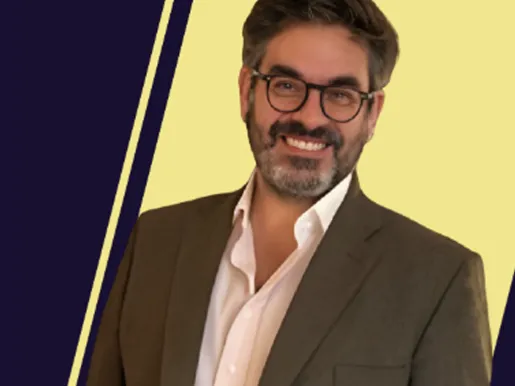
And what happens to the promise of the open internet when governments try to project their censorship rules across borders? Nowhere is that tension clearer than in the growing clash between the United Kingdom’s evolving online censorship regime and the First Amendment protections enjoyed by Americans. Over the last few episodes, we’ve spent a lot of time discussing the boundaries of free speech in the digital world, and today we’ll continue to explore those boundaries with Preston Byrne, who has worked for nearly two decades in international law and emerging technologies as a founder, attorney, think-tank fellow, law professor, and executive.
And now, he is council to a coalition of internet publishing platforms pursuing the UK’s internet regulator. Preston, welcome on to the show. Did I pronounce your last name correctly?
Preston Byrne: Yes, Byrne like rug-burn.
Nico Perrino: There we go. So, I’m reading your bio here. You have your hands in a lot of different pots. You’re an attorney here in the United States. You’re also barred in the United Kingdom, if I’m not mistaken. You teach, you’re a founder, you’re involved in the crypto space. Explain to me how you do what you do? How you got to do what you do?
Preston Byrne: Sure. So, I mean, I have always been interested in the intersection of technology and freedom. That’s something I’ve been interested in, honestly, since college and in law school. When I started my career path going into big law in London back in 2009, when I was a trainee, or even before that, when I was in law school, I kind of had a sneaking suspicion that I wasn’t going to be happy being a corporate associate at a big law law firm. And I was miserably unhappy as an associate. And I was also pretty miserably unhappy as a partner. Even though I did a pretty good job at it, I’d like to say, but –
Nico Perrino: Why were you unhappy, though?
Preston Byrne: Because ultimately, I started out my career in London as a banking lawyer. Banking law is pretty dry. I found myself looking ahead to guys who were 10, 11, 12 years out, on the verge of making partnership, and what were they doing, right? They were producing documents for debt deals that would outlast them, right? Some of these deals, the maturity dates on the loans, were longer than the maturity dates on the associates. And I knew at that point, right, when I was a working lawyer, that I was gonna be pretty unhappy.
But going back earlier, the free speech journey in particular started actually with 4chan, if you can believe it, 4chan had a series of protests against the Church of Scientology called Project Chanology back in 2008. And I was present at those protests because I was a chaner, right? I was in law school, bored, free time, you go hang out on 4chan.
Nico Perrino: Can you tell our listeners what 4chan is? I suspect many of them will be familiar, but maybe we have some older listeners who don’t spend much time on that corner of the internet, so to speak.
Preston Byrne: I mean, 4chan’s pretty old, so I’m sure you have some older listeners who did spend time on 4chan – 4chan’s what they call an image board. So, it’s a place where people share images and then they talk about them and memes – a lot of memes come from 4chan – because people share images that are funny, they propagate. The more entertaining the image, the more people talk about it. Very anarchic. Very chaotic. And I was at one of these protests, and a kid was holding up a sign that said on it – very simple sign, right? “Scientology is a dangerous cult.” And he received a criminal summons from the City of London police.
I was there when it happened. I was five feet away from the kid. And I was so stunned that this could happen in a western country for an act like that, that that started my journey down to becoming a free speech lawyer, which, of course, wound up leading to my leaving banking law, becoming a technology lawyer, looking at issues like content regulation, content moderation, platform regulation, and all those sorts of things, and kind of self-taught and self-built my own practice in that area representing smaller companies rather than bigger ones. So, there are two ways you can represent a social media company.
One of them is you work your way up in a big law company or a big law law firm, and you join a deal time and you work on a particular aspect of their work, and then maybe you go in-house, or you become a partner, and you service that particular client. The other way is you can decide that big law is not for you, and you can go for smaller companies that either can’t afford big law counsel or big law firms won’t represent them. And that’s kind of, over the course of eight or nine years, how I managed to meander my way out from a career that started in banking law into one which was social media and all kinds of crazy technology issues.
And I’ve been very happy there. I mean, I think understanding the rules around how people speak and interact with one another, things like law enforcement and dealing with law enforcement investigations around online speech, is actually something I actually quite enjoy doing. It’s something that I’ve got a lot of experience with. Understanding the differences in content regulations. There are 194 countries in the world. Every single one of them regulates speech in a different way, even though most of that speech is hosted, you know, from an internet perspective, is hosted in the United States.
And to a certain extent, US standards have crept out of the United States because everybody’s using American platforms, or predominantly they’re using American platforms to communicate with one another. So, it’s just a really interesting and varied area of law where you never get bored. There’s never a dull minute. And particularly with offensive or controversial speech, there’s always somebody somewhere in the world – it doesn’t matter what the statement is. You can make a statement as boring and dull as two plus two equals four. And someone somewhere is going to have a – and people have had problems with that, right? When they were talking about querying math back in 2020 and 2021, saying that two plus two plus five is mathematically correct.
So, there’s someone somewhere that will find virtually any statement objectionable and want it removed. And understanding that sort of attack vector and then how you can protect against that is just something which – it pushed a button somewhere. And so, for me, that’s what I’ve been doing for about 10 years now is working with companies that tend to host speech that’s on the more controversial end of the spectrum. Not the unlawful side of the spectrum from a US perspective. Very much lawful, but very much controversial.
And then, observing the various different modalities through which foreign governments, foreign litigants, US litigants attempt to remove that speech from the internet because they disagree with it, and designing strategies to prevent those companies' First Amendment rights from being infringed by those various different threat actors. So, it’s been a very weird and meandering career. I’ve taken as much time as I can to do different things. I taught cryptocurrency law at George Mason and Fordham. My day job, the thing that I do that puts a roof over my head, is that I build cryptocurrency exchange compliance programs. That’s something which has some relevance to online speech.
There is a First Amendment dimension for certain offerings in the crypto space, but crypto’s adjacent to free speech because it involves freedom to transact. And that’s what initially got me into that. So, I know financial regulations there. So, it’s this very broad-ranging interactive services, but centralized and decentralized is where I live. And when Ofcom decided, which we’ll talk about in a bit, to go after four American companies for providing services like that, I decided that was the time – one of the companies was an existing client, the others quickly found me through that existing client. And so, we decided we were going to put up a fight, and we were gonna try to protect the American internet. But yeah, I have a very weird and meandering background story, but long story short, involves working a lot of hours on very strange problems, and that’s what I like to do, right? I love solving weird problems that no one else wants to fix because they’re either too controversial or they’re too niche or something else. Just, yeah, hand it to me. I’ll figure it out. And that’s what I like to do.
Nico Perrino: So, if I understand what you’re saying correctly, it sounds like your free speech work is something you do part-time more or less as a hobby?
Preston Byrne: Yes, that would be correct. That’s accurate.
Nico Perrino: And the folks you represent, as you’ve alluded to, are internet platforms like 4chan, like QV Farms, that I think if our listeners are familiar with those platforms will have an idea of these platforms as being some of the more hateful corners of the internet.
Preston Byrne: I think, of course, I have experience representing these platforms, right? And I look under the hood. And when you look at these platforms and how they actually function, you find that about 99.5% of the content that they host is completely anodyne and boring and stupid, right? For the most part. It’s just people talking to each other. What happened was, the large tech companies have had an interest in painting and portraying these companies as the bet Mars of the internet because that way regulatory attention is focused on them and it’s not focused on Meta and Google and other companies, which frankly host far more content of unlawful nature, right, in a lot of cases.
Which, of course, they engage in best efforts to try to address, right? They have compliance programs. They have legal teams that focus on these issues. It’s very easy to cherry-pick content from these websites and paint them as these lawless anarchic spaces, right? But I’m their lawyer, so I know a couple things because I’ve looked at this problem in great detail. They respond to law enforcement requests. They usually respond to law enforcement requests more promptly and with greater cooperation than the large companies do, right? So, there’s one company I represent where their average turnaround time on an emergency data request from the FBI is something like 25 minutes, right?
Which is unbelievable. Whereas if you dealt with a larger platform, it’d be measured in days. So, I think that reputation is a function of the fact that a small portion of the aggregate speech that they permit is extreme, right? And they permit that because they believe that the principle of having a space where the First Amendment operates online, warts and all, is important. And then, what happens is critics of those sites focus on that very small quantity of content. And then, they say, well, because you allow this at all, we’re going to tar your entire site with that brush and make broad generalizations. So, in the main, the content on these sites is pretty, pretty anodyne and boring. It’s just people talking to each other. You don’t tend to find large groups of millions of people screaming at the extremities to each other all the time.
But they do permit, right, that small slice of speech that they do permit is extreme. And so, what happens is people say, “Well, that’s the only place we can find it, so that must be what the whole site is about.”
Nico Perrino: And how did you come to become involved in those? You said you were a user or a visitor to 4chan back in the 2000s.
Preston Byrne: I mean, 4chan has millions of users. So, I think if you’re an internet culture native, you’d occasionally browse the 4chan back in the day.
Nico Perrino: But how did you come to represent them? Become their lawyer?
Preston Byrne: Yeah, so I started by representing a company called Gab. There was a mass casualty incident in Pennsylvania. The individual who carried it out posted his intent to do so on Gab. The site fully cooperated with law enforcement in that investigation. But the attorney general, now governor of the state of Pennsylvania, Josh Shapiro, sent the company a highly invasive subpoena with a view to trying to knock the site offline through legal process. And I was put in touch with the founder of the site, and I had just finished law school in the United States and just opened my own law firm.
And the founder said, “I need help,” and that was it. I took that matter, and that was probably at that time, I would say, the most controversial instruction in technology law in the United States, and worked my way up from there. So, I’d been focused on free speech issues as an academic or intellectual pursuit up until that point, which is how I got to know people in that space. And then, the rubber met the road, and it was time to actually do a legal representation, so I started doing that. I later represented Parler. After January 6th, that site was deplatformed. And so, I was brought in to advise that company. I’ve also now, as a matter of public record, advised all of Ofcom’s targets in its attempt to extraterritorially enforce English law in the United States. I’ve been adverse to every single censorship authority you can think of. I’m actually currently adverse to authority exercising powers under the EU Digital Services Act, under the UK Online Safety Act, and the Australian E-Safety Commissioner. I’m pretty sure I’m the only lawyer in the world who’s adverse to all three at the same time, except possibly for X’s lawyers. And so, from that point of view, you know, it’s been an area where the targets tend to be small, the targets tend not to be able to afford a defense.
And if we allow those targets to fold, right, in the face of the foreign pressure that they’ve been placed under, then a precedent has been set that foreign pressure can have an effect in the United States. And that’s something that we’re very determined to not permit. So, I got into it eight years ago. I’ve been writing about it for 15 years. I’ve been practicing it for eight. And there are not a lot of people in the space simply because the targets for these censorship regulations – they’re always probing and testing weak targets. The NetzDG has been enforced against two social media companies I can think of. One of them is Telegram.
It received an order and ignored the order. The other one was Gab. It received an order. The Germans tried to order them to set up a representative office for service of process in Germany. The company refused. They’ve been trying to enforce a 30,000 Euro fine over that for the last eight years, completely without success. So, I’ve seen it all, and as a consequence, it’s now kind of a snowball situation where anyone who’s getting a foreign censorship order writes to me and says, “Hey, could you please give me some pro bono advice because I can’t afford a defense either, and this foreign censorship agency is trying to make an example of me.”
What we’ve seen now is that Ofcom is actually starting to pivot. They announced yesterday that they were opening files on X, Facebook, Roblox, TikTok, and a bunch of other major companies that, I believe, have UK footprints. And so, accordingly, they’re not judgment-proof in the United Kingdom. And so, I think we might wind up seeing a change in strategy where instead of going after the weak targets where they know that the weak target’s going to get a lawyer and they know that the lawyer who’s dealt with the matter has seen this movie before, they’re starting to go after the larger targets who I think – I mean, Google expressed incredulity. They said in their announcement, “Why aren’t you going after the high-risk websites? Why are you coming after us?” in a statement that was given to the BBC. And of course, I thought to myself and posted on Twitter, it’s like firstly, thanks, I saw the 65 hits on my website from Council Bluffs last night, so I know you guys were looking, and second, the reason that they’re going after you and not going after the little companies is ‘cause the little companies fought and you didn’t. You appeased. You accommodated. So, it’s been a self-perpetuating cycle of pro bono work over the last several years, dealing with this stuff, either pro bono or very low bono.
And so, at some point, I’d like to stop doing it because it consumed you. I’d like to win so that we don’t have to do this anymore. But yeah, in the meantime, it’s a huge amount of fun, and I derive immense personal satisfaction knowing that I’m helping protect my country and our civil rights.
Nico Perrino: Yeah, and when you’re talking about these foreign censorship laws, what are the things that these foreign countries are trying to censor? Is it offensive speech that would be protected under the First Amendment here in the United States? I mean, is that generally the standard that you’re looking at when you’re defending these companies? Or are they trying to go after categories of speech that would be unlawful here in the United States? Speech in a world of criminal conduct, incitement to imminent lawless action, defamation? I know defamation standards are different outside of the United States than they are here.
But offensive speech in the United States is protected. We have no federal hate speech code, for example. I was just in Cambridge, as some of our listeners know, debating the proposition this house believes in the right to offend. So, what is it that you’re defending, typically on behalf of these companies against foreign censorship efforts?
Preston Byrne: Yeah, so typically what happens is you see the foreign government in question trying to take the first inch, right? They don’t come in the front door and say, “Okay, we’re expecting full compliance with our laws,” as if we’ve been engaged in a constructive dialogue for several years about how you’re going to comply. So, with the UK, they came in, and they said, “Okay, well, under section nine of the Online Safety Act, you’re required to produce a risk assessment. So, please tender the risk assessment to us. And that’s very similar to the California law, which was struck down, requiring social media companies to explain their content moderation policies to the state.
Nico Perrino: Is that the Age-Appropriate Design Act?
Preston Byrne: It’s the Age-Appropriate Design – I can’t remember whether it’s that or something else. I’m not an expert on that particular code ‘cause I haven’t dealt with it. I’m an expert on the Online Safety Act and what they’re trying to enforce there. So, they’ll come in, and they’ll say, “We want that first inch, right? We want a little bit of compliance. We’re not gonna have that conversation yet about illegal content or anything else because we presume you’re guilty of posting that, but we wanna see if you’re gonna comply with this requirement to fess up about all of the illegal content you have on your site.” And so, they went after a couple of companies for that, 4chan, of course, was one of them.
And 4chan was the first one where they advanced to fine proceedings, and they said, “We’re gonna fine you for this because you haven’t been responding to our letters.” And as soon as they issued the provisional decision saying, “We’re gonna fine you,” and announced it publicly, we told them flat out, we said, “Okay, cool. We’ll see you in court.”
Nico Perrino: So, they weren’t even going after any specific content. They just wanted this report produced that would tell the regulator about the content on the platform and how it responds to that.
Preston Byrne: Correct. And so, we turned around and said, sorry, we’re not doing – and if you look at their codes, there’s kind of an order of operations and an order of severity. So, the minimum that they expect every American company to have on file and ready to go is this risk assessment report. And then, if you don’t provide that report on demand when they send you a legally binding information request, they can have you arrested if you set foot on British soil. And yeah, yeah.
Nico Perrino: Sorry to interrupt you here. I’m trying to understand how this all works on the internet, which is like this free and open space. Does 4chan have assets in the United Kingdom? Does it have people in the United Kingdom? Can it decide just not to operate in the United Kingdom? How does this even work on a free and open internet?
Preston Byrne: Yeah, that’s a good question. And the answer is that they drafted a law which purports to have extraterritorial effect in the United States. And what they say is if a service markets to the United Kingdom or targets the United Kingdom or if it’s very high risk to users in the United Kingdom, which is a very vague and loose definition, then they have the ability to enforce the Online Safety Act extraterritorially against those services. So, they said, in our estimation, and keep in mind, this is not a judicial process that’s happening. This is an agency which has been given immense powers by parliament, and those powers include the ability to write their own rulebook, enforce actions, reach determinations, and grade their own homework as they do so.
So, the judge, jury, and executioner. And so, that agency said, “Well, we’ve selected you, 4chan, because all of the NGOs we work with and all the big tech companies who’ve been engaging have pointed to you as the big bad of the internet. And so, what we’re gonna do is we’re gonna focus our enforcement efforts on you, and we expect you to comply with our rules because we have deemed you high-risk. So, there’s no physical nexus with the United Kingdom at all. So, parliament, in principle, its powers are supreme.
There’s an expression that was a famous English jurist named Sir Ivor Jennings said that if parliament decrees that it’s unlawful to smoke on the streets of Paris, then it’s unlawful to smoke on the streets of Paris under the English legal theory. There are two sides to that statement, right? One of them is parliament’s power is absolute, theoretically. The other one is, its power is so absolute that it can legislate something which is completely ridiculous.
And that’s what they’ve done in this case is they basically said, if your server in the United States is accessible from the United Kingdom and we deem that your content, even if perfectly lawful in the United States, is harmful to UK users and that you are high-risk and it presents a risk to users in the United Kingdom. Never mind the fact that the users in the United Kingdom who are seeing this stuff are people who want to be there, right? In the entire time I’ve represented every single one of these companies, collectively we’re looking at tens of billions of page views over nearly a decade.
Not once has a user of the platform written to any of these platforms and said, “I need you to protect me from you because you’re not doing a good enough job.” Right? It has never happened. Not once. And I’m sure at some point someone’s going to do it just to prove me wrong.
Nico Perrino: After hearing you on this podcast, they’re gonna do it, yeah.
Preston Byrne: After hearing me on this podcast. But it’s a censorship regime, right? It’s a censorship regime plain and simple. And it purports to have extraterritorial effect, and because of that, they have chartered a direct collision course with the First Amendment which states that Americans don’t take orders from anybody about this stuff as long as they’re physically present in the United States.
Nico Perrino: And it’s enabled by this Online Safety Act?
Preston Byrne: Yes.
Nico Perrino: The purpose of which is to what?
Preston Byrne: The purpose of which is ostensibly to protect UK internet users from bad content that might be “harmful” to them. That said, the way in which it’s being enforced, we’re seeing the UK effectively treated as a global content mandate. There are some anecdotal reports that a Canadian web forum about depression geo-blocked the United Kingdom. And Ofcom communicated to them that the geo-block is not sufficient, and, therefore, they have jurisdiction to impose their rules on the Canadian forum.
Another client I represent, which is one I have the most discomfort over, to be blunt, it’s a US mental health discussion board that permits discussion of certain topics I’m not gonna discuss here – self-harm, let’s just leave it at that. That platform geo-blocked the UK, and we read a provisional decision that Ofcom is proposing to issue – they haven’t published the final decision yet. We made some representations, but it was clear from the provisional decision that they were unable to access the website except via VPN. And they told this website in their correspondence, “We want you to set up a geo-block.”
The site then set up the geo-block, then Ofcom changed their mind about whether it was suitable or not, and then they turned around and they had to deliberately circumvent the same measure they ordered this site to put in place in order to bring forward enforcement action. And so, we’re waiting to see whether they finalize that, and if they do, the correspondence will be released in the decision. But effectively, we said to them, “Listen, you told this website to do this. You then circumvented it with measures designed to circumvent a geo-block that this site can’t control. And now you’re telling us that as a result of your circumvention of a measure you ordered, you’re gonna fine this site a million pounds or threaten ‘em with prison time or a blocking order. It’s preposterous.” So, the manner in which the extraterritorial powers are being exercised suggests that the United Kingdom thinks it has global jurisdiction to regulate content on the internet generally, regardless of where it is, unless there’s some way that you could essentially limit the access to that material to verified KYC American internet users. And that’s something, which for none of my clients, is on the table.
Nico Perrino: If they think it’s really harmful and they wanna actually be effective in this regime, and this is something that I’m by no means actually recommending, why don’t they put the onus on the internet service providers, VPN providers that do business in the United Kingdom? Why are they coming after these other companies that are incorporated in the United States?
Preston Byrne: They want to. I think they tried to go through the front door. They tried to say to Americans, “Listen, you’re gonna have to do what we say.” The Americans refused. Currently, there are proposals moving through parliament to impose controls, both device-side and client-side scanning on mobile devices and computers, VPN licensing, and VPN KYC. But the issue is, once you do that, once you say, “Listen, you have to KYC to use an English VPN to provide a VPN service in the UK,” effectively that becomes a global KYC mandate, right? An age verification mandate. Because as long as someone –
Nico Perrino: KYC – can you define that for our listeners?
Preston Byrne: Know your customer. So, if you go to a bank and you wanna open a bank account, you have to present identity documents. You have to verify that you exist. You have to present your Social Security number. You have to verify who you are. They run reference checks and the rest of it. Essentially, what the UK seems to think is that the only way, based on what I’m seeing with the geo-blocked cases that are currently live and ongoing, is that the geo-block isn’t enough.
What they want you to do is implement even more aggressive age assurance, even if you’ve put up a geo-block of the country, which is tantamount to saying that even if you’re an American company that has no connection to the UK whatsoever, and you’ve geo-blocked the country, it’s still not enough. They still want you to impose the age verification mandate, and doxxing rules, and identification, and other things, which is effectively a global mandate, right? A global mandate saying that their rules apply on a global basis.
Nico Perrino: China hasn’t even tried to do that, have they? I mean, they create the Great Firewall…yeah.
Preston Byrne: China and Russia wouldn’t dare. Yeah. China and Russia wouldn’t dare. I mean, I’ve seen Russian censorship wars from time to time. They don’t try to do this – what the UK is trying to do. And I’m not sure why the UK thinks it’s appropriate for them to do it. I suspect it’s because it knows that there are aligned political forces in the United States who wouldn’t mind terribly if they got away with it. But there are also political forces in the United States that are fairly upset with this.
Because they speak English, I think, is really the reason – it’s the reason that they think they can get away with it because they speak English and everyone, like the Queen, they think that they’re gonna be able to get away with something that the Chinese couldn’t.
Nico Perrino: But we’re trying to do stuff like this in the United States, too, to the extent the Online Services Act requires age verification or know your customer standards. We are having debates in Congress right now about whether to implement, if not the same, similar standards here in the United States for access to social media channels.
Preston Byrne: Yeah. And thank God for guys like Paul Taske and the NetChoice crew for getting those mandates struck down. At least here we can fight, right? The difference with the foreign stuff is that if you then – you know, we actually sued Ofcom, right? We sought a declaratory judgment in D.C. seeking confirmation that their orders weren’t validly served in accordance with US law and procedure. And they turned around, and they ran behind sovereign immunity in order to try to avoid liability for that or avoid a decision that would be adverse to their enforcement efforts. So, at least in the US, we have the First Amendment, right?
We can wield that as an offensive weapon to go and protect ourselves from these kinds of domestic censorship attempts. The issue with the foreign stuff is that your options in responding are very, very limited under current law, and as a consequence there’s not a lot you can do to stop it except by really being very integrated across the media sphere, by making sure the people know that you’re refusing the orders, by making sure that those refusals are very public and very funny. With 4chan, for example, we’ve been responding with pictures of hamsters, which is –
Nico Perrino: Yeah, my producer, Emily, said you were posting memes in response to Ofcom’s demands on social media. It seems like your strategy is deliberately to raise public awareness of what they’re trying to do.
Preston Byrne: I mean, it’s to raise public awareness. It’s to put pressure on federal officials to move off the plate and do something, and we’re hopeful that they will.
Nico Perrino: And I wanna get into that in a second.
Preston Byrne: Yeah, we’ll get into that in a second. But also, I mean, it’s also when you’re faced with an entity that’s wielding effectively absolute power in a sovereign fashion, you can respond to them on their terms, right? You can turn around, you can file a lawsuit in an English court. You can turn around, write a really formal, stuffy letter. And the aggregate effect from a legal point of view would be exactly the same as sending a hamster picture, but the hamster picture at least makes them look ridiculous. And that’s a tool that most lawyers are not willing to use. But in this case, I wanna win, and so I am willing to use it. And so far, we’ve been using it to fairly great effect.
Nico Perrino: Judging by your accent, it sounds like you were born in America?
Preston Byrne: Born in America, moved over there, went to college over there, trained and qualified over there, lived there for 15 years, and then came back. And I’ve been in America since 2017.
Nico Perrino: So, I wanna get your understanding then of the free speech cultures in both of these countries. In America, you said we have the First Amendment. That’s kind of our guiding light for how we think about these issues, although the First Amendment hasn’t always been as robust as it is today throughout American history. But England, I mean, this is the land of Mill, Milton, and Orwell. A lot of American thinking about free speech comes from John Stuart Mill’s On Liberty. John Milton’s Aeropagitica. But it sounded like you were saying earlier that it’s harder to uphold these sort of free speech norms there, not just because you don’t have the law that mandates it, but because it’s almost not demanded. I think I read in, what was it, the Sunday Times, that something like 30 people a day are arrested in the United Kingdom for offensive speech.
Preston Byrne: Yep.
Nico Perrino: That’s far and away above what happened even during the most censorial period in American history, right after the Espionage and then the Sedition Act during World War I, when I think something like 2,300 Americans were prosecuted during that period.
Preston Byrne: Yeah.
Nico Perrino: So, explain to me how you view these two cultures, having had a foot in both of ‘em.
Preston Byrne: Yeah, so I started living in the UK in 2002. So, there was a very rapid backsliding that occurred in the 20-year period between 2002 and 2022.
Nico Perrino: And that’s around when the Communications Act was passed there.
Preston Byrne: The Communications Act was enacted in 2003, which created the offense that a lot of people are arrested for, which is sending a grossly offensive communication over a public telecommunications network. The key thing to remember is that English norms were very different in 1990 than they are today. And so, you had a lot of different rules around public order and speech and malicious communications. But because the cultural background and the political background was different, you didn’t tend to see these cases used except in the most extreme examples.
So, the Public Order Act, for example, was used to prosecute a guy named Hamit Coskun for burning a Koran outside the Turkish Embassy, which is arguably an expressive act. In the United States, it would be. The canonical case for how you use the Public Order Act in a criminal prosecution comes from 1972, a case called Brutus versus Cozens, or Brutus and Cozens as you would say over there. In Brutus and Cozens, someone walked out onto Center Court in Wimbledon and started leafleting and protesting. That’s worse than taking a dump on a church altar. That’s sacrilege.
Nico Perrino: The hallowed grass of Wimbledon.
Preston Byrne: Hallowed grass of Wimbledon. So, that was a prosecution where there was shock and offense and disturbing and this and this. It was originally intended to deal with situations where public order was seriously disturbed.
Nico Perrino: And that wouldn’t be protected activity here in the United States.
Preston Byrne: I mean, trespass, right.
Nico Perrino: Yeah. Sure.
Preston Byrne: And you’d be asked to leave, right? And then you’d leave. So, that’s what that would be here in the US. Over there, there were cultural constraints on these overbroad laws that prevented their overbroad application. But when politics everywhere across the western world took a very crazy leftward turn around 2012, 2013, there were no guardrails in the UK to prevent these laws from being reinterpreted in different ways. And so, you would see cases that were decided around 2000 that all went one way, and then cases on identical facts only 10 years later would start going the other way, and would go the other way on appeal as well.
So, for example, street preachers. That used to be perfectly lawful activity in the United Kingdom. There’s a case called Redmond-Bate from 1999. The words are not contained in the judgment – the exact words that were used, but we understand from Lord Justice Stephen Sedley that someone was preaching basic principles of Christian morality, as it was described, in public. Someone was offended by it. The police officer arrested the speaker for breach of the peace. And the speaker was convicted at trial and then had that overturned on appeal to the high court. Now, if you had that happen, they would be convicted at trial, and the likelihood of successful appeal is considerably lower.
And we’ve seen a line of cases where that’s the case, where someone who’s engaging in perfectly lawful activity, someone gets offended, they get arrested for breach of the peace, they get arrested for Public Order Act violation. And then, the Public Order Act violation – so, in Coskun’s case, right? He was attacked by a guy with a knife. He was stabbed. Someone tried to kill him for burning a Koran in public. And he was the one who got arrested.
Nico Perrino: That’s a heckler’s veto.
Preston Byrne: Right.
Nico Perrino: Classic heckler’s veto.
Preston Byrne: Classic heckler’s veto. And that’s because you had these overbroad laws that said offensive speech is banned. But then, the cultural concept of what is offensive changed. And as a consequence, the meaning of the law itself changed because there’s no objective test if I was to judge it. And generally speaking, anyone who is sort of 45 and up or 50 and up in the UK is very much in favor of censorship. The people who are running the media class, political class, and others who are a little more senior than we are, they tend to be very pro-censorship, whereas the younger set tends to be very anti-censorship. And so, that’s –
Nico Perrino: Well, that’s good news, I guess.
Preston Byrne: So, Toby Young is a guy over there, Lord Young, who is the –
Nico Perrino: Free Speech Union.
Preston Byrne: – Free Speech Union, right. He’s the Secretary General of the Free Speech Union, member of the House of Lords. He started the Free Speech Union in 2019. Nobody cared. I wrote a paper proposing a First Amendment for the UK in 2020. Nobody cared, right? It was a complete non-event. And we got one angry letter from the law commission to the Telegraph because we accused them of cowardice for proposing another hate speech law to further restrict, and they said, “We’re not cowards,” and it was like, “Yeah, you are.”
But it was a hate speech law because they said, “Listen, the Charlie Hebdo attack from our perspective means that we need to restrict speech further to prevent provoking that kind of attack in the future.” And it’s like, “No, no, no. That’s the wrong answer.” So, things have gotten sufficiently bad in the UK that you now have an organic, and growing, and aggressive, and vocal free speech movement. But ultimately, they don’t have the legal tooling available to fight back against the infringements on free speech, which are increasing geometrically, right, in scope.
Nico Perrino: Yeah.
Preston Byrne: Parliament now can under-labor. They’re proposing that ministers should have the power to unilaterally amend the Online Safety Act without a vote of parliament and that the entire thing can be done by delegated legislation and rulemaking, which doesn’t require parliamentary scrutiny and approval. So, essentially, what they would be doing is the minister for DSIT, Department for Science, Innovation, and Technology, would, in effect, be the country’s chief censor with unilateral power to amend online censorship laws more or less at will without parliamentary scrutiny. And that’s a very dangerous place to be going, right? And it seems, if labor seems in power for too much longer, that is exactly where they will go.
I don’t think that that’s consistent with the English constitutional tradition. I don’t think it’s consistent with English legal principles or the long history the country has with moderation and exercise in government power. I think it’s extreme. And I think it needs to be opposed. And for now, the English seem unable, and the British generally seem unable to oppose it within their own borders. And so, it’s really important to make sure that we oppose it from outside so that it doesn’t spread here or that it doesn’t get a toehold here. So, that’s –
Nico Perrino: Well, at least here in the United States, if you look at American history and its experience with censorship, during those periods where censorship has been at its worst, there’s often a backlash that expands our free speech rights. So, if you start with the Sedition Act of 1798, the effect of that – the effect of throwing people in jail for criticizing Congress or the presidency was that the party that did it, the Federalist Party, is no longer a party in American life. John Adams was voted out of office largely due in part to that. Thomas Jefferson was put in his place, voted in, and one of the first things he does is pardon those who were convicted under the Sedition Act.
Their fines were repaid. If you fast forward to World War I and then the Palmer Raids, we had something like 2,300 people who were prosecuted under the Espionage and Sedition Act, as I mentioned before. But after that, you start finally getting movement from the Supreme Court to defend free speech rights, starting with Justice Oliver Wendell Holmes’ dissent in Abrams in what I believe was November of 1919. And Abrams led Justice Holmes and Brandeis to say things like, “America got a little hysterical with censorship, and President Wilson would be right to do some pardoning.”
And this is coming from a justice in Holmes who voted to convict people in four famous cases earlier that spring under the Sedition Act and the Espionage Act. The Sedition Act was an amendment to the Espionage Act. Then you fast forward to the McCarthy Period, the Second Red Scare, and a lot of those blacklists and show trials in Congress. There’s a reason that McCarthyism has become a slur in American life, and it led to a lot of the really speech-protective decisions that you got in the late ‘50s and ‘60s. So, this is a long way of me saying that I’m heartened to hear that a younger generation seems to be coming around to free speech in the United Kingdom as a result of the excesses and censorialness of the administration there.
What – 12,000 people arrested for speech crimes in one year alone, 2023, in England is just crazy. So, hopefully, in that respect, history repeats itself.
Preston Byrne: And we’ll see. I mean, I have a small team assembled, and we’re working on a bill to essentially replicate with some modifications to account for English cultural sensitivities, First Amendment protections there.
Nico Perrino: What does that mean – English cultural sensitivities?
Preston Byrne: Well, I mean, there’s certain things in the UK – there’s certain things that you’re just never gonna be able to do. For example, we’re gonna look to make it written and spoken, right? Expression is the core of the right, which is not to be touched.
Nico Perrino: So, no flag burning?
Preston Byrne: You know, we’ll leave that up to the courts, I think, is the way to figure it out. You’ve gotta leave enough room for the judiciary to figure out what the acceptable – you’re never gonna be able to get it all into one bill, right? The Constitution certainly didn’t.
Nico Perrino: Well, I mean, the First Amendment says nothing about flag burning, and the Supreme Court said nothing about it until 1989. It had punted in previous cases or explicitly said that that sort of expression wasn’t protected. So, if you write it broad enough, then the courts can interpret it. But if you write it broad enough, then you can end up in the situation that you have right now in the United Kingdom as well, where it just ends up getting interpreted in very narrow ways, and you ultimately have no right to offend.
Preston Byrne: Yeah. Writing laws is tricky business. So, I’m glad I do it as a hobby and not for a living.
Nico Perrino: I mean, all the First Amendment says about free speech is Congress shall make no law abridging the freedom of speech. That’s pretty much the guidelines that are given to judges and to Congress. Yeah. So, all right. Let’s talk now about your efforts here, at least in America, to protect Americans and American companies from the censorial efforts that are happening overseas. You have this thing called the GRANITE Act.
Preston Byrne: Yeah.
Nico Perrino: G-R-A-N-I-T-E, Granite. Tell our listeners what that is.
Preston Byrne: So, GRANITE stands for – it’s an acronym, obviously.
Nico Perrino: You gotta have a good acronym.
Preston Byrne: Gotta have a good acronym. And the reason we picked GRANITE is because I was in New Hampshire when I came up with the idea at a conference in Portsmouth. And GRANITE stands for Guaranteeing Rights Against Novel International Tyranny and Extortion. And what the law does, it’s pretty simple. There are two versions. One-half of it is a shield, which confirms existing judge-made principles that foreign censorship orders transmitted across America’s boundaries are not enforceable in the United States.
There’s an added part of the shield, which prohibits executive branch or state agencies from cooperating or collaborating with those requests and permits someone who’s affected by that to seek declaratory or injunctive relief in order to prevent the state from carrying out that request. And there’s a second piece, which is a sword. And the sword creates a private right of action which says that if a foreign entity – and keep in mind, these foreign entities, when they’re writing to Americans, are threatening them with Titanic fines, 10% of global revenue on a worldwide revenue, right?
And so, for Facebook, $164 billion in revenue, a $16.4 billion fine for potentially violating one of these rules. And so, they’re writing to American companies threatening these huge fines. And we think that a shield is not enough alone to deter those fines. And so, we propose that if a foreign government threatens that fine, then what happens is the American target of that fine benefits from a civil cause of action against that foreign government for the amount of the threatened fine. So, any attempt by a foreign sovereign to project a censorship rule in the United States will create liability in the United States, which would then be recoverable from that foreign sovereign’s sovereign assets in the United States or when they are moving through the American financial system. So, that bill was introduced in Wyoming at the end of January. We got it through the Wyoming House of Representatives 46 to 12, so that’s an 80% super majority vote. There was some controversy over the sword piece because people worried that it stepped on federal preemption issues. Congress, obviously, and the federal government has the right to – they’ve got the Foreign Sovereign Immunities Act, which is an issue.
They have the right to conduct foreign relations. And so, there was some opposition there. And then, it died in the Senate. Made it passed at a committee in the Senate, made it to the Senate floor, but we didn’t have enough legislative time, so about 13 bills didn’t make it because it was a short budget session in Wyoming. So, it’s being taken up as an interim topic, and it’s going to be reintroduced in the 2027 full legislative session for the state of Wyoming. We also have a version of that bill bopping around in New Hampshire.
We missed the filing window by about two weeks because the GRANITE concept was published about two weeks after the filing window closed for the 2026 legislative session. So, we are trying to see if we can get a slimmed-down version of the GRANITE Act through, so just the shield piece by way of an amendment to an existing bill. That’ll have to wait to see what comes over from the Senate to see if there’s anything germane that we can amend. Otherwise, we’re gonna be looking at 2027. A copy or a version of the GRANITE Act was also introduced in the West Virginia Senate this year, shortly after the Wyoming version was introduced.
Didn’t make it out of committee because it was, again, a short session. They had two or three weeks to get it out of committee, and didn’t make it out of committee, but we’re gonna see if we can do it again next year. And I am reliably informed by public statements from federal officials that a federal shield bill is being worked on in the House and the Senate. I don’t know anything more than that. Sarah Rogers is the very pro-free speech undersecretary for public diplomacy, told journalist Harry Cole in an interview about a month ago that shield bills are coming. Senator Eric Schmitt has vowed to introduce one. Chairman Jim Jordan has said that they are looking at the GRANITE Act proposal that we produced. They obviously saw copies of the bill a few months ago. I’ve heard through backchannels that it might be that some GRANITE concepts have made it through, but they don’t tell me very much because I’m one of the belligerents. So, they don’t tell me anything.
Nico Perrino: Well, let’s break this down a little bit. I wanna talk about the shield side because there is some precedent for that at the federal level. You have the speech act, which shields Americans from foreign defamation judgments, right? So, this would functionally be the equivalent to that, but for a broader scope of speech-suppressing judgments.
Preston Byrne: So, we tried to replicate with this whole situation the same fact pattern that if you’re familiar with the Ehrenfeld case, presumably, which is what eventually led to the Speech Act. And so, Rachel Ehrenfeld was a writer in the United States. She was sued. I believe she defaulted on a defamation judgment in England, which they then attempted to enforce in New York. New York then passed something called the Libel Terrorism Act, or Rachel’s Law, which was the predecessor, the forerunner, of the Speech Act. And then, two years later, the federal government took up the Speech Act itself. So, there’s a pattern where –
Nico Perrino: Defamation is approached differently in the United Kingdom.
Preston Byrne: Completely.
Nico Perrino: It’s much more liberal and easier to win a defamation judgment overseas than it is here. I mean, this might be the most difficult case to win a defamation judgment in the world – the United States.
Preston Byrne: Yeah. I mean, the thing to keep in mind in England is that the burden of proof, if you’re raising truth as a defense, the burden of proof is on the defendant to demonstrate the truth of the state rather than the plaintiff to demonstrate its falsity. So, what happens is you get fantasists and liars going to court and then bringing these defamation actions. There’s also costs orders that are associated with it. It’s a loser pays system. So, it’s very heavily stacked in favor of plaintiffs and is a consequence. Particularly, there’s no different standard for public officials. They don’t have an actual malice standard, for example.
Nico Perrino: And that’s why Deborah Lipstadt had to essentially prove that the Holocaust happened when David Irving sued her for defamation for calling him a Holocaust survivor.
Preston Byrne: Exactly. Exactly. That is exactly. But if you win, right, then you’re in a very, very good position. So, from that, there was a pathway there, right? There’s a piece of litigation. There is then state legislation. Then there was federal legislation to match. And so, what we did is we brought litigation against the UK Office of Communications, their internet regulator.
Nico Perrino: Ofcom, as you’ve been referring to them.
Preston Byrne: So, we brought a case against Ofcom. We sought very, very narrow relief. We said, “Listen, we want a declaration from the court that these orders were not properly served because they were sent by email.” Right? There was no attempt at domestication to US court ‘cause no US court would’ve domesticated it. We brought that suit against Ofcom. Ofcom responded by moving to dismiss the case, invoking sovereign immunity. We made an argument about why we didn’t think sovereign immunity applied in that case. Because we said, “Listen, they’re engaged in certain activities here in the United States.
And in the United States, that activity is not reserved to sovereigns. It’s something only private actors can perform.” They filed their reply brief, and we’re waiting for Judge Contreres to make his ruling. But we were trying to demonstrate to Congress this is what happens when you have a foreign regulator asserting that they exercise authority in the United States. They were also at the same time asserting that they’re completely immune from the courts and the jurisdiction of the United States, as they exercise that authority here. And then, we drafted the law, the GRANITE Act, which fixed that particular problem by removing sovereign immunity and creating a private right of action.
And we did that at state level, and we got it through the Wyoming House by a huge majority. And now we’re waiting to see if Congress looked at that whole process and determined, “You know what? This is something we should do at the federal level.” So, it was very much about demonstrating to them and replicating the pattern that led to this Federal Speech Act. We said, “Listen, these are the necessary steps that you need to go through in order to show Congress that you would require a federal solution to this problem.” And we felt that we’ve gone through the steps. We’ve demonstrated it can be viable at the state level. We demonstrated the nature of the problem and the structural issue. And so, we’re hoping that they have reached the same conclusion that we did before we started all of this.
Nico Perrino: So, help me understand the private cause of action here. So, a company or an individual that’s censored by a foreign entity would then sue that entity or those officials in their official capacity?
Preston Byrne: So, the way that this sword provision works is that if an entity is – so, we define a foreign censorship law very broadly. So, it’s an order, judgment, finding, mandate, you name it.
Nico Perrino: Something that would impact your speech rights.
Preston Byrne: Something that would impact your speech rights or threaten to impact your speech right. If they threaten to enforce, attempt to enforce, or actually enforce that law against you in the United States, then you have a private right of action, and you can seek injunctive relief, and you can seek declaratory relief in an American court, state or federal. Now, if you brought it in state, because the FSIA is worded the way it is, they immediately seek to remove to federal court and then dismiss it there. But the idea is that if that threat is transmitted to you on receipt, right, recognizing that the threat itself has a chilling effect.
On receipt, you would have a cause of action against the foreign censor in your home state, where you could sue them. So, it creates a cause of action, then it’s up to you to get through the various hurdles in the Foreign Sovereign Immunities Act in order to get the relief that you need using whatever theories you can, right? And so, there are ways you can get through, right? The Foreign Sovereign Immunities Act is a pretty robust shield, but it is not a perfect shield. And so, our opinion was that creating this at state level would increase the risk marginally for foreign censor attempting to target the citizens or companies of that state that had enacted that law.
It would be a lot easier if Congress helped to get the FSIA out of the way, right, and created additional carve-outs or exceptions to foreign sovereign immunity that addressed this particular problem.
Nico Perrino: I mean, what are they right now? I’m no expert in this area of law, but I remember the terrorism cases after 9/11, where people tried to go after Saudi Arabia, for example.
Preston Byrne: Yeah. So, terrorism is one.
Nico Perrino: Is that the best comparison, I guess?
Preston Byrne: I don’t think we can say what the UK is doing is terrorism.
Nico Perrino: Sure, but the cause of action, right, exists for terrorism-related activity, if I’m not mistaken.
Preston Byrne: Yeah, but in most cases, you wouldn’t have that, right? You’d be looking at explicit waiver, implicit waiver, or commercial activity. In the 4chan case, we argue that they’re engaged in commercial activity. Whether that’s a winning argument or not remains to be seen. There is also a possibility – I don’t know – let’s say you run a company that has a near monopoly on space launch capability worldwide and satellite internet. And let’s say that company also has a social media offering. And you can dictate terms of service to someone. Terms of service are adhesion contracts, and you could include a provision in the adhesion contract that they waive sovereign immunity in the event of any regulatory dispute.
So, you could turn around, and you could say, “Listen, if you wanna access our services,” Google, Meta, X, and other companies can turn around and say, “Hey, we’re going to put a term in here where you expressly waive your sovereign immunity, and if you want to use American internet infrastructure, as most foreign governments do, then you will be required to waive sovereign immunity in any enforcement action against us.” So, there were ways, we think –
Nico Perrino: Oh, interesting.
Preston Byrne: – yeah, to get through via explicit waiver. Completely untested, right, in this context. And it remains to be seen. We obviously didn’t get the bill through on the first attempt because we ran out of time. But I think the cleaner way to do this is just for Congress to say, “Listen, we want to assume control over how and when American litigants can drag a foreign sovereign into an American court over this issue. And we will set the criteria in relation to which we’ll allow an exception to the federal rules to apply.” And so, that’s over them. Right? That’s their decision.
But there were ways with a state law, but ultimately, we think that the stronger approach is for the feds to amend the FSIA, because at the end of the day, federal law is supreme to state law, and preemption’s a big consideration. But that’s all TBD.
Nico Perrino: Yeah, do you think there’s a likelihood that this could happen? It doesn’t seem like much is moving through Congress right now. For example, our TSA agents still aren’t getting paid.
Preston Byrne: Yeah.
Nico Perrino: President Trump said he’s not signing anything until the SAVE Act gets through.
Preston Byrne: Yeah, we’ll see. I mean, I hope something gets through. I think it’s a really big problem for the entire American technology industry. And it’s not just edgy companies. Reddit has these problems. Cloudflare has them. Now it’s Meta with Facebook, TikTok, Roblox, Google, X, everybody’s got the issue.
Nico Perrino: Yeah, and let me ask you this, though. I mean, some of these companies are so big, so powerful, and foreigners depend so much on their services. The way the Europeans, in particular, are treating some of these companies, is there ever gonna come a point where Google just says, “Screw you. We’re leaving.”
Preston Byrne: Probably not. I think Google probably –
Nico Perrino: Some companies have done that with China, right? They just didn’t wanna abide the standards and censorship that would be required to operate there, so they said, “We’re not gonna operate there.” Then China goes and steals their intellectual property, but you know. I mean, there’s a lot I can say about Europe, but I don’t think they’d be that underhanded.
Preston Byrne: I mean, I think if you look at a company like Google, they make, I think, $26 billion, and formally they make $2.5 billion a year in revenue from the UK, I think unofficially via various different jobs.
Nico Perrino: I love how you have this just at the top of your head.
Preston Byrne: I think unofficially, they make about $26 billion. So, the question is, is the cost of the compliance program and the fine worth more or less than $26 billion a year? If Google decided in its infinite wisdom that it was going to turn around and just walk out of the United Kingdom and turn out the lights, Ofcom would capitulate in a week because most of the country would cease to work. So, they don’t have adequate domestic replacements for the American services that would walk. But I think there’s a lot of institutional inertia at these larger companies, and they just don’t care about free speech that much. Free speech is an issue. They view it as a cross-border regulatory issue, just like every other cross-border regulatory issue, and they deal with it accordingly.
Nico Perrino: Although X left Brazil for a period, right?
Preston Byrne: I believe they did for a period, but they were arresting –
Nico Perrino: Or threatening to do it, yeah. They were arresting its personnel.
Preston Byrne: They were arresting their personnel. I mean, there’s not a whole lot you can do. And, I mean, the French police raided their French office because the rumor is that X turned around and said, “Come back with a warrant. Go use the MLAT if you want this data.” And the French police just said, “Okay, well, we’re gonna go raid one of your branch offices.” And keep in mind, the X branch office in France, these branch offices of the major US companies in Europe, are not where data is kept, right? Those are kept in data centers in the United States and CDN edge servers in Ireland. It’s not necessarily in their home office.
So, the Europeans are being very aggressive about how they choose to enforce against these American companies. They’re being brutish about it, to be blunt. And they’re not really respecting international procedure or international law as they do so. And there are very clear ways for any other proceeding – it’s interesting. If this were any other type of legal cooperation that were being sought with the United States. If it were criminal cooperation for a civil lawsuit. If it were intelligence sharing, whatever else, there is a process that gets followed. And those processes are obeyed.
When it comes to censorship, those processes still exist, but the Europeans drafted their laws to ignore those processes because they know that the United States will never grant them reciprocal treatment. And so, what they’ve done is they’ve chosen to ignore the treaties. They’ve chosen to ignore 200 years of international law. And they said, “This is the way things are going to work on the internet.” And, I’m sorry, but like our position, the small companies that have fought back against this, is that if you want information on us, if you wanna ask about our affairs, if you wanna inquire into our businesses, if you want us to give you data about some personal representative who you can validly serve process on any time of day or night, guess what? Come back with a warrant. That’s what you need to do ‘cause we’re over here, we’re not over there. And they’re bluffing their way through this by purporting to have the power to impose this on American companies. And so far, the bluff has been called, and it’s just not working. And that’s what the hamster’s about. It’s the most public bluff-calling possible. It’s, “Okay, 4chan’s gonna respond to your email with a picture of a hamster. And what are you gonna do about it?” And the answer is nothing.
And then, of course, in two months, everybody’s gonna say, “Well, they sent you a picture of a hamster. What are you gonna do about it?” Still nothing. Why? Because we ignored international law. They know it. They know what their rights are. They asserted those rights and were unable to overcome them.
Nico Perrino: Yeah, well, I’m writing a book about the history of the fight for free speech in America through the lens of the civil libertarians who made our robust First Amendment protections for free speech possible. And as part of the research for that book, I did a deep dive into the period of the ‘80s and ‘90s, where the civil libertarians – I call ‘em cyberlibertarians in my book – defended a free and open internet. One of the people that I research and write about is John Perry Barlow, who wrote A Declaration of the Independence –
Preston Byrne: The great one. Yeah, John Perry Barlow.
Nico Perrino: Yeah, and, you know, when you talk about the Electronic Frontier Foundation, which he cofounded, they really thought of the internet as a frontier through which these grubby, grabby, terrestrial governments had no place to police. They viewed it as digital colonialism of sorts by trying to pass things like the Communications Decency Act in 1996, which was subsequently struck down by the Supreme Court in 1997, and they largely won. I mean, for decades, these efforts failed because they failed in American courts. And because America built up the internet infrastructure, foreigners really weren’t able to do anything about it.
But it seems like now we’re fighting a two-front war, not just abroad, where they’re passing things like the Online Safety Act, or they’re implementing agencies like the Safety Commission in Australia that are trying to reach across borders to censor American internet companies. But even here in the United States, passing things like age verifications, a papers-please approach, to accessing the internet. I almost feel like Russell Crowe in Gladiator, standing there at the center of the coliseum and talking about how I had a dream that was Rome. You know, these cyberlibertarians had a dream that was the free and open internet, and it feels like – and again, yeah, thank goodness for our friends at NetChoice standing there at the frontlines defending this – you as well – standing at the frontlines defending this. But it feels like Roger Baldwin, who cofounded the ACLU, was right, that no battle is ever won. The fight for liberty requires eternal vigilance.
Preston Byrne: Yeah, and we’re standing on the shoulders of giants. It’s those ‘90s precedents which are protecting us now. And our familiarity with those is something that you get the sense that the Europeans just – I don’t know, maybe they missed that period or they haven’t studied it very much, because they walked in here haughty and officious and arrogant, and they said, “You’re gonna obey our rules now.” We said, “No, we’re not. Sorry. This is America.” So, I think, no, but all of the work that was done in the ‘90s to shore up the American internet, and the early 2000s, is very much what we’re drawing on now to mount this defense against foreign intrusion.
NetChoice is doing an absolutely incredible job striking down similar mandates here in the United States. And so, it’s interesting, you mentioned the internet as the territorial frontier, and everybody’s trying to grab the new territory. The funny thing is, the territory that we won in the ‘90s here in the United States, adopting a territorial approach to the internet, is what’s gonna save it. Is that we’ve got this bastion, this very well-armed nuclear superpower, which has free speech. And so, as a consequence of that, you can put servers here, and no one can do very much about it from outside.
Nico Perrino: Yeah. I think it was John Gilmore, another cofounder of the Electronic Frontier Foundation, who said something to the effect that the internet views censorship as an error and just routes around it. I think as technology has advanced, it’s becoming harder to really believe that seeing the Great Firewall in China. There’s still ways to do it, albeit at great risk. But there was that dream that was the free and open internet. And for now, hopefully it still stands, but there are definitely challenges at the frontier. So, Preston, I appreciate you coming on the show and talking about all you’re doing to try and defend that free and open internet.
Preston Byrne: Thanks so much. It was a pleasure.
Nico Perrino: That was Preston Byrne. If you’d like to keep up with the latest developments in his case and hear his thoughts on the broader fight over online speech and international regulation, be sure to follow his Substack. We’ll link it in the show notes here. I am Nico Perrino, and this podcast is recorded and edited by a rotating roster of my FIRE colleagues, including Bruce Jones, Ronald Baez, Jackson Fleagle, and Scott Rogers. Emily Beaman produces this podcast. She edits it as well. Thank you, Emily. To learn more about So To Speak, you can subscribe to our YouTube channel or Substack page, both of which feature video versions of this conversation.
We also have video versions on X. You can search for our handle Free Speech Talk. We take feedback, sotospeakatthefire.org. Again, that is sotospeakatthefire.org. If you have feedback for Preston as well, I’ll be sure to forward that along to him. And if you enjoyed this episode, please leave us a review on Apple Podcasts, Spotify, wherever you get your podcasts. They help us attract new listeners to the show. And until next time, thanks again for listening.