Table of Contents
Age Verification and Speech: Frequently Asked Questions
Research & Learn
Age-verification laws aim to protect children online, but they also raise serious First Amendment, privacy, and effectiveness concerns.

Zulfugar Graphics / Shutterstock.com
WHAT IS AGE-VERIFICATION?
Age-verification is a process that requires users to prove their age in order to access certain content, features, or software (including apps) that has been “age-gated,” meaning accessible only to individuals determined to be above a certain age. Age-verification processes may be required online by social media and other websites, individual apps, and app stores. Alternatively, in device-based age-verification, an individual phone or computer maintains a record of a verified age that sites or apps may request.
Online platforms and devices use a number of methods to determine a user’s age or age range. However, age-verification most often refers to methods which require users to submit some form of hard evidence of their birthdate or age. Frequently, this evidence is a government-issued ID, like a driver’s license or passport. But some processes infer age using credit card or banking information, utility bills or other documents, and some age-estimation may require submission of a selfie for facial analysis. The type(s) of verification required generally depends on the platform and the legal requirement(s) and/or other imperatives it is seeking to satisfy.
The majority of proposed and enacted age-verification laws in the United States and abroad seek to protect children from a variety of potential harms which for some may be associated with social media and the internet, including poor mental health, eating disorders, low self-esteem, and negative impacts on attention and development. Proponents also claim age-verification protects minors from exploitative ads and online predators.
HOW DOES AGE-VERIFICATION WORK?
Typically, a platform or system will ask the user to upload both a photo of their government ID and a live selfie. It then compares the images, usually via an automated facial recognition system, and if they match, the user is age-verified. Platforms or websites can conduct ID-checks themselves, or they may rely on third-parties such as ID.me or Yoti.
The point in the user experience at which the user must verify their age can depend on the platform and on the law. Some sites, including Instagram, Facebook, Pinterest, TikTok, and Google, will require ID if a user attempts to change their self-reported age from under age 18 to over age 18, or if behavioral metrics have identified a user as being underage. In some places that have enacted age-verification laws, a user may have to submit an ID at the account creation stage.
WHAT CONTENT IS AGE-GATED? WHO DECIDES WHAT IS AGE-GATED?
Two factors impact what content is age-gated:
- The language of any applicable laws, and
- The choices platforms themselves make.
The First Amendment restricts when the government can require age-verification before users can gain access to expression. Age-verification regulations act as content-based restrictions on speech, because the nature of what is said or whether speech falls into a particular category dictates who can access it, and thus whether age-verification applies. Under the First Amendment, the government cannot restrict speech or access to it based on content without a compelling government interest. And even where a sufficiently compelling interest exists, the regulation must use the least speech-restrictive means available.
Notably, minors have First Amendment rights to access information except in certain, narrowly-defined categories, such as descriptions or depictions of sex which meet the legal test for obscenity as it is tailored to minors. Outside this category, laws requiring age-gating are unlikely to pass constitutional muster, as FIRE discusses in our statement on age-verification.
FIRE statement on age-based restrictions on social media access
Lawmakers across the country are advancing legislation intended to protect minors from harms allegedly caused by social media use, but the First Amendment prohibits the government from swinging an ax when a scalpel might suffice.
Social media companies can exercise their own editorial discretion, separate from legal obligations, when they restrict content on their platforms. Often, these online platforms block “adult” or “inappropriate” content under their content policies from any accounts where the user self-reports as under age 18, or is inferred to be under age 18 based on behavioral metrics that compare the activity to that of other users in order to estimate age. What content is subject to these policies varies across platforms. Some may restrict minors’ access to only sexual content, while others limit their access to depictions of violence, profanity, discussions/depictions of drugs and alcohol, and/or hate speech, among other topics.
Many platforms automate their content moderation systems using AI, flagged terms, or both. For example, a social media site which bans “hateful content” might scan all posts for racial slurs and automatically hide any posts which contain them. Alternatively, such posts might be flagged for review by a human or AI moderator which determines if they are compliant with the platform’s content policies and terms and conditions.
Such automated content moderation is not without concerns. It has been shown to disproportionately flag LGBTQ+ content as inappropriate, as well as to inadvertently block educational and medical information. For example, Youtube has occasionally blocked or demonetized WWII and nature documentaries due to their “promotion of hatred” and/or “violent” content.
WHAT ARE THE RISKS/PROBLEMS WITH AGE-VERIFICATION?
Age-verification would require anyone signing up to a platform – minors and adults alike – to submit an ID to confirm their age is either above or below the threshold that dictates what content they may access. Some laws also mandate parental consent for children under a certain age to use a platform, which requires parents to provide ID as evidence of their connection to the child. These identity verification processes come with a number of risks to privacy and to expressive rights for children, their parents, and all other adults.
Some platforms, as noted, use ID verification companies, which are high-value targets for hackers, putting extensive amounts of personal information at risk, especially as many enacted and proposed age-verification laws do not require companies to delete data after completing the verification process. Even when deletion is required, bad actors can capture verification data while during collection and/or processing. Multiple age-verification companies, including AU10TIX (used by TikTok and X), 5CA (Discord), and Persona (Roblox, OpenAI), have already suffered hacks and/or data breaches. And children’s IDs are especially profitable for identity theft, as they are checked less often and have little to no credit history, meaning that compromising them is less likely to trigger unusual use alerts. Legally required age-verification would thus mandate that users accept the risk of potentially life-ruining identity theft in order to access large portions of the internet.
Connecting internet use to a personal ID may also make it more difficult for individuals to leave abusive or domestic violence situations by limiting safe access to online resources.
As age-verification ties accounts to specific IDs and personal information, it would provide an avenue for government and corporate surveillance and eliminate anonymity for speakers. This will likely limit the ability of whistleblowers to safely share important information online or with journalists. It also undermines key First Amendment protection for anonymous speech.
Anonymity is an important protection for dissident and minority voices that would otherwise be at risk of retaliation, harassment, or abuse for speaking. The Supreme Court recognized this free speech right in Talley v. California, writing that “persecuted groups and sects from time to time throughout history have been able to criticize oppressive practices and laws either anonymously or not at all.”
Anonymity also protects the free assembly and association that allow associations, clubs, and other organizations to not have their member and donor rosters made public. The Supreme Court upheld this right in NAACP v. Alabama, recognizing that publicizing the membership of the organization could lead to retaliation against its members, including violence. By serving as a key protection from retaliation, anonymity has protected speakers throughout American history, from Revolution-era pamphleteers, including the authors of the Federalist papers, to Civil Rights leaders, to pro-choice organization donor records.
And the risks of retaliation for speech remain clear today. We have already seen home visits by Department of Homeland Security agents and subpoenas for the personal information of online critics. And, with the rise of cancel culture, people increasingly lose jobs, platforms, and education access for their online speech.
Anonymity also allows messages to stand on their own, without being colored by or rejected for the identity of the speaker. Some speakers simply want privacy, hence the popularity of pen names. Or, perhaps you just want to have a secondary Instagram account to share your deeply personal poetry or vent about family members on Reddit. As is your right.
Given these numerous risks and the loss of anonymity, many people who would have otherwise used online expressive platforms may choose to forgo doing so if age-verification is legally required, creating an impermissible chilling effect on speech. Additionally, a number of people who are unable to verify their ages due to lack of ID or problems with facial recognition technology – like its inability to recognize facial differences such as birthmarks or craniofacial conditions – will face exclusion from a large segment of society and lose access to important sources of information and communication.
HOW HAS AGE-VERIFICATION BEEN IMPLEMENTED IN THE U.S. ALREADY?
Half of U.S. states have passed laws which require the use of age-verification, generally falling into one of three categories:
- Preventing minors from accessing “harmful” content, including pornography;
- Preventing minors from using social media without parental consent; and
- Requiring greater privacy and safety protections on sites that minors are likely to access.
In California, state law requires online services to redesign their sites to be “appropriate for children,” as defined by the state. In Utah, social media platforms are required to obtain parental consent before minors can create an account. These laws face constitutional and other challenges and are working their way through the courts, with mixed results.
At the federal level, the “Protecting Kids on Social Media Act” is pending before Congress. Additionally, a growing number of federal bills have provisions which only apply to minors. While age-verification is not expressly mandated by all of these bills, their requirements may nevertheless depend on determining which users are minors. And, as laws restricting social media access for minors proliferate abroad and in the United States, platforms may become more aggressive in their age-gating and verification requirements in order to avoid lawsuits and the threat of additional regulation.
IS AGE-VERIFICATION EFFECTIVE?
While the goal of age-verification is to make the internet safer for minors, does it actually do so?
To begin with, age-gating social media is not a silver bullet to address mental illness, self-esteem, or eating disorders. While social media may contribute to these problems for some, it certainly is not the only factor. Genetics, environmental stressors, family dynamics and pressures, trauma, major life changes, and other psychological and physiological conditions have all been linked to the development and severity of mental illness, low self-esteem, and disordered eating.
Minors likely to be adversely affected by social media content will not automatically cease being susceptible at age 18. At the same time, blocking minors from the internet will keep them from accessing support networks and could impede their development of skills beneficial to managing their triggers and/or to using social media in a healthy way. Recent studies have shown that access to online community can support mental health and well-being for LGBTQ+ youth through peer connection. Moderate social media use has also been associated with better well-being outcomes for adolescents than no social media use.
And age-gating tellingly has not been effective at preventing access to or deterring social media use. In Australia, which has implemented age-verification for social media, teens’ usage has not substantially declined. One study found that 61% of teens who had accounts before the ban still had access, and many set up fake profiles before the ban went into effect. In the UK, a study found that one-third of children have bypassed safety measures like age-verification. Minors are already circumventing age-verification measures using VPNs (which change a user’s IP address to indicate a different location where age-verification is not required), artificial intelligence, 3-D printed face masks, printed photos, fake facial hair, their parents’ IDs and information, and even occasionally their parents’ direct assistance. The Australian government’s own report found that facial assessment technology is least reliable at identifying teenagers.
Rather than deterring usage, age-verification requirements may also drive users to less regulated and more dangerous parts of the internet. After Australia’s ban passed, thousands sought little-known apps not covered by the ban, like Lemon8, Yope, and Coverstar. Similarly, after Louisiana adopted age-verification requirements for porn, users migrated en masse to non-compliant platforms, and in both Louisiana and Florida, searches for VPNs surged.
Minors are likely to continue finding new ways to circumvent age-verification, often doing so at high risk, and minors with illicit accounts will be less likely to seek help when problems arise out of fear of punishment.
Age-gating will not effectively protect minors, but it will deny both minors and adults alike their right to free expression.
WHAT ARE THE ALTERNATIVES TO AGE-VERIFICATION?
Protecting minors on the internet is an admirable goal; however, it can be accomplished in ways other than age-verification which do not infringe on freedom of expression and privacy.
To protect minors from the negative impacts of social media, parents can implement parental controls offered by social media platforms, search engines, device operating systems like Windows or iOS, and a number of third party softwares and apps. These include tools like content moderation, kid specific accounts, direct blocks on inappropriate or unwanted accounts and channels, and ad tailoring, among a number of others. Parents can also adjust privacy settings to prevent direct contact of their children by strangers. Parents can also teach internet safety, limit where and when their minors enjoy screen time, model healthy behavior and boundaries, and encourage open communication when problems arise online.
The government can also take steps to support parents and families which do not infringe on individual rights by providing education and resources. For example, New Jersey provides mandatory K-12 education on online safety and information literacy.
Different minors have different levels of maturity and different parents have different standards for the content to which they want their children to have access. The government’s application of a one-size fits all ban through age-verification usurps the rights of families to make their own decisions about how they use the internet. Internet safety is important but it cannot come at the expense of our First Amendment rights.
Keep Reading
FIRE’s principles for defending speech — in the U.S. and abroad — on the global internet
Issue Pages

Commercial speech: Should it still receive unique constitutional treatment?
Issue Pages
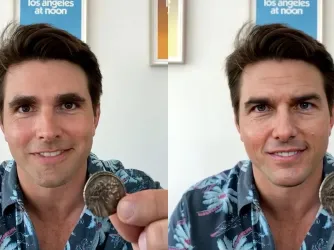
Deepfakes, democracy, and the perils of regulating new communications technologies
Issue Pages