Table of Contents
Hawaii is a forgotten First Amendment failure
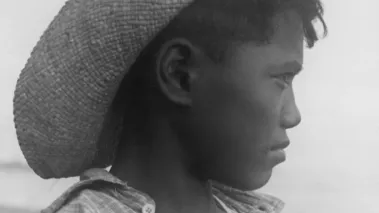
Hawaiian child circa 1910.
Elyse Everest is a rising junior at Boston College from Honolulu, Hawaii, who studies international studies and transformative education.
From 1896 until 1986, and over 5,000 miles from where the U.S. Constitution was written, the Hawaiian Islands were subject to one of the most harmful and forgotten large-scale violations of free speech in our nation’s history.
Although Hawaii did not become a state until 1959, the Hawaiian language ban of 1896, or Act 57, made English mandatory in all public and private schools. In practice, this meant corporal punishment and public humiliation for children caught speaking the Hawaiian language (ʻōlelo Hawaiʻi) on school grounds, a policy that survived annexation, the territorial period, and statehood itself, remaining on the books until the state legislature quietly discovered and repealed it in 1986.
Speakers recall being forced to pull a weed for every Hawaiian word spoken in class, or being taken home by a teacher who would tell their parents to stop using Hawaiian at home. These systematic efforts to suppress the use of the Hawaiian language nearly drove it to extinction. By 1985, it was estimated that only 32 children could speak Hawaiian fluently across all eight islands.

Are AI companies doing authoritarians’ dirty work?
Are AI companies exporting authoritarian censorship worldwide? A new report warns that repressive regimes may be shaping what LLMs will say.
There seemed to be no hope for revitalization, but in the 1970s, a group of activists worked hard to bring the language back. The most foundational effort along those lines was a radio show produced by one such activist, Larry Kimura, who had his elders speak Hawaiian together, leaving listeners unsure and curious about what they were saying. This inspired great interest and commotion in the community, and led to further efforts to bring Hawaiian back to the classroom — and establish Hawaiian immersion schools.
In the 1923 case Meyer v. Nebraska, the Supreme Court struck down a Nebraska law requiring instruction in English and barring the teaching of modern foreign languages in any public or private school to students who had not yet passed the eighth grade. The law was the result of anti-German sentiment during and after World War I. Under the Wilson administration, German Americans faced enormous pressure to demonstrate patriotism. Many bought Liberty Bonds, enlisted in the military, abandoned German-language newspapers, anglicized their names, and stopped speaking German in public — which could invite suspicion or harassment.
But the Court held that Nebraska’s law violated the Due Process Clause of the Fourteenth Amendment because it unconstitutionally interfered with parents’ rights to direct their children’s education. It held that a state cannot ban the teaching of foreign languages to young children, even in private schools, simply because lawmakers want everyone to speak English. Today, Meyer is best known as an early case protecting parental rights in directing their children’s education. And although Meyer was not a First Amendment case, its broad understanding of individual liberty helped lay the groundwork for later decisions that applied many constitutional rights — including free speech protections — to the states through the Fourteenth Amendment.
When targeting a nation and its people, restricting speech is the first and most detrimental step.
Furthermore, in the 1920s, the Territory of Hawaii attempted to place private Japanese-language schools (along with Chinese and Korean schools) under strict government control — regulating teachers, textbooks, and hours. In the 1927 case Farrington v. Tokushige, the Court unanimously struck down the regulations, extending Meyer to hold that parents have a Fifth Amendment due process liberty interest in directing their children’s education, including foreign-language instruction.
When targeting a nation and its people, restricting speech is the first and most detrimental step. Hawaiian was fortunate to experience a renaissance. As Kimura put it, “language is the first aspect of a people to vanish.”
This is because censors understand a simple but eternal truth: Being able to say what you want, how you want, and in whatever language you want, is one of the most powerful tools that people can wield against their government.
It may be tempting to treat the history of the Hawaiian language as peripheral to mainstream First Amendment doctrine due to the islands’ geographic and, at times, political distance from Washington. But in fact, that history exposes one of the doctrine’s central tensions: the difference between constitutional principle and constitutional reality. A population annexed into the United States, governed for decades without meaningful representation in the national political process, and largely unable to rely on ordinary democratic mechanisms, was especially dependent on constitutional guarantees to protect fundamental liberties. Yet those guarantees arrived unevenly.
The gap between Meyer’s 1923 recognition that language choice is protected by the Fourteenth Amendment and Hawaii’s 1986 repeal of its English-only law is not a footnote. It illustrates how constitutional protections, though universal in principle, have often been uneven in practice. Hawaii’s experience therefore belongs not in the margins of First Amendment history but near its center, reminding us that constitutional doctrine is measured not by the rights courts declare, but by how long it takes those rights to become realities for the people they are meant to protect.
That unevenness has consequences that outlast the original harm. Hawaii has consistently had some of the lowest voter turnout in the nation. No single historical event explains that on its own, but it is difficult to expect deep trust in constitutional government from people whose own experience taught them that constitutional rights could arrive decades too late. If the Constitution did not protect your language when it mattered most, why should you instinctively believe it will protect your rights now?
Hawaii has never lacked civic talent. The islands produced Senator Daniel Inouye, one of the longest-serving senators in American history, and President Barack Obama. The problem was never the people. It was that the constitutional protections articulated in cases like Meyer took far too long to reach them. Even Tinker v. Des Moines, the Supreme Court’s landmark 1969 ruling recognizing that the First Amendment prohibits punishment of public school students for non-disruptive speech, was decided 17 years before the repeal of Act 57.
No federal statute designates any official national language, religion, or culture. In public schools, English-only instruction is not a constitutional imperative — it’s a policy choice with real costs. But Hawaii’s campaign went much further. By imposing that mandate on private schools and punishing children for speaking Hawaiian, the government intruded on parents’ authority over their children’s education, violated students’ First Amendment rights, and helped sever a people from their language and identity. You don’t have to ban books or arrest speakers to suppress a language. You just have to make sure the next generation never learns it in the first place.
So why does this little island chain matter to the rest of the country? Because the suppression of the Hawaiian language proves the point that rights delayed are often rights denied, and the damage doesn’t end when the law finally catches up. It lingers in culture, civic trust, and the relationship between a people and the government that was supposed to protect their identity and their voice.
Recent Articles
Get the latest free speech news and analysis from FIRE.
VICTORY: New Jersey drops complaint against school board member targeted for asking constituents about taxes

FIRE sues Los Angeles City Council over policy banning certain words during public comment

It was never just going to be about keeping kids off social media