Table of Contents


Silencing social media won’t stop the unrest in France
Shutterstock
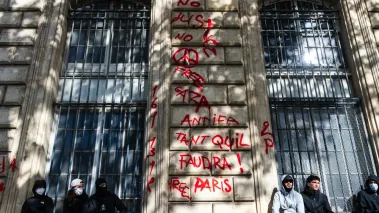
Riots in Paris, France, on Oct. 17, 2026.
Human beings possess many wonderful qualities but one widespread, and less laudable, trait is this: We’re often pretty damn lazy, too. We seek easy fixes for complex problems, reaching for Band-Aids for wounds that need stitches or a fresh coat of paint to conceal a crack in a house’s foundation.
And this unfortunate habit is chipping away at speech rights, even in free and democratic nations. When there’s a problem, too many leaders are looking to censorship as a one-quick-fix, as if you can address a problem by limiting speech related to that problem.
Censorship isn’t a “one weird trick,” a Band-Aid, or a miracle cure. It won’t work. It never does. But again and again, we reach for it.
After a congressman challenged a student reporter’s right to record, here’s what journalists should know
Recording conversations in public isn’t surreptitious or against the law — and knowing how to assert your right to record can make your reporting easier
The latest example is in France, where political figures are responding to ongoing demonstrations and riots — some of which led to looting, injuries, and arrests — linked to complaints about schooling conditions and cost of living. There are no doubt many debates about policy solutions that French leaders and citizens can and should have at this moment to discuss why riots are taking place, what should be done to address them, and what broader governmental changes, if any, are needed.
Former prime minister and current presidential candidate Gabriel Attal has a different suggestion, though: Social media blackouts.
“You have young people at home who see their friends going out to loot, which gives the impression that they’re getting away with it; they see them on social media, and then they go out too,” Attal said in a recent radio interview. Attal cautioned that the social media blackouts would be “temporary” and “limited to the area where the riots are taking place.”
Attal has played this card before. When he was prime minister in 2024, France blocked access to TikTok for two weeks amidst deadly riots in its overseas territory New Caledonia. The Conseil d’État, France’s highest administrative court, struck down the ban but left the door open for social media bans in “exceptional circumstances” when certain conditions are met.
French President Emmanuel Macron floated a similar idea amidst unrest in 2023, suggesting a ban on platforms when the state deems necessary. “We need to have a think about social media, about the bans we need to put in place,” Macron said. “And when things get out of hand, we may need to put ourselves in a position to regulate or cut them off.” A spokesperson partially walked back Macron’s comments, suggesting the ban would be about “suspending certain functions” like location tools for a short time.
Though no moves have been made toward a temporary or regional block on social media, this week Digital Affairs Minister Anne Le Hénanff summoned representatives from major platforms including TikTok and Meta to push for increased moderation of material related to the riots including livestreams, content that encourages criminal conduct, and AI-produced images. Exactly how that will change companies’ moderation rules in France in the coming days isn’t yet clear.
State officials may try to ban the platforms people use to discuss the social and political issues behind unrest, or talk about the unrest itself, but when they lift those bans, the underlying problems won’t have magically fixed themselves while no one could tweet about them.
Censorship can’t solve those problems. But it can create new ones, alongside troubling precedents and abuses of state power. Emergency powers have a curious habit of expanding an official’s idea of what an “emergency” is, and we risk inviting overbroad invocations of those powers when we extend them to immense authority over online forums for speech.
Such blackouts also issue a group punishment against broadly lawful speech for unrelated unlawful criminal activity. It does not follow that millions of people should be cut off from a vital communicative tool because a much, much smaller group is engaging in illegal conduct primarily offline.

Restoring Title IX kangaroo courts is no solution to the ‘Cornell 7’ sexual assault controversy
The outrage over the sexual assault allegations at Cornell University cannot lead to a return to the old Title IX regulations that cast aside due process.
There’s another downside: Access to information can help people avoid dangerous situations, not just seek them out. A livestream or photographs of violent clashes or property destruction can help those who live nearby know whether they might want to avoid a certain shopping center or subway station. Governments may tell themselves they are protecting the peace by cutting off social media during unrest, but instead they are just hindering people’s ability to share or consume information that keeps them out of harm.
Lastly, social media, for all its flaws, can serve as a public record during turbulent times when official, police, demonstrator, and bystander accounts clash. Those documentations, like photos on X and videos on TikTok, might even challenge and refute government claims amid times of unrest, particularly when officials are seeking a monopoly over available information. It’s happened before — with Alex Pretti’s killing in Minneapolis, for example — and will again. Indeed, times of crisis may be when social media is most important.
Leave the “one weird trick” and promises of miracle cures in the clickbait ads where they belong. And don’t let politicians or government officials convince you that speech rights are an obstacle, rather than a building block, to a functional society.
Recent Articles
Get the latest free speech news and analysis from FIRE.
Why you should talk to strangers w/ Fin Colleton and Kratima Divakar
Podcast
FIRE is bringing the Free Speech Forum to the West Coast!
After a congressman challenged a student reporter’s right to record, here’s what journalists should know