Table of Contents
New Mexico's $25 billion verdict against Meta is fundamentally about speech
Shutterstock
Trace Mitchell is lead counsel for technology and Free Expression Policy
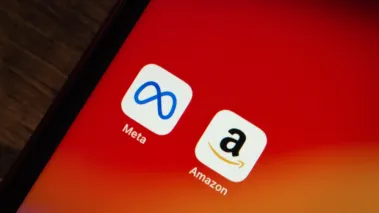
On Oct. 21, a New Mexico state court ordered Meta to pay a staggering $25 billion to the state for violating its consumer protection laws. The state claims in a suit by its attorney general that Meta misrepresented its content moderation and data protection practices in various statements over an 11-year span. And according to the judge, the penalty could have been far worse, as the state could have been awarded up to $219 billion under New Mexico’s Unfair Practices Act.
While most coverage has characterized the suit as a privacy case, the claims the state advanced are fundamentally about speech. In fact, three of the five categories of alleged misrepresentations have absolutely nothing to do with data privacy. Instead, they concern moderation around “hateful, violent, and divisive content,” “misinformation,” and “equal application of Facebook’s policies.” That is, statements like, “We do not profit from misinformation or hate, and we do not want this content on our platforms” and “We do not allow hate speech on Facebook because it creates an environment of intimidation and exclusion, and in some cases, may promote real-world violence.”
Each is based on what speech Facebook allows, what speech it takes down, or whether it treats different speakers in the same way.
The First Amendment does not protect fraud, to be sure. But “hateful, violent, and divisive content” and “misinformation” are incredibly vague and inherently subjective concepts. They lack clear legal definitions and encompass a wide range of constitutionally protected speech. Yet the lawsuit allowed a jury to interpret the terms and somehow evaluate the accuracy of Facebook’s high-level statements about how it tries to moderate content.

It was never just going to be about keeping kids off social media
Age-gating teens online was never going to stop with kids. The UK is already promising a more "active interventionist state" for the internet.
To decide whether a statement like “we do not allow hate speech” was false, jurors had to apply their own understanding of those broad terms — then decide whether Facebook applied its policies truthfully and equally, across billions of posts dealing with some of the most contentious political and social issues of the last decade. Again, these exceedingly amorphous concepts mean something different to everyone. What one juror views as hate speech or misinformation may be another juror’s sincerely held opinion. That makes it all but impossible to prove falsity — a necessary element of any fraud case.
Nevertheless, the jury found Facebook committed 43,899,725 violations of New Mexico’s Unfair Practices Act.
43,899,725.
How? By multiplying the 26 statements Facebook made about its policies by the total number of users in the state — and, for some statements, New Mexicans who don’t even have Facebook accounts — regardless of whether the users actually read the statement.
That math is as shaky as the claims against the company. For one thing, many of the statements were not advertising at all. They included executives speaking publicly about how Facebook handles some of the most contested content moderation questions platforms confront. The executives made those statements across 11 years and, as the judge himself noted, they “were not confined to one statement, one speaker, one medium or one aspect of Facebook’s business,” but instead included earnings calls, television interviews, and press conferences. And under the state’s theory, every additional person who might have heard it served as another violation. The larger the audience, the larger the ultimate penalty.
And it’s important to remember these are not contractual damages. When contractual rights get enforced, damages are usually based on the specific plaintiff(s) or pursued via a class action, and typically reflect actual, measurable harms. These are penalties for unfair trade practices, of the sort typically sought by state attorneys general or federal agencies, which means these cases can easily become ideologically charged, politically motivated, and even, sometimes, viewpoint-based.
We have already seen government officials across the political spectrum weaponize consumer protection law to limit speech rights of those with whom they disagree. In 2023, New Jersey’s attorney general abused the state’s investigatory powers to seek sensitive information from crisis pregnancy centers and, in 2025, Missouri’s attorney general used consumer protection law as a pretext to go after chatbots that expressed unfavorable views about President Trump. Similarly, the Federal Trade Commission launched an investigation targeting technology platforms over allegations of “censorship” while claiming constitutionally protected editorial decisions could constitute unfair or deceptive trade practices. FIRE has consistently fought against the abuse of consumer protection laws to target protected speech, whether from the left or the right, the federal government or the states. That kind of abuse is exactly what’s at issue here.
Silencing social media won't stop the unrest in France
French politicians want to shut down social media during riots. But censorship won't stop unrest, though it could make things worse.
If left to stand, the New Mexico decision gives government officials a dangerous blueprint to go after content moderation decisions or private expressive platforms they don’t like. Every state has a consumer protection law like New Mexico’s Unfair Practices Act, every major platform has adopted guidelines about what content it removes and how it enforces them, and some states have already enacted laws that require platforms to make affirmative statements about how they moderate certain forms of content. Then all a state has to do is point to an alleged discrepancy between a platform’s content moderation and its stated policy, even if it was the state itself that mandated the policy.
An attorney general who believes a platform is unfairly removing conservative posts or banning conservative users can claim it is deceptively failing to apply its policies equally. Another attorney general who believes the same platform is leaving up too much of what the attorney general considers “misinformation” can claim it is deceptively failing to enforce its own rules, even if the state itself forced a “misinformation” policy on the platform. And so on.
Do we really want government officials wielding that kind of power over what Americans can see and say on the internet? No. That’s the approach that Europe takes to regulating online speech, not the United States.
If not overturned, this verdict will have a massive chilling effect on what platforms say about their content moderation practices. The safest course of action for any platform may be to say as little as possible about how it moderates content, to as few people as possible. Executives will likely think twice before explaining a difficult moderation decision in an interview. Community standards will likely become vaguer — or so detailed so as to leave no room for subjectivity that they become impenetrably long — and transparency reports will become less detailed. Ultimately, laws meant to protect consumers will operate to confer less benefit, and public debate over online speech will be greatly diminished.
Recent Articles
Get the latest free speech news and analysis from FIRE.
Silencing social media won't stop the unrest in France

FIRE is bringing the Free Speech Forum to the West Coast!
After a congressman challenged a student reporter’s right to record, here’s what journalists should know