Table of Contents
So to Speak Transcript: Ada Palmer on the history of censorship from the Renaissance to AI
Note: This is an unedited rush transcript. Please check any quotations against the audio recording.
Nico Perrino: – but Orwellian censorship is actually radically unlike any real censorship that has ever existed, and often makes us vigilant, I think, against some of the wrong things.
Martin Luther King: Somewhere I read of the freedom of speech.
Male Voice: You're listening to So to Speak: The Free Speech Podcast, brought to you by FIRE, the Foundation for Individual Rights and Expression.
Nico Perrino: Welcome back to "So to Speak," the free speech podcast, where we take an uncensored look at the world of free expression through the law, philosophy, and stories that define your right to free speech. I'm your host, Nico Perrino. Today we are joined by University of Chicago Professor Ada Palmer. Earlier this year, Professor Palmer had a wildly popular appearance on the Dworkesh podcast, where she briefly discussed some of her research on the history of censorship.
I'm embarrassed to say I hadn't been familiar with Professor Palmer's work at the time, but after hearing that episode, I've been eager to get her on our show to do a deeper dive into her thoughts on censorship, including what motivates it, how effective it is, and how it has shaped intellectual history in the United States and Europe. Professor Palmer's specialty is in the Renaissance, and she is the author of the book Inventing the Renaissance: Myths of a Golden Age.
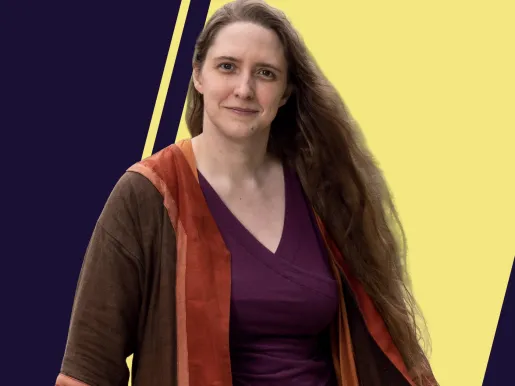
A Renaissance woman herself, she is a popular author of science fiction and fantasy novels, a composer, a singer, and an expert on anime and Japanese pop culture. Professor Palmer, welcome onto the show.
Ada Palmer: Thanks. I've been looking forward to this.
Nico Perrino: Let's start by your interest in censorship. Where did it begin?
Ada Palmer: Well, it began much as FIRE began, in the classroom of Alan Kors at Penn, who is, of course, one of the co-founders of FIRE, who first introduced me, as I was studying French Enlightenment philosophies, the impact of censorship structures on the way philosophers distributed their work. One of the fascinating things that that launched me on is thinking about how all censored material tends to travel through the same channels. When you want to understand how it's moving and how it's working, you need to often examine topics that seem to have nothing to do with each other, side by side.
If I wanted, as I did, to look at the history of radical thought and atheism and the origins of the scientific method in the 17th and 18th centuries, radical treatises about science were circulating in the same underground bookshops and from the same forbidden presses as pornography and books about magic and conjuration and alchemy and criticisms of the king and satires. And you couldn't study radical philosophy and atheism and science without also studying pornography at the same time, even though they seem so unrelated.
And this is how my students are always sort of baffled why I have so much deep expertise in the history of sodomy law and pornography and radical sexuality, when I'm primarily looking at history of science. If they're traveling through the same channels and often being written by the same people, then you need to study all these things side by side. Whether it's witchcraft or belief in the existence of atoms in vacuum, it's being policed by the same structures, and the society that is trying to police it uses the same methods, so they travel together.
Nico Perrino: And your specialty is in the Renaissance. What was the main mechanism, if any, for censorship in the Renaissance?
Ada Palmer: The Renaissance is, of course, a long period, starting somewhere around the 1300s and going all the way, usually up to 1600 as people count it. And there's no answer to how the mechanism worked, because the mechanism transforms radically in the middle. The Renaissance is the point at which the printing press arrives. Therefore the production of books vastly accelerates. And therefore the whole culture turns over upside down to say, "Whoops, we have to figure out how to censor this new medium."
And there's an incredible transformation. We think, for example, of the Inquisition as something that does a lot of book censorship. And we think of it as a medieval institution, but it isn't until it's reacting to the printing press in the 15-teens through 1540s, that it starts making book censorship be a large and organized part of what it's doing. The Renaissance is the moment at which medieval structures of censorship transform and are replaced by the first modern structures of censorship, in response to the arrival of a new information technology.
And zooming out from that, it helps remind us that every time a new information technology arrives, the society in question does not yet know how to censor it and then figures out a way. Every new information technology triggers a new wave and innovations of how censorship work. We're seeing that with the computer and the Internet as well, which are new information technologies. And our society is very concerned with and developing new ways to try to police those new media. Every information revolution, therefore, is also a censorship revolution.
Nico Perrino: Did people in power at the advent of the printing press realize how revolutionary the printing press was going to be, or did it take time?
Ada Palmer: It took time. And it's useful to remember that the printing press, like any technology, spread exponentially, and that exponential spread is at first slow. Think of the puzzle where you put a penny on the first square of a chess board and then double it. Two, four, eight, 16. You're going to have a billion dollars by the end, but you still only have a tiny amount of money when you're halfway down the second row. There's one printing press. Gutenberg has it. He goes bankrupt. Some of his apprentices try making some. They go bankrupt. His bank reproduces the press. They try printing. They all go bankrupt.
Gutenberg has it. Then his apprentices have it. Then they flee their debts. They teach a couple people. Sort of third generation learning it, you've doubled it twice. Now you have eight, effectively, printing presses. That's already taken more than a decade, so the dissemination of it is slow and the impact is slow. Another reason people didn't quite realize how impactful it was going to be is that the printing press was a continuation of a phenomenon that had already begun.
There was a boom in book production and library building as a result of cultural and political forces already going before 1450 that got going around 1400 and just before. Gutenberg, we often talk about as if a genius out of nowhere invents a thing. Whereas we need to think of it as a big market was building. There was a spike in demand for books, and entrepreneurs sat down and said, "Okay, can I develop a technology that will produce these books faster?" Based on the woodblock printing that was already circulating a couple of decades earlier.
Nico Perrino: And what were the books that were in demand at that time like before the advent of the printing press? What was the inspiration for this demand?
Ada Palmer: Those are two different questions, actually, because, of course, the books that are always most in demand and the books that were the motive for this library building boom are different. What books are always most in demand? Breaking news, scandal rags, pornography, spelling textbooks for schools, and simple religious texts like a pocket prayer book or something that a priest would refer to when developing a sermon. Those are the top –
Nico Perrino: It wasn't the sort of ancient texts that you associate –
Ada Palmer: Those are the actual things that get printed en masse and make money. The motive for the library building project was indeed the ancient texts, the let's collect together all of the classics and reconstruct the libraries of antiquity. Which was a political and scholarly project characteristic of the very beginning of the 1400s, spiking just before the year 1400, in which a set of intellectuals, among them Petrarch, conceived the idea that in an unstable and chaotic world, in which Italy's vulnerable city-states were constantly in danger of being overthrown and conquered, what they needed was the arts of the ancients.
And we associate the Renaissance revival of antiquity with art and linear perspective and realistic drawings of anatomy and aqueducts and diagrams; but they're thinking of the political science technologies. How did the Romans organize their government? How did they educate their ruling elites? The Romans were very successful in having a long and stable government. And books like Livy's "Histories" describe Romans who were incredibly loyal and willing to give their lives for Rome.
The original Roman Brutus, one of the first consuls, who when his sons conspired to take over the city and make him king, executed his own sons for treason against the state. And Italy at the time is living in the plot of "Romeo and Juliet." Can you imagine Lord Montague executing Romeo for anything? No. He's like, "Romeo should get away with murder." They want to reconstruct the educational system and political methods that enabled the stability of ancient Rome.
And they believe that the secrets to this lie in the library that educated Brutus and educated Caesar and educated Cicero; and that if every king and duke and merchant prince and high status leader figure educates his sons and daughters with this ancient new method, they will create a generation of competent rulers who will bring peace, prosperity, stability, and success to these city-states. That creates the library boom. And it's a very elite project, as books are heck expensive. Before the printing press, a book cost as much as a house in the manuscript production period.
In order to have a library, you have to be someone who has tens and hundreds of millions, so that you can invest in a library in which each book costs $300,000. And when the printing press comes in, he's trying to meet the fact that lots of people want libraries and there is a market for it; but he's so effective at reducing the cost that between 1450 and 1490, the price of a book drops from the cost of a house – let's say $300,000, $600,000, depending on the size of the book – to costing about a school teacher's salary for one month.
Which is still a lot more than we pay for a book today; but boy, is it a lot less than the mega-elite spending that was necessary. By the time you hit the early 1500s, any mediumly affluent person can afford to own a dozen books. And any somewhat rich person can afford to have a large library. And importantly, every town has someone who can afford to have a library, to which then the youth of that town who want to be educated can knock on the door and beg to visit. The accessibility of having a library increases by an order of magnitude within a century.
Nico Perrino: And is this information, as it's increasing, flowing relatively freely? I remember when I was a student at Indiana University, studying Renaissance history under Arthur Field. We were introduced to a book called "Two Renaissance Book Hunters," about Poggio Bracciolini and Niccolo Niccoli.
Ada Palmer: Yes. That book is magnificent.
Nico Perrino: It's magnificent in part because it felt like a real life "National Treasure" or "Indiana Jones." You had Poggio Bracciolini out there rediscovering treasures and writing to his friend Niccolo Niccoli about them. In the back of Poggio's mind, was there any sort of conception that the books he was rediscovering would be censored or would be a threat to kings or dukes or the papacy? Or did this stuff –
Ada Palmer: Super-not, because Poggio was writing super-satirical pornographic condemnations of the clergy, which they run around with their dicks out, and publishing that, which did get censored. And he knows that the classics is the non-controversial, non-dirty, non-problematic half of what he's doing.
Nico Perrino: There's no concern about these pagan authors from the past?
Ada Palmer: There are later letters of major founders of the inquisitional book structure, Ghislieri. Anyway, who was writing back and forth between a couple of different inquisitors. I remember reading these letters, and they talk about Poggio's own personal work as an example of the kind of stuff that needs to be censored. And Lucretius, which Poggio famously rediscovered and has these radical denial of the immortality of the soul, and atoms and vacuum and all of this very modern-sounding science as an example of, according to the founder of Inquisition book hunting, something that doesn't need to be censored.
And that's one of the really interesting subtleties. The more I look at censorship, whether medieval or ancient or Renaissance or enlightenment, the more, putting on my science fiction writer hat, I'm like, "If we had a time machine and could go talk to these people, we would tell them they are censoring the wrong stuff." Poggio's random porn is a threat to nobody. Lucretius is going to overturn the entire world order as we know it. Censors are always after the wrong thing, which is really fascinating from a historian point of view.
Whenever we look at an era and we're saying, "Okay, it's the Enlightenment. Voltaire, Montesquieu, Diderot, they're brewing the French Revolution, they're questioning the rationality of man. They're turning everything upside down." And what is the Inquisition worried about? The Inquisition is worried about Jansenism. Yeah, that's like the number one thing that the Renaissance – sorry, that the Enlightenment Inquisition is after. And Jansenism? Jansenism is Calvinism for Catholics.
Do you want to have a cruel, arbitrary, distant God who holds you in his hand like a worthless spider before hurling you into the fire and no free will, but also have to obey the asshole in Rome? Then Jansenism is for you. It gives you both of the worst sides of the Catholic-Protestant divide. And there was this big anxiety that Jansenism was going to appeal to the most pious of Catholics and suck them into error in the devil-quoting scripture way. And man, the Inquisition is just turning itself inside out and upside down, worrying about Jansenism and letting works by the Marquis de Sade just happily go around. And like, "What are you doing?"
By happily go around, of course, I mean they're still banned, but this is one of these subtleties where you can be banned a little and you can be banned a lot. Because all censorship structures are porous. All censorship structures have, well, we restrict A and we restrict B, and we're focusing on A and we don't have enough energy for both. Because an important characteristic of all censoring bodies ever in human history is that they always feel like they don't have enough manpower and they don't have enough resources, and they're being overwhelmed and they can't police everything.
That's one of the things that's so deceptive about the model of censorship raised for us by Orwell's "1984," which dominates the way we imagine censorship operating and has given us very valuable tools for thinking about and being vigilant against surveillance and totalitarianism; but Orwellian censorship is actually radically unlike any real censorship that has ever existed, and often makes us vigilant, I think, against some of the wrong things. And one of the things he depicts is that the Ministries of Information and Truth and Love have infinite resources.
And when they go to, say, censor something, when Winston goes in to delete a person from a newspaper in his job at the Ministry of Truth, all copies are deleted. Everything is affected. When his colleagues are working on bowdlerizing Shakespeare, they're bowdlerizing all Shakespeare they can get at, all the versions of Shakespeare. And they have so many people, they can have an entire team just to surveil Winston personally, at a ratio of five or six surveillers to every citizen. Which is, of course, mathematically impossible, and practically impossible.
When you look at the real censorious systems that even Orwell is modeling this on, like the USSR or the Inquisition, and you look at their letters, they're always like, "Oh, my God, we don't have enough people. There are so many of them. We will never catch up with anything." They choose their battles. And in the French Enlightenment, many, many books are banned, but they focus on policing the ones that they're afraid of. Anton Matitsyn has this brilliant book. I hope you've had him on. He's great. On radical doubt and radical skepticism in the 17th century.
And he's found these documents from actually directly documenting a raid by the authorities on a clandestine bookshop. Here's one of these underground bookshops that's printing forbidden books. And what do they have? They have Voltaire and Rousseau and everything you would want. Or no, it's a little early for that. Maybe they have – I've forgotten the exact date, but they have all the Enlightenment figures that are happening at that time. They've also got porn. They've also got criticisms of the king. And there's this long inventory of all of the stuff that they have.
And they're like, "This is fine. This is fine. Radical, whatever. We're just gonna chide them and wave a finger at them and be like, 'Don't do it again.' Oh, my God! They have a Jansenist treatise against the nature of the Trinity. Throw the book at them. This is the worst and most dangerous thing." Even when the Encyclopedie, Diderot's Encyclopedie, when it is finally condemned, this is a really telling moment. 'Cause they didn't want to condemn the Encyclopedie. The French authorities liked it. The French authorities let it circulate.
The king liked it. The queen is on record praising how it taught her how to understand the way her silk stockings were made. It had some radical political ideas, but it was very careful. It was a meticulous act of cautious self-censorship, which Diderot and others organized, saying, "All right, we really want this project to be available to citizens. This is the book that's supposed to create a universally educated populace so that everyone can be a participating citizen.
We want everybody to have it, so we're going to be on our best behavior and write the sort of most moderate versions of all of our radical ideas." And this is successful with the French king, who's like, "This is fine." And with the French censors, who are like, "Mmm, yeah, this is fundamentally fine." 'Cause they're sympathetic to it, which I'll come back to in a second. But eventually Rome catches up with it. And theoretically, all of the Catholic nations' local censoring bodies are under Rome.
When Rome catches up with them, it's like, "Wait. You're letting them publish what? No, this is not okay, France. I command you to condemn the Encyclopedie." And they condemn the Encyclopedie. As of Volume H. And when Rome commands you to condemn something, you're supposed to then, in Paris, have a symbolic burning of a copy. And there's a very grave day and they announce that they're happy and take the copy of the Encyclopedie and they parade it over to the fire and set it carefully aside and burn a pile of Jansenist treatises about the nature of the soul and its place. Because they like the Encyclopedie.
They don't want to burn it. They would rather burn Jansenism. Which just shows you how things can be complexly both condemned and not condemned at the same time. And these levels of porousness had always been intentional, to the degree that when they're printing the forbidden later volumes of the Encyclopedie in Geneva and in Switzerland, and smuggling them across into France.
The Encyclopedie, of course, faithfully stops, but this unrelated encyclopedia, in exactly the same font and size, starts coming across the border from Switzerland, conveniently beginning just at the place that the old one ended; but it has nothing to do with the original editors, of course. When they're smuggling that in, the censors are so sympathetic to it that they just let it cross the border. And if they pull up somebody's hidden compartment that's filled the Encyclopedie, they're like, "Okay, just pay me a small bribe, whatever."
They start printing title pages of the Encyclopedie and wrapping it around more forbidden books, and things like De Sade come into France wrapped in the Encyclopedie, disguising a banned book as a different banned book. Because the two had a different level of how much enforcement there was of the ban, even though under the law, technically, they were the same. And I said I would come back to the sympathy of it, but one of the things we always forget is that historically speaking, a censor is a member of the educated literati. You have to be an educated person familiar with all sorts of ideas in order to recognize what you're looking at.
You have to be fluent in literary languages. All the way through the Enlightenment, working as a censor in 18th century France is like a normal first job out of college for a lit major. And a lot of these people are themselves pretty radical and are themselves also authors. We have letters that Robert Darnton chronicled of censors writing to each other, "Oh, Jacques, my dear college roommate, I got your book to censor. Don't worry, I'll do a really good job." While they're writing their own books, hoping to debut, and then be able to get a better job than working at a censor later on.
In a weird way, censors tended liberal, or at least tended educated and were sympathetic to new ideas. The people who are doing the censoring are themselves often moments of permeability. And there's this great case, and I always forget his name, but there's a leader of the Portuguese Enlightenment who wrote a really important treatise in favor of more liberal education against sort of traditional Jesuit-led education. And it was printed in Naples, in Portuguese, to be brought across into Lisbon. And this is one of these rare cases where the Inquisition had a shot at actually eradicating this book.
Because once a print edition actually disseminates and a thousand copies of it are all over, you're doomed. There's no way to ever track those down. Not even in modern cases can the CIA track down every single printed copy of a book once they exist. In this case, they're warned. The books are on a boat, it's coming into Lisbon, it's arriving at this time. They intercept it in the harbor. And they get and they destroy the entire edition. And nonetheless, the second edition is printed within a month, about eight miles away.
And we say, "How did that happen?" And the answer was the Inquisitors kept copies for their own reference, because you have to keep reference copies of the bad books so that you can look up whether other things are the same book circulating under a different title. One of the Inquisitors kept it, read it, liked it, smuggled it out, and had it printed.
Nico Perrino: One of your big claims is that we cannot and should not draw a line between state censorship and private or civilian censorship. And you argue that the majority of censorship is actually self-censorship. What do you mean by that?
Ada Palmer: Those are two very different questions. I'll do them in order. The first one focuses on the fact that so often censorship is actually hybridly achieved by a combination of government and culture. And that when a government wants to censor something, it'll often use the culture to do it, or when a culture wants to censor something, it'll use the government.
Nico Perrino: Oh, I see what you're saying. Okay.
Ada Palmer: Right? To use a very clear modern example, let's look at how film censorship works in America versus New Zealand. Now, New Zealand is the wonderland for studying censorship, especially if you want to study the First Amendment, New Zealand and Australia both. Because fundamentally, America and Australia and New Zealand started with the same original legal system and original structure of government. America has the First Amendment and they don't When these cultures want to censor something – these cultures are very similar, they have a lot in common.
They usually want to censor the same thing at the same time, because the same thing will hit the Anglosphere all at once. "Oh, no, talkies." Now people can say words in movies, which means they can say bad words in movies, so we must now figure out how to censor that. That hits all these cultures at the same time across the Anglosphere. "Oh, no, it's World War II, we have to censor sedition." That hits everything. "Oh, no, it's 1954, we're panicking about comic books causing juvenile delinquency." This hits all these cultures at the same time.
And every time it hits America, Congress shall make no law. If America wants to pick on something, whether it's comic books or communism, America cannot do it by Congress making a law and it has to use a workaround. When America wants to censor movies, America has the civilian Movie Ratings Board. And there are a lot of cultural pressures, including some from government. A congressman will call you up to make everybody comply with this supposedly voluntary and civilian process. In New Zealand, they just have a state office that censors movies, and it's done by the government.
And it has exactly the same function and it gives movies ratings. And in one of them it's the state, and the other one it's sort of technically not the state, but they're censoring the same stuff for the same motives at the same time. And they're entangled with government in both ways. And there are good and bad facets to both of them. Because in America, for example, film ratings are done by the civilian organization, which means it has no accountability and it's incredibly corrupt and it's run by Hollywood insiders. And they have no obligations to have criteria publicly or to justify their ratings.
You just get your answer, and they probably give better ratings to their own studio's work and harsher ones to outsiders, to try to make it harder for outsiders to break in. And there's no appeals process. But they can't ban your film. They can bankrupt you, because your film will not be able to be shown if it gets 18-Plus, etc., but you can project your film on the side of a barn. It's legal. You have the right to express yourself. A film that goes bankrupt means you really can't express yourself, even if you technically have the right.
Nico Perrino: Well, I think you can still put them out on streaming. For example, I made a documentary –
Ada Palmer: You can't make your next film. Because you've lost all of your money and you don't have any money and nobody will fund your next film, so this is your last gasp.
Nico Perrino: Sure, yeah. If you're trying to make one that's going to be shown in theaters and all that, yeah. If you're making an indie documentary, you probably don't need [inaudible – crosstalk] [00:26:38].
Ada Palmer: Right, but that's not what they're targeting. They're targeting the things that are trying to hit a large and mainstream audience and they can effectively mean this is going to be your last film. Meanwhile, in New Zealand, the censoring is done by the state and it's done by civil servants who have no connection with this industry whatsoever. They're basically the same thing as postal workers. They have a very transparent process. They have very specific, clearly defined, "These are the five things we're allowed to censor. We're not allowed to censor anything else."
They're required to explain publicly their motives and decision process. There is an official appeals process where you can appeal to a judge. Their website, if you haven't been there, is amazing. They have a blog where they post about things. They're always having "Deadpool" in little icons with little talk bubbles commenting on the censorship. They have, believe it or not, an actual mascot, the cute, sad bunny of having watched age-inappropriate material. It's the weirdest cute mascot I think I've ever seen. And they have a Twitter account, or they did.
I don't know if they still do. And a blog covered with stock photos of happy teenagers on laptops, presumably reading censored material. I don't know what they're supposed to be doing, but there they are. They can ban your film, and they can jail you for it. The government version has more transparency, more accountability, more appeals process, but teeth on the other end, the civilian one, is much more likely to give you an arbitrary, unfair, and unjust initial experience. Then there's nothing you can do about it, but they can't ban your film. Notice how these are definitely the same society achieving the same thing two different ways. And it isn't –
Nico Perrino: Well, in America, for 35 years, you did have government censorship. Because I believe it was in 1915 that the Supreme Court ruled that movies don't receive First Amendment protection. Then you had sprouting up, I believe, hundreds of local film licensing boards. And I think there were seven states that had these as well. And that's where you got the industry moving into action. Because you had this weird scenario where different localities would give your movie a different censorship rating or require you to excise different portions of the film.
And it's just no way to distribute a movie across the country, and so they brought in the sort of rating system. And then it was 1952, 1953, and the Miracle decision, the First Amendment finally started applying to movies; but the Hays Code and whatnot still existed.
Ada Palmer: And with the guidelines for what we recommend that you do, etc. Notice how all of this is entanglement of government and civilian factors, including things like the movie companies wanting to be able to have national distribution instead of local distribution. And things like the Hays Code, which is not force of law but recommended. And you're gonna have a harder time getting other things you want from the government if you don't follow it. Government outsources censorship to society.
Society outsources censorship sometimes to government, when there's a company that really realizes that they can make a lot of profit by controlling some sort of expression. They will lobby the government to do a thing, not because the government wanted to, but because the corporation wanted them to. It's deceptive to draw a stark line between the two. These things are always very entangled with each other.
And when having this discussion of, "Is censorship always the state, are these strictly separate?" for me the killer answer is, "The Inquisition wasn't the state." The Inquisition was a separate organization organized by the church that goes into and collaborates with governments. It operated like Doctors Without Borders operates. It's not the state. If the Inquisition doesn't fall under our labels of definitely censorship, then our definitions have gone way wrong.
We need to acknowledge that the vast majority of censorship is a blurry collaboration in which state is one of several factors, money another, profit-seeking another, cultural taboos and preferences another; that all turn together with each other to make a variety of apparatuses that often mix legal and non-legal and paralegal and simply cultural tools, and corporate tools, to censor something in a much messier way than a strict binary between state and not-state.
Nico Perrino: Which is interesting, 'cause I'll sometimes have guests on this show who push back on any idea that censorship can happen in the private context, that it's always going to be state action. You're saying it's more complicated than that because it's hard to draw a clear line between state and private action, because often it's the state that's incentivizing the private action.
Ada Palmer: Right. Or it's the private incentives that are pushing the state. And so you really have to look at these as entangled factors when you zoom in. You had asked a second half of that question.
Nico Perrino: About self-censorship.
Ada Palmer: Ah, yeah. I'll state the thesis, then I'll give an example. The majority of real censorship is self-censorship. The majority of self-censorship is deliberately cultivated by an outside power, and in fact the cultivation of self-censorship is often the primary goal of censorious action, and especially censorious government regimes. I had a brilliant student who asked a great question in the classroom once, which was, "Did the trial of Galileo succeed or fail?" And if we think the goal of the Galileo trial is to silence Galileo, then it's an abject failure, because it made him much more famous even than he already was.
If we think of the goal of the Galileo trial as to scare Descartes into withdrawing the freshly written treatise he had just delivered to his publishers and telling them, "Wait, wait, wait, wait, don't publish it. I'm going to revise this over the next two years to be way more Catholic and way more Orthodox, because I am scared." And 1,000 other intellectuals in that same moment as Descartes, who also carefully revised their work to be much more cautious after hearing about the Galileo trial, that's the success. Could they silence Galileo? No.
Could they get the self-silencing of 1,000 other intellectuals who are frightened by the Galileo trial? Yes. And when we look at the practices of censorious bodies, we so often see them even in their notes saying, "We can't police all of these things, so we will police one or two things prominently so that people see it, notice it, hear about it, pay attention to it, and that will get people to self-censor." right? They choose their battles. And when we look at China right now and the sort of influencer blogosphere, all across China people are using VPNs and bypassing censorship all the time. Humans want information and humans are smart.
Censorship cannot make an absolute curtain. People do this all over the place. Who does the state actually arrest? They wait until people have a certain level of fame and then they enforce a almost arbitrary and random grabbing of a person, because that's scarier than there being a specific cause. It's, "This person who's doing the same thing everyone else is doing, therefore I'm scared and I'm going to be extra careful." Random enforcement is more effective at sowing fear than going after specific works.
And like the Portuguese example that I gave, censorious bodies know perfectly well it is impossible to track down and destroy every copy of a piece of information once it's already disseminated in our digital age. Certainly even in the printing press age, but it's possible to destroy every copy of a book that never exists in the first place by scaring people into self-censoring. The Inquisition in its earlier days does a lot of a treatise goes out, you visit that intellectual, you interview him, you make sure that all of his friends know that this happened.
He promises not to do it again. You say, "Okay, good, go home." And you get much more cautious work out of that guy and all of his friends for a long time. This type of encouraging the culture of fear.
Nico Perrino: Is America the same? When I look at American history, I see a lot of prosecutions or persecutions that are meant to send a message. You can go back to the Sedition Act of 1798. One of the first prosecutions was Benjamin Franklin Bache, who published "The Aurora," a big critic of the Federalists. Very clearly they're going after him 'cause he's prominent. It's going to send a message. You see the same thing during the Palmer raids and the Red Scare and the prosecutions and persecutions during World War I, where I think there was 2,100 prosecutions, 1,000 convictions. They're going after some very prominent people.
Obviously the McCarthy era. They're literally putting people before hearing committees in Congress. I feel like in my experience at FIRE, though, today, where the First Amendment is as robust as it is, sunlight is our best disinfectant. Shining a light on the censorship is one of the best ways to push back on the censorship.
And to me that would signal that these censoring bodies, be they colleges or universities, violating a professor's academic freedom or censoring a student group, or some of these local municipalities that we will sue sometimes, they don't want the censorship to be known. And sometimes we don't even need to go to court to fix, it because the public awareness of it is enough.
Ada Palmer: It's sort of the case that they don't want it to be known. It's often the case that some of the involved do want it to be known. For example, when it's a case of a school librarian – there is a parent challenging the school library – the school does not want to make news. The school wants this to quietly go away so that they can do the 100,000 things that a school exhaustedly is desperately trying to do without enough money. The group that urged the parent to do that, though – the strategic Facebook group that is trying to make waves with this –
Nico Perrino: The Moms for Liberty group. Yeah.
Ada Palmer: Right. They want that to get attention. And there then will be a lawsuit and then the ACLU and others, and maybe you, will help. And the book will be restored to that school library, but it is definitely and provably the case that dozens of other school libraries around that region will not buy that book or will not buy similar books, 'cause they don't want to go through this. And we know the Streisand effect makes a great success and boom of the sales of the book in question.
And every year when the American Library Association Office of Intellectual Freedom releases it's, "What were the top banned and challenged books of the year?" people literally try to steal the list in advance so that they can know in advance which books are about to have a big sales boom. Because it'll help those, but the same publishers that are like, "Great, we get to reprint hundreds of copies of this, and we're going to actually buy and put out fewer similar books by other authors."
One book will sell 100,000 copies and 20 books will never be published in the first place, because the publisher decides to be a little more careful. And no sunlight is shone on that. That's a quiet decision made in the closed doors of publishers, but it does happen.
Nico Perrino: I want to ask you as a student.
Ada Palmer: And then fewer books with that theme. Whether it's transgender or whatever it is, fewer books with that theme get published the next year.
Nico Perrino: There's a cascading effect that can often be unseen that happens –
Ada Palmer: And that's the goal.
Nico Perrino: As a historian of intellectual history – we can focus here on European intellectual history – I often like to think about what would happen if something didn't happen in history. We talked about the effect of the trial of Galileo on Descartes. Was there an example of censorship that if that censorship did not happen, it would have totally revolutionized the trajectory of European history? Is there an alternative universe that but for that censorship, the history of Europe –
Ada Palmer: You're looking for one case?
Nico Perrino: Well, I'm sure there's a lot, but is there one that stands out to you as kind of the world would be different if this didn't happen?
Ada Palmer: The example my mind goes to, which is not what you want, but I think is an important example. I work a lot on Giovanni Pico della Miranda, this famous Renaissance genius who by the time he was 14 knew seven languages and worked on this great project of 900 theses to unite all world religions into one and thought he was going to revolutionize and merge Islam and Zoroastrianism and Platonism with Christianity.
And was so confident that he was persuasive and right that he write letters to invite all the crown heads of Europe to come see him defend this thesis publicly in Rome in front of the Pope; and never imagined that anybody would, despite the inquisition existing, never imagined that anybody would condemn it. Then also in the middle of traveling to go to his defense of it, tried to elope with a married noblewoman, imprudently. When he's arrested and the trial is happening, and the question is, is he going to get in big trouble or not happens, his allies and his patronage network, and his great protector, Lorenzo de Medici kicks in.
A lot of money moves hands and a lot of leverage is exerted. What's really going on is the larger political tensions between Florence and Rome. Florence, which is protecting him; Rome, which is in major tension with Florence at the time, which is not. Another thing that's happening at the time is the tension between Guelph power structures and Ghibelline power structures, because at that time these two great factions that hate each other, like the Montagues and Capulets, both Pico and Florence are part of one set of political military allies, and the papacy at this time is in the domination and control of Ghibellines, who are their political and military adversaries.
When you zoom in, what you see in the arrest of Pico della Mirandola is here is the most amazing intellectual possibly of this entire century. And here he is being arrested and jailed, and then having first 13 clauses out of his theses condemned, and then eventually the whole thing condemned. And it feels like it's about the ideas, and it feels like it's about the censoring of stuff. And then you zoom out, and you're like, "Wait a minute. No, these inquisitors are being sent there because their boss hates his friend and is trying to use this as leverage in a long, complicated military coup in which the Papal states are trying to annex Tuscany.
And this is entangled with three different wars, and an old enmity and the Pazzi conspiracy, and all of that. And the degree to which you can say it was motivated by ideas is a tiny drop, because all of the higher level decisions of are we going after the scholar, are we not, are in fact 90% about the political entanglement, and only 10% about the ideas. And it so constantly, even something like the trial of Giordano Bruno, you zoom in, it looks like it's about ideas.
You zoom out and look at the people connected, and you realize how much that's about Rome's tensions with Venice, just as much as it is about any intellectual material that's going on. All of our showstopper cases that feel like they're really about ideas, when we then zoom out, we see how entangled they are with politics.
Nico Perrino: Yeah, personal animosity, politics. It's a story of human nature, yeah.
Ada Palmer: Right, the degree to which this can be a pawn in a larger battle. And in the case of Pico, he is not condemned. His book is condemned, but he is released sort of into house arrest in the custody of Lorenzo de' Medici, and a lot of money and political capital and favor trading is used on the leverage necessary to rescue Pico; which is a victory for Rome, which has weakened Florence and wants to weaken Florence and the Medici and make them spend their political capital on this, so they don't have that political capital to spend on other things.
Nico Perrino: Do you think that the advent of artificial intelligence is going to change the way censorship has operated historically? For example, you talk about how censorship systems are often made permeable by sympathetic people on the inside.
Ada Palmer: Right.
Nico Perrino: If you implement a censorship system that isn't dependent on people –
Ada Palmer: This has nothing to do with whether it's artificial intelligence and everything to do with whether it's automated. Because we've had automated censoring filters for a decade before it's done by one particular form of that technology. I'd like to step back from the talking about AI to – actually, what we're talking about is computer automated censorship, which is much bigger than AI, doesn't need AI, predates AI. Could make use of AI. Could not.
Nico Perrino: The idea is that AI could make it more powerful.
Ada Palmer: Yeah, but the next thing after AI will also make it more powerful. We're in the middle of a constant set of innovating how computers work. We're going to keep innovating how computers work. Fundamentally, the technology is the computer, in the same sense that fundamentally the technology was the Gutenberg press. Computer-based censorship indeed has the interesting principle that then you are potentially removing the intellectual from direct contact with the object.
You are also potentially having one person create a device that can then censor thousands and thousands of things more than an individual could. It doesn't remove the permeability of a sympathetic person, however, because the programmer of the thing can program in loopholes. The overseer, the human in the loop, can do things. Now, the authority can try to prevent that by having it go through multiple humans and multiple loops, but that was true of the Inquisition as well.
Another thing, however, that it means, though – and this we see a lot in the way censorship was done with tagging in Facebook, when you flag something as inappropriate content and it has to be looked at. Both the programmers involved in the creation of computer-automated censorship, and the individuals that are being hired to look at things that are flagged on Facebook – or in China, is it the 30-cent army? The people who work looking at Chinese Internet censorship – are not a fresh out of college lit major, are not the literati.
A lot of them have no advanced degree, and if they have the advanced degree, it's in a STEM-focused, engineering-focused, not critical thinking-focused arena. One of the things that modern and digital-based censorship has done has shifting who's doing the censoring, away from subtle, critically thinking educated figures to a much less educated class. You could frame this as the democratization of censorship, but you can also frame it as the de-intellectualization of censorship.
And how much sympathy are you going to get with Diderot's Encyclopedie from somebody who doesn't read it and doesn't know the context to which it's responding? You're going to get less sympathy than you will from somebody who realizes what this project is about.
Nico Perrino: Are you going to get more clumsy censorship too? One of the things that I read you talking about previously is that you would get very exacting censorship in some of these more historical works. On the one hand, they could just ban the book, throw it into the bonfire; but instead, the Inquisitions, for example, will often have people spend hours and days and weeks just combing precisely through different manuscripts to excise certain parts.
Ada Palmer: Well, and part of that is the ideal, but part of that is also what the goal of the censorship is. There's a gorgeous treatise by Cardano on logic that we have a copy of here at the university, and pages are missing where the Inquisitor has gone in with scissors and cut them out, and other pages have loop-de-loops where the pen has covered it over. It took hours and hours for that Inquisitor to go through that one single physical copy of Cardano's treatise, and it would have taken him seconds to throw it in the fire.
And this is being done at the same moment that the Inquisitors are writing letters back and forth about how understaffed they are, and how they never have enough time, and how they don't have enough people. And you look at it and you say, why on Earth are they spending hours and hours going through this book to get just the right sentences instead of throwing it in the fire? An even better example, which I love putting next to it, is Gesner's Encyclopedia of Animals. Conrad Gesner, the most prolific author of the 17th century after the death of Erasmus, so the second half of the – sorry, the 16th century, after the death of Erasmus. Good grief.
And he's great. He lives right next to print shops. He really focused on trying to be prolific, and every week he would go down to the print shop and say, "Do you need a learned introduction to something? I'd love to write you a learned introduction to something. I don't care what it is. It can be engineering. It can be art. You need a learned introduction. You can get it from Conrad Gesner."
And he wrote this Encyclopedia of Animals. Whopper, six volume, gorgeously illustrated, wonderful woodcuts of elephants and guinea pigs looking nothing like elephants and guinea pigs. And in each entry about animals – this is a completely secular work. It's not like a medieval bestiary that's like, "The fox is an allegory of the devil, and the unicorn is an allegory of Christ." It's like, "No, this is a lizard. It has this many legs. It has spots. It lives here." It's very like a modern biological encyclopedia.
And Gesner's a Protestant, so the Inquisition looks at this as they do at anything by a Protestant, and they have to decide, "Can you have it or can you not have it?" And they look through it, and their decision is this. "Ges, you can have it. You can even have it – you might have to ceremonially [inaudible] [00:49:48]." Sort of cross out Gesner's name, which they sometimes do, but they're okay with Gesner. He's a pretty neutral dude.
The Inquisition's answer is this. "You can have the book. You can even have the guy's name," but in his entries, Gesner is a good scholar, and he thanks his sources; so under the picture of the lizard it always says, "And I have to thank the learned and excellent Dr. So-and-So of Amsterdam for sending me this picture of a lizard." And the Inquisition's order is, "If the learned and excellent Dr. So-and-So is a Protestant, then you must go through your six-volume encyclopedia and cross out learned and excellent, because Protestants aren't learned and excellent. Protestants are bad and wrong."
You go through this encyclopedia, and thousands of pages. There are these little cross-outs, and all they're crossing out is when he says a Protestant is smart, and you're like, "What does this achieve? No information is being destroyed. Everyone perfectly gets everything, even the guy's name. There's [inaudible]. What are you doing?" The answer being, every user of that encyclopedia, flipping through the encyclopedia, sees those little lines, and they are reminders of the authority of the Inquisition.
And the Cardano, you look at it, and you look at those maimed pages, and you think, "I don't want that to happen to my book. I'm going to be more careful. I'm going to phrase things more delicately." It transforms a neutral object into a extension of the Inquisition's power, so that you are reminded of its existence and its authority with every page. And if you're a scholar and you use that, you get this lesson over and over as you scroll through and see those scary black lines, to be scared. It projects power.
And they could have thrown it in the fire in 90 seconds, and then it would be gone, or they can have hours with it and leave it transformed into a tool of power. And authorities want to turn things into tools of power. They are being selective and carefully choosing which sentences of the Cardano they care about, but the object that they've produced as a result is a grim reminder teaching tool, just like a poster of Big Brother on the wall, or the green thing at the beginning of movie previews that says it's been approved by the authority that normalizes and reinforces to us the expectation that our movie viewing should be censored.
All of these tools of deliberate visibility are important and fascinating. Think about when you visit Censored Internet. It could pretend there's an error, but often instead it pops up a little thing that says, "Nope, this is a forbidden website. It has been forbidden by X, Y, Z authority. That is what encourages the self-censorship. When you look at an Inquisition that is desperate for manpower and spends hours censoring one book, yes, it's being sensitive to the ideas; yes, it tells us that it's being done, intellectuals; but more so it shows us the goal of this censorship is to encourage the self-censorship of the reader of the Cardano and the reader of the Gesner. That's what they care about more.
They even have a thing where they'll tell you the list of what needs to be crossed out, and you, the owner of the Gesner, must go out and cross it out yourself. And you go page ahead, you cross out, learn it in excellent, learn it in excellent, learn it in excellent. Just like Bart Simpson writing on the chalkboard, "I will not associate with Protestants. I will not associate with Protestants." It's a didactic tool that is designed to change the heart and character of the user, to get them to respect that authority, fear it, and therefore self-censor.
Nico Perrino: You once said, by ways of closing here – I want to ask you about it – you once said that censorship is one of the elements of the social periodic table, that it's kind of always going to be with us. How should we as free speech advocates think about that? Does that mean fighting against censorship is futile?
Ada Palmer: No. Let me let me expand on that quote. We often talk about censorship as if the natural state of humankind is absolute free speech, and by nature we are living in a state of free speech; unless some aberrations, some laws, some nastiness, appears and creates an apparatus of censorship. And if we remove that apparatus of censorship, then we will return to our natural, pure liberty.
That way of thinking about it, which is an 18th century way of thinking about it, derives from that same era, when we're imagining the state of nature and the noble savage, and here we stood naked in the woods thinking, "Hmm, we should conform ourselves into a polity, I wonder what inalienable rights it would want to have." These are thought experiments, and the natural human as living in a state of free speech is thought experiment.
When we turn to the anthropologists and sociologists and say, "Hey, what are people like without censorship?" they say, "There are no people without censorship. We have no cases, no societies anywhere in the historical record or the present interview record." You can look at the most sophisticated empire or the most isolated tribe, and they have taboos and they have customs of who is allowed to say what when, and they have things that you can express or things that you can't express, or things you can only express in tabooed manners.
Human beings never live in a state of absolute free expression. We always have sets of customs, expectations, rules, around who can say what when. The impulse to try to control speech, the impulse to try to silence speech that is scary, this is a human universal impulse, just as much as the impulse to want to sit in a comfortable chair. We hear things that scare us, and we don't want people to say that again. And we can seek that by having a conversation with the person about how we don't want them to say it again, or we can seek it by making policy, but we have no cases of humans living in a state of absolute free speech.
More useful is to say the impulse to silence is a human universal. It is a element of the social periodic table. It is one of the constituent elements of why we create societies and why they have rules. It is in all of us. It is in our bodies right now. It is like arsenic, and just like arsenic, what matters is not whether it's present but whether it's present in toxic forms and at toxic levels.
Nico Perrino: How do we know when it's toxic?
Ada Palmer: When it's starting to cause harm to the social body. Right?
Nico Perrino: Yeah.
Ada Palmer: Because small amounts of arsenic are in chemicals that our bodies actually need to survive. And similarly, small amounts of social control over who says what, where, are very important. For example, if I'm scheduled to give a lecture at a class in a room, and we gather there for me to be able to give the lecture, and somebody comes in with a megaphone and starts shouting the word beluga over and over and over and over for an hour, preventing us from being able to have our lecture, our society all agrees we need to be able to have a mechanism to say, "Excuse me, sir, please do not interrupt our lecture. We need to use this space. Your speech is interfering with our other speech."
There are customs and rules which say the scholar scheduled to lecture in this room has privilege to speak in this room, and others have to respect and obey the customs around that privilege. That is, in fact, the impulse to censor, working in a really constructive way.
Nico Perrino: There are gray areas, right?
Ada Palmer: Absolutely.
Nico Perrino: There's cancer culture, for example, where many people thought that this was just society policing taboos, whereas you have other people saying these things that you're policing are controversial, they're up for debate, they're not politically decided, and you're driving people out of jobs, driving people out of academia.
Ada Palmer: Yeah, all things have a gradient from the right amount to the wrong amount. If we try to look at censorship as something that doesn't come naturally from us, if we try to look at it as something imposed upon us externally by the scary them, by the Orwellian party, by the iron boot stamping down upon us, then our vigilance is going to be directed for that iron boot and we're going to make the kind of mistakes people make when they say, "Well, it's not real censorship, because it's not from coming from the state. It's not real censorship, because it's grassroots bottom up, not top down. It's not real censorship because it's not seeking power, it's seeking something else. It's not real censorship because its goal is to be kind and protect."
That's a common one. "I'm doing it for good motives. I'm doing it to protect children. I'm not doing it to silence speech. Therefore it's not real censorship." There was a great moment in my classroom. We had the Cardano out on the table, and next to it one of my other favorite censored physical books I've ever gotten to touch, a copy of the third novel in the "Twilight" vampire romance series, where the mother of the under-aged owner of the book had gone through with scissors and cut out the sex scene and used a combination of whiteout and sharpie to excise the sexually explicit sentences on either side of the sex scene.
And we had it sitting next to the Cardano. And here are two books with a few pages cut out and ink excluding specific sentences. And yet the Cardano is this 17th century authoritative mathematical treatise on logic by a male author for a presumed male audience in a very serious and academic context. And we look at it with gravity and it gives us a chill. And whenever the "Twilight" one comes up, we giggle. Because this is a light entertainment, a mass produced book by a female author for a presumed female reader.
And many other axes of power make us take it less seriously, even though the exact same physical act was done to these two books. And we were having the discussion, and one of the people in the discussion said, "Well, the real difference between these two things is that the mother believes she's doing something good." And there was this awkward pause before people were like, "Well, but doesn't the Inquisitor also think he's doing something good?" That first impulse to say, "Well, they're different because the mother thinks she's doing something good," is a really important impulse for us to examine.
Because often we do believe what Orwell teaches in "1984," that O'Brien knows he is the bad guy, that the censor wills power and wills evil, and knows that his goal is control and pain, that the censor is a bad guy, is a villain and knows inside. People will look at themselves and say, "I'm angry at this book I wanted out of this library." Or, "I'm angry at this person. I don't want them to say this thing."
And they'll look in their heart and they'll ask why. And they'll say, "Well, my heart is pure. My heart wants this because I'm protecting something. I'm protecting a child. I'm protecting this community. I'm protecting myself. I don't see in my heart the impulse to power or the impulse to control. Therefore the thing I'm doing isn't what Orwell warns us against. Therefore the thing I'm doing is okay. And the thing I'm doing is not bad censorship or not even real censorship." Which is so core to why you can have people who will describe themselves as free speech absolutists while insisting on a book being kicked out of a library.
And that's a fascinating psychology. That's one of the most fascinating psychologies ever to examine. And this is partly because a part of our nationalism as Americans is free speech. This is part of the national myth of America, is that it is a land of free speech. Patriotically, you must self-identify as anti-censorship, but if you're doing a good thing, that's not real censorship, and so many people will pass the internal ethics test of, "Am I the baddie? No. Therefore I'm not a censor." The Inquisitor also thought he was protecting people.
He thought he was protecting poor, vulnerable Catholics from the scary threats of Jansenism, or whatever other thing he's censoring. He thought he was protecting a vulnerable populace from dangerous ideas. And so often the motive is protecting a supposedly vulnerable populace from dangerous ideas. If we look back again at Lucretius, where the Inquisition was writing back and forth saying, "This is a perfectly safe book." Yes, it denies the immortality of the soul and it has this radical physics and all this other un-Christian stuff, but everybody who reads it knows to ignore that and quote, "Read it as a mere fable." End quote.
Because Lucretius is in very difficult Latin, and nobody is going to get to read Lucretius who hasn't already read a lot of other stuff and heard the normal descriptions of what the society thinks is true, and knows that this is contradicting it. And when they print Lucretius, the first ever classroom edition of Lucretius, which is printed in the mid-1500s, says, "And it's important for us to have Lucretius in the classroom so that students meet it with a teacher as their chaperone to help them know which parts should not be believed."
The idea that it was in difficult and complex Latin meant that it would only be encountered by the populations that were ready; but when it was translated into Italian so that anybody could trivially read it on the street, that's when the Inquisition banned it. Because that's when it was dangerous to a vulnerable population of uneducated women and children and all these non-Latin readers. The Inquisition was thinking the same way modern censors often do here, of, "Oh, children. Oh, this vulnerable population. We justify ourselves in protecting them. Therefore it's not bad censorship." Or in American parlance, often not real censorship.
Nico Perrino: Yeah, that's so much of censorship throughout time, has been, "We need to censor it for them because they are vulnerable. I, on the other hand, I am capable of confronting this text or this [inaudible - crosstalk] [01:04:14].
Ada Palmer: Oh, yeah. The Inquisition's assembled huge libraries of banned books for the reference of Inquisitors, because they had to be familiar with all the forbidden ideas in order to be able to recognize them, so massive collections of forbidden books. They never burned every copy of things. They always kept them for reference. The best libraries in the Renaissance and Enlightenment are the Inquisition's libraries. They're full of the best stuff, but keep them away from others. And this is exactly the same.
The USSR, when they were purging Western material from libraries, they purged it from public libraries; but inner party libraries, they still had the Plato and the John Locke and everything else. Different rules for the trusted elites and the outsiders. And in fact, second to self-censorship, often the most common motive I see in censorious structures is to curate access. Not to destroy a thing or make sure a thing doesn't exist, but to make sure Group A has access to this. Group B does not. Adults can have this 18-plus material. Children cannot.
The inner party can have this material. Others cannot. Latin reading elites can have this material. Others cannot. People at Chinese elite universities can have uncensored Internet. People at middle-class universities for the less elite have censored Internet.
Nico Perrino: That's a big debate we're having in America right now, is are we going to essentially age-gate the entire Internet to restrict access to kids for a certain portion of it? Social media, for example. This is a debate that never goes away. And Professor Palmer, you had written in one of your essays that you were working on a book called "Why We Censor: From the Inquisition to the Internet." Is that still something that you're working on amongst the many other projects that you have your hands in?
Ada Palmer: It's finally top burner, so I'll be working on that one this year. It's coming out from Norton, hopefully, in a couple of years. Though I'm also, of course, working on the second of my two Norse mythology novels, the first of which comes out in June of next year. That is on the way.
Nico Perrino: Ever busy. Wow. Yeah, go to your website. I'd urge our listeners to go to your website. Just see everything that you do, because it is quite impressive, and I don't know how you do it. I appreciate you taking the time to speak with us today. And I hope more of our listeners now are introduced to your excellent work and your very fascinating theories on censorship in a way that, as I mentioned, I hadn't been at the early part of this year, and I don't know why, and I feel embarrassed to say so.
Ada Palmer: Well, I'm delighted to be on. I'd love to discuss again. I want to introduce one more simile, because I think similes are really useful for thinking about this stuff.
Nico Perrino: Let's do it.
Ada Palmer: I like the arsenic simile for the impulse to censor and how it's in us, but we also need a simile for free speech protections and free speech absolutism. Because I feel very strongly that practically nothing is incapable of doing harm. Practically every tool we make, no matter how beneficial, can also be used to do harm. And I think a great simile is a kitchen knife. We all need kitchen knives. We use them and we benefit from them every day. There are millions upon millions of them in our country, as there should be. Everybody should have one.
And people do get stabbed with them. And in the same way, we all need free speech protections and we need our commitment to free speech. We also need to acknowledge that every so often somebody perverts that and uses it for the opposite of what it is, that like a kitchen knife or every other invention that we have, they can be perverted. People will sometimes ask me, "Are you a free speech absolutist?" And I say, "No, because all tools can be misused."
Nico Perrino: Yeah, we at FIRE don't use the phrase free speech absolutist either. We'll sometimes say we're opinion absolutists, that everyone should have an absolute right to an opinion; but free speech absolutists, we generally think that to the extent the Supreme Court has carved out some exceptions – fraud, incitement to criminal lawless action, true threats, things like that – the way the Supreme Court has approached it is a very thoughtful way.
Now, many of us will have disagreements over certain other categories of accepted speech, like how copyright is exercised or defamation law, for example. Generally, we all agree that there should be some sort of exceptions. There are categorical exceptions in a way that in other countries they're often –
Ada Palmer: Yes and no. Because right now we live in a situation in which rules lawyering and clever use of policy is one of the biggest tools people are using to advance personal agendas. And I say personal because this is true both of political agendas and of profit-seeking and corporate agendas. And there are very, very highly paid people whose job it is to comb through protocols, to comb through customs, to comb through policies, to comb through precedent, to find the way to twist around a court case to get the opposite of what everyone thinks the meaning should be, or to justify a corporation doing the opposite of what its supposed pledge to be a public benefit corporation says it should do.
I do think that in this moment in which rules lawyering is a fashionable technique for advancement, whether personal, political, or profit-seeking, there has been a spike in the last few decades of how often people are deliberately twisting free speech protections to do harm. People are using the kitchen knife to stab a bit more often than in other eras. And that's an arena in which we all have to be very careful and watch for it and say, "Is this invocation of free speech actually being used perversely to cause harm?" Which we all have to be careful.
Nico Perrino: Yeah, I think one of the things I'm trying to say, though, is that often when you are trying to attack free speech and you're doing it in a way that doesn't feel like it naturally falls within one of the categorical exceptions that we're familiar with, they'll make the argument nevertheless that it fits into one of those categorical exceptions. Whereas abroad, you have more of a balancing test, almost like a utilitarian test of balancing the various harms that are at play, that you don't do as much. You do some of it here in the United States, but you don't do as much of it here in the United States.
And to speak to the point that you were making when you were talking about similes, I think one of the things that I like to say is that I won't say that free speech doesn't come up with trade-offs, that it never causes harm. I don't know, the advent of the printing press arguably led to the 30 Year War and eight million dead in Europe. Yeah. And if you're asking, "Was the printing press worth eight million dead in Europe?" do I sound like an asshole saying, "Yes, in the long run, probably." At the same time, there are millions dead as a result of it.
One of the things I'd like to say in America is that our Constitution is based on this idea that we err on the side of liberty. That's not to say that we never make compromises around it to protect from certain harms, but it's where there are tough trade-offs to make, we generally err on the side of liberty. That's what I'll generally tell audiences, and they'll understand that. European audiences not as much.
Ada Palmer: And you should chat with the people in New Zealand. To guard you against the "Am I the asshole for endorsing the printing press?" remember, of course, that the printing press enables the building of libraries, which enable radical expansion to how many people are studying medicine, which results in the discussions around Fracastoro's germ theory of disease, which results in the proliferation of inoculation against smallpox, which saves more lives than those wars cost.
Nico Perrino: It's the butterfly effect. And that's one of the arguments that you could make about artificial intelligence. There are a lot of people that want to stop artificial intelligence now, that want to censor it.
Ada Palmer: I think it's something better than a butterfly effect. Because butterfly effect is here is a random thing and then it has an unexpected outcome. And every butterfly effect will have unexpected good and bad outcomes. Whereas I think the democratization of knowledge and increasing how quickly it moves and how much people access it arcs the world toward more justice, more equality, and many better things.
Nico Perrino: Yeah, but our critics will say in the short term –
Ada Palmer: Not as a butterfly effect.
Nico Perrino: – it also leads to misinformation and disinformation.
Ada Palmer: It does.
Nico Perrino: And it destroys our political system.
Ada Palmer: You should talk about the – yep, it does, but it also has the other effects. It's not a butterfly effect, because a butterfly effect is a random effect. And this is an inevitable effect. It's a stronger claim to say that these are disruptive and helpful.
Nico Perrino: Yeah, it's an inevitable effect if you believe that in the long run the democratization of information –
Ada Palmer: Of information.
Nico Perrino: – is going to be a good thing. I, of course, believe that. It sounds like you believe that as well.
Ada Palmer: Yeah.
Nico Perrino: Right now I feel like –
Ada Palmer: We should talk another time so we can talk about the early adopter effect and some of the reasons that information technology disruptions cause spikes in censorship and disruption. We've had a long conversation already.
Nico Perrino: Yes, but the good news is, you have a book coming out on this topic in the next couple of years, so there'll be another opportunity for us to chat about all this.
Ada Palmer: Perfect.
Nico Perrino: Professor Palmer, thank you so much for joining us today.
Ada Palmer: Thank you.
Nico Perrino: I am Nico Perrino, and this podcast is recorded by a rotating roster of my FIRE colleagues, including Bruce Jones, Ronald Baez, Jackson Fleagel, and Scott Rogers. The podcast is produced and edited by Emily Beaman. To learn more about "So to Speak," you can subscribe to our YouTube channel or Substack page, both of which feature video versions of this conversation. We're also on X by searching for the handle Free Speech Talk. And if you want to send us feedback, you can send that to sotospeak@fire.org.