Table of Contents
So to Speak Podcast Transcript: FIRE Monthly Member Webinar - May 2026
Note: This is an unedited rush transcript. Please check any quotations against the audio recording.
Interviewer: If the US government tried to regulate AI, how could this even happen? What regulatory actions have been contemplated? Greg, do you wanna talk about your concerns surrounding free speech and AI and the regulations that are starting to pop up across the country? I believe there’s been thousands of bills introduced.
Greg Lukianoff: Yeah, I don’t think it’s quite cracked 2,000. But it’s right around 2,000 bills across the United States. And they’ve been trying all sorts of legal theories. The one that scares me the most – and I adamantly think should scare everybody else – is watching various legislatures try to use the same sort of Trojan Horse approach that was used on campuses to attack freedom of speech. Which was to recharacterize speech codes, in the ‘70s and ‘80s, as anti-discrimination codes.
Male Speaker: Somewhere I read of the freedom of speech.
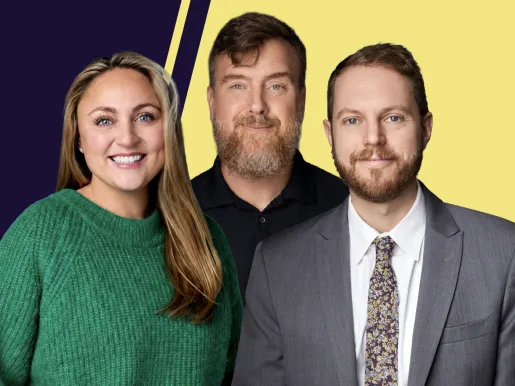
Nico Perrino: You’re listening to So to Speak, the free speech podcast. Brought to you by FIRE, the Foundation for Individual Rights and Expression. Welcome, folks, to FIRE’s May monthly webinar. We opened this one up to the public. So, anyone who is interested can join. But typically, how this works is, every month, if you are a donor to FIRE of at least $25.00, you are a FIRE member and you are invited to these once-a-month conversations where FIRE staff and leadership hop on and all we do is answer your questions. So, none of us who are on the call today know what we’re gonna get.
We’re excited to hear what you have to ask. Comments, questions, all of that stuff is invited over the course of the next hour. We’ll try and keep our answers clear and concise so we can get to as many questions as possible. If you don’t know how to ask your question, however, you can go to the bottom of your Zoom screen, and you should see a Q&A button that’ll bring up a popup window, and you can just type your questions in there. And if you don’t see that Q&A button, you might have to click more, which is that circle with the three dots in it. And you should see the Q&A button in there.
Now, I don’t put the questions forward chronologically when they come in. I try and bunch them up thematically. So, if we get one question, we usually get follow-up questions – I try to address as many of those as possible, while trying to keep things moving. Because, again, we only have an hour. Sometimes we go a few minutes over. This is a live recording, and it is going to be put up on my podcast, FIRE’s podcast, So to Speak, the free speech podcast. So, if you don’t subscribe to that, you can do that now on Apple Podcasts, Spotify, or wherever else you get your podcasts. You should see this recording up by the end of the day. Now, another note that I’ve been asked to provide before we get started is to urge all of you to attend and buy a ticket to FIRE’s big free speech conference happening in November of this year.
Greg Lukianoff: It’s going to be lit, as they say.
Nico Perrino: As the kids say. Alisha, do you wanna talk a little bit about this? When is it happening, where is it happening, and what are we gonna do when we’re there?
Alisha Glennon: Yeah, so, Soapbox is happening in Philadelphia from November 4th through 6th. It’s happening right in Center City, on Broad Street, at the Bellevue Hotel. And FIRE has never actually hosted a big free speech conference before. We’ve done galas, we’ve done regional events. But this is our first time doing a two-day, two-night, all-you-can-eat free speech conference. And so, we’re really excited. We have enough room for about 500 people.
So, we do expect to sell out, which is why I really wanted Nico to make sure that our members and the people attending this call got first dibs. We are offering some early bird rates right now that will end on July 4th. Once you register, you can get information for the hotel blocks. And we’ll be dripping some of the programming out as we get closer. But I’m happy to share some of the information about the speakers that we have today, if you give me a minute to do that. Is that okay, Nico?
Nico Perrino: I can give you 30 seconds, how about that?
Alisha Glennon: All right. Well, so, everything will end with this big gala dinner that Friday night, the 6th. And we have announced our keynote speaker. He’s a Canadian named Alex Edalman. He’s absolutely hilarious. He’s a free speecher. If you haven’t seen it yet, he has an HBO special called Just for Us, and I highly recommend it. So, Alex will be headlining our gala with a speech about free speech. And I’m assuming it’s going to be very funny, as well. So, we think that will be a special treat for all the attendees.
During the conference, we have two big podcasts that we’ll do live performances of. The Fifth Column, to those that are familiar, these are a great group of guys that talk about the news and the culture. And they’re also a bunch of free speechers; very entertaining. And then, we have Advisory Opinions, with Sarah Esker and David French. So, we’ll be doing live podcast events for both of those podcasts. And then, we also have two college presidents attending. We have Michael Roth from Wesleyan, and we have Sian Beilock from Dartmouth. And so, those are five programming items out of hundreds. Not exaggerating.
Greg Lukianoff: Yeah, I think we have, what, 20 breakouts? There’s at least three or four keynotes.
Alisha Glennon: We have 20 breakouts, we have main stage events, we have Nick Gillespie, Matt Taibbi. We have tons of great speakers. We’re also going to have some friction on these panels. So, it’s going to be pretty thought-provoking, entertaining, educational, and you will be able to meet all your fellow members, the FIRE staff, and mingle with the speakers. So, I think if you love free speech and you’re interested in it, come join us in Philadelphia, November 4th – 6th.
Introducing Soapbox 2026: Free speech – still revolutionary!
FIRE is launching Soapbox 2026 — our bold new conference dedicated to the power of expression, the courage of dissent, and the timeless value of speaking freely.
Nico Perrino: Yeah, and as Alisha mentioned, we’re not just trying to bring people to this conference who tow the FIRE line on these issues. We are trying to foster some debate and discussion around these issues. And I see Justin Bailey there in the comments saying that he already grabbed the early bird ticket, very excited to attended. We’re excited to see you there, Justin. And if you haven’t gotten your ticket already, the URL is soapbox.fire.org. Again, soapbox.fire.org.
And Welby, our producer here, will put that in the show notes. So, joining me on this call, for our podcast audience that can’t see my colleagues’ titles here – of course, Alisha Glennon, our chief operating officer, who you just heard from. A regular on these FIRE member calls. Greg Lukianoff, our president and chief executive officer. I’m sure most if not all of you are familiar with him. And then, of course, Will Creeley, our legal director, who just celebrated 20 years at FIRE, Will. And we thoroughly embarrassed him at our staff retreat this week with a 10-minute tribute video. Will, how does it feel? Twenty years, man.
Will Creeley: It feels good. I’m ready to go. I’m ready for the next 20. That was the longest 10 minutes of my life.
Greg Lukianoff: Well, there was also five minutes of me toasting you before that, so it just kinda went on and on.
Will Creeley: It was excruciating, but I loved it and I will think of it often in my old age. No, it was very moving and touching. And I was very gratified by it – the recognition was nice, even if it was exceptionally hard to sit there and take it. So, thank you all.
Nico Perrino: And I told Will that I felt bad for him, because it’s a room of 140 people, and throughout this 10 minutes, everyone’s just looking back at Will sitting at the back of the room. It’s like being in a fishbowl.
Greg Lukianoff: Except for me, ‘cause I was getting all choked up too. I mean, it was pretty moving.
Will Creeley: A surprise party without the alcohol – I appreciate it. I was grateful.
Nico Perrino: All right, let’s do it, folks. Let’s jump right in. We’ve got a question from Bill that I think is a good way to tee things up. I wanna give this one to you, Greg. Bill asks, “Many students seem to feel that shouting down a speaker is free speech and a legitimate part of public debate. Is FIRE doing anything about this?”
Greg Lukianoff: We’ve been leading the charge on education about it. We’ve also been calling out students for it. And by the way, we actually get this refrain from someone in particular that I respect a great deal, Randy Kennedy. But I think he’s utterly wrong-headed in this –
Nico Perrino: Professor of Harvard, right?
Greg Lukianoff: Essentially, FIRE’s disinvitation database, our deplatforming database, is wrong, because students have every right in the world to demand that speakers not speak at their schools. And it’s a straw man, because it’s like, yeah, we know that. However, if you actually have a situation – and so, we’re not saying that students should be punished for being illiberal. We are saying that if students got their way every time and no controversial speaker was ever allowed on campus, that is not good for the state of the free trade of ideas on campus. And it’s even worse, of course, if they engage in shout downs. And they engage in, in some cases, violent disruptions of events.
And this keeps on happening. And I feel like the number of ways is actually saying, “Well, it’s just the students’ free speech rights to impose on everybody else who they are allowed to see,” is starting to sound as ridiculous as it’s always been. They are acting like authoritarians. They’re showing up and they’re saying, “Because I don’t like you, none of the rest of you are gonna be allowed to hear this speaker.” And that is an authoritarian attitude. And so, I’ve been doing everything I can – I talk about this to high heaven, we call it out in our deplatforming debase – so, we’re actually one of the reasons why people know what a problem this is. Without us, they probably wouldn’t.
I devoted the first part, the first half of my TED talk, to this issue, calling this out. And I unapologetically point out when students do this. Because we always make the point that we’ve been defending pro-Palestinian students all over the country, every time they get in trouble. But I’ve also been annoyed that a lot of those student groups, at the same time, have been leading the shout downs. I think for two years about, there were only about three cases that involved student shout downs weren’t pro-Palestinian students.
So, we’re fighting it pretty hard. And we’re publicizing these cases. But motivated reasoning is a hell of a drug. And one of the things that I’ve been saying is that every time there is a shout-down, two things need to happen at minimum on every campus. Because people forget that administrators actually contribute to these. 1.) There needs to be an investigation. Did administrators do anything to stop them from shutting down an event? And more importantly, did administrators do anything to actually facilitate or create the situation in the first place? ‘Cause this happens more than you know.
It certainly happened at Stanford. The only reason why we really know that clearly is because one of the administrative organizers actually decided to make herself the star of the show. But I think that we do need to get tougher with these disruptions and make it very clear that, if this keeps on happening, it’s essentially a formal part of what the university’s doing. And they don’t punish anyone who’s involved – in some cases, they facilitate them doing it. That’s basically university policy – that we’re going to allow the mob to shut down locally unpopular voices. So, I do think that we really do need those two reforms to be expected every time one of these shout downs happen.
Nico Perrino: And Greg mentioned his TED talk. Malvi, if you wanna put a link to that into the notes here in the Zoom. It’s a fantastic TED talk; Greg got a standing ovation. I urge everyone to check it out. Greg, I wanna stay with you, ‘cause we have something that’s in a similar vein from James Enstrum –
Greg Lukianoff: Hi, Jim.
Nico Perrino: James says, “The announcement for this conversation cited the lack of free speech at the UCLA law school.” There was recently an effort to shout down a DHS speaker there. “The incident occurred because UCLA law school is dominated by very liberal faculty, staff, and students who suppress conservative viewpoints,” says Mr. Enstrum. “This is consistent with FIRE’s free speech ranking for UCLA of F. Can FIRE expand its free speech ranking highlights to include the ratio of liberal professors to conservative professors at UCLA?” I’m not sure if we have plans to do that, but is there anything you wanna add about UCLA and just the ratio of liberal to conversative to independent to libertarian professors on these campuses?
Greg Lukianoff: Well, UCLA was the most recent time I’ve actually trotted out this old idea of mine, that you have to have this administrative accountability every time these shout downs happen. So, we’re very involved in that. But when it comes to adding viewpoint diversity to the rankings, we’re probably not the group to do that. But we are the group to study things like viewpoint diversity, and we did actually come out with a report about it – the research department.
Alisha Glennon: Well, actually, we have one coming out next week.
Greg Lukianoff: Next week? Okay.
Nico Perrino: Oh, preview!
Greg Lukianoff: Yeah, sorry. I read it, so…
Nico Perrino: Stay tuned.
Greg Lukianoff: Yeah. So, we’re coming out with viewpoint diversity. However, I’m a little uncomfortable with FIRE actually being the one to tie that to free speech. ‘Cause in theory at least, you could have a highly politically homogeneous environment that has a great free speech culture because people are more old-school liberals. And they actually get the idea that you’re supposed to have free speech. You could have something that – oh, sorry.
Alisha Glennon: I was gonna say, but our partners at Heterodox Academy, who are sponsoring, they’re one of our sponsors of Soapbox and will be participating. We have John Thomasi there, he’ll be on the panel with the college presidents. And one of our scholars, Nate Honeycut, who specializes in this. So, it’s very much a topic that we talk about. But I agree with Greg that adding it to the database probably wouldn’t be the best role for FIRE to play there. I didn’t mean to interrupt you, Greg.
Greg Lukianoff: Oh, no, it’s fine. And I was actually gonna get to that – we do actually rely on other organizations like Heterodox. And I think Manhattan Institute incorporates that as well. But with regards specifically to the UCLA case, Will, is there any updates on that?
Will Creeley: No. The updates are that we’re a little bit at a standstill. Folks may know what happened here. As Nico said, there’s a DHS attorney there. Students protested in the talk with a series of coordinated walkouts, heckling, phones going off, etc. The cumulative effect was to make it very difficult for folks who were there to ask questions and listen to the talk to do so, and for the speaker to talk. So, a functional shutdown. The UCLA then kinda stepped in it further by warning one of the student organizers of the event – it was a Federalist Society event – warning him that public comments that identified the students who had disrupted the talk could be subject to disciplinary action.
Which is a clear violation of the First Amendment. If folks are in public, disrupting an event, they don’t have any reasonable expectation of privacy. They don’t have a right not to be named. In fact, as I think Greg would argue, the kind of culture of free speech – the accountability component – would be that if you disrupt an event, you should expect to be named. You should expect there to be consequences for doing so. So, we wrote into UCLA and told them that they had this exactly backwards. They responded with a, I think mealy-mouthed – I think the technical term is “half-assed” – attempt at an apology. And we said that was unacceptable and not good enough. And I think that’s where we are still with it now.
Nico Perrino: We have Aaron Turner, our colleague who sometimes appears on these member webinars, who just wanted to provide a clarification. He said, “To partially defend Harvard professor, Randall Kennedy, he agrees with us that disrupting events is unacceptable. He just disagrees that calls for disinvitations are a problem.”
Greg Lukianoff: And let me just put in this other point here –
Nico Perrino: Yeah, he has an essay in the Chronicle of Higher Education that Malvi might be able to link to. I believe it’s the Chronicle.
Greg Lukianoff: Right. And Professor Kennedy and FIRE are in full agreement that peaceful protest is absolutely protected. I wanna be clear about that part. It’s the disruption; it’s the prevention of a speaker from speaking or from the audience from hearing. That’s our concern. If you wanna stand outside an event and protest peacefully, that’s your absolute right to do so. We would defend your right to do so. I remember, years ago, we had a case at the University of Toledo where Karl Rove was speaking, and two students – I believe they were from the Muslim Student Association – were protesting, and they were standing outside with flyers. And they were told they couldn’t do that.
They weren’t disrupting anything; the talk went on, etc. And I remember writing in there, and the idea from the school, the attempt at justification, was something like, “Well, they might disrupt it.” Well, they didn’t disrupt it. They engaged in lawfully protected, clearly peaceful protests. So, we take seriously that line between disruption and protesting. In fact, we would absolutely defend folks’ right to protest.
Nico Perrino: Yeah, but what I don’t think Randy’s taken seriously is that I do think it’s a failure of education if students’ first instinct is to try to get someone disinvited. Or worse, try to shout them down.
Alisha Glennon: We should talk about the article in the Times this week, right?
Greg Lukianoff: Oh, yeah, yeah, yeah.
Alisha Glennon: I’m gonna be really interested to see what happens at the NYU commencement, where we have Johnathan Haidt, Greg’s co-author of the Coddling of the American Mind, he’s giving the commencement address there, and –
Greg Lukianoff: At Yankee Stadium, by the way. Which is pretty cool.
Nico Perrino: Really?
Greg Lukianoff: Yeah.
Alisha Glennon: It is cool. NYU has already stated that they are not disinviting John. So, that’s not what this is about right now. But there were calls from students to disinvite him.
Greg Lukianoff: The student government, indeed.
Alisha Glennon: From the student government. Because of his work on Coddling and what he’s been saying about students being disempowered – which is what Greg wanted to name the book – and so, it’s very topical right now that we’re talking about this. And John is on the receiving end of calls for disinvitation. So, that will go into our deplatforming database. But it will go in there as an attempt. A failed attempt. Meaning the students were not successful and the school stuck up and had their backbone and didn’t disinvite John. But that’s not to say there might not be a disruption, so we’ll be watching closely.
Greg Lukianoff: And I’m doing a watchout this afternoon for one of my goofy, ridiculous, handheld videos, called Greg on the Run, where I talk about trying to explain to Gen Z, “I know you think Coddling of the American Mind is saying, ‘Oh, these students are so spoiled.’ And that’s not at all what it actually is saying. It’s saying something actually quite different, and that me and John have been standing up for student resilience and autonomy in a way. And we are criticizing, basically lying to students about being more fragile than they actually are. But people don’t read books.
Will Creeley: Can I jump in on this one real quick?
Nico Perrino: Yep.
Will Creeley: As a NYU double-alum – Gallatin ‘03, law ‘06.
Alisha Glennon: Wait, did you speak at the commencement, Will?
Greg Lukianoff: That’s right.
Will Creeley: I was about to say, I had the honor of speaking at the commencement. I was on stage with then Mayor Bloomberg, Joe Torry, and it was funny.
Greg Lukianoff: You’re so cool.
Will Creeley: Hey, listen, it was funny because –
Greg Lukianoff: No, but I mean it, I’m not kidding.
Will Creeley: It was right after Bloomberg had announced the smoking ban in New York. And at this point, NYU commencements weren’t yet at Yankee Stadium – they were in Washington Square Park. But they were outside.
Greg Lukianoff: Oh, that’s beautiful.
Will Creeley: It was a beautiful sunny day. And when Bloomberg got up, everybody in the crowd – well, not everybody, but it felt like everybody up on that stage – everybody in the crowd got out cigarettes and started smoking. So, this huge waft of smoke. But here’s what I wanna say – I don’t wanna give NYU too much credit for holding the line on John Haidt so far. Because NYU also, to this alumni’s shame and disappointment, has started requiring student speakers to pre-record their addresses to the crowd. Because they’re worried about student speakers saying something that some folks in the crowd wouldn’t like or wouldn’t agree with.
Last year, a student gave pro-Palestinian remarks and caused a little bit of a hubbub, as some attendees were offended by them. But to me, teaching students that only anodyne, pre-approved, scrubbed-clean addresses are gonna be acceptable in public furthers this loss of agency among students that Greg and John were worried about. This idea that we’re too fragile to hear ideas that we might not like or might not agree with, even at an event like at a commencement. In fact, you should expect to be challenged at a university from start to finish.
And I hate the idea of pre-sanitized student addresses. So, it makes me upset. I remember, I took a shot at the business school in mine. And it was pretty mild – I said something like, “Business school graduates, I hope you make a lot of money but also do good.” Something like that. And the business school dean, when he came onstage, he was like, “I’d like Mr. Creeley to know that we all will do our best.” Something like that. But that was cool. That was important.
Greg Lukianoff: That’s great, yeah.
Nico Perrino: We have a lot of questions about campus here.
Greg Lukianoff: Oh, I just have one last thing to say about it. I actually completely missed the whole – that they have to be on video thing until the end of that New York Times article. And I was like, “What?” And I love the ending quote ‘cause it was kinda like, there is a great irony in having someone who’s campaigned against screens having a graduation where the students can only appear by screen.
Nico Perrino: Craig asks, “Is not peaceably walking out of a controversial speaker a matter of free speech?” Will, how would we assess that up there?
Will Creeley: I think it is. I think if you get up and you walk out, that’s absolutely protected. I would say, in many ways, that’s vastly preferable to, for example, having your cellphones coordinated to ring loudly every 30 seconds or whatever the hell. I remember Chris –
Nico Perrino: That’s what happened at UCLA.
Will Creeley: Yeah. Chris Finan – the old head of the National Coalition Against Censorship – and I had a discussion about this back in…I want to say 2017, when “white nationalists” like Richard Spencer were on speaking tours around the country. And Chris remembered, from his time as an undergrad – I wanna say at Brown University – how walkouts…that folks would come and listen and then walk out together as a show of protest – that was a common tactic. And he said it allowed the speech to go on, it allowed people who wanted to ask questions to ask questions. But also, is a way of demonstrating disagreement. I think if that’s done in a…say it takes 20 seconds to walk out, I would say that’s protected.
Alisha Glennon: We’ve also said that silently holding a sign in the back that doesn’t disrupt something is also protected.
Will Creeley: That’s right. Some years ago, I got asked by New York Times to write an op ed about one of those white nationalists, Richard Spencer, who is on the University of Florida campus. And the question that was put to me by the Times was, “How should students respond to this speech that many of them are gonna find absolutely abhorrent?” And I said there are lots of ways.
You can go and ask good questions and kind of puncture this sense of gravitas that he’s trying to cultivate. You can protest peacefully outside. You can make fun of him. You can do lots of things. What you can’t do is engage in violence or try and shout him down. Because that gives the speaker the exact kind of attention, first of all, that he may very well be looking for. And second of all, it prohibits the presentation of his ideas and the opportunity to disagree with them and maybe change minds. So, it does a “double wrong,” to quote Frederick Douglass.
Nico Perrino: Eric Hammel asks, “It’s my understanding that not only was Professor Tom Alter summarily fired from TSU in response to constitutionally protected remarks he made in his own time and in his own personal capacity, but that it was done without even the semblance of due process. Has FIRE taken any action on this case?” Will, you noted here that you were gonna answer this live.
Will Creeley: Yeah.
Nico Perrino: Who is Professor Alter? Where’s he teach? What happened?
Will Creeley: Texas State University, which is a hotbed of censorship. We’ve been joking amongst staff for a while now that we could just open up a Texas office full time. Man, things are terrible in Texas for student –
Greg Lukianoff: Think of the barbecue.
Will Creeley: Think of the barbecue. For student faculty speech, it’s an absolutely nightmare. Things are a mess. We’re in court on a number of fronts down in Texas. But to focus on Professor Alter, yeah, we are in touch with his attorney. Did some media statements, coordinated meeting statements from Washington that case closed. And my understanding is that litigation is still going on. Yeah, he was fired for his commentary.
We are more closely involved with the defense of one of his colleagues, Professor Idris Robinson, who was fired for appearing at a…I wanna say it was an anarchist book fair in North Carolina. So, off-campus, out-of-state, giving a talk about Palestine, pro-Palestinian causes in Isreal. And a video of it surfaced and he was summarily fired. My colleague, JT Morris, who lives in the great state of Texas, his local council, and our former colleague, Samantha Harris, a long-time FIRE employee, is representing Professor Robinson.
And they just this week got a good ruling from a judge who said – let me quote here, if I can get it handy. Who said something like the State hadn’t made any effort to demonstrate that the decision to fire him wasn’t about speech. They just really…there you go, this is the quote. “The State really hasn’t made an effort to argue that the speech that the plaintiff gave wasn’t in some role or another a motivating factor.” In other words, they fired him from speech. They didn’t even try and hide it. So, the court has just ordered his reinstatement for a year at Texas State. I don’t know, we could do a whole hour and a half – we could do three hours on Texas. It’s a mess.
Nico Perrino: Maybe one day. But not now.
Will Creeley: Yeah, not now. We’ll keep going.
Nico Perrino: Alisha, George asks, “How many scholars vs attorneys have you grown to now?” I’m assuming at FIRE, right? I’d mentioned earlier that we had 140 people at our staff retreat and that’s about what our staff is now. What’s the breakdown there? Alisha, I think you’re muted.
Greg Lukianoff: You’re muted, Alisha.
Alisha Glennon: Sorry. I believe we have almost 60 attorneys. Maybe in the high 50s. And our research team I think is about a dozen or so people. Those are rough numbers, but it gives you a sense. That sound right to you, Will?
Will Creeley: It does.
Alisha Glennon: Yeah, because we have our in-house litigation program and First Amendment litigators, but we also employ attorneys that work on our public advocacy team, our campus rights team, and our policy reform team, our legislative team. So, our attorneys kind of stand the organization. And our research team, like I said, is about a dozen people.
Will Creeley: Crawling with lawyers.
Greg Lukianoff: Yeah. Well, but I also tend to be really proud of the fact that we’re about half – we’re less than half lawyers. Because lawyers bring awesome perspectives, but at the same time, if you have a group that’s just lawyers, there can be a kind of legal “everything is solved by litigation” kinda tunnel vision.
And one of the things I love about FIRE – and we just had our retreat up in Philadelphia over the last two days and it was just so awesome seeing everybody – is we attract such different personalities, such different points of view, to the same office. But we also attract people with really different disciplines. And so, we practice what we preach here. And I think it makes us smarter and deeper thinkers that we wouldn’t be if we were just all one profession.
Nico Perrino: Yeah. We’re not solely a legal organization and have never been that way. If you look at our mission, nowhere is the First Amendment mentioned. We talk about free speech – which, Greg, you often refer to as a bigger, bolder, grander idea than just the legal protections that apply to it. So, thank you for that good question. Greg, I’m gonna come to you now with a question from Howard Winnett. “Has the incidence of cancel culture events on college campuses changed since the Trump administration took office?” I think you wrote the definitive book on cancel culture, so I wanna give this one to you.
Greg Lukianoff: Yeah. And I’m gonna say something that I know that people who don’t like me would intentionally misunderstand – since I was trying to get people to think of cancel culture as like a historical period for censorship that had unique characteristics largely related to what you can do with social media and that kind of stuff, I think that, with the election of Trump, that era changed. Not because things got better, but because we entered a era that was worse in a lot of ways.
Because I do actually think that classic cancel culture, like in the sense of the most stereotypical kind – like where someone says something that is counternarrative. And then, groups get together to try to get that person fired. That still happens, and we still have cases like that on campus. To be clear, not nearly as many as we had in, say, 2022 or 2021 – two of the worst years for it. But at the same time, you have this much more even serious threat when you have politicians or government leaning on institutions to censor or punish people.
So, I would say that I don’t wanna call that cancel culture. Not because I don’t think it’s bad. I don’t wanna call it cancel culture ‘cause I think it’s something even more serious than an intolerant culture that wants to get people punished. So, I do think that things have changed dramatically. And if you look at our data, we have this big kind of spike in professors getting in trouble around 2020, 2021, 2022 – ‘21 through ‘22. And then it kinda starts to recover a little bit. Now, it wasn’t that great, because at the very same time, deplatforming skyrocketed in the other direction.
But then, when you look at this last year, it’s like a hockey stick up because then you also factor in all the political pressure to get people punished for speech on campus. So, I wrote something in the Dispatch saying that I feel like we’re living in the worst of both worlds. I don’t think that sort of…what Tim Urban likes to call “social justice fundamentalism,” or what other people like to call “wokeness,” has gone anywhere. I think it’s just – or at least it’s gone largely – it’s only receded a little bit. But meanwhile, kinda like threat from the right have gone through the roof. And of course, just one final addendum on this, people say they have to fight back to what was going on on campus.
They had to do something about the censorship, and this is Trump’s attempt to do it. And what’s frustrating to me is there’s a million ways you could’ve addressed the problems on campus that wouldn’t get laughed out of court – that wouldn’t have meaningfully threatened the First Amendment. And instead, I don’t know, in some cases, what this administration is thinking. That they’re gonna try to fix the problem by doubling down on aversion of cancel culture is not just wrong, it’s also incredibly tactically foolish. ‘Cause it’s not gonna work. And my fear and prediction is we’re gonna end up in an even worse place in a couple years from now.
Will Creeley: Just to jump in real quick again on that one, Nico – it’s not even cancel culture. It’s backed by the power of the State. So, I fully agree, Greg – it’s even worse. The firings of faculty for saying the wrong thing are bad when they come at the result of cultural pressure. And they’re bad – and I would again argue even worse – when they come as a result of government pressure. And we are seeing that left and right and center every damn day. I mean, it’s constant.
Nico Perrino: So, a lot of these questions have been about campus happenings, which makes sense. FIRE, for the first 23 years of our existence, was a organization devoted exclusively to defending free speech and civil liberties on college campuses. As many of you, I’m assuming, know, we expanded off campus in June of 2022. And I’m going to take the conversation in that direction now, after spending more or less 30 minutes on the campus beat. And I’m going to go to you, Will, with some questions we’ve gotten about doxxing. There are a number of questions like this in the chat.
Joshua Spizer asks, “Can you talk a little bit about doxxing? What FIRE defines as doxxing and what the organization might be doing to combat it, a la the billboard trucks that were circulating around Harvard." Robert Shavits has a similar question, “I would like to hear FIRE’s position on doxxing. That is publication of personal contact information, especially home and/or work addresses. I do not see this as a free speech but rather a personal harassment potentially posing as a real safety threat to individuals.”
Will Creeley: Great questions. I appreciate the opportunity to answer both. My initial problem with the concept of doxxing – which arises from the hacker context – the reason we call it “doxxing” is because it’s revealing documents, right? So, you’re providing documents about somebody.
Greg Lukianoff: Oh.
Will Creeley: Yes, I know. A fun fact.
Greg Lukianoff: It makes so much sense.
Will Creeley: Right? So, whether or not you spell it with one X or two, that’s the origins of doxxing. My problem with doxxing these days is a little bit like my problem with bullying – it is this inherently elastic term that can be used to cover a great deal of speech. Both the type of speech that might result in criminal or civil liability, that is that kind of specifically targeted harassment that you’re talking about. Or, of course, unprotected categories of speech like a true threat. But sharing someone’s name or address is often very protected.
As my colleague Robert Shibley said yesterday in a FIRE conversation we were having internally about this issue, you remember when once a year you’d get a big yellow book thrown on your driveway or in your mailbox? The phonebook. And the phonebook had people’s names and phone numbers and addresses, and it used to just be part of the public record. In fact, you can still get a lot of that information now. So, I’m worried about doxxing. And I’ve been on the record about being worried about doxxing, the way it’s invoked to silence protected speech.
I remember last year, when Elon Musk and DOGE were doing their thing in federal offices across Washington. Some people reported on the identities of these folks who are working for the federal government, in a government role, and were saying, “Hey, this is so-and-so. This is what he’s doing. He’s a member of DOGE.” And there was this push by then interim US Attorney Ed Martin, to have people prosecuted for sharing that information. Listen, folks – you can share information about government workers. I mean, those are taxpayer-supported jobs. We have a right to know who is slashing funding for X, Y, Z federal agency. That’s part of what the First Amendment was designed to protect – that criticism of the government.
You don’t have a right to anonymity if you’re working for the public – just the opposite. So, that was called doxxing. And I’m wary of those kinds of invocations, of doxxing to silence protected speech – which is oftentimes just criticism of the government. And to the second part of the question is where that line is. What do we think about when that information is used for bad ends? Well, I would say, when the information is used for bad ends, then you punish the person who’s using it for bad ends, right? You don’t punish just the release of the information. That’s not a kind of causality or liability that makes sense when we’re thinking about what is and isn’t protected.
In other words, if I say, “So-and-so lives at 123 Main Street,” and then somebody goes into 123 Main Street and rings their doorbell for an hour in the middle of the night – well, now you’re maybe talking about a harassment charge or some kind of liability, either criminal or civil. But the person who said that X, Y, Z lives at 123 Main Street – I love all these generic terms I’m using – that’s still protected. One last example of how this works in practice: In New Jersey, there’s a law that prohibits government workers’ names and addresses – or pardon me, just addresses, I think – from being published in the public. We have been involved in efforts to push back on those kinds of laws, because they are susceptible to abuse.
In one county in New Jersey, the chief law enforcement officer turned out not to be living in the town where he was the top cop. In fact, he was living two hours away, on the Jersey Shore. And an activist found this out and published it. This is relevant information, news you can use if you’re a voter in that town. And of course, the police chief said, “Well, wait a second, I’ve got a right under state law not to have my address published, you should be in a lot of trouble.” I mean, that’s garbage to me.
Nico Perrino: And this police chief was actually Snookie.
Will Creeley: Yeah, well, I guess I just can’t abide by that. So, in other words, when it comes to doxxing, you gotta look out for the actual criminal, actual unprotected speech. Just the act of sharing public information is not a problem. We were talking about UCLA a minute ago; the UCLA assistant dean of the law school who warned the student organizer of the event that got shouted down. He said, in other words, don’t dox the students who did the disrupting. Look out for doxxing, because it’s gonna be used as a way to silence protected speech that’s necessary for our public discourse.
Nico Perrino: Hey, Alisha, we got a question about volunteers, and you actually just addressed this at the meeting yesterday.
Alisha Glennon: Yeah, so . . . who asked this? Andrea. If you email me, we can look for a customized opportunity. FIRE does not have, right now, a full-scale volunteer program that we’ve launched, where anybody can volunteer. But we do work with individuals with skill sets to see if we have a need that they can fill. And so, that’s not to say we won’t ever have a big volunteer program, but we’re just not there yet. But I’m happy to work with you, Andrea.
Nico Perrino: David Langed asks, “If the US government tried to regulate AI, how could this even happen? What regulatory actions have been contemplated?” Greg, do you wanna talk about your concerns surrounding free speech and AI and the regulations that are starting to pop up across the country? I believe there’s been thousands of bills introduced.
Greg Lukianoff: Yeah. I don’t think it’s quite cracked 2,000. But it’s right around 2,000 bills across the United States. And they’ve been trying all sorts of legal theories. The one that scares me the most – and I adamantly think should scare everybody else – is watching various legislatures try to use the same sort of Trojan Horse approach that was used on campuses to attack freedom of speech. Which was to re-characterize speech codes, in the ‘70s and ‘80s, as anti-discrimination codes. Basically saying, we’re not actually in very much” – tipping their hat to people like Herbert Marcuse – “to go after speech claiming that actually this kind of speech is discriminatory, it’s racist, sexist, etc. But by the way, we actually just mean in some cases the expression of ideas.”
And what we’re seeing in a number of states, including Colorado and Texas, are the passage of what are called algorithmic discrimination laws. And there’s been a lot of developments in this just in the past couple of days, even. XAI launched a lawsuit against Colorado’s algorithmic discrimination law. They’ve rewritten the law, it’s gone to Jared Polis – it looks like it’s a vast improvement from the previous law, but we still have some arguments about it. But so, anti-discrimination, I think, is a very powerful way to try to manipulate the truth function of AI.
And we, once again, we talked about this with staff yesterday – AI is complex and we think about it all the time. It presents all sorts of interesting policy questions and problems. Particularly ‘cause some of it actually acts like a person. It goes out into the world and acts as an agent – agentic. But the function that is most closely tied to freedom of speech, knowledge creation, academic freedom, is that function where AI kind of works like a combination of a library and a research assistant at the same time, which is inherently – or for that matter, a creator – which is all inherently expressive.
And the most – and I use this word meaningfully – terrifying result to me, the one that could really create tyranny, is if you actually allow power to have control on what AI is allowed to consume from an information standpoint, or what its outputs need to be in terms of what it says is true. Because power – and Orwell explained this better than anybody – power has always wanted to control truth. Foucault explained it, but poorly, in my opinion. And that essentially that we need to prevent that. I’ve been talking a lot about the same way we have separation of church and state, we need to have separation of truth and power. Because power will do everything in its power to make sure it gets to define reality itself if it can. And we have to fight that.
Nico Perrino: Yeah, one of the examples that I like to use is this AI chatbot that comes out of China called DeepSeek. I’m sure many of our participants here are familiar with that. It comes out of China, and if you try and have a conversation with it about Tiananmen Square or Jiang Ping and some of the more controversial aspects of Chinese politics, it pretends like it can’t answer or it’s outside of its parameters, right? If you do not apply, or if the First Amendment does not apply, to artificial intelligence, there is nothing stopping our government – whether it be a Trump administration or a Biden administration – from forcing the people who create these models, whether they be OpenAI or Anthropic, from producing the same limitations on their chatbots.
The First Amendment is what prevents the government from manipulating the truth, or manipulating the sharing of information, as Greg was just discussing about. So, to the extent that these are tools for expression, that they create and disseminate knowledge – they help you make movies, write music, research essays, make video games – you need to apply the same First Amendment protections that you would in other contexts. Okay, do we have any other follow-up questions about AI? I don’t think so.
But we do have one question I wanna direct to you, Will, from Joan Downs. “As someone with clinical depression who has benefited from talk therapy and medication, I appreciated Justice Jackson’s decent in the Childs v. Salazar case, where Justice Jackson said that paraphrase talk therapy is medical treatment. Can we draw a substantive line between talk therapy as speech and talk therapy as medical treatment? If so, how?”
This is a Supreme Court case that was decided earlier this year where the court ruled that this sort of talk therapy – conversion therapy, mainly for people who are same-sex attracted and want to no longer be same-sex attracted – can the State regulate what can be said during those interactions? And Will, you wrote a long blog post about this case after, I believe, oral argument. How did you look at it and what do you think of Joan’s question?
Will Creeley: It’s great question. Thanks very much, Joan. The essential distinction that’s trying to be drawn here is when does talk become something more than just talk? When is talk therapy medicine and regulable as such? I am very wary of drawing that kind of distinction. What we’re talking about here – conversion therapy has an absolutely atrocious history, to be clear, and I understand it’s a subject of intense pain and controversy as a result. But what we were talking about here, and what was at issue before the court, was a willing speaker, the therapist, and a willing listener who had gone to get this therapy voluntarily and wanted to be there.
And the State saying, “No. Even though you are a willing speaker and you’re a willing listener and you want to talk about these questions in this way, you can’t. We’re not going to allow it.” And that, to me, grants the State a degree of power that I don’t think is tenable. When Justice Gorsuch, in his opinion, says this is at base speech. I think that’s right. And I think the consequences of saying otherwise would be dangerous indeed. If we let the State start saying, “Yeah, I know you’re both talking. I know you wanna talk and you wanna listen and vice versa, but really there’s something more going on here,” it won’t stay cabin to issues like conversion therapy or that kind of discussion.
Very quickly, we’ll see a wide range of speech that we would expect to be able to participate in being rebranded as some kind of conduct. You see the same context with regard to – in the court’s questioning – therapy that would be cognizant of someone with same sex attraction and want to make them feel comfortable with it, right? Or want to say we’re normalizing this. And some of the questioning of the attorneys for the State of Colorado in that case – the folks who were defending Colorado’s conversion therapy ban – the justices, including Justice Kagan, essentially said if the therapy was trying to make somebody accept that they were say, transgender, would that be regulable? Would you be able to ban that?
And the Colorado folks said, “Well, no.” And I said, “Well, then, that’s classic viewpoint discrimination. You’re not regulating speech as medicine or speech as therapy – you’re just trying to enshrine one viewpoint as acceptable and one not.” So, you really gotta watch out when you’re granting the State that kind of power. Look, nothing in here is to say that speech isn’t powerful. It’s exactly because speech is so powerful that we wanna keep the government regulation of it absolutely hands-off and to a minimum. That’s the point here, at base. I recommend folks reading the opinion, ‘cause I do think Justice Gorsuch just does a really thoughtful job. And in the blog entry that Nico discussed, I quote some of the oral argument which is pretty powerful and pretty interesting. So, I encourage folks to check it out.
Nico Perrino: We have a question here from Ms. Levy, a regular participant in these member webinars – good to see you.
Will Creeley: Hey, Ricky.
Greg Lukianoff: Oh, hi, Ricky!
Nico Perrino: We’re seeing increasing pressure on platforms, educators, libraries and even therapists to restrict lawful speech related to sexuality and gender. Where does FIRE see the greatest emerging threats to expressive freedom online? Particularly when governments use vague safety language to justify restrictions. And does FIRE think we can rely on the courts to uphold free speech and the first amendment? Well, we had the Paxton case out of Texas recently – seemed to overturn some aspects of precedent.
Will Creeley: Let me just say, Ricky, before I hopped on this call I was just talking to our mutual friend, David Horowitz of Media Coalition for 45 minutes. And he and I drove that conversation right into the ditch with being depressed about the absolute onslaught in both – mostly state legislature. See, now we’re talking about on issues regarding speech about sex, speech about gender. Requirements for age verification is another threat that I would identify here. In other words, having to verify your identity before you’re able to access protected speech online.
We are seeing that threat rampant across the states, in the light of the Supreme Court opinion that Nico mentioned – Free Speech Coalition v. Paxton. So, that’s a huge threat. If you teach people who are 17 years old that there are some aspects of protected speech the State is just not gonna allow you to see, or you teach 14-year-olds whose parents want them to be online and talking to each other rather than being isolated or feeling conflicted about who they are, and the State says, “No, you can’t.” I mean, we’ve got real problems. And that’s just talking about the impact on minor speech, let alone the hoops that adults would have to jump through to access protected content. We could go long on this one.
But so, without getting too specific, yes, there are lots of threats out there. Do I think court’s gonna pull them? I’ve kind of bet my whole career on it. I’m hopeful not just to be making sandcastles here that will go out when the tide comes in. That’s what FIRE fights for every day, is to make sure the principles in the First Amendment are protected. Both as a cultural matter and as a legal matter. So, we’re doing our damnedest, Ricky. We are dancing as fast as we can. So, stay tuned.
Greg Lukianoff: Yeah, and I need to chime in here because – I mentioned Haidt in the NYU context, but I’m the co-author of Coddling the American Mind. And yeah, I continue to believe that a certain subset of young women probably should not use Instagram and that it’s not super healthy. And if you can keep some of your daughters off of it until they’re older, that’s fabulous and probably a good idea. But unfortunately –
Nico Perrino: And why do you say young women, Greg? Is it because the science demonstrates that it’s more harmful for that cohort?
Greg Lukianoff: Yes. Just flat out, yeah. But it specifically tends to be things about bullying and looks comparison type stuff. But that being said, that argument morphing into “and now we need to know everybody who’s using social media or everyone who’s using the internet,” is horrifying to me. And we’ve really devoted time and energy to fighting identity verification on the internet. And you might wonder why I’m not saying age verification – because there’s no way to do age verification by itself. It always affects the rights of adults. It always affects the rights of dissenters. Always effects the rights of PhDs.
And in Europe, for example, I feel like they’re jumping right into this. Being kind of like, great. And no more anonymous use of the internet. I mean, we’ll protect your privacy from outsiders but not from the government. As if the EU would never harm you. It’s just like, that’s adorable, Europeans. But so, FIRE’s been leading the fight. Saying that these attempts to do age verification are a threat to freedom of speech. Particularly that of adults. And globally. So, I do see a lot of the threats actually coming from, as usual, well-meaning stuff. Coming from within the US but also from both well-meaning and pernicious actors outside.
Nico Perrino: Did you guys see that article that was going around, maybe it was a week, two, three, weeks ago? Where there was some reporting on the effects of the age verification requirements in the UK. UK has some of the more onerous, restrictive regulations –
Will Creeley: Yeah, I saw this one, I know where you’re going.
Nico Perrino: And some kids, in order to circumvent these age verification tools – often they use biometric readings. So, they’ll read your face to estimate whether you’re older than 16 or 18 or whatever it is over there. And kids were getting around it literally by drawing mustaches on their face.
Will Creeley: Yeah. I love it.
Greg Lukianoff: That’s awesome.
Will Creeley: Let me just jump in here too, ‘cause this goes back to the doxxing conversation we were having a few minutes ago. Somebody said, “Well, what about students who don’t feel comfortable?” And this goes for both the on-campus and off-campus context. Do you defend anonymous speech? And we say absolutely. For all the reasons that Greg just identified. The First Amendment protects anonymous speech dating back to the founding, to before the founding – the Federalist Papers, Publius. The idea that you have to be able to speak anonymously.
And there are many reasons you might want to go on a social media platform under an anonymous cover, right? I mean, that’s absolutely part of your first known right. That’s necessary, and we will absolutely defend that. So, when we’re talking about this kind of identity verification, where the government gets to see everything about you…look out.
Alisha Glennon: Nico, can I do something different and report on an email that I basically just got in real time that I think –
Nico Perrino: Please!
Greg Lukianoff: No!
Nico Perrino: I’m curious now.
Alisha Glennon: I think this is gonna make people in this call feel good, but it does go back to our campus conversation for a second. So, FIRE just received a $500.00 donation. But it came with a really special note. These are from students. “We, the leaders of Middlebury College Democrats and Middlebury College Republicans, received an award for organizing joint meetings. Formed for engagement across differences on controversial political issues between our two clubs. We wanted to do our part to improve political discourse on campus. We admire FIRE’s work to protect free speech and free expression in higher education, and in America more broadly. And as such, we have chosen to use our award to support your work.”
Nico Perrino: Oh, wow.
Alisha Glennon: How great is that, right?
Will Creeley: That makes my day. Thank you very much.
Alisha Glennon: I had to do that. Thank you for giving me the chance, Nico.
Nico Perrino: Yeah, and folks, if you donate to FIRE and you leave a note, that’s stuff that – we love to see it. Often gives us energy to start or end our days. And if you mention someone in particular and say you’re not requesting that the note be kept private, we’ll share it internally to kind of let the staff know what people are thinking. So, yeah, amazing.
Will Creeley: Yeah, I’m not gonna do any Bette Middler karaoke, but you folks – the wind beneath our wings. And I’m grateful for it, thank you.
Nico Perrino: Well, it’s also significant in another way, because folks will recall that in 2017, one of the big, catalyzing free speech controversies came out of Middlebury, where Charles Murray was shouted down.
Greg Lukianoff: Oh, yeah, absolutely. And Allison Casings.
Will Creeley: Allison Stanger.
Nico Perrino: Stanger, what was –
Will Creeley: Hospitalized.
Nico Perrino: Assaulted.
Will Creeley: Yeah, she got –
Greg Lukianoff: She got permanently injured.
Will Creeley: Yeah, bashed.
Nico Perrino: And there were some kind of downstream consequences from that. I believe there was another incident where the university in this case tried to censor someone who was coming to speak on campus. I believe this was a foreign politician or something. And the students said no. And so, it’s nice to see that the students, again, here are kind of embodying that free speech culture that FIRE seeks to advance. So, thanks for sharing that, Alisha.
Will Creeley: Thanks.
Greg Lukianoff: Yeah, thanks.
Nico Perrino: I’m curious, Alisha, also – and this can be for Will or Greg – we’ve been talking here about applying free speech and First Amendment standards to technologies. Be they social media or artificial intelligence or sexual expression online – do you see that as kind of one of the more challenging aspects of our work at the moment? I think people often kind of understand the man or the woman on the soapbox who’s expressing their political opinion.
But when you involve technology and all of people’s complicated feelings about technology and its effects on their lives…do you feel like, in the conversations you have with donors or with supporters or with critical audience members when you’re giving a speech, that this is one that’s more difficult to communicate? Any of you can take this.
Alisha Glennon: I’ll just go first, quickly, and then see what the others have to say. But I think the hardest part of those conversations is oftentimes people want FIRE to also offer the solution to the problem, right? And so, we find ourselves in a position where we’re saying, “No, the government can’t do this. This is wrong for the First Amendment, and it’s really important that we keep this starch in it, and this isn’t the way.” That’s our role as a civil liberties organization. But then, oftentimes, the next question is, “Well, then how do you solve the problem of youth on social media?”
And it’s not satisfying of an answer to say, “Well, that’s not really FIRE’s mission and our goal.” And so, I find those conversations sometimes hard to navigate from the FIRE perspective. But I have my own perspective on that – I’m a parent of teenagers. And so, I can talk about what I do or how I feel. But as far as those conversations, I think that the lack of us providing this perfect, beautiful alternative solution can sometimes leave people feeling like, “Oh…”
Will Creeley: Yeah. Let me jump in there. Free speech is messy, right? We don’t do this ‘cause it’s easy – to paraphrase JFK – we do it ‘cause it’s hard. If it was easy, we wouldn’t need the right. But we do. And sometimes, to pick up on Alisha’s point, it is unsatisfying. Am I freaked out about my 8-year-old and 11-year-old and screens and AI and college and all the rest of it? Yeah, of course I am. I’m super freaked out about it. The only way I’d be more freaked out about it is if the government was controlling it and telling me what I could and could not think about, and what information I could and couldn’t find.
So, that’s always the hard part, is making clear that we don’t do this because we think the speech doesn’t hurt, or that it’s great to subcontract your mind out to AI, or stare at screens all day, or whatever the issue might be. Or that we like this speech or don’t like this speech. No. The idea is that we have personal freedom. And thinking about parenting, I think the responsibility to do this for ourselves and not let the State do it for us. Because that part gets much scarier much more quickly.
If AI is what folks think it might be, the possibility of turnkey totalitarianism is gonna be real. And what we’re doing right now, what the fight is, thinking about technology and screens in particular, is to try and keep – as Greg put it – truth separated from power, so that we don’t have that kind of top-down control. That’s the fight. And it does, yeah, it feels scary and unsatisfying. And I know people feel all different kinds of ways about AI and technology in general, social media, whatever. But the alternative is far worse.
Nico Perrino: David H. has a somewhat lengthy question here that I’m gonna try and do my best to boil down.
Greg Lukianoff: In the last two minutes.
Nico Perrino: Yeah. The crux of David’s question is, does accepting government money and becoming subject to federal legal obligations tend to protect speech, restrict speech, or do both? Depending on how the law is enforced. And he’s contextualizing this in some of the recent attacks on higher education where the government has conditioned continued federal funding or revoked federal funding – future federal funding – on abiding some policies the government wants to put in place that would restrict speech.
Will, I know you just spoke, but you were recently at Harvard debating some of these issues. And I’m assuming this came up, because this is often the response that we get. When we’re in court filing amicus briefs or whatnot, pushing back on government speech restrictions as a condition of federal aid.
Will Creeley: Yeah, the idea is that if you accept government money, you gotta dance the government’s tune. Well, that’s not what universities are for. And that’s not what the government is funding. There’s some knowledge-generating institutions, like universities, that have what I would argue a First Amendment function. And that needs to be protected. We don’t wanna be in a situation where what is taught in university is what we consider true hinges on the outcome of elections. I don’t wanna have a red state university turn to a blue state university every four Novembers, right? That’s not how we do it.
What I want is for the government, if it is going to fund universities, having made the choice to do so, to respect the bottom line First Amendment rule against viewpoint discrimination, right? They don’t wanna say that there are some subjects that the government does not want you to teach, so you will not. That’s ridiculous to me.
To answer this very good question, David, I’d be happy to talk more about this via email, will@thefire.org. I don’t want to see a situation where there are what I would call unconstitutional conditions put on federal funding, that you’re waiving the right to, for example, criticize the federal government. Or insist upon a First Amendment compliant definition of harassment in order to receive federal funding. That’s a way to warp public debate and gets us right back in that totalitarianism bucket I was warning about a minute ago.
Greg Lukianoff: Yeah, and I’m definitely gonna be the most radical on this. I think, on balance, federal funding has been a disaster for free speech on campus over the last several decades. Because you gotta remember that I started way back in 2001. And in 1999, the big argument that was happening on campus was, we have to cut down on freedom of speech on campus because it’s required through federal funding, through Title IX, that’s actually saying that if you want these federal funds, you actually have to clamp down on free speech.
And a lot of places interpreted this very ideologically willingly – that that meant that private schools were required to censor speech, but they weren’t required to protect it. So, personally, I think federal funding has been a disaster for free speech and economic freedom on balance. It’s not that it hasn’t had any other benefits. But I do think that there was some warnings about the higher ed industry taking a lot more federal funding, going back to the 1950s and 1940s. And I do think, on balance, it’s backfired in a huge way.
Nico Perrino: We’re at time now, but there is one kind of interesting question about FIRE’s role that is good to close out with. Graham Thompson asks, “Is FIRE fundamentally a reactionary organization? Are there any circumstances where FIRE might share solutions where students can speak freely and anonymously? And if so, can you provide an example?” And I know reactionary can be used as pejorative, I think he’s more –
Greg Lukianoff: You mean reactive?
Nico Perrino: Yeah, I think that’s how I’m reading the question.
Will Creeley: I was just jumping in to answer this one. I was just about to type it out, yeah.
Nico Perrino: Yeah. Wanna answer it live, Will?
Will Creeley: Sure, there are lots of ways we share solutions, Graham, in response to students feeling as though they can’t speak out. First of all, when they do speak out, we have their backs. That’s the truth. At public universities, you have a First Amendment right to speak. At private universities, you have got the right promised to you by the university rules. And the vast majorities do promise free expression. So, No. 1, tell students to get in touch with us. No. 2, we have great programming.
Like this summer, we’re having high school students from across the country come learn in an intensive, week-long camp, from FIRE staffers and free speech luminaries, about how to exercise their rights, how to defend their rights, and how to educate their peers about their rights. I mean, that’s part of the whole game here. It’s not just defending –
Alisha Glennon: Completely free of charge.
Will Creeley: Completely free of charge. Not just defending rights but teaching people about their rights. So, Graham, that is a big part of our mission. Check out our website, there’s more on it all over.
Nico Perrino: We could do this all day, folks.
Will Creeley: We could.
Nico Perrino: We’ve still got 31 open questions –
Greg Lukianoff: I’m sorry. I’m too long-winded.
Nico Perrino: Which I apologize to those of you who asked that that we weren’t able to get to them. And I would actually enjoy doing this all day. I might need a bio break here or there, but it would be a lot of fun. We do this every month, though. It’s usually not open to the public. If you are a FIRE member, which means you give at least $25.00 or more a year, you receive an invitation every month to join. We try and do it at different times of the day to accommodate our east coast, west coast, midwestern supporters.
So, the next one might not be at the same time or the same day of the week. If you enjoy this, please join us. We’d love to get your questions, we’d love to hear your feedback. And in the meantime, please do check out Soapbox, our big conference in November. You can learn more about it at soapbox.fire.org. All of us on this call will be there. We hope you’ll buy a ticket, and we hope to see you there. And until next time, thanks, everyone.
Will Creeley: Thanks, folks.
Alisha Glennon: Take care.
Greg Lukianoff: Bye, everybody.