Table of Contents
So to Speak Podcast Transcript: Financial censorship: how banks silence speech w/ Rainey Reitman
Note: This is an unedited rush transcript. Please check any quotations against the audio recording.
Rainey Reitman: I have one civil liberties advocate I quote in my book who calls bankers akin to long tailed cats in a rocking chair store, so that they are skittish and nervous about potential regulation. And that means that they are often jumping at shadows. They are going above and beyond what the law requires in order to try to have the best relationship possible with regulators. At the same time, we also can see instances where it really comes down to almost morality policing by the financial institutions. So, sure, sometimes they’re doing what they think the government might want, sometimes they’re doing what the government directly asks for.
And sometimes, they are just pushing their own moral ideas onto online speakers and deciding who does and doesn’t get access to the banking service based on that.
Recording: Somewhere I read of the freedom of speech. You’re listening to So to Speak: The Free Speech Podcast, brought to you by FIRE, the Foundation for Individual Rights and Expression.
Nico Perrino: Welcome back to So to Speak: The Free Speech Podcast, where we take an uncensored look at the world of free expression through the law, philosophy, and stories that define your right to free speech. I’m your host, Nico Perrino. Money makes the world go ‘round. It pays for your groceries, fuels businesses, funds movements, and generally enables our participation in society.
Now, imagine waking up tomorrow to find your bank account frozen, no warning, no explanation, and no clear path to appeal. For most people, that sounds unthinkable, but for many individuals and organizations, more than you might think, it’s a reality. Across the world, stories of account closures, payment processing bans, and financial exclusion have led to questions about the consequences of so-called financial censorship. That is when you are denied access to financial services because of your lawful speech conduct.
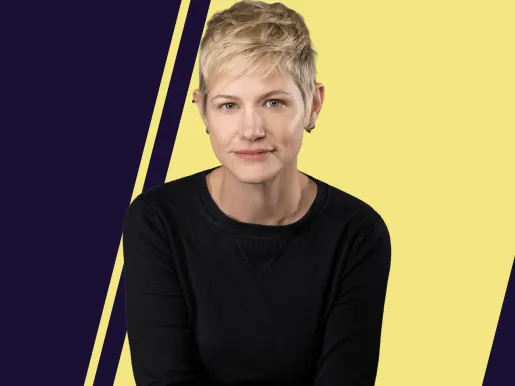
Joining me today to explain financial censorship and its impacts is Rainey Reitman, a writer and civil liberties advocate who has served at the frontlines of today’s most urgent digital rights battles. In April, she published Transaction Denied: Big Finance’s Power to Punish Speech, and the book examines the role financial companies like Visa, Chase, and PayPal play in policing speech and silencing speakers. Rainey, welcome to D.C., and thanks for coming on the show.
Rainey Reitman: Hey, thanks so much for having me.
Nico Perrino: So, before we get started talking about this book, let’s talk a little bit about your background. We were going back and forth over email because the last name, Reitman, came up in some of the research that I was doing for my current book –
Rainey Reitman: Which I’m looking forward –
Nico Perrino: And I had asked, are you related to this guy who used to work at the ACLU? And I forget what his first name is now, but his last name was Reitman. And you were like, “No, actually. I’m related to Ben Reitman,” who was a critical player in many of the international workers of the world fights from early 20th century and critical in the famous San Diego free speech fights. Was it your great-grandfather that got you interested in this topic?
Rainey Reitman: Oh, man. How did I get interested in this – it is true, my great-grandfather was Ben Reitman. He was known as a hobo physician. He was doing access to medicine for street prostitutes, decades and decades ago. And he was a huge advocate for free speech. And he collaborated with Emma Goldman and fought against basically prohibitions on free speech down in San Diego. Very violent rally that actually was very difficult for him, and has kinda gone down as a major story in the free speech fights. So, thankfully, I have not had a violent rally that I had to survive.
Nico Perrino: Not yet.
Rainey Reitman: Not yet. We’ll see, but it’s just amazing that you know about that legacy. So, I was delighted because a lot of people don’t know about that chapter in history.
Nico Perrino: Well, yeah, so many of the early free speech fights were over labor rights and anarchists. You kinda forget about that today because, well, the free speech fights aren’t so much about that anymore. And one of the early characters that I profile in my forthcoming book is a guy named Theodore Schroeder who was the founder of this organization called the Free Speech League, which was the first national organization, first to my understanding, national organization in the United States dedicated solely to defending free speech rights.
And Ben Reitman, your great-grandfather, writes to Theodore Schroeder, and thanks him for his constant support for all the various free speech issues that Ben, and Emma Goldman, and all those people who were constantly being censored in those early years were fighting out. And did I read that you actually spoke at an anniversary event for –
Rainey Reitman: I did.
Nico Perrino: – the San Diego free speech fight?
Rainey Reitman: Yeah. Well, I did a couple of Ben Reitman events. Yes, I am also famous. It’s like what I do, and then there’s the fact that I’m his great-granddaughter. So, this is interesting. It’s kind of overlapping. I went out to Chicago and spoke at an event there commemorating him around – and I talked about our fight against SOPA, the online blacklist that was gonna basically give new powers to censor the internet. And I talked about our internet blackout against that. And then, I went down to San Diego, and I stood up on a soapbox. And I retold the story of my –
Nico Perrino: A literal soapbox?
Rainey Reitman: A literal soapbox, and the police were right there the whole time. And they were giving us a hard time. And I was like, wow, this is like I’m reliving the moment because they felt like our protest was taking too long, and we were being too loud. And I got to be part of that negotiation. And then, I stood up on a soapbox, and talked about Ben, and his fight for free speech, and how we’re still in a different fight for free speech to this day.
Nico Perrino: And so, what is your recent history like? Well, professionally, you have been with the Electronic Frontier Foundation. You helped found the Freedom of the Press Foundation. How did you get involved in all of that work today?
Rainey Reitman: My background before I was at the Electronic Frontier Foundation, I was a consumer advocate at a small nonprofit in San Diego called the Privacy Rights Clearinghouse. So, we actually did direct to consumer support. There was three of us in a tiny office. And if you were having problem with data privacy, you could literally call us, and we would do our best to figure it out. We did everything from background checks to credit reports to whatever. So, I was actually really in the privacy space. And from there, I got picked up by EFF back in 2010. And I ran their advocacy department for eight years, and then moved up into kind of a management role.
And then, while I was at EFF, I definitely became – I’m not saying I shifted from privacy to free speech issues, but I really saw how intertwined a lot of these issues are. I also cofounded a nonprofit project to support the whistleblower, Chelsea Manning. That was really just a passion project of mine. I was so personally influenced by the documents that she released and the video she released to WikiLeaks. And it so influenced my thinking about how our own government was working overseas, that I felt it was really important that she get a fair trial, and that other people have a chance to stand up for her.
And then, from there, I got really interested in WikiLeaks, and the right to publish, and the right to access information, and the Espionage Act, and everything. And that’s when I cofounded the Freedom of the Press Foundation. So, I was with EFF until 2022. And then, I took a break and wrote this book.
Nico Perrino: Well, it sounds like you were also Cindy Cohn’s book whisperer as well.
Rainey Reitman: I was.
Nico Perrino: Because we just had her on the podcast a couple episodes ago, and you’re thanked in the acknowledgement as someone who really sherpa’d her through the process.
Rainey Reitman: It’s true. We spent a lot of hours working together on that book, and the whole thing from the beginning to the end, how to find an agent, how to get it published, how to get it finished. So –
Nico Perrino: Which isn’t easy. Book publishing takes a while, and it’s very much an analogue era process for a digital economy.
Rainey Reitman: Oh, yeah. Well, my book was finished in 2024 and is just coming out now, which it’s just incredible to me because it feels like a whole different world today than it was when I finished this book.
Nico Perrino: There’s something related to that that I wanted to ask you later in the podcast, but I’ll save it until that moment. But the Chelsea Manning story, I think if I’m not mistaken, is really the origin of your interest in this topic, dealing with financial censorship because WikiLeaks was debanked.
Rainey Reitman: That’s right. So, WikiLeaks itself faced an incredible banking blockade, kind of unprecedented in its scale because Visa, Mastercard, Bank of America, they all blocked online donations to WikiLeaks.
Nico Perrino: And what year is this, just so we can timestamp it for our listeners.
Rainey Reitman: So, that would have happened in 2010.
Nico Perrino: 2010.
Rainey Reitman: So, that’s when the banking blockade went in against WikiLeaks. And it really froze all of their donation pathways other than if you mailed them a physical check, if you got them cash. And then, later, they were able to get cryptocurrency. So, they published a report the next year that showed that 95% of their revenue just dried up overnight. And so, the next year, they had this massive reduction in funds, which is right when they were facing a pretty significant legal fight with the U.S. government.
Nico Perrino: Is this after the Chelsea Manning leaks?
Rainey Reitman: Yeah. So, Chelsea Manning released the collateral murder video, showing American soldiers gunning down journalists and shooting at children in April of 2010. And then, in the following months, a few months after that, they started releasing additional files. And then, in the fall, I wanna say November, this –
Nico Perrino: And they, Chelsea Manning released them through WikiLeaks, right?
Rainey Reitman: Through WikiLeaks, that’s – well, it’s not just WikiLeaks. If we remember, WikiLeaks was in partnership with a whole bunch of other major news organizations when they published future leaks, including The New York Times, The Guardian, folks like that. And so, WikiLeaks then published state department cables, so information about the U.S.’s involvement in overseas affairs, which the U.S. government found incredibly embarrassing. And that backlash to that leak, which was happening slowly over a long period of time, was what resulted in so many cries of outrage from the U.S. government and calls to stop providing services to WikiLeaks.
And that resulted in a banking blockade against WikiLeaks.
Nico Perrino: So, were there any prosecutions that – what led to the debanking? Was there any laws that required these financial institutions to stop servicing WikiLeaks?
Rainey Reitman: So, if we go back to when the banking blockade went into effect, there were not charges against WikiLeaks at the time. And in fact, it was years before we saw sort of the grand jury turn into actual charges against Julian Assange. And those changed a few different times.
Nico Perrino: Julian Assange was the leader of WikiLeaks.
Rainey Reitman: That is right, the leader of WikiLeaks, the editor-in-chief at the time of these leaks. And so, the banking blockade did not happen because the financial companies were required to cut off WikiLeaks. The banking blockade happened by them citing their terms of service. At the time, and I quote this in my book, each of the different major financial institutions that blockaded WikiLeaks pointed to a different terms of service and said, oh, this is part of our agreements. We’re gonna stop providing services to them because of this, not because we were ordered to by the government.
Nico Perrino: Because something in their terms of service presumably said that you can’t use their services to help reveal, what, confidential information from the – because that would seem to extend to The New York Times, The Washington Post, anyone else who reports on and exposes confidential United States documents.
Rainey Reitman: Well, so the way the terms of service were written was pretty vague, but it was often things like possible illegal activity. So, they were like, well, there could possibly be something illegal happening with WikiLeaks. We’re not sure, so we’re gonna go ahead and just cut them off.
Nico Perrino: Well, wasn’t that one of the knocks against WikiLeaks, that Julian Assange might have helped Chelsea Manning hack U.S. government databases?
Rainey Reitman: Yeah. I think this is such a misunderstood fact from history, but what Julian Assange was doing was not hacking anything. He was communicating with Chelsea, similar to the way any investigative journalist would communicate with a source. It was Chelsea, and she talked about this both during her trial and subsequently in her book, who made the decision to become a whistleblower, take those documents, and release them to the public. And you’re completely right that there is nothing that WikiLeaks did that you couldn’t point to The New York Times and say, well, they did kinda the same thing.
Nico Perrino: Well, you talk in your book about the Pentagon Papers case, of course, where there’s that large report about the Vietnam War, very embarrassing for the United States government. And the government tried to take The New York Times and the other publishers of this to court, and failed to do so, failed to kind of enact a prior restraint on them.
Rainey Reitman: And thankfully, the courts got it right in that circumstance. The courts had this opportunity to think about the rights of the press, and should national security be a trump card for our right to access information. And they took a very skeptical view of that. And so, back when this was all going down with WikiLeaks, I think a lot of us in the civil liberties space, thought we were gearing up for a massive court battle. I for one, really thought that we were going to see WikiLeaks be the trial of the century around our access to information rights, and the First Amendment, and the Espionage Act.
And instead, the attack came from this other direction, through the financial system. And so, without ever getting an opportunity to stand up in front of a court of law, and explain why they had published those documents, or anything, suddenly they were cut off from the financial system, from their donors, and in many ways, from their ability to do their work.
Nico Perrino: And so, this presumably launched you on this journey to understand how debanking had affected other communities? Is this the origin of the book?
Rainey Reitman: Actually, it’s slightly different. I was working with the Chelsea Manning Support Network, which was advocating for Chelsea Manning at the time. And we lost our PayPal account. And so, we obviously hadn’t been charged with anything. We’re an advocacy organization just trying to raise awareness and legal defense funds for Chelsea. And we lost our PayPal account. And I couldn’t get it resolved. And I couldn’t get answers from PayPal for weeks and weeks, until finally, they said it was an internal policy decision. And at that point, we put out a press release and made a just huge deal about it, got a ton of people writing, signing petitions, we had reporters calling PayPal.
And PayPal caved and gave us our account back. And that was the moment that I realized that this tool, this financial censorship tool could be used to really harm small advocacy groups that were willing to stand up to the government on various topics, and that it could be incredibly effective, that it could really hamstring advocacy organizations. So, I became curious at that moment. I could see how effective this would have been against my very tiny nonprofit at the time. What would this be like for other groups? What about journalists? What about other types of speakers?
And so, I became very curious about the impact of this tool, and that’s when I started collecting the stories.
Nico Perrino: So, let’s talk a little bit about some of these stories that you have in the book because I think it’ll help put meat on the bones for our listeners as to how this actually plays out. So, is there one or two stories in your book, and your book is chock full of them, that is really emblematic to you of this debanking trend that you were noticing?
Rainey Reitman: Yeah. Oh my gosh. It’s so hard to always pick one.
Nico Perrino: Including, there was a United States senator as well who set up a religious liberty organization, and even he couldn’t figure out why he was getting debanked.
Rainey Reitman: That’s a good one. I’ll start with that one. So, there was a nonprofit project. It was a 501(c)(4) that was geared around religious freedom here in the United States.
Nico Perrino: And a (c)(4) is different than a (c)(3) in that it can do more political advocacy.
Rainey Reitman: That’s right. It can do more political advocacy, more engagement with lobbying and things of that nature. And they lost their Chase Bank account. The National Coalition for Religious Freedom, I think that’s right. Is that –
Nico Perrino: We’ll check, and in the show notes.
Rainey Reitman: NCRF. Well, NCRF.
Nico Perrino: Read the book, and we’ll make sure.
Rainey Reitman: Read the book. So, NCRF lost their Chase Bank account. And the way it went down is former senator and former ambassador, Brownback, went into Chase just to do a deposit, and they were like, “Your account is closed.” And they wouldn’t give him answers.
Nico Perrino: And he was leading his organization.
Rainey Reitman: He was the cofounder of it, that’s correct. And at the time, they really got the runaround. And one of the things I appreciated so much, and this is such a lesson for anybody who ever faces this in future, is they documented everything. So, when I spoke to them, they had transcripts of phone calls. They had meticulous notes on everything. And they got –
Nico Perrino: These are the leaders of the organization.
Rainey Reitman: That’s right. And they really got the runaround from Chase at the time. And in the end, the excuse Chase used – well, before I get to the end, I will say Chase, among other things, demanded information about any elected officials that they might be endorsing in the future, which seemed like an awful overreach for a bank to ask for a political group. And –
Nico Perrino: Also, why does it matter? What sort of law does that implicate? There might be one. I don’t know it, but there are a lot of political advocacy groups across the country, thousands presumably. Do none of them have bank accounts?
Rainey Reitman: Or does Chase wanna review all of the political advocacy work that you’re gonna be doing before they will provide services to you, banking services. And then, what Chase ended up saying was that Senator Brownback was a political exposed person. So, are you familiar with this term?
Nico Perrino: I am somewhat. There are a couple terms in your book that I think are important for our listeners to understand in the context of these debanking scandals. One is politically exposed person. I also wrote down here, know your customers, reputational risk. There’s are all things –
Rainey Reitman: That’s an important one. I feel like that’s the most important one that people need to takeaway.
Nico Perrino: Because I mean, one of the things I took away from this is that when the debanking is happening, it’s usually not the government that’s doing it. I mean, it’s risk averse financial institutions, sometimes responding to government incentives, but usually not responding to some outright demand or some law that makes it very clear that this person can’t bank with this institution.
Rainey Reitman: That’s right. When it’s more direct government censorship, as we saw in the NRA v. Vullo case, which I talk about in my book, it rises to the level of unconstitutional coercion.
Nico Perrino: First Amendment violation.
Rainey Reitman: And it’s a First –
Nico Perrino: This is the New York State insurance regulator writing a letter more or less telling these businesses in New York that do business with the NRA that they’re putting their businesses at risk by doing that.
Rainey Reitman: That’s right. And it was really a ham-fisted attempt by this regulator to try to pressure these banks that are regulated by her to stop doing business with the NRA.
Nico Perrino: And the Supreme Court said nine-zero, you can’t do that.
Rainey Reitman: Unanimous. And the NRA and the ACLU teamed up. And the ACLU went to court with them and said that this was a terrible violation of their First Amendment rights. And so, I think the Supreme Court really got that one right, but most of the time, as you said, it’s not gonna be that overt. I have one civil liberties advocate I quote in my book who calls bankers akin to long tailed cats in a rocking chair store, so that they are skittish and nervous about potential regulation. And that means that they are often jumping at shadows.
They are going above and beyond what the law requires in order to try to have the best relationship possible with regulators. At the same time, we also can see instances where it really comes down to almost morality policing by the financial institutions. So, sure, sometimes they’re doing what they think the government might want, sometimes they’re doing what the government directly asks for. And sometimes, they are just pushing their own moral ideas onto online speakers and deciding who does and doesn’t get access to the banking service based on that.
Nico Perrino: So, there’s this group in your book called the Wolfsberg Group –
Rainey Reitman: That’s right.
Nico Perrino: – that sets some of these banking standards separate from what the government may or may not require. It kind of seems like a shadowy group, kinda like the Bilderberg group.
Rainey Reitman: I know.
Nico Perrino: And I didn’t know what to think of it. They met in Europe in some fancy – Switzerland, I don’t know.
Rainey Reitman: It’s in Switzerland. They’re named after a chateau in Switzerland –
Nico Perrino: Of course they are.
Rainey Reitman: – where they meet.
Nico Perrino: Of course, a bunch of bankers set up a group called the Wolfsberg Group that’s named after a chateau in Switzerland, but anyway.
Rainey Reitman: Of course.
Nico Perrino: Is this one of the groups that sets up these kind of concepts surrounding politically exposed person, reputational risk.
Rainey Reitman: Yeah. So, the reason I put the Wolfsberg Group in there is, so our government agencies, they put out different types of guidance about how should banks interpret our laws, what should the banks be doing. And the Wolfsberg Group – and probably their other industry groups doing this as well, but these are a very large group. They put out their own guidance, and it’s not exactly the same as what the government puts out. For example, they have a different definition of who qualifies as a politically exposed person than what the government puts out.
Nico Perrino: And is that because some of these institutions are multinational institutions, and so they’re more or less having to cater to the most restrictive regime in the world?
Rainey Reitman: I think that is a fair guess, yes. I’d say that’s quite possible, but the implication of that is that U.S. citizens banking with U.S. companies in the United States under U.S. law are getting basically lumped in with international standards that may not have the same honor for the First Amendment and for our particular approach to democracy as other countries do.
Nico Perrino: Well, that’s something you see in the social media context too, where you have all these different countries that have different speech rules, more or less. And you worry, as a user of social media, that these companies are just gonna play to the lowest common denominator, and our speech rights are gonna be subject to whatever regulations they have in Brazil or Australia because it’s expensive to write code, more or less, moderation code that adheres to however many countries there are in the world, what, 200 and some on – you know.
Rainey Reitman: If it’s cheaper and easier for them to do it in a blanket way, and so it’s easier for them to do it to the most restrictive version, and then not have different types. So –
Nico Perrino: What is this concept of politically exposed person? Because I heard a lot during the 2024 campaign for example, that Donald Trump and his family were being debanked. And my understanding – I do not know as much on the subject as you do. And actually, I knew very little about it before I read your book, but my understanding is it related to this politically exposed person concept, to the extent he was being debanked at all. I don’t know whether that was true or not.
Rainey Reitman: So, a politically exposed person is a very high-profile political figure or their direct family members. So, it’s typically a head of state or their direct family member associate, somebody that the bank has a reason to believe would be particularly likely to deal with bribery or something like that. So, it doesn’t mean that they can’t have a bank account. It means that there’s an additional level of scrutiny that’s supposed to go into place. So, the idea that every former senator that’s ever held political office would be a politically exposed person is absolutely bananas. It’s such a huge expansion of it, but –
Nico Perrino: Why would anyone wanna become a United States senator or any public servant if it’s gonna compromise a risk to bank?
Rainey Reitman: But in the United States, the term politically exposed person by our regulators, they put out guidance that say it doesn’t apply to United States folks. This is for people who are not U.S. citizens, not American heads of state. So, I think it’s a little interesting. I mean, I think Donald Trump is different than somebody – because you could say, well, he was a head of state, and he is a head of state, but this nonprofit advocacy group working on religious freedom, I think it’s such an outstanding misinterpretation of the law to try to say that they also fall under the politically exposed person regulations.
And even if they did, that doesn’t mean they can’t have a bank account.
Nico Perrino: Sure.
Rainey Reitman: It’s not preventing people from having a bank account.
Nico Perrino: Well, what about this reputational risk concept?
Rainey Reitman: So, reputational risk is this really nebulous idea that financial institutions like banks need to be concerned with their reputation and consider their –
Nico Perrino: The bank’s reputation or their customer’s?
Rainey Reitman: So, that their reputation will be impacted by doing business with certain customers. It’s an incredibly nebulous concept. And yet somehow, it worked its way into our regulatory guidance. You literally see this term showing up in the handbook for the Office of the Comptroller of the Currency. It has since been reviewed.
Nico Perrino: But why is that? Is it like, you’re afraid there’s gonna be some sorta run on the bank because you provide payment services for Pornhub?
Rainey Reitman: I’m also actually not sure why reputational risk got added to our regulatory guidance. That’s a good question. Why? I just know that it was there and that –
Nico Perrino: I just don’t think of banks or insurers as representing the people who put their money there. I just –
Rainey Reitman: It’s not normally a –
Nico Perrino: I don’t think of them in the same bucket.
Rainey Reitman: It is interesting. And yet, we kind of saw this term getting used, and we saw for example, financial institutions putting out guidance for themselves on regulatory risk or on reputational risk. For example, the Wolfsberg Group, again, put out guidance on reputational risk. And a lot of these companies are paying third-party services to run checks on their customers to see if any of them have reputational issues.
Nico Perrino: Any of these risks. One of the chapters in your book that really struck out to me was dealing with Muslim Americans.
Rainey Reitman: Can I finish one thought?
Nico Perrino: Yeah, sure, please.
Rainey Reitman: I just think it’s really important that people know that the reputational risk has been removed from the regulatory guidance.
Nico Perrino: Oh, it has?
Rainey Reitman: Yes. It came out in an executive order in 2025. And I just wanted – I know your podcast listeners are very –
Nico Perrino: You don’t wanna get nitpicked online.
Rainey Reitman: I don’t wanna get nitpicked. So, that language has since been removed from the regulatory guidance, which I think was great. I think there’s other questions about that executive order, but that part was awesome.
Nico Perrino: Well, do you think that came from Trump’s experience with the banking industry and getting debanked, him and his family?
Rainey Reitman: I think it might have come from the personal experience. I also think there’s a big conversation happening right now –
Nico Perrino: And was this a statutory requirement, or was it rulemaking through one of the agencies that put this reputational risk criteria in place in the first place? Do you know?
Rainey Reitman: It’s more in the handbooks for the regulatory – so I don’t –
Nico Perrino: So, who knows, yeah.
Rainey Reitman: I don’t even think that is – it’s not in a statute. It’s not in the law. You’re not required to look for somebody’s reputational risk. And now, I’m not even sure that they get feedback on their handbooks and stuff. Do they?
Nico Perrino: I’m not sure either.
Rainey Reitman: I’m not sure.
Nico Perrino: But presumably, it doesn’t matter if the bank still wanna adopt these standards, right?
Rainey Reitman: Yeah. Well, the –
Nico Perrino: Regardless of what the government says, I mean, the story I take from your book is that the government can say what it wants. The banks are still gonna do what they can, I guess, to protect the reputational risk, to monitor politically exposed people. I don’t know what the Wolfsberg Group has in store for the next meeting in the chateau in Switzerland, but…
Rainey Reitman: The debanking order or the debanking executive order is trying to do a few other things to reduce sort of the debanking of different political and religious groups. I don’t know. It’s not baked into law. And I think there are a lot of questions about what you can achieve through an executive order when you’re trying to affect the terms of service between a financial company and an individual client, but at least we got the word reputational risk out of the regulatory guidance.
Nico Perrino: Sure.
Rainey Reitman: So, that’s the one good thing I think we can say.
Nico Perrino: And Producer Emily, if you could put that executive order in the show notes, that’d be helpful for our listeners to check that out, but getting back to my earlier question about Muslim American communities. There are also regulations surrounding sanctioned groups, sanctioned individuals, specifically surrounding terrorism. And you find some people who are not involved in terrorism who are getting wrapped up in these regulations and sanctions, efforts against countries like Iran for example.
Rainey Reitman: So, I didn’t take a position on whether or not sanctions are good or bad in my book. What I focused on was all the people who are not supposed to be swept up in sanctions laws, who are nonetheless losing their bank accounts over it, or having their PayPal account frozen, or losing access to online services for payments.
Nico Perrino: Like someone who teaches Persian poetry, I think is one of the stories in your book.
Rainey Reitman: That’s right, yeah. Yeah, one of the folks I interviewed, Detroit-based guy who teaches Persian poetry. He offers online classes. He’s really popular on Instagram. And he has this website, persianpoetics.com. And he has faced problem after problem after problem with the banking services because he’s so reliant on small transactions. People send him 20 bucks for access to a class pass, so that they can learn about Farsi, or they can learn Persian poetry, or they wanna take a class on Rumi. And so, he’s getting all these little transactions, and a lot of them say Persian class. And that’s enough, just that word Persian, to flag it for the banking institutions.
And he’s getting enough of those that his account kept getting frozen again and again. So, he had problems with PayPal and its associated Venmo. And then, he also had huge problems with his Chase Bank account and ended up having to close that account because it was just such a huge hassle.
Nico Perrino: Chase and PayPal seem to be recurring characters in your book.
Rainey Reitman: They are –
Nico Perrino: But you’re also careful to say that they’re not necessarily the worst actors. They’re just some of the bigger institutions.
Rainey Reitman: Well, I think we have some good questions about, are some of them worse actors, and are some of them better actors? And until we get more transparency about how widespread this problem is, I mean, it’s really hard to answer that. There could be credit unions that are terrible about this, and they’re just not forced to provide any information about who they’re debanking, but yeah, Chase is in here a lot.
Nico Perrino: Well, you have to look at it – and you do at the end of your book, look at it from the bank’s perspective, if the risks of facilitating transaction between sanctioned groups or sanctioned individuals are very high in the –
Rainey Reitman: They are.
Nico Perrino: – terrorism space. And you have a client in this case, the Persian poet tutor who is constantly, as you note in your book, doing business with people, Persian names, Muslim names, Muslim associated names, lots of small transactions, you can see how the incentives would suggest that a bank like Chase or a payment processor like PayPal would say it’s just not worth the compliance costs of servicing this client, but this guy did nothing wrong. He just is banking while Persian.
Rainey Reitman: He’s just banking while Persian. I think that the incentives are so interesting here because the fines for allowing a single sanctioned violation transaction to go through are huge. And they affect the banking institution each time it happens. And it affects them even if they didn’t know it violated sanctions. If it’s later found out that it violated sanctions, they’re facing massive, massive fines. So, for them, they have every reason to freeze or shutter accounts because accidentally shuttering an account comes with no fines. There’s no risk to these institutions for closing down that account again and again.
It’s just, they don’t face any consequences in the one direction. So, there’s this lopsided incentive structure where there is so many incentives to close an account, but no incentives to keep it open.
Nico Perrino: The tools that they’re using to kind of investigate their clients, are they just AI tools? Presumably, you don’t have a human looking at all this. And one of the other themes that comes out of your book is that if you get debanked, there’s very little recourse for you. There’s not much due process. There’s hardly any transparency. There are no requirements by law, to my understanding, that these banks talk to you about what’s happening to your money. You kind of hope that someone like you with a platform or an organization blows the whistle on it and coerces, forces, pressures these institutions, pressures is probably the right word, to re-bank their clients.
Rainey Reitman: I like to think of it as in comparison to our court system, where you get to know the charges against you, and you get to have a third-party examine them. And whatever decision is made, is made public. And there’s a right of appeal. And you have somebody who went to law school who’s thinking about the complexity of the speech issues at play. And you don’t have any of that when it comes to just the fight you might get in with PayPal, or Chase, or whoever, where first of all, it’s hard to get them on the record about why they’re closing an account. The appeals process is broken. Nothing is transparent.
And yet, this is where a lot of speech battles are playing out. A lot of these who is going to be able to publish speech online questions are happening in relationship to financial companies and what their policies are.
Nico Perrino: And it’s not a First Amendment issue unless you get –
Rainey Reitman: Exactly.
Nico Perrino: – at something like a New York State insurance regular pressuring NRA’s partners to –
Rainey Reitman: Exactly.
Nico Perrino: – stop doing business with them, or the Sheriff Dart and Backpage situation that you talk about in your book.
Rainey Reitman: Very important case, yeah.
Nico Perrino: So, these are private companies doing business with private individuals. So, we’re not talking about a First Amendment violation, but is it censorship? One of the things that we at FIRE often get nitpicked for is because we’ll use the word censorship when we talk about a culture of free speech and the sort of private expressive institutions or these institutions that service expression, writing policies that have the effect of censoring people who just wanna participate in the public square, whether it be social media companies or banking institutions. How do you think about that? Do you have problems using censorship in the private context?
Rainey Reitman: I think as a word, it’s fine to use. I think it’s okay to use it, as long as we’re clear whether or not there is First Amendment issue at play. I do think that, and we kinda talk about this, you have these sort of two far ends of the spectrum. On the one far end, you have the Supreme Court saying that Superintendent Vullo pressuring banks directly with a letter on letterhead to end services to the NRA is unconstitutional. It is illegal. It violates the First Amendment. And on the other end, you have Visa having something vague in their terms of service that makes it so that sex workers can’t post on the websites that they wanna post on.
And there’s this idea that, well, one is just the position of a financial company, and then the other is government pressure. And then, in the middle, you know what? There’s a whole lot of government pressure that we probably can’t see. And I think that’s a really interesting thing about this particular area of speech is that so much of it is probably under the surface, probably things we’ll never know, which is those conversations that regulators are having with banking institutions that are trickling down throughout the kind of larger financial ecosystem.
And I think it would be a mistake to think this is only relationships between financial companies and their customers. I think there’s always the shadow of government pressure.
Nico Perrino: To that point, I wanna pull of a clip.
Rainey Reitman: Oh, yeah.
Nico Perrino: It’s a famous clip that went viral. It was a conversation between the venture capitalist, Mark Andreessen and Joe Rogan, that I believe came out in November of 2024, and sparked a lot of conversations about exactly this topic. I’m sure you’re frustrated your book wasn’t out when this happened because that would have been –
Rainey Reitman: Well, my book had also been written at that point and been turned in. So –
Nico Perrino: So, you’re watching it all unfold, and you’re like, my book’s not gonna come out for another, what, at that point, year and a half.
Rainey Reitman: It was a long time.
Nico Perrino: Holy cow. So, Emily, if you can pull up the clip, we’ll watch it.
Mark Andreessen: This started about 15 years ago with this thing called Operation Choke Point, where they decided to – as marijuana started to become legal, as prostitution started to become legal, and then guns, which there’s always a fight about, under the Obama administration, they started to debank legal marijuana businesses, escort businesses, and then gun shops, just your gun manufacturers, and just like, you’re done. You’re out of the banking system. And so, if you were running a medical marijuana dispensary in 2012, guess what? You’re doing your business all in cash because you literally can’t get a bank account.
You can’t get a Visa terminal. You can’t process transactions. You can’t do payroll. You can’t do direct deposit. You can’t get insurance. You’ve been sanctioned. None of that stuff is available. And then, this administration extended that concept to apply it to tech founders, crypto founders, and then just generally political opponents.
Joe Rogan: God.
Mark Andreessen: So, that’s been super pernicious. And –
Joe Rogan: I wasn’t aware of that.
Mark Andreessen: Oh, 100%. So, it was Operation Choke Point 1.0, was 15 years ago against the pot and the guns. Choke Point 2.0 is primarily against their political enemies, and then to their disfavored tech startups. And it’s hit the tech world hard. We’ve had 30 founders debanked in the last four years.
Joe Rogan: Really?
Mark Andreessen: Yeah. It’s been a big recurring pattern.
Joe Rogan: Thirty.
Mark Andreessen: This is one of the reasons why we ended up supporting Trump. It’s like we can’t live in this world. We can’t live in a world where somebody starts a company that’s a completely legal thing, and then they literally get sanctioned and embargoed by the United States government through a completely unaccountable – by the way, no due process. None of this is written down. There’s no rules. There’s no court. There’s no decision process. There’s no appeal. Who do you appeal to? Who do you go to, to get your bank account back?
Nico Perrino: So, just as an author talking to another author, so frustrating. This was super viral. I mean, this was a whole news cycle. And I have to admit, I had somewhat the same reaction as Joe Rogan there, where he’s like, I had no idea this was happening. I work in the free speech space, and I had no idea that this level, at least that Mark Andreessen’s claiming there – and I know there were some people that were pushing back on him. I don’t know if they were right, or if they’re wrong. You can tell us, but I had no idea that this was happening.
It was all kinda happening in the shadows, even for us working in the –
Rainey Reitman: Wow.
Nico Perrino: – free speech organization. And you have a whole chapter about the cannabis industry too.
Rainey Reitman: I do, yeah. For years, I really understood the impact that financial censorship would have on journalists, or on advocacy groups –
Nico Perrino: Sure.
Rainey Reitman: – or online content creators, but it took me a little bit to really understand actually how devastating it could be for society to have financial censorship going after startup industries. And I ended up profiling the cannabis industry because it is in many ways, a startup industry. It’s a smaller industry that challenges existing power structures. It’s going up against the pharmaceutical industry. It's going up against the beverage industry. It’s going up against – there’s a lot of groups that are police groups that lobby against it. And so, they have nonetheless managed – many of them are businesses. They have a business license, and they are paying business taxes.
And yet, they keep losing access to financial services. And in my book, I specifically focused on especially noncontroversial parts of this. So, for example, I wrote about a cannabis journalist, so somebody –
Nico Perrino: Cannabitch or whatever the name –
Rainey Reitman: Yeah, Cannabitch. She’s a phenomenal journalist, an award-winning journalist, Jackie Bryant, down in San Diego, who lost her Stripe account for their belief that she was violating their prohibitions on selling marijuana and drug paraphernalia, which she was not. She was a journalist writing about cannabis. And –
Nico Perrino: But because she would link to some of these companies in the course of her writeup, they’d –
Rainey Reitman: Well, she would link to lots of different things –
Nico Perrino: Sure.
Rainey Reitman: – the way a journalist does. You’ve gotta have hyperlinks to link to your sources or to what you’re covering. And since the book came out, I’ve actually heard from a whole bunch of other cannabis journalists. And this is still happening. This is literally happening to them now, just writing articles about cannabis and about the cannabis industry. And there’s actually a huge plethora of writing happening in this space. It’s like there’s so much happening between lobbying efforts, and the medical issues around it, and then recreational issues around it. It’s just like –
Nico Perrino: I always love to go down the rabbit hole of the various trade groups that write about their industry because they can get really deep into it. You don’t even know this exists, all this writing exists.
Rainey Reitman: They have publications, they have newsletters, they have a huge community that’s reading all of this stuff. And they have faced problem after problem after problem. And the impact is it hurts a form of journalism. And so, I wanted to frame it there. And then, I also talked about an advocacy group called the Marijuana Policy Project that had donation blocked to them. Again, totally legal. I don’t know if they’re a 501(c)(3) or 501(c)(4). I wanna say they’re a (c)(3), just advocating for reform to our marijuana policy laws. And –
Nico Perrino: John Gilmore, a founder of EFF, friend of FIRE’s, tries to make a donation to them, and is denied by his bank.
Rainey Reitman: Yeah. I met John Gilmore, and I actually was gonna interview him about something else, and he mentioned this happening. And I was like, “Wait, you weren’t able to send a donation to a nonprofit that you sit on the board of?” And he was like, “No, they blocked it.” And I was like, “All right. That’s going in my book.” It just was so offensive. It was so offensive to think that a financial institution was stopping a donor from sending money to a legal nonprofit. It just galls me.
Nico Perrino: Well, you have one anecdote in your book, someone who worked for some group in the cannabis industry who literally took, what, $70,000.00 in cash and dumped it on the table of some government office.
Rainey Reitman: He had to pay his taxes. And so, he brought cash in to pay his taxes. And it just cascades down onto the ground. Because it’s so hard for them to maintain banking services, that they’re having to deal with large amounts of cash, which is really problematic in a bunch of different ways.
Nico Perrino: An ACH transform isn’t so easy when you work in the cannabis industry, but what are your other responses? What are your other thoughts just listening to Mark talk to Joe Rogan there? I mean, is he on to something? I mean, he’s on to something, obviously. You talk about the due process, the lack of transparency, but he’s also talking about this Choke Point 2.0 concept where a lot of this debanking is hitting tech founders, crypto businesses I’m assuming.
Rainey Reitman: I’ve been curious, and I’ve been watching the crypto industry in particular. In fact, I originally thought I was gonna have a chapter just about cryptocurrency. I do have a chapter about cryptocurrency in my book, but I thought I would have just a bunch of profiles also of folks in the cryptocurrency space, losing access to the banking services. I ended up not. And I think that could also just be my research criteria. I was looking at American customers. And I was looking at them having banking institutions that were American banking institutions, so here in the United States, who had not been charged with violating any laws.
And a lot of these crypto founders that I spoke with, they were setting up bank accounts with non-U.S. companies. And so, when they were having problems, it was kind of falling outside of the scope of my research criteria. I did have a couple of really super solid examples. So, I do think there is something going on there, but it wasn’t quite enough for me to write up in the book.
Nico Perrino: So, you think there’s some there, there. Because I think some of the critiques of Mark’s was that he was overstating the impact. And I can’t say either way. I haven’t investigated this enough. And it is kinda shadowy. A lot of these people probably don’t wanna speak up at risk of becoming an even greater target.
Rainey Reitman: Well, this was a big thing with a lot of folks I talked to, which is that especially if they’re in a fight to – for example, if they’re worried about their immigration status, or in this case of cryptocurrency, if they’re worried about the future regulatory guidance that might go after them, they don’t wanna speak up. It’s dangerous for them to speak up. It’s dangerous for them to go up against banking institutions. One of the folks I quoted in the book told me about getting denied access to a banking service. He’s part of an advocacy group working in the adult space.
And his bank, they tried to open up a second account with their existing banking service, and they were denied. And he was like, “I don’t wanna tell you the name because I don’t want them to cut off the one bank account we do have with them.”
Nico Perrino: Wow.
Rainey Reitman: So, I’m not that surprised that folks weren’t willing to go on the record with me about it. I am curious, but I – yeah, I’m curious about it. I think we’re gonna have to get more transparency overall. And that’s one of my big calls to action. We gotta get –
Nico Perrino: We got solutions here. I wanna get to it.
Rainey Reitman: We can’t answer these questions about how widespread the problem is or which industries it’s targeting, if we don’t have the data to back it up.
Nico Perrino: Before we do move on to solutions, I wanna ask you about porn content. Porn, legal in the United States.
Rainey Reitman: It is, and popular.
Nico Perrino: But banks are very cautious with it. And you can probably understand why you’re worried, especially in the social media age where it’s not always professional pornographers uploading content, that there might be minors whose content – or who have videos up on the site, but I didn’t realize before reading your book that these companies, Visa and whatnot, will actually go on these websites, Pornhub, pick your big pornography website, and review content.
Rainey Reitman: Yeah, that’s –
Nico Perrino: It’s someone’s job to sit there and watch porn, all day presumably, I don’t know, to make sure that it’s lawful, so that they can continue to do business with them?
Rainey Reitman: Well, I did not say which companies were doing it. In case you’re watching, Visa, I did not say that you were doing it.
Nico Perrino: Visa, the only reason I bring up Visa –
Rainey Reitman: Is because they’re involved in –
Nico Perrino: – is because they’re involved in one of these disputes, which I hope you will talk about, but no, I’m not saying someone over at Visa’s job is to watch porn all day.
Rainey Reitman: Yeah, but you’re completely correct. When I talked to folks in the adult space, what I found out, and this was very shocking to me, is that it is very typical for adult content creators, people running websites, pornography websites, to give the password access to all of their content to their banking services. And then, some banker logs on and literally provides editorial feedback to the level of like, take this video out, keep this one, change this word to this other word, don’t use this word at all. That’s the level at which they’re literally operating at.
Nico Perrino: You have it on good authority that they’re actually doing this.
Rainey Reitman: Yeah.
Nico Perrino: Wow.
Rainey Reitman: That is what I heard from the folks in the adult content space when they spoke to me about it. And I was really fascinated about that because I think it’s probably been going on for a while, and because now we’re seeing all these other examples of financial companies engaging in different levels of kinda editorializing about online content. And so, I wonder if somewhere over the years, they got this idea that they had an editorial role. And now, they’re starting to take that outside of the adult content space. And we’re seeing it show up with, say, independent journalists and things like that.
Nico Perrino: Why do these banks continue to do business with porn sites, if they can be such a liability? Is it just because it’s big business? I mean, porn is a huge business, and a lot of people don’t realize that.
Rainey Reitman: That’s a good question.
Nico Perrino: I think you had some stat in your book. It was like, there are 150 million visits to porn websites or one porn website, I forget what it was, on a single day.
Rainey Reitman: It’s porn –
Nico Perrino: That’s half of America.
Rainey Reitman: I think I put it in there, it’s like –
Nico Perrino: I don’t know if that’s unique users or not, but…
Rainey Reitman: It was like, more visitors per day than voted for a president in the presidential election. They’re very popular websites. There’s a lot of money to be had for financial companies in this space. And again, it’s legal content. The vast majority of it is legal content. And these companies are benefiting from it. And it’s popular content as well.
Nico Perrino: But there was video you talk in your book about. It was a 13-year-old girl who had a video of her uploaded to one of these sites. And the girl sued one of the companies, I forget which one, and Visa.
Rainey Reitman: It was MindGeek, which is the company that is the parent company of Pornhub. It’s a really terrible story. And I guess I wanna say that I think that’s a horrible thing that happened to her, and I obviously stand against any form of child trafficking. And that’s a tragedy that we should do more of to address as a society. And at the same time, there’s this question of, well, who should be doing more, and what should more look like? And –
Nico Perrino: And who is responsible?
Rainey Reitman: And who is responsible? And there’s this question of, well, should Visa, the credit card network associated with, I think the advertising company associated with the website that didn’t even have any advertisements on pages related to her content, should Visa be liable for someone uploading illegal content onto this website? And I think that’s kind of the big question at the heart of this still unresolved lawsuit. And I think it’s gonna have big ramifications for the future of the internet because there’s one interpretation of this, which is that going forward, let’s just run all our uploads by Visa before we put them on the internet.
Let’s just literally have Visa just double check everything before anything gets uploaded, which is an unbelievably ridiculous idea.
Nico Perrino: But why the payment processor? Why not also the management company that owns the building that houses MindGeek, or the floor cleaners that come in and clean MindGeek’s floor, or –
Rainey Reitman: Or any of the other payments folks within the ecosystem? So, there’s Visa, but it’s not Visa’s the only payment company. So, there’s the people who provide services to the building. There’s all the various corporations that have relationships –
Nico Perrino: Or the internet service provider that provides the wiring –
Rainey Reitman: Anybody.
Nico Perrino: – into the servers. There are just some things that a business needs to run that have no relationship to the editorial outputs of that business. So, why –
Rainey Reitman: And they shouldn’t.
Nico Perrino: Why should they be held liable for what that business does? It just…
Rainey Reitman: It boggles the mind. Why would Visa be held liable? I think that’s –
Nico Perrino: And I should say, I haven’t read this lawsuit, so I don’t know what the allegations are, but just, if you’re talking about it strictly as all Visa does is provide payment processing for this website…
Rainey Reitman: Yeah, that’s all that they’re alleged to have done, yes. I think that your analysis is correct, that there’s nothing special about Visa here. There’s no reason Visa over any other entity should be held liable here, except that Visa and Mastercard, they did shut off payments to Pornhub. And it got Pornhub to erase massive and massive amounts of content from their website. Mastercard has changed their guidelines for adult content creators. And it resulted in just, I don’t even know how many thousands of videos being removed from the internet to try to comply with Mastercard’s standards.
So, I don’t know that it’s that Visa should be liable. It’s that they are sort of the weak link that I think litigators think they can go after. And we’ll see what happens with that lawsuit. I think it could have a really big impact on the future of the internet.
Nico Perrino: Well, do you think we need something like a Section 230 for internet service – well, internet service providers perhaps, but banking institutions, just something in the law that says that they are not gonna be held liable for the third parties that they service, and what they do with their product?
Rainey Reitman: Well, I mean, Section 230 is such a beleaguered term, that I’m trying to avoid using that word in particular, but –
Nico Perrino: I know. I mean, I’m that lone person, kinda out there in the corner saying you really do not wanna lose Section 230 protections because the whole internet will drastically change if it did.
Rainey Reitman: And it would be terrible. It would be awful. It’s why the internet has flourished in the United States is Section 230. It’s why the internet has flourished globally is because we had it in the United States.
Nico Perrino: And it puts the liability where it should be –
Rainey Reitman: Exactly.
Nico Perrino: – with, in this case, the person who would have uploaded that video that is clearly unlawful, or on social media to the extent you defame someone. That person who does the defamation should be held liable for the defamation, not Facebook. I mean, the internet just cannot work any other way when you have, I don’t know, two billion pieces of content. I’m just throwing a random number out there that I’m sure is not too far off, posting a day on any of Meta’s products.
Rainey Reitman: And unless the internet became far less collaborative. The only way it would work is if it was more like our experience of television, where we’re just consuming it, but we’re not participating in the creation of it. But the participatory, creative, collaborative nature of the way the internet is today, where people can upload things, where people can create content, where people can post comments, that requires 230. That requires 230. So, then the question –
Nico Perrino: Unless you want these companies kinda policing what you send over email. I mean, that would be an implication. These companies could be held liable for what you send over email, so…
Rainey Reitman: So, in conclusion, without using the word 230, I do say that we’ve got to change the way incentives are structured for financial companies. We’ve gotta make it so that they’re incentivized to keep accounts open, so that they’re disincentivized from closing accounts, especially in relation to lawful speech, and that they can’t be held liable for the legal speech of users, and allowing that to happen. It just, it doesn’t make sense for them to be policing online speech.
Nico Perrino: You also seem to be a big fan of cash.
Rainey Reitman: I am a fan of cash. It’s true.
Nico Perrino: That’s one solution to this problem. Although, it can’t really solve much, especially when you’re doing big transactions. Not everyone has a briefcase big enough to carry $70,000.00 in.
Rainey Reitman: No.
Nico Perrino: But what about bitcoin?
Rainey Reitman: So, well, I had a –
Nico Perrino: Or other cryptocurrencies?
Rainey Reitman: I have a chapter on cash, and then I have a chapter on cryptocurrency. And I specifically look at bitcoin. And with cryptocurrency, I was really asking this question, which is, is it censorship resistant? Does it remove that corporate middle man who can have a terms of service or who can be looking through your accounts and deciding certain ones can’t go through? Does it solve that problem? And what I came down to was other than some pretty theoretical threats, yeah, it’s pretty censorship resistant. You can create a wallet, and you can send bitcoin to a different wallet.
And you don’t have to go through a corporate middle man to do that transaction, but the reality for most people is that they are going through a corporate middle man. They’re going through a Coinbase or what have you, a Kraken, to obtain bitcoin, to hold it, to trade it, if they wanna trade it back into some other type of currency, and that these are custodial accounts. These are accounts that are held in custody in your cryptocurrency. And as soon as you do that, you’ve recreated the same power structure, the same power dynamic that you had in the traditional financial world.
So, you’ve got a corporation that can have its own terms of service, that is doing know your customer on you, that is deciding who should and shouldn’t have access to the banking system. And then, it’s not revolutionary at all. At that point, you’ve just –
Nico Perrino: You lose kind of the whole reason that Satoshi Nakamoto wrote that paper, which is for the privacy aspect of it, and for, additionally, the protection against being debanked.
Rainey Reitman: Yeah, censorship resistant.
Nico Perrino: So, at that point, I mean, if you’re using a Coinbase or something, you’re really just using bitcoin as an investment vehicle presumably.
Rainey Reitman: I think there’s a bunch of different reasons that people can be drawn to using a custodial account. And I don’t wanna dictate to other people, whether or not they should consider that. It’s their decision, but what I do say is we need to recognize that this is recreating the same power structures we have in the traditional financial world, which means we have to fix those power structures for everybody. We need corporations to adapt best practices. And we need legal reform, so we can get the liability in the right place.
We can have more transparency, and we get the government to stop pressuring financial institutions to act as censors in a way that the government couldn’t do directly without violating the First Amendment.
Nico Perrino: Well, folks, the book is Transaction Denied: Big Finance’s Power to Punish Speech, and its author is Rainey Reitman who is in studio with us today. Rainey, thanks for joining us.
Rainey Reitman: Hey, thank you so much for having me. This was a blast. I’ve been a huge fan of your organization for years.
Nico Perrino: Oh, thank you. Thank you. I am Nico Perrino, and this podcast is recorded and edited by a rotating roster of my FIRE colleagues including Bruce Jones, Ronald Baez, Jackson Fleagle, and Scott Rogers. This podcast is produced by Emily Beaman. To learn more about So to Speak, you can subscribe to our YouTube channel or Substack page, both of which feature video versions of this conversation. We also post a video version to X where you can search for the handle, free speech talk, and find us. Feedback can also be sent to sotospeak@fire.org. Again, that is sotospeak@fire.org. And we always take reviews of the show.