Table of Contents
The Case for Radically Free Speech
In this course, you’ll learn about how the right to freedom of speech has evolved over human history, how it promotes peace in society and uplifts minority voices, and why censorship is never the answer to dissident speech.

Introduction
In this course, you’ll learn about how the right to freedom of speech has evolved over human history, how it promotes peace in society and uplifts minority voices, and why censorship is never the answer to dissident speech.
Please note that some of this course’s content contains explicit language.
Why should speech be free?
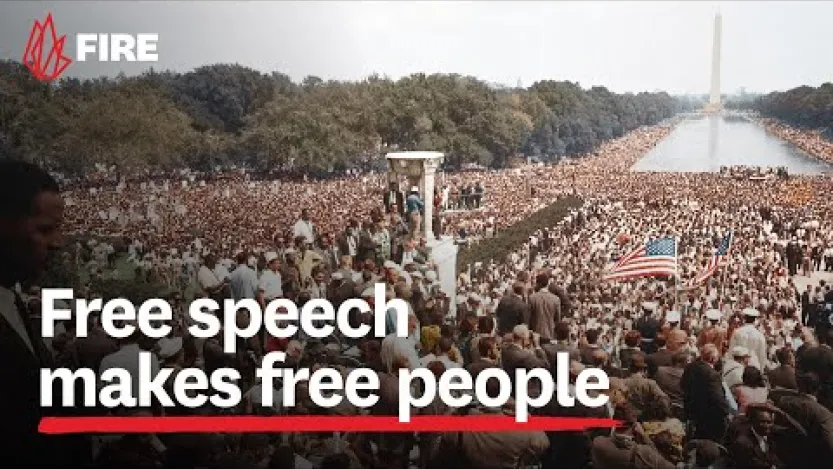
In this lesson, you’ll learn from musical artist and academic Nathan Dufour, NBA player Enes Kanter Freedom, Brookings Institution Scholar Jonathan Rauch, and FIRE President and CEO Greg Lukianoff about what free speech is and how it promotes a healthy society.
A History of Free Speech
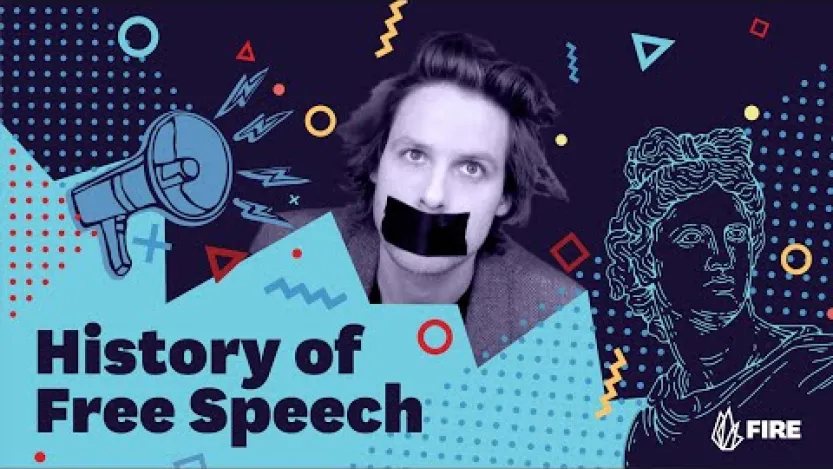
Check out Nathan Dufour’s “A History of Free Speech” to learn about what free speech is and how it has evolved over the ages.
Want to know more?
Check out FIRE President and CEO Greg Lukianoff’s blog piece, “The Eternally Radical Idea” for more about the development of free speech and its radical nature.
'Change can only happen in America with freedom of speech.' — Enes Kanter Freedom

NBA player Enes Kanter Freedom expresses his appreciation for the right to free speech in America and describes his own experience with censorship in Turkey, his home country.
'Being offended is part of how we learn.' — Jonathan Rauch

Hear from author and Brookings Institution scholar Jonathan Rauch about why the right to free speech must protect even the most offensive speech and why the protection of offensive speech is one of the most powerful ways to uplift minorities.
Want to know more?
Check out this piece, Free Speech is for Everyone, by Greg Lukianoff and former president of the ACLU Nadine Strossen for more about why Jonathan Rauch’s definition of pluralism is crucial to freedom.
Freedom of speech protects minorities most of all

In this clip from an interview for Conversations with John Anderson, led by former Deputy Prime Minister of Australia John Anderson, learn from FIRE’s President and CEO Greg Lukianoff about how the right to freedom of speech exists chiefly to protect minorities.
Want to know more?
To read about one instance in which the First Amendment has proven its usefulness to minority views, check out James Kirchick’s article entitled “The First Amendment Created Gay America,” published on Bari Weiss’ substack Common Sense
The case against censorship

Check out this lesson to learn not only why censorship doesn’t work but why it should be avoided and fought against at all costs.
For a great introduction to arguments against censorship, check out Greg Lukianoff’s and Nadine Strossen’s piece, “‘New’ justifications for censorship are never really new.”
'Speech restrictions are like poison gas.' — Ira Glasser

Former ACLU Director Ira Glasser explains why censorship is toxic to societal stability.
Mill’s Trident

Learn from 19th-century British philosopher John Stuart Mill about why censorship is never the answer.
Want to know more?
In their blog article “Does free speech ‘inevitably’ lead towards truth? Is the ‘Marketplace of Ideas’ a broken metaphor?”, Greg Lukianoff and Nadine Strossen argue against the assertion that “[f]ree speech rests on the false premise that the marketplace of ideas will lead to truth.”
'Don’t Censor, Engage. — Jon Stewart

Check out this clip in which Jon Stewart makes the case for engagement and against censorship amid calls for Spotify to remove The Joe Rogan Experience.
Want to know more?
In their piece “Is counterspeech the best answer to bad speech?”, Greg Lukianoff and Nadine Strossen explain why the best remedy for disturbing speech is more speech.
Closing Remarks
Thank you so much for completing this course! We hope you feel more empowered to spread the word about free speech in your communities. Check out our other Learn with FIRE courses to hear about how you can put this knowledge to work.
If you’re interested in diving more deeply into the concept of free speech and how it has evolved, check out FIRE President and CEO Greg Lukianoff’s Recommended Free Speech Culture Study List.