Table of Contents
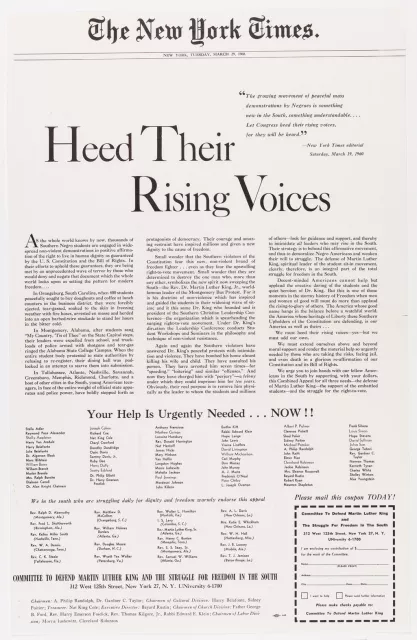
Call for Papers: Historical Arguments for Sullivan's Actual Malice Test
UPDATE: The proposal deadline has been extended! Proposals are now due Friday, June 12th at 6 PM.
FIRE invites paper proposals for a research workshop examining historical frameworks for modern First Amendment jurisprudence, and specifically the “actual malice” test outlined by the Supreme Court in New York Times, Co. v. Sullivan (1964). The workshop will be held in March 2027 at FIRE’s Philadelphia office. Chosen submissions will receive $4,000 upon completion of the workshop.
Sullivan transformed American defamation law by holding that public officials suing for defamation must show the defendant published a false statement with knowledge of falsity or reckless disregard for the truth. Sullivan crafted that rule as a matter of constitutional law, reasoning that debate on public issues must remain “uninhibited, robust, and wide-open” and that the constitutional commitment to freedom of speech requires breathing space for even some false statements.
However, the actual malice rule’s historical pedigree remains disputed. And as courts increasingly deploy “history and tradition” methodologies, assessing how the historical record informs landmark First Amendment rulings like Sullivan is necessary.
Proposals should indicate: (1) the argument the submitter will advance; (2) the evidence with which the submitter intends to engage; and (3) how the scholarship will interact with emerging “history and tradition” methods in contemporary jurisprudence and scholarship. Proposals should be no more than 3 pages in length. Submitters must also include a CV alongside their proposal.
The proposal deadline has been extended! Proposals are now due Friday, June 12th at 6 PM. Please email submissions to papers@fire.org. Questions or concerns can be directed to the same email address. FIRE will notify selected participants in June 2026. Selected participants will have until February 2027 to complete their papers in anticipation of the March 2027 workshop.
Keep Reading
Why New York Times v. Sullivan matters more than ever
History
‘So to Speak’ podcast transcript: New York Times v. Sullivan and its future
Interviews