Table of Contents
Enacted Campus Free Speech Statutes – Tennessee
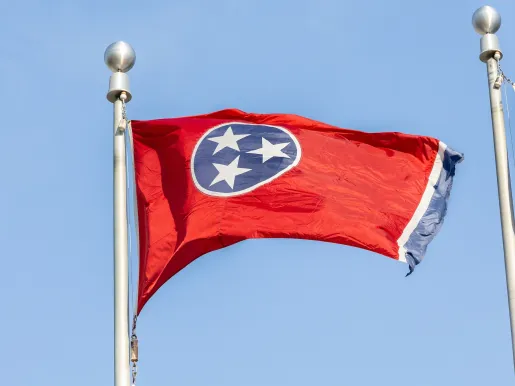
In 2017, Tennessee enacted SB 723, now Tenn. Code. Ann. §§ 49-7-2401 through 49-7-2408. In 2026, Tennessee enacted SB 1741, now Tenn. Code Ann. §§ 49-7-3201 through 49-7-3206.
SB 723 Summary
SB 723, the Campus Free Speech Protection Act, is comprehensive legislation that extended free speech protections to students and faculty at public institutions of higher education. The statute prohibits a wide range of forms of censorship including misleadingly labeled “free speech zones”, overbroad anti-harassment policies, and speaker disinvitations.
Key Provisions
- Prohibits the use of “free speech zones”;
- Defines student-on-student harassment in a way that is consistent with the definition provided by the Supreme Court in Davis v. Monroe County Board of Education;
- Bars institutions from rescinding invitations to speakers invited by students or faculty on the basis of their anticipated speech;
- Prohibits viewpoint discrimination in the allocation of student fees to student organizations; and
- Protects faculty from being punished for speech in the classroom, unless the speech is both “not reasonably germane to the subject matter of the class as broadly construed, and comprises a substantial portion of classroom instruction.”
FIRE Commentary
Comprehensive campus free speech bill becomes law in Tennessee
SB 1741 Summary
SB 1741, is a campus free speech bill that supplements and clarifies Tennessee’s campus speech protections.
Key Provisions
- Requires institutions to adopt a policy on freedom of expression that is identical or substantially similar to the University of Chicago’s Free Speech Policy Statement;
- Requires institutions to adopt an institutional neutrality policy that is identical or substantially similar to the Kalven Report;
- Prohibits retaliating against professors for the viewpoints expressed in their scholarly work or for other speech protected by the First Amendment;
- Clarifies that anticipated protests are not appropriate grounds for prohibiting or rescinding invitations to speakers;
- Provides examples of what it means to “substantially obstruct or otherwise substantially interfere” with others’ expressive events on campus.
FIRE Commentary
The critics are wrong about Tennessees Charlie Kirk Act. Heres why.